
2015年12月·第2套英语六级写作(大作文) · 题目、范文与解析
本页是 2015年12月英语六级真题第2套 写作 的写作真题页(图表 / 漫画大作文)—— 与试卷排版同一卷面:完整写作要求(Directions,词数要求 150–200 词) 与真题配图(附中文图意) 连续排印 ,卷面下方直接给出参考范文(199 词)与整篇中译、逐段拆解,另附审题立意、谋篇句架与评分自检 。
写作题和范文
本页写作题面、参考范文与逐段解析由懒笔记基于2015年12月·第2套 英语六级写作原卷整理。与试卷排版同一卷面:完整写作要求(Directions,含主题、文体、词数与署名约束)、真题配图连续排印。写作是生产性任务、无 ABCD 标准答案——题面即整道题;卷面下方直接给出满足全部硬约束的参考范文、整篇中译与逐段拆解。
【参考范文 · 199 词】写作无唯一标准答案,以下为达标示范
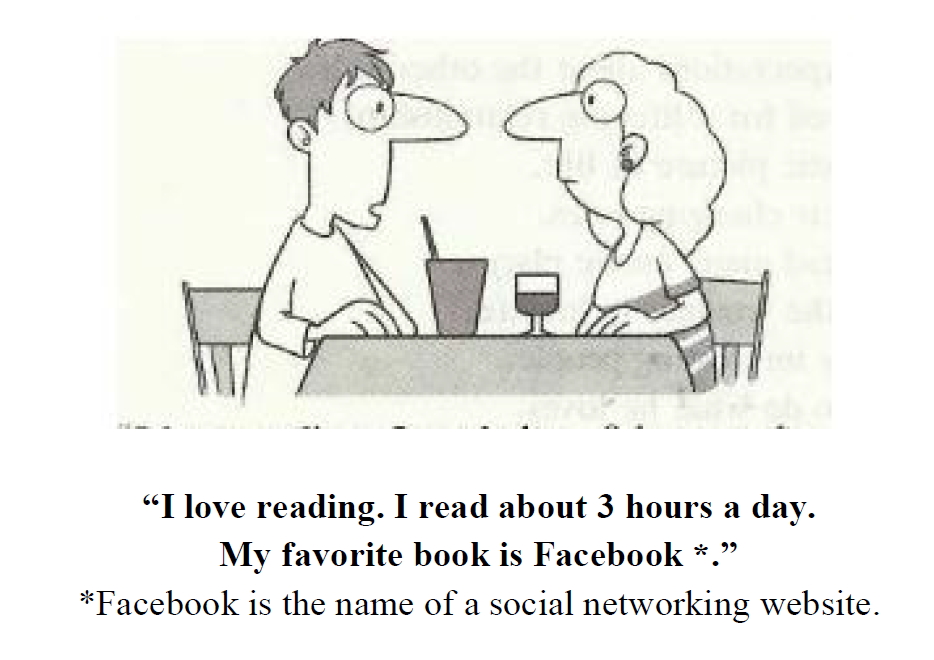
As is vividly depicted in the picture, a man is talking proudly to a woman, his eyes wide open, claiming that he reads about three hours every day and that his favorite book is Facebook. Simple as it is, the drawing conveys a thought-provoking message: for many people today, so-called reading has quietly been replaced by scrolling through social networking websites.
The implication behind this cartoon deserves our serious attention. On one hand, social platforms do bring us fragmented information, giving us the illusion that we are reading a great deal. On the other hand, such fragmented reading rarely leaves anything solid in our minds. Constant notifications keep shortening our attention span, so that few of us can sit down and finish a whole book. In this sense, what the man calls reading is far from genuine, in-depth reading.
In my view, social networking websites are a double-edged sword rather than a substitute for books. We should make use of them to gather information, yet consciously reserve time for serious reading that truly nourishes the mind. Only by striking such a balance can we enjoy the convenience of the digital age without losing the depth that classic books offer.
【参考译文】
如画中所生动描绘的,一个男人瞪大眼睛,正得意地对一位女士说,他每天读大约三小时,最爱的『书』是 Facebook。画面虽简单,却传递出一个发人深省的信息:对今天许多人而言,所谓的阅读已悄然被刷社交网站所取代。
这幅漫画背后的寓意值得我们认真对待。一方面,社交平台确实每时每刻带给我们碎片化的信息,让我们产生『读了很多』的错觉;另一方面,这种碎片化阅读几乎在脑中留不下任何扎实的东西。不断弹出的推送持续缩短着我们的注意力时长,以至于我们很少有人能坐下来读完整本书。从这个意义上说,那个男人口中的『阅读』,远非真正的、深入的阅读。
在我看来,社交网站是一把双刃剑,而非书籍的替代品。我们应当利用它来获取信息,同时有意识地留出时间进行真正滋养心智的严肃阅读。唯有如此取得平衡,我们才能既享受数字时代的便利,又不失经典书籍所给予的思想深度。
【第 1 段】白描加点寓意落实描述段方法。开头 As is vividly depicted in the picture, a man is talking proudly ... 是客观描述句架,两句转述了画面反差;随后 Simple as it is, the drawing conveys a thought-provoking message 一句把画面翻译成寓意『so-called reading has ... been replaced by scrolling through social networking websites』,完成 outline 第 1 段『描述画面并点出寓意』的功能,把话题稳稳交给下文分析。
【第 2 段】让步转折加回扣落实论证段方法。主题句 The implication behind this cartoon deserves our serious attention 承接寓意;On one hand ... On the other hand ... 摆出『制造错觉』与『削弱深度』两面;Constant notifications keep shortening our attention span, so that ... 用因果句架给出可感后果;末句 what the man calls reading is far from genuine, in-depth reading 把话题回扣到阅读焦点,正是 outline 第 2 段所要的分析。
【第 3 段】定性加建议加展望落实结论段方法。In my view, ... a double-edged sword rather than a substitute for books 一句表态并定性;We should make use of them ..., yet consciously reserve time ... 给出一正一衡的具体建议;Only by striking such a balance can we ... 以展望收尾,完成 outline 第 3 段『表态并提出建议』,避免了空喊口号。
这道题到底要写什么、立意是什么
动笔前先钉死本题的核心写作任务与读者语域、读懂配图 ,再定中心立意与要展开的要点 —— 这些是本题特有的内容判断,不是通用套路。
评论社交网站如何影响阅读
本题要求 write a short essay based on the picture below,并用一句话把焦点限定成 focus on the impact of social networking websites on reading——即围绕漫画谈『社交网站对阅读的影响』,而不是泛写社交网站的利弊或漫画之外的话题。凡是脱离『阅读』这个落点的段落都算跑题。
面向阅卷人的正式书面语
这是一篇纯议论性质的图画评论,画面之外没有任何具体收信人,因此不写称呼、不写落款,全篇用第三人称客观陈述加末段的个人表态,保持正式书面语即可;不要用口语缩写、感叹或聊天式语气。
把刷社交网站当成读书的反差
画面里 一个男人和一个女人坐在桌子旁,那位 男人睁大眼睛 一脸自豪地宣称 I love reading. I read about 3 hours a day. My favorite book is Facebook,图下还特意注明 Facebook is the name of a social networking website.。关键反差就在这里:他把每天刷三小时 Facebook 说成『读书三小时、最爱的书是 Facebook』——这正是把浏览社交网站误当成真正阅读的讽刺,也就是本文要评论的寓意。
碎片浏览不等于真正阅读
漫画表面在夸『我爱读书』,实则揭示:社交网站让很多人把碎片化浏览误当成真正的阅读,这种替代削弱了专注力与深度阅读能力,因此我们应把社交网站当工具而非读书的替代品。
- 反差即寓意:刷 Facebook 被当成读书 第一段落点:画面那句 My favorite book is Facebook 的荒诞反差本身就是寓意——把刷社交网站等同于读书,正是本文要评论的现象。
- 影响:碎片阅读削弱专注与深度 第二段落点:社交网站给人『读了很多』的错觉,但碎片化内容留不下东西,不断的推送缩短注意力时长(attention span),使人再难静下心读完一本书,谈不上深度阅读(in-depth reading)。
- 对策:平衡使用并保留深度阅读 第三段落点:表明立场——社交网站是双刃剑而非读书替代品;建议用它获取信息,同时有意识地留出专门时间做严肃、深度的阅读。
怎么分段、每段写什么、能套哪些句架
按写作家族给出现成的段落框架(每段承担什么功能),并为每段配可直接套用的 功能句架(留出填本题内容的空位)。段序与上方参考范文一一对应。
- 第 1 段 描述画面并点出寓意 两句客观白描画面人物与那句 My favorite book is Facebook 的反差,紧接一句点出寓意:很多人把刷社交网站误当成阅读。
- 第 2 段 分析寓意背后的影响 承接寓意,扣住 focus on the impact of social networking websites on reading 分析社交网站如何用碎片信息制造『读了很多』的错觉、削弱专注与深度阅读。
- 第 3 段 表态并提出建议 亮明立场(社交网站是双刃剑非读书替代品),给出可操作建议:用它获取信息、同时保留深度阅读时间。
写画面:一个男人瞪大眼睛自豪地对身旁女人说他每天读三小时、最爱的『书』是 Facebook;再点寓意:这一反差表明如今很多人已把刷社交网站悄悄等同于真正的阅读。
- 客观描述画面 As is vividly depicted in the picture, someone is doing something, claiming that ...(用来客观交代画面人物与其言行,填入本题的男人与那句话)
- 由画面点出寓意 Simple as it is, the drawing conveys a thought-provoking message that ...(用来把画面翻译成一句抽象寓意,填入本题『把浏览误当阅读』)
分析影响:社交网站每分钟喂来碎片信息,给人『读了很多』的舒适错觉;但碎片化阅读留不下扎实的东西,不断的推送缩短注意力时长,使人难以读完整本书,因此男人所谓的『读书』远非真正的深度阅读。
- 让步转折摆两面 On one hand, ... ; on the other hand, ...(用来先承认表面好处再转出实质问题,填入『给人错觉』与『削弱深度』)
- 因果推出后果 ..., so that few of us can ...(用来由原因推出可感的后果,填入『注意力缩短→难以读完一本书』)
表态:社交网站是双刃剑,而非读书的替代品;建议:用它获取信息,同时有意识地留出时间做真正滋养心智的严肃阅读;展望:唯有如此才能既享受数字时代的便利又不失深度。
- 亮明立场定性 In my view, ... is a double-edged sword rather than ...(用来一句话表态并定性,填入本题对社交网站的判断)
- 给出平衡建议 We should ..., yet consciously ...(用来提出一正一衡的建议,填入『用它获取信息』与『保留深度阅读时间』)
本题在四个评分维度怎样算达标、容易在哪丢分
按阅卷四维(内容切题 / 结构连贯 / 语言准确 / 字数格式)给出本题达标要点,并把最容易踩的低分写法摆出来 + 给改法 —— 这是写作版的「狠拆诱人错项」。
- 内容切题 每段都要扣住阅读这个落点 本题红线是 focus on the impact of social networking websites on reading,描述段要点破『把浏览误当阅读』,中段与末段都要落在『阅读』上;若写成社交网站好坏的泛论、或只停在看图说话,就偏离了这一焦点。
- 结构连贯 三段功能分明并用衔接词串联 本文用 Simple as it is 从描述过渡到寓意、用 The implication ... 承接分析、用 In my view 转入表态,三段各司其职、层层递进,没有把描述与议论搅在一段。
- 语言准确 用话题词替换空泛表达 本题可用 fragmented reading、attention span、in-depth reading、double-edged sword 等贴题表达替换『很好很坏』式空话;注意 a man is talking / notifications keep shortening 等处的主谓与单复数不要写错。
- 字数格式 落在下限与上限之间且不散段 本题硬性要求 at least 150 words but no more than 200 words,既不能低于下限也不能超过上限;同时保持三段分明、不要写成一大段,描述段控制在两三句以免挤占论证。
- 通篇复述画面细节不挖寓意 反面示例:『There is a man and a woman. The man says he reads three hours a day and his favorite book is Facebook. There is a cup on the table.』——全在看图说话、没有观点。应改为在描述后补一句:The picture reveals that many people have mistaken scrolling through social media for real reading.
- 一边倒断言缺呼应与论据 反面示例:『Social networking websites are totally bad. They destroy everything about reading.』——绝对化又无依据。应改为:Social platforms feed us fragmented information that creates an illusion of reading, yet leaves little in our minds, which is exactly what the cartoon mocks.
- 换词重说同一意思凑字数 反面示例:『Reading is important. Reading matters a lot. We should know reading is very important indeed.』——三句一个意思。应改为保留一句并补新信息:Genuine reading matters because it builds the sustained attention that fragmented browsing keeps eroding.
常见问题
围绕本题的写作题目与要求、作文类型、配图说明、立意要点、参考范文、谋篇分段与评分丢分,逐条给出可核对的答案。
- 2015年12月英语六级真题第2套 写作的写作题目是什么?要求写多少字?
- 2015年12月英语六级真题第2套 写作(Part I)的写作要求为:For this part, you are allowed 30 minutes to write a short essay based on the picture below. You should focus on the impact of social networking websites on reading. You are required to write at least 150 words but no more than 200 words. 本题要求150–200 词。
- 2015年12月英语六级真题第2套 写作属于哪种类型的作文、有什么格式要求?
- 2015年12月英语六级真题第2套 写作 是考研大作文(图表描述 / 漫画评论,先读图再评论)。写作要求150–200 词。题目配有一幅漫画,动笔前需先读懂漫画意再展开。
- 2015年12月英语六级真题第2套 写作的漫画画的是什么、说明了什么?
- 2015年12月英语六级真题第2套 写作的漫画内容为:图片中一个男人和一个女人坐在桌子旁。男人睁大眼睛,正在对女人说:“I love reading. I read about 3 hours a day. My favorite book is Facebook”。桌子上有一个带吸管的杯子和一个玻璃杯。图片还有一行说明文字“Facebook is the name of a social networking website.” 就本题而言,画面里 一个男人和一个女人坐在桌子旁,那位 男人睁大眼睛 一脸自豪地宣称 I love reading. I read about 3 hours a day. My favorite book is Facebook,图下还特意注明 Facebook is the name of a social networking website.。关键反差就在这里:他把每天刷三小时 Facebook 说成『读书三小时、最爱的书是 Facebook』——这正是把浏览社交网站误当成真正阅读的讽刺,也就是本文要评论的寓意。
- 2015年12月英语六级真题第2套 写作(评论社交网站如何影响阅读)应该怎么立意、写哪几个要点?
- 2015年12月英语六级真题第2套 写作的中心立意是漫画表面在夸『我爱读书』,实则揭示:社交网站让很多人把碎片化浏览误当成真正的阅读,这种替代削弱了专注力与深度阅读能力,因此我们应把社交网站当工具而非读书的替代品。可展开的要点:第一段落点:画面那句 My favorite book is Facebook 的荒诞反差本身就是寓意——把刷社交网站等同于读书,正是本文要评论的现象;第二段落点:社交网站给人『读了很多』的错觉,但碎片化内容留不下东西,不断的推送缩短注意力时长(attention span),使人再难静下心读完一本书,谈不上深度阅读(in-depth reading);第三段落点:表明立场——社交网站是双刃剑而非读书替代品;建议用它获取信息,同时有意识地留出专门时间做严肃、深度的阅读。
- 2015年12月英语六级真题第2套 写作(评论社交网站如何影响阅读)的参考范文是怎样的?多少词?
- 2015年12月英语六级真题第2套 写作的参考范文(199 词):As is vividly depicted in the picture, a man is talking proudly to a woman, his eyes wide open, claiming that he reads about three hours every day and that his favorite book is Facebook. Simple as it is, the drawing conveys a thought-provoking message: for many people today, so-called reading has quietly been replaced by scrolling through social networking websites. The implication behind this cartoon deserves our serious attention. On one hand, social platforms do bring us fragmented information, giving us the illusion that we are reading a great deal. On the other hand, such fragmented reading rarely leaves anything solid in our minds. Constant notifications keep shortening our attention span, so that few of us can sit down and finish a whole book. In this sense, what the man calls reading is far from genuine, in-depth reading. In my view, social networking websites are a double-edged sword rather than a substitute for books. We should make use of them to gather information, yet consciously reserve time for serious reading that truly nourishes the mind. Only by striking such a balance can we enjoy the convenience of the digital age without losing the depth that classic books offer.
- 2015年12月英语六级真题第2套 写作(评论社交网站如何影响阅读)这篇作文怎么分段、每段写什么?
- 2015年12月英语六级真题第2套 写作的参考范文共 3 段:第 1 段(描述画面并点出寓意)两句客观白描画面人物与那句 My favorite book is Facebook 的反差,紧接一句点出寓意:很多人把刷社交网站误当成阅读;第 2 段(分析寓意背后的影响)承接寓意,扣住 focus on the impact of social networking websites on reading 分析社交网站如何用碎片信息制造『读了很多』的错觉、削弱专注与深度阅读;第 3 段(表态并提出建议)亮明立场(社交网站是双刃剑非读书替代品),给出可操作建议:用它获取信息、同时保留深度阅读时间。
- 2015年12月英语六级真题第2套 写作(评论社交网站如何影响阅读)作文容易在哪丢分?
- 按内容切题 / 结构连贯 / 语言准确 / 字数格式四维评分,本题达标要点:内容切题——本题红线是 focus on the impact of social networking websites on reading,描述段要点破『把浏览误当阅读』,中段与末段都要落在『阅读』上;若写成社交网站好坏的泛论、或只停在看图说话,就偏离了这一焦点;结构连贯——本文用 Simple as it is 从描述过渡到寓意、用 The implication ... 承接分析、用 In my view 转入表态,三段各司其职、层层递进,没有把描述与议论搅在一段;语言准确——本题可用 fragmented reading、attention span、in-depth reading、double-edged sword 等贴题表达替换『很好很坏』式空话;注意 a man is talking / notifications keep shortening 等处的主谓与单复数不要写错;字数格式——本题硬性要求 at least 150 words but no more than 200 words,既不能低于下限也不能超过上限;同时保持三段分明、不要写成一大段,描述段控制在两三句以免挤占论证。 典型低分写法(须避免):反面示例:『There is a man and a woman. The man says he reads three hours a day and his favorite book is Facebook. There is a cup on the table.』——全在看图说话、没有观点。应改为在描述后补一句:The picture reveals that many people have mistaken scrolling through social media for real reading;反面示例:『Social networking websites are totally bad. They destroy everything about reading.』——绝对化又无依据。应改为:Social platforms feed us fragmented information that creates an illusion of reading, yet leaves little in our minds, which is exactly what the cartoon mocks;反面示例:『Reading is important. Reading matters a lot. We should know reading is very important indeed.』——三句一个意思。应改为保留一句并补新信息:Genuine reading matters because it builds the sustained attention that fragmented browsing keeps eroding。