
2016年考研英语一写作(大作文) · 题目、范文与解析
本页是 2016年考研英语一真题 写作 的写作真题页(图表 / 漫画大作文)—— 与试卷排版同一卷面:完整写作要求(Directions) 与真题配图(附中文图意) 连续排印 ,卷面下方直接给出参考范文(199 词)与整篇中译、逐段拆解,另附审题立意、谋篇句架与评分自检 。
写作题和范文
本页写作题面、参考范文与逐段解析由懒笔记基于2016年 考研英语一写作原卷整理。与试卷排版同一卷面:完整写作要求(Directions,含主题、文体、词数与署名约束)、真题配图连续排印。写作是生产性任务、无 ABCD 标准答案——题面即整道题;卷面下方直接给出满足全部硬约束的参考范文、整篇中译与逐段拆解。
Write an essay of 160-200 words based on the following pictures. In your essay, you should
l) describe the pictures briefly,
2)interpret the meaning, and
3)give your comments.
You should write neatly on the ANSWER SHEET. (20 points)
【参考范文 · 199 词】写作无唯一标准答案,以下为达标示范
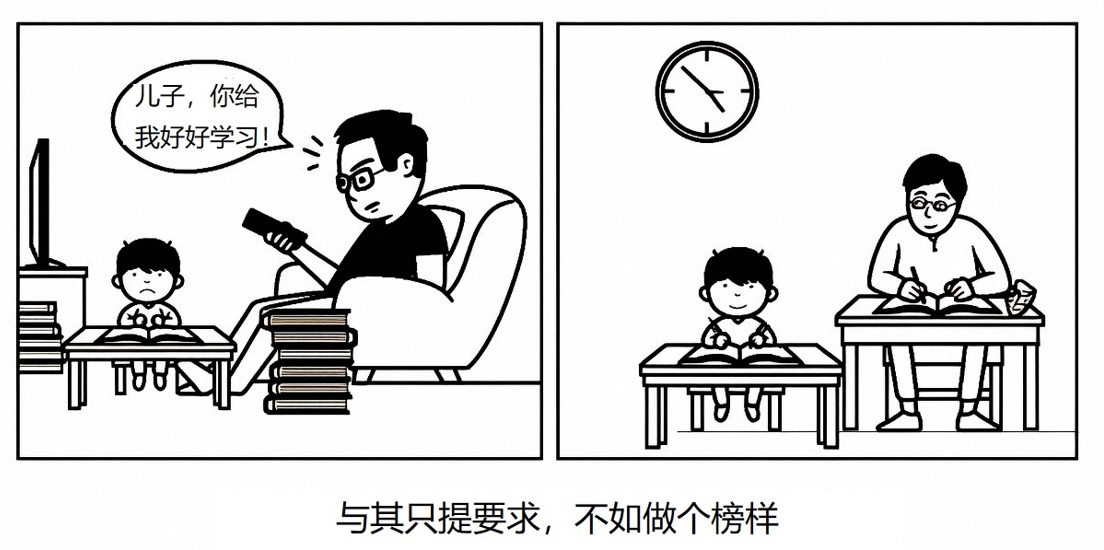
As is vividly portrayed in the two pictures, a striking contrast is presented. In the left one, a boy sits listlessly before a desk piled with books, turning to a man who, with his back to the child, lounges in a chair, smokes and watches television, yet demands, "Son, study hard!" In the right one, however, the father and the son are both seated at their own desks, studying attentively side by side.
What the cartoon conveys is that setting a good example speaks louder than merely issuing orders. When the parent indulges himself while ordering his child to work, his empty words carry no weight; only when he picks up a book himself does genuine guidance begin. In essence, our behaviour, rather than our commands, shapes those who look up to us. This applies not only to family education but to teachers and leaders alike.
In my view, the message merits our reflection. Parents should first discipline themselves before requiring the young to do so, because children learn far more from what they see than from what they are told. Only by practising what we preach can we exert a lasting and positive influence on the next generation.
【参考译文】
如两幅图所生动描绘的,画面呈现出鲜明的对比。左图中,一个小孩无精打采地坐在堆满书的书桌前,扭头看向一个成年人;那人背对着孩子,瘫在椅子里,抽着烟、看着电视,却喊道:"儿子,你给我好好学习!"而右图中,父亲和儿子却各自端坐在书桌前,并肩专注地学习。
这幅漫画所传达的是:树立好榜样远比一味发号施令更有力量。当家长自己放纵,却命令孩子用功时,他空洞的话语毫无分量;只有当他自己拿起书本,真正的引导才开始。归根结底,塑造那些仰望我们的人的,是我们的行为,而非我们的命令。这不仅适用于家庭教育,也同样适用于老师和管理者。
在我看来,这一寓意值得我们深思。家长应先约束好自己,再去要求年轻人,因为孩子从所见中学到的,远多于从被告知中学到的。唯有身体力行、言行一致,我们才能对下一代产生持久而积极的影响。
【第 1 段】描述段:一句对比统起,两句带过左右图。用句架 As is vividly portrayed in the two pictures, a striking contrast is presented 开场,再以 In the left one … / In the right one, however … 各一句勾勒反差,全段简短,落实了描述要 briefly 的要求,不堆砌细节。
【第 2 段】释义段:主旨句加正反对照加升华推广。首句 What the cartoon conveys is that setting a good example speaks louder than merely issuing orders 点明寓意;接着 When … / only when … 正反对照论证;再用 In essence 归纳、末句 This applies not only … but … alike 推广,四步齐全,是全文最重的得分段。
【第 3 段】评论段:表态加建议加呼吁闭环。In my view, the message merits our reflection 表态,Parents should first discipline themselves before … because … 给建议加理由,末句 Only by practising what we preach can we … 呼吁收尾,紧扣身教主旨、不另起炉灶。
这道题到底要写什么、立意是什么
动笔前先钉死本题的核心写作任务与读者语域、读懂配图 ,再定中心立意与要展开的要点 —— 这些是本题特有的内容判断,不是通用套路。
看图议论:描述—释义—评论三步走
本题要求 Write an essay of 160-200 words based on the following pictures,交际目的不是叙事而是借图说理:先客观 describe the pictures briefly,再 interpret the meaning 挖出图背后的道理,最后 give your comments 亮出自己的看法。一句话钉死:借这幅家教漫画,论证并评价"身教重于言传"。
面向阅卷人的正式书面语
本题是纯议论型图画作文,没有具体收信人,也无需称呼与署名;语域按面向阅卷人的正式书面英语处理即可——不用口语缩写、不抖机灵,句式端正、用词书面。
左右反差:只提要求 vs 以身作则
标题即中心:标题为“与其只提要求,不如做个榜样”的漫画。左图是反面——一个放着很多书的书桌前坐着一个无精打采的小孩,而家长 这个成年人背对着小孩,坐在椅子上,抽着烟翘着二郎腿,面带笑容地看着电视,却在对话框里 里面写着:“儿子,你给我好好学习!”;右图是正面——右侧画面中,孩子和成年人都坐在各自的书桌前,认真地学习。可写点就是这组"言行不一 vs 身体力行"的对照。
身教重于言传
全篇中心论点一句话:真正塑造孩子的是长辈的行动而非空洞的命令,interpret the meaning 这一步要点明的就是这层道理——与其一味 里面写着:“儿子,你给我好好学习!” 式地提要求,不如自己先坐下来读书。
- 反面:只提要求苍白无力 家长一边翘腿看电视一边命令孩子学习,这个成年人背对着小孩,坐在椅子上,抽着烟翘着二郎腿,面带笑容地看着电视,言行相悖,说教毫无说服力,孩子自然 一个放着很多书的书桌前坐着一个无精打采的小孩。
- 正面:榜样力量胜过命令 右图里长辈自己拿起书本,孩子随之专注,右侧画面中,孩子和成年人都坐在各自的书桌前,认真地学习,说明以身作则比一百句命令都管用。
- 推广:师者领导同理 把道理从家庭教育推向更广的场景——老师、管理者同样应先做到再要求别人,身教是普适的影响机制。
怎么分段、每段写什么、能套哪些句架
按写作家族给出现成的段落框架(每段承担什么功能),并为每段配可直接套用的 功能句架(留出填本题内容的空位)。段序与上方参考范文一一对应。
- 第 1 段 描述段:勾勒画面与对比 用一两句客观交代两图的关键反差,即 describe the pictures briefly,不铺陈每个角落。
- 第 2 段 释义段:点明并论证寓意 由画面提炼出"身教重于言传"的主旨句并展开论证,完成 interpret the meaning,是全文重心。
- 第 3 段 评论段:表态与呼吁收束 亮出个人看法、给出建议并呼应寓意收尾,落实 give your comments。
左图:孩子 一个放着很多书的书桌前坐着一个无精打采的小孩,家长却背对着他抽烟看电视还喊着让他好好学习;右图:右侧画面中,孩子和成年人都坐在各自的书桌前,认真地学习。抓住这一反差即可。
- 描述开场句架 As is vividly portrayed in the two pictures, + 一句概括对比(如 a striking contrast is presented)。
- 左右对比句架 In the left one, + 反面画面; in the right one, however, + 正面画面。
主旨:以身作则远胜空洞命令;论证:家长自己放纵却命令孩子,命令毫无分量,只有自己拿起书本,真正的引导才开始;升华:塑造后辈的是行为而非命令;推广:家庭教育之外,老师与管理者同理。
- 点明寓意主旨句架 What the cartoon conveys is that + 抽象道理(如 setting a good example speaks louder than merely issuing orders)。
- 正反对照论证句架 When + 反面情形, + 后果; only when + 正面做法, + 积极结果。
- 归纳升华句架 In essence, + 主体, rather than + 被否定项, + 真正起作用的结论。
表态:这一寓意值得反思;建议:家长和长辈应先自我约束再要求年轻人,因为孩子从所见中学到的远多于从说教中学到的;呼应收尾:唯有言行一致,才能对下一代产生持久而积极的影响。
- 亮明态度句架 In my view, the message merits our reflection. / From my perspective, + 你的判断。
- 提建议句架 + 主体 should + 建议做法 before + 对照做法, because + 理由。
- 呼吁升华句架 Only by + 关键做法 can we + 期望的积极结果。
本题在四个评分维度怎样算达标、容易在哪丢分
按阅卷四维(内容切题 / 结构连贯 / 语言准确 / 字数格式)给出本题达标要点,并把最容易踩的低分写法摆出来 + 给改法 —— 这是写作版的「狠拆诱人错项」。
- 内容切题 三步齐全且寓意扣标题 本题达标关键是寓意必须落到 标题为“与其只提要求,不如做个榜样”的漫画 的"身教重于言传",最易失分处是只描述画面、不提炼寓意,跑成看图说话。
- 结构连贯 三段递进且评论呼应寓意 本题达标要点是第三段的评论要呼应第二段的寓意、形成闭环;易失分处是评论段另起炉灶谈无关话题,导致全文脱节。
- 语言准确 描述用现在时,善用图画常用句型 描述画面统一用一般现在时,用好 As is vividly portrayed、What the cartoon conveys is that 等图画作文常用句型,避免中式直译,是本题稳住语言分的抓手。
- 字数格式 控在区间内三段布局 本题给了明确上下限,达标要点是把篇幅稳稳压在区间内且分成三段;易失分处是描述段过长挤占论证,或靠重复句子注水凑数。
- 通篇看图说话 反面示例:The left picture shows a man watching TV and telling his son to study. The right picture shows the man and the boy studying together. That is what the two pictures show. —— 只复述画面、无寓意无评论。改法:保留一句描述,补上"这说明身教重于言传"的寓意句和"家长应先律己"的评论句。
- 逐字硬译 反面示例(劣质直译):The father give son demand but himself no study, this is very not good father behavior. 改法(正确写法):The father demands that his son study hard, yet he himself does not, which makes his words utterly unconvincing.
- 另起炉灶 反面示例:In my view, students today face too much homework and should have more free time to relax. —— 跑去谈课业负担,与身教寓意无关。改法:In my view, elders should set an example before making demands, for actions teach far more than words.
- 同义重复凑字 反面示例:Setting an example is important. It is very important to set an example. We should all set a good example because examples are important. —— 三句一个意思。改法:把后两句换成新信息,如 The same holds true for teachers and leaders, whose conduct silently shapes those around them.
常见问题
围绕本题的写作题目与要求、作文类型、配图说明、立意要点、参考范文、谋篇分段与评分丢分,逐条给出可核对的答案。
- 2016年考研英语一真题 写作的写作题目是什么?要求写多少字?
- 2016年考研英语一真题 写作(Section III Part B)的写作要求为:Write an essay of 160-200 words based on the following pictures. In your essay, you should l) describe the pictures briefly, 2)interpret the meaning, and 3)give your comments. You should write neatly on the ANSWER SHEET. (20 points)
- 2016年考研英语一真题 写作属于哪种类型的作文、有什么格式要求?
- 2016年考研英语一真题 写作 是考研大作文(图表描述 / 漫画评论,先读图再评论)。题目配有一幅漫画,动笔前需先读懂漫画意再展开。
- 2016年考研英语一真题 写作的漫画画的是什么、说明了什么?
- 2016年考研英语一真题 写作的漫画内容为:这是一幅标题为“与其只提要求,不如做个榜样”的漫画,由左右两部分组成。左侧画面中,一个放着很多书的书桌前坐着一个无精打采的小孩,小孩扭头看向一个成年人。这个成年人背对着小孩,坐在椅子上,抽着烟翘着二郎腿,面带笑容地看着电视,成年人的头上方有一个对话框,里面写着:“儿子,你给我好好学习!”。右侧画面中,孩子和成年人都坐在各自的书桌前,认真地学习,墙上挂着一个钟表。 就本题而言,标题即中心:标题为“与其只提要求,不如做个榜样”的漫画。左图是反面——一个放着很多书的书桌前坐着一个无精打采的小孩,而家长 这个成年人背对着小孩,坐在椅子上,抽着烟翘着二郎腿,面带笑容地看着电视,却在对话框里 里面写着:“儿子,你给我好好学习!”;右图是正面——右侧画面中,孩子和成年人都坐在各自的书桌前,认真地学习。可写点就是这组"言行不一 vs 身体力行"的对照。
- 2016年考研英语一真题 写作(看图议论:描述—释义—评论三步走)应该怎么立意、写哪几个要点?
- 2016年考研英语一真题 写作的中心立意是全篇中心论点一句话:真正塑造孩子的是长辈的行动而非空洞的命令,interpret the meaning 这一步要点明的就是这层道理——与其一味 里面写着:“儿子,你给我好好学习!” 式地提要求,不如自己先坐下来读书。可展开的要点:家长一边翘腿看电视一边命令孩子学习,这个成年人背对着小孩,坐在椅子上,抽着烟翘着二郎腿,面带笑容地看着电视,言行相悖,说教毫无说服力,孩子自然 一个放着很多书的书桌前坐着一个无精打采的小孩;右图里长辈自己拿起书本,孩子随之专注,右侧画面中,孩子和成年人都坐在各自的书桌前,认真地学习,说明以身作则比一百句命令都管用;把道理从家庭教育推向更广的场景——老师、管理者同样应先做到再要求别人,身教是普适的影响机制。
- 2016年考研英语一真题 写作(看图议论:描述—释义—评论三步走)的参考范文是怎样的?多少词?
- 2016年考研英语一真题 写作的参考范文(199 词):As is vividly portrayed in the two pictures, a striking contrast is presented. In the left one, a boy sits listlessly before a desk piled with books, turning to a man who, with his back to the child, lounges in a chair, smokes and watches television, yet demands, "Son, study hard!" In the right one, however, the father and the son are both seated at their own desks, studying attentively side by side. What the cartoon conveys is that setting a good example speaks louder than merely issuing orders. When the parent indulges himself while ordering his child to work, his empty words carry no weight; only when he picks up a book himself does genuine guidance begin. In essence, our behaviour, rather than our commands, shapes those who look up to us. This applies not only to family education but to teachers and leaders alike. In my view, the message merits our reflection. Parents should first discipline themselves before requiring the young to do so, because children learn far more from what they see than from what they are told. Only by practising what we preach can we exert a lasting and positive influence on the next generation.
- 2016年考研英语一真题 写作(看图议论:描述—释义—评论三步走)这篇作文怎么分段、每段写什么?
- 2016年考研英语一真题 写作的参考范文共 3 段:第 1 段(描述段:勾勒画面与对比)用一两句客观交代两图的关键反差,即 describe the pictures briefly,不铺陈每个角落;第 2 段(释义段:点明并论证寓意)由画面提炼出"身教重于言传"的主旨句并展开论证,完成 interpret the meaning,是全文重心;第 3 段(评论段:表态与呼吁收束)亮出个人看法、给出建议并呼应寓意收尾,落实 give your comments。
- 2016年考研英语一真题 写作(看图议论:描述—释义—评论三步走)作文容易在哪丢分?
- 按内容切题 / 结构连贯 / 语言准确 / 字数格式四维评分,本题达标要点:内容切题——本题达标关键是寓意必须落到 标题为“与其只提要求,不如做个榜样”的漫画 的"身教重于言传",最易失分处是只描述画面、不提炼寓意,跑成看图说话;结构连贯——本题达标要点是第三段的评论要呼应第二段的寓意、形成闭环;易失分处是评论段另起炉灶谈无关话题,导致全文脱节;语言准确——描述画面统一用一般现在时,用好 As is vividly portrayed、What the cartoon conveys is that 等图画作文常用句型,避免中式直译,是本题稳住语言分的抓手;字数格式——本题给了明确上下限,达标要点是把篇幅稳稳压在区间内且分成三段;易失分处是描述段过长挤占论证,或靠重复句子注水凑数。 典型低分写法(须避免):反面示例:The left picture shows a man watching TV and telling his son to study. The right picture shows the man and the boy studying together. That is what the two pictures show. —— 只复述画面、无寓意无评论。改法:保留一句描述,补上"这说明身教重于言传"的寓意句和"家长应先律己"的评论句;反面示例(劣质直译):The father give son demand but himself no study, this is very not good father behavior. 改法(正确写法):The father demands that his son study hard, yet he himself does not, which makes his words utterly unconvincing;反面示例:In my view, students today face too much homework and should have more free time to relax. —— 跑去谈课业负担,与身教寓意无关。改法:In my view, elders should set an example before making demands, for actions teach far more than words;反面示例:Setting an example is important. It is very important to set an example. We should all set a good example because examples are important. —— 三句一个意思。改法:把后两句换成新信息,如 The same holds true for teachers and leaders, whose conduct silently shapes those around them。