
2020年考研英语一写作(大作文) · 题目、范文与解析
本页是 2020年考研英语一真题 写作 的写作真题页(图表 / 漫画大作文)—— 与试卷排版同一卷面:完整写作要求(Directions) 与真题配图(附中文图意) 连续排印 ,卷面下方直接给出参考范文(194 词)与整篇中译、逐段拆解,另附审题立意、谋篇句架与评分自检 。
写作题和范文
本页写作题面、参考范文与逐段解析由懒笔记基于2020年 考研英语一写作原卷整理。与试卷排版同一卷面:完整写作要求(Directions,含主题、文体、词数与署名约束)、真题配图连续排印。写作是生产性任务、无 ABCD 标准答案——题面即整道题;卷面下方直接给出满足全部硬约束的参考范文、整篇中译与逐段拆解。
Write an essay of 160-200 words based on the picture below. In your essay, you should
1)describe the picture briefly,
2)interpret the implied meaning, and
3)give your comments.
You should write neatly on the ANSWER SHEET. (20 points)
【参考范文 · 194 词】写作无唯一标准答案,以下为达标示范
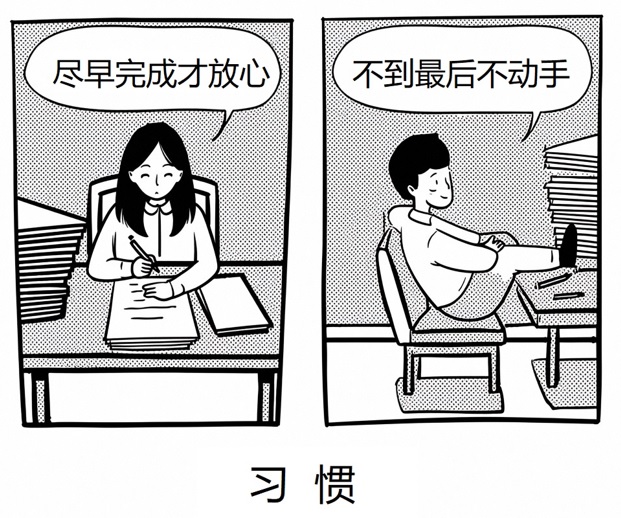
As is depicted in the drawing entitled "Habit", two contrasting figures are presented. On the left, a woman sits at a desk piled with documents, bending over her work, with a bubble above her reading that she feels at ease only when tasks are finished early. On the right, a man leans back in his chair with only a book and a pen before him, looking relaxed, saying that he never starts until the last moment.
Simple as it seems, the picture conveys a thought-provoking message about the power of habits. The two attitudes stand for two life styles: one embraces planning ahead and finishing early, while the other keeps putting things off until deadlines loom. What the cartoonist intends to highlight is that a good habit of getting things done in advance keeps us calm and efficient, whereas procrastination leaves us anxious and passive when time runs out.
In my view, we should cultivate the good habit of acting early rather than delaying. Therefore, it is advisable to make a plan and start at once. Only in this way can we stay in control of our time and lead a more productive life.
【参考译文】
如画中题为「习惯」的漫画所示,画面呈现出两个形成对比的人物。左侧,一位女性坐在堆满文件的办公桌前,低头伏案,她上方的对话框写着:只有尽早完成任务,她才感到安心。右侧,一位男性靠在椅背上,桌上只有一本书和一支笔,看上去很放松,他说自己不到最后一刻绝不动手。
看似简单,这幅漫画却传达出一个发人深省的信息,关乎习惯的力量。两种态度代表两种生活方式:一种崇尚提前规划、尽早完成,另一种则一拖再拖,直到期限逼近。画家意在强调:提前把事情做完的好习惯让我们从容而高效,而拖延则让我们在时间耗尽时焦虑又被动。
在我看来,我们应当培养尽早行动而非拖延的好习惯。因此,明智之举是制定计划、立即着手。唯有如此,我们才能掌控自己的时间,过上更高效的生活。
【第 1 段】客观分述左右。本段用「As is depicted ... two contrasting figures are presented」总起点出对比,再以 On the left / On the right 分述两人动作,并把对话框转为间接引语(reading that ... / saying that ...),全用现在时客观陈述,落实描述段功能,对应 describe the picture briefly。
【第 2 段】抽象出寓意。本段以「Simple as it seems, the picture conveys a ... message」把镜头从画面拉向道理,用「The two attitudes stand for two life styles」把人物抽象成两类,再以「What the cartoonist intends to highlight is that ...」点明习惯决定状态,是采分核心,对应 interpret the implied meaning。
【第 3 段】表态并给建议。本段以「In my view, we should ... rather than ...」亮明支持早做,用「Therefore, it is advisable to ...」给出制定计划、立刻着手的建议,末句「Only in this way can we ...」倒装拔高收尾并回扣寓意,对应 give your comments。
这道题到底要写什么、立意是什么
动笔前先钉死本题的核心写作任务与读者语域、读懂配图 ,再定中心立意与要展开的要点 —— 这些是本题特有的内容判断,不是通用套路。
看图三段:描述+寓意+评论
本题要求 Write an essay of 160-200 words based on the picture below,即根据漫画写一篇小短文,依次完成 describe the picture briefly(简述画面)、interpret the implied meaning(阐释寓意)、give your comments(发表评论)三件事。这不是抒情散文,是有固定采分点的议论小短文。
面向阅卷人的正式书面语
本题无具体收信人、无身份设定,也不需要称呼和落款,只需面向阅卷人写规范的正式书面英语:用第三人称客观描述画面,评论段可用第一人称表态。不要写成书信或口语,别用缩写和网络词。
同题两人:早做 vs 拖延
配图是 标题为“习惯”的漫画,左右对比:左侧 一位女性坐在办公桌前,桌上堆满了文件,对话框写 尽早完成,才放心;右侧 一位男性坐在办公桌前,桌上只有一本书和一支笔,靠在椅背上很放松,对话框写 不到最后,不动手。同一标题「习惯」下,一个未雨绸缪、一个临时抱佛脚——可写点就是两种习惯的对照及其后果。
养成提前完成的好习惯
中心论点:一个人应养成 尽早完成,才放心 式提前行动的好习惯,摒弃 不到最后,不动手 的拖延,因为前者带来从容与高效,后者只留下焦虑与被动。
- 描述点:两种态度的画面 客观交代漫画两侧:勤勉早做的女性 vs 靠椅放松、拖到最后的男性,以及各自对话框里的话,为后文寓意作铺垫。
- 寓意点:习惯决定状态 由画中两人推出生活道理:提前规划的习惯让人计划内从容,拖延的习惯让人在期限逼近时焦虑被动——习惯不同,人生状态不同。
- 评论点:表态+建议 明确支持提前行动,并给出可操作建议:制定计划、立刻着手,尤其对学生和年轻人,以此掌控时间、提升效率。
怎么分段、每段写什么、能套哪些句架
按写作家族给出现成的段落框架(每段承担什么功能),并为每段配可直接套用的 功能句架(留出填本题内容的空位)。段序与上方参考范文一一对应。
- 第 1 段 描述画面 用客观笔法简述漫画左右两侧的人物、动作与对话框文字,完成 describe the picture briefly。
- 第 2 段 阐释寓意 由画面对比过渡到抽象道理,点明两种习惯的意义,完成 interpret the implied meaning,是全文采分核心。
- 第 3 段 评论收束 亮明态度、给出建议并首尾呼应,完成 give your comments。
落点:左侧女性伏案疾书、桌上堆满文件,信奉 尽早完成,才放心;右侧男性靠椅仰头、桌上仅一书一笔,秉持 不到最后,不动手。两幅同处标题 标题为“习惯”的漫画 之下。
- 总起点题句架 As is depicted in the drawing entitled __, two contrasting figures are presented.(用来一句话引出并点出「对比」)
- 分述左右句架 On the left, __, while on the right, __.(左右对照分述,填各自的人物与动作)
- 转述对话框句架 with a bubble above ... reading that __(把对话框里的话转成间接引语,填人物心声)
落点:两个对话框代表两种生活方式——一种未雨绸缪、提前完成,一种一拖再拖、临期才动;画家借此提醒,提前行动的好习惯让人从容高效,拖延的坏习惯让人在时间耗尽时焦虑被动。
- 画面转寓意句架 Simple as it seems, the picture conveys a message about __.(让步式过渡,从画面转向道理)
- 抽象归类句架 The two attitudes stand for __, one __ while the other __.(把人物抽象成两类,填两种做法)
- 点明意图句架 What the cartoonist intends to highlight is that __.(直接说出画家用意,填中心寓意)
落点:明确赞成提前行动、反对拖延;建议每个人尤其年轻人制定计划、立刻动手,而非拖到最后一刻,唯有如此才能掌控时间、过更高效的生活。
- 亮明态度句架 In my view, we should __ rather than __.(表态并对比,填提倡与反对的做法)
- 给出建议句架 Therefore, it is advisable to __.(引出可操作建议,填具体行动)
- 拔高收尾句架 Only in this way can we __.(倒装强调,填这样做的好处,收束全文)
本题在四个评分维度怎样算达标、容易在哪丢分
按阅卷四维(内容切题 / 结构连贯 / 语言准确 / 字数格式)给出本题达标要点,并把最容易踩的低分写法摆出来 + 给改法 —— 这是写作版的「狠拆诱人错项」。
- 内容切题 三问齐全且不跑偏 本题须同时完成 describe the picture briefly、interpret the implied meaning、give your comments;最易失分处是只描述、寓意段空缺,或寓意跑偏成与「习惯」无关的话题。
- 结构连贯 三段分明、首尾呼应 本题三段与三问一一对应,寓意段与评论段应首尾呼应(都落在「养成提前完成的好习惯」上);避免描述段过长、评论段一笔带过导致比例失衡。
- 语言准确 现在时描述、对比句准确 本题描述与寓意宜全程现在时;对比结构(one ... while the other ...;whereas ...)要用对,别中途跳到过去时,也别把对话框直接照抄中文式英语。
- 字数格式 守住 160-200 区间 本题为硬性区间,须 Write an essay of 160-200 words based on the picture below,低于 160 或高于 200 都失分;三段配比宜描述略短、寓意最足、评论收束。
- 只看图说话 反面示例:「The woman is writing and the man is resting. The picture is very interesting.」——止于画面、无寓意。应改为:「The two figures stand for two habits: planning ahead versus putting things off, which shape whether we stay calm or anxious.」
- 万能句开场 反面示例:「With the development of society, more and more problems appear in our life.」——空转不切题。应改为:「As is depicted in the drawing entitled "Habit", two people show two opposite attitudes toward work.」
- 评论重复寓意 反面示例:「In a word, procrastination is bad and finishing early is good.」——原地打转。应改为:「In my view, we should make a plan and start at once, so that we can stay in control of our time.」
- 描述里下结论 反面示例:「On the right, a lazy man is wasting his time, which is really terrible.」——过早评价。应改为:「On the right, a man leans back in his chair, saying that he never starts until the last moment.」
常见问题
围绕本题的写作题目与要求、作文类型、配图说明、立意要点、参考范文、谋篇分段与评分丢分,逐条给出可核对的答案。
- 2020年考研英语一真题 写作的写作题目是什么?要求写多少字?
- 2020年考研英语一真题 写作(Section III Part B)的写作要求为:Write an essay of 160-200 words based on the picture below. In your essay, you should 1)describe the picture briefly, 2)interpret the implied meaning, and 3)give your comments. You should write neatly on the ANSWER SHEET. (20 points)
- 2020年考研英语一真题 写作属于哪种类型的作文、有什么格式要求?
- 2020年考研英语一真题 写作 是考研大作文(图表描述 / 漫画评论,先读图再评论)。题目配有一幅漫画,动笔前需先读懂漫画意再展开。
- 2020年考研英语一真题 写作的漫画画的是什么、说明了什么?
- 2020年考研英语一真题 写作的漫画内容为:这是一幅标题为“习惯”的漫画,由左右两个部分组成。左侧画面中,一位女性坐在办公桌前,桌上堆满了文件,她正在低头写字,她的上方画着一个对话框,写着:“尽早完成,才放心”。右侧画面中,一位男性坐在办公桌前,桌上只有一本书和一支笔,他靠在椅背上,头向后仰,看起来很放松,他的上方画着一个对话框,写着:“不到最后,不动手”。 就本题而言,配图是 标题为“习惯”的漫画,左右对比:左侧 一位女性坐在办公桌前,桌上堆满了文件,对话框写 尽早完成,才放心;右侧 一位男性坐在办公桌前,桌上只有一本书和一支笔,靠在椅背上很放松,对话框写 不到最后,不动手。同一标题「习惯」下,一个未雨绸缪、一个临时抱佛脚——可写点就是两种习惯的对照及其后果。
- 2020年考研英语一真题 写作(看图三段:描述+寓意+评论)应该怎么立意、写哪几个要点?
- 2020年考研英语一真题 写作的中心立意是中心论点:一个人应养成 尽早完成,才放心 式提前行动的好习惯,摒弃 不到最后,不动手 的拖延,因为前者带来从容与高效,后者只留下焦虑与被动。可展开的要点:客观交代漫画两侧:勤勉早做的女性 vs 靠椅放松、拖到最后的男性,以及各自对话框里的话,为后文寓意作铺垫;由画中两人推出生活道理:提前规划的习惯让人计划内从容,拖延的习惯让人在期限逼近时焦虑被动——习惯不同,人生状态不同;明确支持提前行动,并给出可操作建议:制定计划、立刻着手,尤其对学生和年轻人,以此掌控时间、提升效率。
- 2020年考研英语一真题 写作(看图三段:描述+寓意+评论)的参考范文是怎样的?多少词?
- 2020年考研英语一真题 写作的参考范文(194 词):As is depicted in the drawing entitled "Habit", two contrasting figures are presented. On the left, a woman sits at a desk piled with documents, bending over her work, with a bubble above her reading that she feels at ease only when tasks are finished early. On the right, a man leans back in his chair with only a book and a pen before him, looking relaxed, saying that he never starts until the last moment. Simple as it seems, the picture conveys a thought-provoking message about the power of habits. The two attitudes stand for two life styles: one embraces planning ahead and finishing early, while the other keeps putting things off until deadlines loom. What the cartoonist intends to highlight is that a good habit of getting things done in advance keeps us calm and efficient, whereas procrastination leaves us anxious and passive when time runs out. In my view, we should cultivate the good habit of acting early rather than delaying. Therefore, it is advisable to make a plan and start at once. Only in this way can we stay in control of our time and lead a more productive life.
- 2020年考研英语一真题 写作(看图三段:描述+寓意+评论)这篇作文怎么分段、每段写什么?
- 2020年考研英语一真题 写作的参考范文共 3 段:第 1 段(描述画面)用客观笔法简述漫画左右两侧的人物、动作与对话框文字,完成 describe the picture briefly;第 2 段(阐释寓意)由画面对比过渡到抽象道理,点明两种习惯的意义,完成 interpret the implied meaning,是全文采分核心;第 3 段(评论收束)亮明态度、给出建议并首尾呼应,完成 give your comments。
- 2020年考研英语一真题 写作(看图三段:描述+寓意+评论)作文容易在哪丢分?
- 按内容切题 / 结构连贯 / 语言准确 / 字数格式四维评分,本题达标要点:内容切题——本题须同时完成 describe the picture briefly、interpret the implied meaning、give your comments;最易失分处是只描述、寓意段空缺,或寓意跑偏成与「习惯」无关的话题;结构连贯——本题三段与三问一一对应,寓意段与评论段应首尾呼应(都落在「养成提前完成的好习惯」上);避免描述段过长、评论段一笔带过导致比例失衡;语言准确——本题描述与寓意宜全程现在时;对比结构(one ... while the other ...;whereas ...)要用对,别中途跳到过去时,也别把对话框直接照抄中文式英语;字数格式——本题为硬性区间,须 Write an essay of 160-200 words based on the picture below,低于 160 或高于 200 都失分;三段配比宜描述略短、寓意最足、评论收束。 典型低分写法(须避免):反面示例:「The woman is writing and the man is resting. The picture is very interesting.」——止于画面、无寓意。应改为:「The two figures stand for two habits: planning ahead versus putting things off, which shape whether we stay calm or anxious.」;反面示例:「With the development of society, more and more problems appear in our life.」——空转不切题。应改为:「As is depicted in the drawing entitled "Habit", two people show two opposite attitudes toward work.」;反面示例:「In a word, procrastination is bad and finishing early is good.」——原地打转。应改为:「In my view, we should make a plan and start at once, so that we can stay in control of our time.」;反面示例:「On the right, a lazy man is wasting his time, which is really terrible.」——过早评价。应改为:「On the right, a man leans back in his chair, saying that he never starts until the last moment.」。