
英语四级 2015年6月·第1套 · 真题整卷
按真题原卷顺序的全部题型,逐题型可进试卷排版、题目解析、原文精读;整卷可免费下载电子版(真题 PDF、解析版 PDF 与 Word)。
整卷试卷排版
四级 · 真题卷第1套 · 2015年6月
英语四级2015年6月·第1套真题
Directions: For this part, you are allowed 30 minutes to write an essay based on the picture below. You should start your essay with a brief description of the picture and then comment on this kind of modern life. You should write at least 120 words but no more than 180 words.
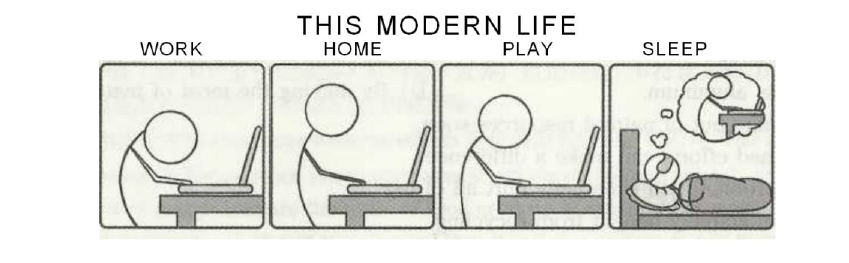
英语四级2015年6月·第1套真题
Directions: In this section, you will hear three news reports. At the end of each news report, you will hear two or three questions. Both the news report and the questions will be spoken only once. After you hear a question, you must choose the best answer from the four choices marked A), B), C) and D). Then mark the corresponding letter on Answer Sheet 1 with a single line through the centre.
Questions 1 and 2 are based on the news report you have just heard.
1.
A)An earthquake hitting Lahore in Pakistan.
B)Rescue operation after the earthquake.
C)A factory building being damaged in the earthquake.
D)Relief work in the collapsed factory building.
2.
A)Concrete and bricks.
B)Heavy machines.
C)Plastic bags.
D)Building materials.
Questions 3 to 4 are based on the news report you have just heard.
3.
A)Its color choices.
B)Its hardware.
C)Its price.
D)Its size.
4.
A)About 500 dollars.
B)About 400 dollars.
C)About 300 dollars.
D)About 100 dollars.
Questions 5 to 7 are based on the conversation you have just heard.
5.
A)The repeated chemotherapy.
B)The immune system treatment.
C)The stem cell transplant.
D)The bone marrow transplant.
6.
A)About 33.
B)About 35.
C)About 50.
D)About 94.
7.
A)Improving cancer-fighting ability of immune cells.
B)Encouraging patients with skin or lung cancers.
C)Healing the leukemia patients in a single treatment.
D)Eradicating invading viruses and bacteria.
Directions: In this section, you will hear two long conversations. At the end of each conversation, you will hear four questions. Both the conversation and the questions will be spoken only once. After you hear a question, you must choose the best answer from the four choices marked A), B), C) and D). Then mark the corresponding letter on Answer Sheet 1 with a single line through the centre.
Questions 8 to 11 are based on the conversation you have just heard.
8.
A)It specializes in safety from leaks.
B)It is headquartered in London.
C)It has a chemical processing plant.
D)It has a partnership with LCP.
9.
A)He is a safety inspector.
B)He is Mr. Grand's friend.
C)He is a chemist.
D)He is a salesman.
10.
A)The public relations officer.
B)Head of the personnel department.
C)Mr. Grand's personal assistant.
D)Director of the safety department.
11.
A)Send a comprehensive description of their work.
B)Provide details of their products and services.
C)Leave a message for Mr. Grand.
D)Wait for Mr. Grand to call back.
Questions 12 to 15 are based on the conversation you have just heard.
12.
A)She listened to recordings of many European orchestras.
B)She read a lot about European musicians and their music.
C)She dreamed of working and living in a European country.
D)She learned playing the violin from a famous French musician.
13.
A)She was a pupil of a famous European violinist.
B)She gave her first performance with her father.
C)She became a professional violinist at fifteen.
D)She began taking violin lessons as a small child.
14.
A)In 1955.
B)In 1961.
C)In 1964.
D)In 1970.
15.
A)It was the chance of a lifetime.
B)It was a great challenge to her.
C)It gave her a chance to explore the city.
D)It helped her learn classical French music.
Directions: In this section, you will hear three passages. At the end of each passage, you will hear three or four questions. Both the passage and the questions will be spoken only once. After you hear a question, you must choose the best answer from the four choices marked A), B), C) and D). Then mark the corresponding letter on Answer Sheet 1 with a single line through the centre.
Questions 16 to 18 are based on the passage you have just heard.
16.
A)There are mysterious stories behind his works.
B)His personal history is little known.
C)His works have no match worldwide.
D)There are many misunderstandings about him.
17.
A)He once worked in a well-known acting company.
B)He moved to Stratford-on-Avon in his childhood.
C)He failed to go beyond grammar school.
D)He was a member of the town council.
18.
A)People of his time had little interest in him.
B)His works were adapted beyond recognition.
C)Possible sources of clues about him were lost in a fire.
D)Writers of his time had no means to protect their works.
Questions 19 to 21 are based on the conversation you have just heard.
19.
A)Theft.
B)Air crash.
C)Cheating.
D)Road accidents.
20.
A)Learn the local customs.
B)Have the right documents.
C)Book tickets well in advance.
D)Make hotel reservations.
21.
A)Contact your agent.
B)Use official transport.
C)Get a lift if possible.
D)Have a friend meet you.
Questions 22 to 25 are based on the conversation you have just heard.
22.
A)Cut down production cost.
B)Refine the taste of his goods.
C)Sell inexpensive products.
D)Specialise in gold ornaments.
23.
A)At a meeting of top British businesspeople.
B)During a local sales promotion campaign.
C)During a live television interview.
D)At a national press conference.
24.
A)Discouraged.
B)Distressed.
C)Puzzled.
D)Insulted.
25.
A)He is not laughed at, that laughs at himself first.
B)There should be a limit to one's sense of humour.
C)He who never learns from the past is bound to fail.
D)The words of some businesspeople are just rubbish.
英语四级2015年6月·第1套真题
Directions: In this section, there is a passage with ten blanks. You are required to select one word for each blank from a list of choices given in a word bank following the passage. Read the passage through carefully before making your choices. Each choice in the bank is identified by a letter. Please mark the corresponding letter for each item on Answer Sheet 2 with a single line through the centre. You may not use any of the words in the bank more than once.
As a teacher, you could bring the community into your classroom in many ways. The parents and grandparents of your students are resources and 26 for their children. They can be 27 teachers of their own traditions and histories. Immigrant parents could talk about their country of 28 and why they emigrated to the United States. Parents can be invited to talk about their jobs or a community project. Parents, of course, are not the only community resources. Employees at local businesses and staff at community agencies have 29 information to share in classrooms.
Field trips provide another opportunity to know the community. Many students don't have the opportunity to 30 concerts or visit museums or historical sites except through field trips. A school district should have 31 for selecting and conducting field trips. Families must be made 32 of field trips and give permission for their children to participate.
Through school projects, students can learn to be 33 in community projects ranging from planting trees to cleaning up a park to assisting elderly people. Students, 34 older ones, might conduct research on a community need that could lead to action by a city council or state government. Some schools require students to provide community service by 35 in a nursing home, child care center or government agency. These projects help students understand their responsibility to the larger community.
A)assets
B)attend
C)aware
D)especially
E)excellent
F)expensive
G)guidelines
H)involved
I)joining
J)naturally
K)observe
L)origin
M)recruited
N)up-to-date
O)volunteering
Directions: In this section, you are going to read a passage with ten statements attached to it. Each statement contains information given in one of the paragraphs. Identify the paragraph from which the information is derived. You may choose a paragraph more than once. Each paragraph is marked with a letter. Answer the questions by marking the corresponding letter on Answer Sheet 2.
Reaping the Rewards of Risk-Taking
A)
Since Steve Jobs resigned as chief executive of Apple, much has been said about him as a peerless business leader who has created immense wealth for shareholders, and guided the design of hit products that are transforming entire industries, like music and mobile communications.
B)
All true, but let's think different, to borrow the Apple marketing slogan of years back. Let's look at Mr. Jobs as a role model.
C)
Above all, he is an innovator(创新者). His creative force is seen in products such as the iPod, iPhone, and iPad, and in new business models for pricing and distributing music and mobile software online. Studies of innovation come to the same conclusion: you can't engineer innovation, but you can increase the odds of it occurring. And Mr. Jobs' career can be viewed as a consistent pursuit of improving those odds, both for himself and the companies he has led. Mr. Jobs, of course, has enjoyed singular success. But innovation, broadly defined, is the crucial ingredient in all economic progress—higher growth for nations, more competitive products for companies, and more prosperous careers for individuals. And Mr. Jobs, many experts say, exemplifies what works in the innovation game.
D)
"We can look at and learn from Steve Jobs what the essence of American innovation is," says John Kao, an innovation consultant to corporations and governments. "Many other nations," Mr. John Kao notes, "are now ahead of the United States in producing what are considered the raw materials of innovation. These include government financing for scientific research, national policies to support emerging industries, educational achievement, engineers and scientists graduated, even the speeds of Internet broadband service."
E)
Yet what other nations typically lack, Mr. Kao adds, is a social environment that encourages diversity, experimentation, risk-taking, and combining skills from many fields into products that he calls "recombinant mash-ups(打碎重组)," like the iPhone, which redefined the smartphone category. "The culture of other countries doesn't support the kind of innovation that Steve Jobs exemplifies, as America does," Mr. John Kao says.
F)
Workers of every rank are told these days that wide-ranging curiosity and continuous learning are vital to thriving in the modern economy. Formal education matters, career counselors say, but real-life experience is often even more valuable.
G)
An adopted child, growing up in Silicon Valley, Mr. Jobs displayed those traits early on. He was fascinated by electronics as a child, building Heath kit do-it-yourself projects, like radios. Mr. Jobs dropped out of Reed College after only a semester and traveled around India in search of spiritual enlightenment, before returning to Silicon Valley to found Apple with his friend, Stephen Wozniak, an engineering wizard(奇才). Mr. Jobs was forced out of Apple in 1985, went off and founded two other companies, Next and Pixar, before returning to Apple in 1996 and becoming chief executive in 1997.
H)
His path was unique, but innovation experts say the pattern of exploration is not unusual. "It's often people like Steve Jobs who can draw from a deep reservoir of diverse experiences that often generate breakthrough ideas and insights," says Hal Gregersen, a professor at the European Institute of Business Administration.
I)
Mr. Gregersen is a co-author of a new book, "The Innovator's DNA," which is based on an eight-year study of 5000(创业者) and executives worldwide. His two collaborators and co-authors are Jeff Dyer, a professor at Brigham Young University, and Clayton Christensen, a professor at the Harvard Business School, whose 1997 book "The Innovator's Dilemma" popularized the concept of disruptive(颠覆性的) innovation.
J)
The academics identify five traits that are common to the disruptive innovators: questioning, experimenting, observing, associating and networking. Their bundle of characteristics echoes the ceaseless curiosity and willingness to take risks noted by other experts. Networking, Mr. Hal Gregersen explains, is less about career-building relationships than a consistent search for new ideas. Associating, he adds, is the ability to make idea-producing connections by linking concepts from different disciplines.
K)
"Innovators engage in these mental activities regularly," Mr. Gregersen says. "It's a habit for them." Innovative companies, according to the authors, typically enjoy higher valuations in the stock market, which they call an "innovation premium(溢价)." It is calculated by estimating the share of a company's value that cannot be accounted for by its current products and cash flow. The innovation premium tries to quantify(量化) investors' bets that a company will do even better in the future because of innovation.
L)
Apple, by their calculations, had a 37 percent innovation premium during Mr. Jobs' first term with the company. His years in exile resulted in a 31 percent innovation discount. After his return, Apple fortunes improved gradually at first, and improved markedly starting in 2005, yielding a 52 percent innovation premium since then.
M)
There is no conclusive proof, but Mr. Hal Gregersen says it is unlikely that Mr. Jobs could have reshaped industries beyond computing, as he has done in his second term at Apple, without the experience outside the company, especially at Pixar—the computer-animation(动画制作) studio that created a string of critically and commercially successful movies, such as "Toy Story" and "Up."
N)
Mr. Jobs suggested much the same thing during a commencement address to the graduating class at Stanford University in 2005. "It turned out that getting fired from Apple was the best thing that could have ever happened to me," he told the students. Mr. Jobs also spoke of perseverance(坚持) and will power. "Sometimes life hits you in the head with a brick," he said. "Don't lose faith." Mark D. Shermis, a professor at the University of Akron in Ohio, supervised the Hewlett Foundation's contest on automated essay scoring and wrote a paper about the experiment. In his view, the technology—though imperfect—has a place in educational settings.
O)
Mr. Jobs ended his commencement talk with a call to innovation, both in one's choice of work and in one's life. Be curious, experiment, take risks, he said to the students. His advice was emphasized by the words on the back of the final edition of The Whole Earth Catalog, which he quoted, "Stay hungry. Stay foolish." And, Mr. Jobs said, "I have always wished that for myself. And now, as you graduate to begin anew, I wish that for you." "Often they come from very famous institutions where, in fact, they do a much better job of providing feedback than a machine ever could," Dr. Shermis said. "There seems to be a lack of appreciation of what is actually going on in the real world."
36.
Steve Jobs called on Stanford graduates to innovate in his commencement address.
37.
Steve Jobs considered himself lucky to have been fired once by Apple.
38.
Steve Jobs once used computers to make movies that were commercial hits.
39.
Many governments have done more than the US government in providing the raw materials for innovation.
40.
Great innovators are good at connecting concepts from various academic fields.
41.
Innovation is vital to driving economic progress.
42.
America has a social environment that is particularly favorable to innovation.
43.
Innovative ideas often come from diverse experiences.
44.
Real-life experience is often more important than formal education for career success.
45.
Apple fortunes suffered from an innovation discount during Jobs' absence.
Directions: There are 2 passages in this section.Each passage is followed by some questions or unfinished statements.For each of them there are four choices marked A),B),C)and D).You should decide on the best choice and mark the corresponding letter on Answer Sheet 2 with a single line through the centre.
Passage One
Questions 46 to 50 are based on the following passage.
Some of the world's most significant problems never hit headlines. One example comes from agriculture. Food riots and hunger make news. But the trend lying behind these matters is rarely talked about. This is the decline in the growth in yields of some of the world's major crops. A new study by the University of Minnesota and McGill University in Montreal looks at where, and how far, this decline is occurring.
The authors take a vast number of data points for the four most important crops: rice, wheat, corn and soybeans(大豆). They find that in between 24% and 39% of all harvested areas, the improvement in yields that took place before the 1980s slowed down in the 1990s and 2000s.
There are two worrying features of the slowdown. One is that it has been particularly sharp in the world's most populous(人口多的) countries, India and China. Their ability to feed themselves has been an important source of relative stability both within the countries and on world food markets. That self-sufficiency cannot be taken for granted if yields continue to slow down or reverse.
Second, yield growth has been lower in wheat and rice than in corn and soybeans. This is problematic because wheat and rice are more important as foods, accounting for around half of all calories consumed. Corn and soybeans are more important as feed grains. The authors note that "we have preferentially focused our crop improvement efforts on feeding animals and cars rather than on crops that feed people and are the basis of food security in much of the world."
The report qualifies the more optimistic findings of another new paper which suggests that the world will not have to dig up a lot more land for farming in order to feed 9 billion people in 2050, as the Food and Agriculture Organisation has argued.
Instead, it says, thanks to slowing population growth, land currently ploughed up for crops might be able to revert(回返) to forest or wilderness. This could happen. The trouble is that the forecast assumes continued improvements in yields, which may not actually happen.
46.
What does the author try to draw attention to?
A)Food riots and hunger in the world.
B)News headlines in the leading media.
C)The decline of the grain yield growth.
D)The food supply in populous countries.
47.
Why does the author mention India and China in particular?
A)Their self-sufficiency is vital to the stability of world food markets.
B)Their food yields have begun to decrease sharply in recent years.
C)Their big populations are causing worldwide concerns.
D)Their food self-sufficiency has been taken for granted.
48.
What does the new study by the two universities say about recent crop improvement efforts?
A)They fail to produce the same remarkable results as before the 1980s.
B)They contribute a lot to the improvement of human food production.
C)They play a major role in guaranteeing the food security of the world.
D)They focus more on the increase of animal feed than human food grains.
49.
What does the Food and Agriculture Organisation say about world food production in the coming decades?
A)The growing population will greatly increase the pressure on world food supplies.
B)The optimistic prediction about food production should be viewed with caution.
C)The slowdown of the growth in yields of major food crops will be reversed.
D)The world will be able to feed its population without increasing farmland.
50.
How does the author view the argument of the Food and Agriculture Organisation?
A)It is built on the findings of a new study.
B)It is based on a doubtful assumption.
C)It is backed by strong evidence.
D)It is open to further discussion.
Passage Two
Questions 51 to 55 are based on the following passage.
The endless debate about "work-life balance" often contains a hopeful footnote about stay-at-home dads. If American society and business won't make it easier on future female leaders who choose to have children, there is still the ray of hope that increasing numbers of full-time fathers will. But based on today's socioeconomic trends, this hope is, unfortunately, misguided.
It's true that the number of men who have left work to do their thing as full-time parents has doubled in a decade, but it's still very small: only 0.8% of married couples where the stay-at-home father was out of the labor force for a year. Even that percentage is likely inflated by men thrust into their caretaker role by a downsizing. This is simply not a large enough group to reduce the social stigma(污名) and force other adjustments necessary to supporting men in this decision, even if only for a relatively short time.
Even shorter times away from work for working fathers are already difficult. A study found that 85% of new fathers take some time off after the birth of a child—but for all but a few, it's a week or two at most. Meanwhile, the average for women who take leave is more than 10 weeks.
Such choices impact who moves up in the organization. While you're away, someone else is doing your work, making your sales, taking care of your customers. That can't help you at work. It can only hurt you. Women, of course, face the same issues of returning after a long absence. But with many more women than men choosing to leave the workforce entirely to raise families, returning from an extended parental leave doesn't raise as many eyebrows as it does for men.
Women would make more if they didn't break their earning trajectory(轨迹) by leaving the workforce, or if higher-paying professions were more family-friendly. In the foreseeable future, stay-at-home fathers may make all the difference for individual families, but their presence won't reduce the numbers of high-potential women who are forced to choose between family and career.
51.
What gives women a ray of hope to achieve work-life balance?
A)More men taking an extended parental leave.
B)People's changing attitudes towards family.
C)More women entering business management.
D)The improvement of their socioeconomic status.
52.
Why does the author say the hope for more full-time fathers is misguided?
A)Women are better at taking care of children.
B)Many men value work more than their family.
C)Their number is too small to make a difference.
D)Not many men have the chance to stay at home.
53.
Why do few men take a long parental leave?
A)A long leave will have a negative impact on their career.
B)They just have too many responsibilities to fulfill at work.
C)The economic loss will be too much for their family to bear.
D)They are likely to get fired if absent from work for too long.
54.
What is the most likely reaction to men returning from an extended parental leave?
A)Jealousy.
B)Surprise.
C)Admiration.
D)Sympathy.
55.
What does the author say about high-potential women in the not-too-distant future?
A)They will benefit from the trend of more fathers staying at home.
B)They will find high-paying professions a bit more family-friendly.
C)They are unlikely to break their career trajectory to raise a family.
D)They will still face the difficult choice between career and children.
英语四级2015年6月·第1套真题
Directions: For this part, you are allowed 30 minutes to translate a passage from Chinese into English. You should write your answer on Answer Sheet 2.
中国是世界上最古老的文明之一。构成现代世界基础的许多元素都起源于中国。 中国现在拥有世界上发展最快的经济,并经历着一次新的工业革命。中国还启动了雄心勃勃的太空探索计划,其中包括到 2020 年建成一个太空站。目前,中国是世界最大的出口国之一,并正在吸引大量外国投资。同时,它也在海外投资数十亿美元。2011 年,中国超越日本成为世界第二大经济体。
全卷客观题答案速查
英语四级2015年6月·第1套真题全卷客观题参考答案速查如下表,按卷面顺序逐题型列出;写作、翻译等主观题无标准答案,参考范文与逐题解析见对应题型解析页。
| 题型(卷面位置) | 参考答案 |
|---|---|
| 写作 Part I | 主观题 · 参考范文与逐题解析见 写作解析页 |
| 听力 Part II (1–25 题) | 1 D · 2 C · 3 D · 4 A · 5 B · 6 A · 7 A · 8 C · 9 D · 10 C · 11 B · 12 A · 13 D · 14 D · 15 A · 16 B · 17 D · 18 C · 19 A · 20 B · 21 B · 22 C · 23 A · 24 D · 25 B (逐题解析见 听力解析页 ) |
| 完形填空(选词填空) Part III Section A (26–35 题) | 26 A assets · 27 E excellent · 28 L origin · 29 N up-to-date · 30 B attend · 31 G guidelines · 32 C aware · 33 H involved · 34 D especially · 35 O volunteering (逐题解析见 完形填空(选词填空)解析页 ) |
| 长篇阅读(信息匹配) Part III Section B (36–45 题) | 36 O · 37 N · 38 M · 39 D · 40 J · 41 C · 42 E · 43 H · 44 F · 45 L (逐题解析见 长篇阅读(信息匹配)解析页 ) |
| 阅读理解(四选一) Part III Section C (1) (46–50 题) | 46 C · 47 A · 48 D · 49 D · 50 B (逐题解析见 阅读理解(四选一)解析页 ) |
| 阅读理解(四选一) Part III Section C (2) (51–55 题) | 51 A · 52 C · 53 A · 54 B · 55 D (逐题解析见 阅读理解(四选一)解析页 ) |
| 汉译英(段落翻译) Part IV | 主观题 · 参考范文与逐题解析见 汉译英(段落翻译)解析页 |
全卷构成
- Part I 写作
- Part II 听力
- Part III Section A 完形填空(选词填空)
- Part III Section B 长篇阅读(信息匹配)
- Part III Section C (1) 阅读理解(四选一)
- Part III Section C (2) 阅读理解(四选一)
- Part IV 汉译英(段落翻译)
关于英语四级 2015年6月·第1套 真题(整卷)的常见问题
- 2015年6月英语四级真题第1套由哪些部分和题型组成?
- 2015年6月英语四级真题第1套共分写作、听力、阅读、翻译四大部分。写作为1篇看图作文;听力有8段音频材料(3则新闻报道+2段长对话+3篇短文讲座);阅读含选词填空1篇、长篇阅读信息匹配1篇、仔细阅读四选一2篇;翻译为汉译英1篇。
- 2015年6月四级第1套听力部分一共有几段材料,都有听力原文吗?
- 2015年6月四级第1套听力共8段材料,且全部附有完整听力原文。8段按结构分三组:Section A 三则新闻报道(对应第1至7题)、Section B 两段长对话(第8至15题)、Section C 三篇短文讲座(第16至25题),听力合计25道编号小题。
- 2015年6月英语四级真题第1套的阅读文章总词量和难度分布如何?
- 2015年6月英语四级真题第1套的4篇阅读文章合计约1985词,难度以C1为主——按CEFR分级为1篇B2、3篇C1。最短的是选词填空篇章(约229词、B2),最长的是长篇阅读《Reaping the Rewards of Risk-Taking》(约1064词、C1),两篇仔细阅读分别约349词与343词、均为C1。
- 2015年6月四级第1套一共有多少道编号客观题?
- 2015年6月四级第1套的编号客观题共45道:听力25题(第1至25题)、长篇阅读信息匹配10题、仔细阅读四选一10题(第46至55题)。此外选词填空为10个空、写作与翻译各1篇,均不计入这45道编号题。
- 2015年6月英语四级真题第1套第一则听力新闻的高频词有哪些?
- 2015年6月英语四级真题第1套Section A第一则新闻围绕巴基斯坦工厂倒塌,高频词集中在灾难救援场景:factory出现5次、building出现4次、earthquake出现4次、rescue出现3次、collapse出现3次,另有 survivor、rubble、machinery、industrial 等词,是备考灾难报道类听力的典型词汇。
- 2015年6月英语四级真题第1套的翻译(汉译英)考的是什么主题?
- 2015年6月英语四级真题第1套翻译为汉译英,主题是中国的概况与发展成就。原文写道中国是世界上最古老的文明之一、许多构成现代世界基础的元素起源于中国,并谈及中国当前经济发展最快、正经历新的工业革命、启动了包括2020年建成太空站在内的太空探索计划,且2011年超越日本成为世界第二大经济体。
- 2015年6月英语四级真题第1套的作文题目是什么?
- 2015年6月英语四级真题第1套写作为看图作文,限时30分钟、要求120至180词。题目要求先简要描述所给图片,再就图片反映的这类现代生活方式(原文表述 comment on this kind of modern life)发表评论。
- 2015年6月四级第1套的长篇阅读(信息匹配)文章讲的是什么?
- 2015年6月四级第1套长篇阅读信息匹配的文章标题为《Reaping the Rewards of Risk-Taking》,围绕苹果创始人史蒂夫·乔布斯谈创新。文章把乔布斯视作创新榜样,引用创新顾问 John Kao 与《The Innovator's DNA》作者 Hal Gregersen 的观点,提出颠覆性创新者的五种特质——提问、实验、观察、联想、社交,并以苹果的创新溢价数据和乔布斯2005年斯坦福毕业演讲名句 Stay hungry, Stay foolish 收尾。
- 2015年6月英语四级真题第1套仔细阅读第一篇(第46至50题)讲了什么?
- 2015年6月英语四级真题第1套仔细阅读第一篇(第46至50题)讲全球主要粮食作物单产增长放缓的问题。文章引用明尼苏达大学与麦吉尔大学的研究:水稻、小麦、玉米、大豆四大作物在24%至39%的收获区,1980年代之前的增产势头在1990、2000年代放缓;印度和中国的自给能力尤其令人担忧,并对联合国粮农组织关于2050年养活90亿人无需扩大耕地的乐观预测提出质疑。
- 2015年6月四级第1套仔细阅读第二篇(第51至55题)的话题是什么?
- 2015年6月四级第1套仔细阅读第二篇(第51至55题)讨论全职奶爸与工作—生活平衡。文章指出全职爸爸虽在十年间翻了一倍,但仅占已婚夫妇的0.8%,人数太少不足以消除社会偏见;研究显示85%的新手爸爸只休一两周假,而休产假女性平均超过10周,长时间离岗会损害职业发展,因此指望全职爸爸增多来帮助高潜力女性平衡家庭与事业是被误导的期望。
- 2015年6月英语四级真题第1套选词填空(Section A)的短文主题是什么?
- 2015年6月英语四级真题第1套选词填空短文(约229词、CEFR B2)讲教师如何把社区引入课堂。内容包括:把学生的父母、祖父母当作教学资源,请移民家长讲原籍国经历、请家长谈职业;组织实地考察去参观博物馆和历史遗址;以及通过校园项目让学生参与种树、清理公园、到养老院做志愿服务等社区实践。
- 2015年6月四级第1套听力Section A的三则新闻分别报道了什么?
- 2015年6月四级第1套听力Section A包含三则新闻:第一则报道巴基斯坦拉合尔一座塑料袋工厂倒塌、至少16人遇难,疑与上周地震有关;第二则报道苹果在发布会上推出尺寸更小的 iPhone SE,Tim Cook 称其满足四英寸产品需求、16GB 版约售400美元;第三则报道一种利用免疫系统对抗血癌的实验性疗法,在35名白血病患者的试验中94%实现完全缓解。
- 2015年6月英语四级真题第1套听力的长对话和短文讲座都聊了哪些内容?
- 2015年6月英语四级真题第1套听力Section B两段长对话:一段是 Walter Berry 代表 LCP 公司致电 TGC,推销化学处理防泄漏的安全服务;另一段采访日本小提琴家 Yamada 女士,讲她6岁学琴、15岁获巴黎奖学金深造的经历。Section C三篇短文分别讲:莎士比亚生平因资料稀少而成谜、出国旅行的安全防范(盗窃最为常见)、以及英国珠宝商 Gerald Ratner 因一句失言毁掉公司的昂贵玩笑。
- 2015年6月英语四级真题第1套难度大吗?
- 从阅读篇章的 CEFR 分级看,2015年6月英语四级真题第1套整体偏难:4篇阅读中3篇达 C1、仅选词填空1篇为 B2。长篇阅读《Reaping the Rewards of Risk-Taking》约1064词且含大量创新、经济类抽象词汇;两篇仔细阅读分别涉及农业粮食安全与职场性别议题,长难句较多。听力则含新闻、长对话与讲座三类共8段材料,信息量大。
- 2015年6月英语四级真题第1套的听力原文和参考答案在哪里看?
- 2015年6月英语四级真题第1套的8段听力均可在懒笔记整卷页查看完整听力原文(新闻、长对话、短文讲座逐段可读),并配有各题型的试卷排版、题目与逐篇原文精读。需要提醒的是,全国大学英语四六级官方不公布标准答案,网络流传的答案均为培训机构的参考版本,成绩请以官方为准。
全卷共 8 篇录音0:00 / 0:00