
考研英语二 2013年 · 真题整卷
按真题原卷顺序的全部题型,逐题型可进试卷排版、题目解析、原文精读;整卷可免费下载电子版(真题 PDF、解析版 PDF 与 Word)。
整卷试卷排版
考研英语二 · 英语二真题 · 2013年
考研英语二2013年真题
Directions:
Read the following text. Choose the best word(s) for each numbered blank and mark A, B, C or D on the ANSWER SHEET. (10 points)
Read the following text. Choose the best word(s) for each numbered blank and mark A, B, C or D on the ANSWER SHEET. (10 points)
Given the advantages of electronic money, you might think that we would move quickly to the cashless society in which all payments are made electronically. 1 , a true cashless society is probably not around the corner. Indeed, predictions have been 2 for two decades but have not yet come to fruition. For example, Business Week predicted in 1975 that electronic means of payment would soon "revolutionize the very 3 of money itself," only to 4 itself several years later. Why has the movement to a cashless society been so 5 in coming?
Although electronic means of payment may be more efficient than a payments system based on paper, several factors work 6 the disappearance of the paper system. First, it is very 7 to set up the computer, card reader, and telecommunications networks necessary to make electronic money the 8 form of payment. Second, paper checks have the advantage that they 9 receipts, something that many consumers are unwilling to 10 . Third, the use of paper checks gives consumers several days of "float" – it takes several days 11 a check is cashed and funds are 12 from the issuer's account, which means that the writer of the check can earn interest on the funds in the meantime. 13 electronic payments are immediate, they eliminate the float for the consumer.
Fourth, electronic means of payment may 14 security and privacy concerns. We often hear media reports that an unauthorized hacker has been able to access a computer database and to alter information 15 there. The fact that this is not an 16 occurrence means that dishonest persons might be able to access bank accounts in electronic payments systems and 17 from someone else's accounts. The 18 of this type of fraud is no easy task, and a new field of computer science is developing to 19 security issues. A further concern is that the use of electronic means of payment leaves an electronic 20 that contains a large amount of personal data. There are concerns that government, employers, and marketers might be able to access these data, thereby violating our privacy.
1.
[ A ]Moreover
[ B ]However
[ C ]Therefore
[ D ]Otherwise
2.
[ A ]off
[ B ]back
[ C ]over
[ D ]around
3.
[ A ]power
[ B ]concept
[ C ]history
[ D ]role
4.
[ A ]reverse
[ B ]resist
[ C ]resume
[ D ]reward
5.
[ A ]silent
[ B ]sudden
[ C ]slow
[ D ]steady
6.
[ A ]for
[ B ]against
[ C ]with
[ D ]on
7.
[ A ]expensive
[ B ]imaginative
[ C ]sensitive
[ D ]productive
8.
[ A ]similar
[ B ]original
[ C ]temporary
[ D ]dominant
9.
[ A ]collect
[ B ]copy
[ C ]provide
[ D ]print
10.
[ A ]give up
[ B ]take over
[ C ]bring back
[ D ]pass down
11.
[ A ]before
[ B ]after
[ C ]since
[ D ]when
12.
[ A ]kept
[ B ]borrowed
[ C ]withdrawn
[ D ]released
13.
[ A ]Unless
[ B ]Because
[ C ]Until
[ D ]Though
14.
[ A ]hide
[ B ]express
[ C ]ease
[ D ]raise
15.
[ A ]analyzed
[ B ]shared
[ C ]stored
[ D ]displayed
16.
[ A ]unsafe
[ B ]unnatural
[ C ]unclear
[ D ]uncommon
17.
[ A ]steal
[ B ]choose
[ C ]benefit
[ D ]return
18.
[ A ]consideration
[ B ]prevention
[ C ]manipulation
[ D ]justification
19.
[ A ]call for
[ B ]fight against
[ C ]adapt to
[ D ]cope with
20.
[ A ]chunk
[ B ]chip
[ C ]trail
[ D ]path
考研英语二2013年真题
Directions:
Read the following four texts. Answer the questions after each text by choosing A, B, C or D. Mark your answers on the ANSWER SHEET. (40 points)
Read the following four texts. Answer the questions after each text by choosing A, B, C or D. Mark your answers on the ANSWER SHEET. (40 points)
Text 1
In an essay entitled "Making It in America," the author Adam Davidson relates a joke from cotton country about just how much a modern textile mill has been automated: The average mill has only two employees today, "a man and a dog. The man is there to feed the dog, and the dog is there to keep the man away from the machines."
Davidson's article is one of a number of pieces that have recently appeared making the point that the reason we have such stubbornly high unemployment and declining middle-class incomes today is largely because of the big drop in demand because of the Great Recession, but it is also because of the advances in both globalization and the information technology revolution, which are more rapidly than ever replacing labor with machines or foreign workers.
In the past, workers with average skills, doing an average job, could earn an average lifestyle. But, today, average is officially over. Being average just won't earn you what it used to. It can't when so many more employers have so much more access to so much more above average cheap foreign labor, cheap robotics, cheap software, cheap automation and cheap geniuses. Therefore, everyone needs to find their extra – their unique value contribution that makes them stand out in whatever is their field of employment.
Yes, new technology has been eating jobs forever, and always will. But there's been an acceleration. As Davidson notes, "In the 10 years ending in 2009, [U.S.] factories shed workers so fast that they erased almost all the gains of the previous 70 years; roughly one out of every three manufacturing jobs – about 6 million in total – disappeared."
There will always be change – new jobs, new products, new services. But the one thing we know for sure is that with each advance in globalization and the I. T. revolution, the best jobs will require workers to have more and better education to make themselves above average.
In a world where average is officially over, there are many things we need to do to support employment, but nothing would be more important than passing some kind of G. I. Bill for the 21st century that ensures that every American has access to post-high school education.
21.
The joke in Paragraph 1 is used to illustrate____.
[ A ]the impact of technological advances
[ B ]the alleviation of job pressure
[ C ]the shrinkage of textile mills
[ D ]the decline of middle-class incomes
22.
According to Paragraph 3, to be a successful employee, one has to____.
[ A ]work on cheap software
[ B ]ask for a moderate salary
[ C ]adopt an average lifestyle
[ D ]contribute something unique
23.
The quotation in Paragraph 4 explains that____.
[ A ]gains of technology have been erased
[ B ]job opportunities are disappearing at a high speed
[ C ]factories are making much less money than before
[ D ]new jobs and services have been offered
24.
According to the author, to reduce unemployment, the most important is ____.
[ A ]to accelerate the I.T. revolution
[ B ]to ensure more education for people
[ C ]to advance economic globalization
[ D ]to pass more bills in the 21st century
25.
Which of the following would be the most appropriate title for the text?
[ A ]New Law Takes Effect.
[ B ]Technology Goes Cheap.
[ C ]Average Is Over.
[ D ]Recession Is Bad.
Text 2
A century ago, the immigrants from across the Atlantic included settlers and sojourners. Along with the many folks looking to make a permanent home in the United States came those who had no intention to stay, and who would make some money and then go home. Between 1908 and 1915, about 7 million people arrived while about 2 million departed. About a quarter of all Italian immigrants, for example, eventually returned to Italy for good. They even had an affectionate nickname, "uccelli di passaggio," birds of passage.
Today, we are much more rigid about immigrants. We divide newcomers into two categories: legal or illegal, good or bad. We hail them as Americans in the making, or brand them as aliens to be kicked out. That framework has contributed mightily to our broken immigration system and the long political paralysis over how to fix it. We don't need more categories, but we need to change the way we think about categories. We need to look beyond strict definitions of legal and illegal. To start, we can recognize the new birds of passage, those living and thriving in the gray areas. We might then begin to solve our immigration challenges.
Crop pickers, violinists, construction workers, entrepreneurs, engineers, home health-care aides and physicists are among today's birds of passage. They are energetic participants in a global economy driven by the flow of work, money and ideas. They prefer to come and go as opportunity calls them. They can manage to have a job in one place and a family in another.
With or without permission, they straddle laws, jurisdictions and identities with ease. We need them to imagine the United States as a place where they can be productive for a while without committing themselves to staying forever. We need them to feel that home can be both here and there and that they can belong to two nations honorably.
Accommodating this new world of people in motion will require new attitudes on both sides of the immigration battle. Looking beyond the culture war logic of right or wrong means opening up the middle ground and understanding that managing immigration today requires multiple paths and multiple outcomes, including some that are not easy to accomplish legally in the existing system.
26.
"Birds of passage" refers to those who____.
[ A ]stay in a foreign country temporarily
[ B ]leave their home countries for good
[ C ]immigrate across the Atlantic
[ D ]find permanent jobs overseas
27.
It is implied in Paragraph 2 that the current immigration system in the US ____.
[ A ]needs new immigrant categories
[ B ]has loosened control over immigrants
[ C ]should be adapted to meet challenges
[ D ]has been fixed via political means
28.
According to the author, today's birds of passage want____.
[ A ]financial incentives
[ B ]a global recognition
[ C ]the freedom to stay and leave
[ D ]opportunities to get regular jobs
29.
The author suggests that the birds of passage today should be treated____.
[ A ]as faithful partners
[ B ]with legal tolerance
[ C ]with economic favors
[ D ]as mighty rivals
30.
The most appropriate title for this text would be____.
[ A ]Come and Go: Big Mistake
[ B ]Living and Thriving: Great Risk
[ C ]With or Without: Great Risk
[ D ]Legal or Illegal: Big Mistake
Text 3
Scientists have found that although we are prone to snap overreactions, if we take a moment and think about how we are likely to react, we can reduce or even eliminate the negative effects of our quick, hard-wired responses.
Snap decisions can be important defense mechanisms; if we are judging whether someone is dangerous, our brains and bodies are hard-wired to react very quickly, within milliseconds. But we need more time to assess other factors. To accurately tell whether someone is sociable, studies show, we need at least a minute, preferably five. It takes a while to judge complex aspects of personality, like neuroticism or open-mindedness.
But snap decisions in reaction to rapid stimuli aren't exclusive to the interpersonal realm. Psychologists at the University of Toronto found that viewing a fast-food logo for just a few milliseconds primes us to read 20 percent faster, even though reading has little to do with eating. We unconsciously associate fast food with speed and impatience and carry those impulses into whatever else we're doing, Subjects exposed to fast-food flashes also tend to think a musical piece lasts too long.
Yet we can reverse such influences. If we know we will overreact to consumer products or housing options when we see a happy face (one reason good sales representatives and real estate agents are always smiling), we can take a moment before buying. If we know female job screeners are more likely to reject attractive female applicants, we can help screeners understand their biases – or hire outside screeners.
John Gottman, the marriage expert, explains that we quickly "thin slice" information reliably only after we ground such snap reactions in "thick sliced" long-term study. When Dr. Gottman really wants to assess whether a couple will stay together, he invites them to his island retreat for a much longer evaluation: two days, not two seconds.
Our ability to mute our hard-wired reactions by pausing is what differentiates us from animals: dogs can think about the future only intermittently or for a few minutes. But historically we have spent about 12 percent of our days contemplating the longer term. Although technology might change the way we react, it hasn't changed our nature. We still have the imaginative capacity to rise above temptation and reverse the high-speed trend.
31.
The time needed in making decisions may____.
[ A ]predetermine the accuracy of our judgment
[ B ]prove the complexity of our brain reaction
[ C ]depend on the importance of the assessment
[ D ]vary according to the urgency of the situation
32.
Our reaction to a fast-food logo shows that snap decisions____.
[ A ]can be associative
[ B ]are not unconscious
[ C ]can be dangerous
[ D ]are not impulsive
33.
To reverse the negative influences of snap decisions, we should____.
[ A ]trust our first impression
[ B ]think before we act
[ C ]do as people usually do
[ D ]ask for expert advice
34.
John Gottman says that reliable snap reactions are based on____.
[ A ]critical assessment
[ B ]"thin sliced" study
[ C ]adequate information
[ D ]sensible explanation
35.
The author's attitude toward reversing the high-speed trend is____.
[ A ]tolerant
[ B ]optimistic
[ C ]uncertain
[ D ]Doubtful
Text 4
Europe is not a gender-equality heaven. In particular, the corporate workplace will never be completely family-friendly until women are part of senior management decisions, and Europe's top corporate-governance positions remain overwhelmingly male. Indeed, women hold only 14 per cent of positions on European corporate boards.
The European Union is now considering legislation to compel corporate boards to maintain a certain proportion of women – up to 60 per cent. This proposed mandate was born of frustration. Last year, European Commission Vice President Viviane Reding issued a call to voluntary action. Reding invited corporations to sign up for gender balance goals of 40 per cent female board membership. But her appeal was considered a failure: only 24 companies took it up.
Do we need quotas to ensure that women can continue to climb the corporate ladder fairly as they balance work and family?
"Personally, I don't like quotas," Reding said recently. "But I like what the quotas do." Quotas get action: they "open the way to equality and they break through the glass ceiling," according to Reding, a result seen in France and other countries with legally binding provisions on placing women in top business positions.
I understand Reding's reluctance – and her frustration. I don't like quotas either; they run counter to my belief in meritocracy, governance by the capable. But, when one considers the obstacles to achieving the meritocratic ideal, it does look as if a fairer world must be temporarily ordered.
After all, four decades of evidence has now shown that corporations in Europe as well as the US are evading the meritocratic hiring and promotion of women to top positions – no matter how much "soft pressure" is put upon them. When women do break through to the summit of corporate power – as, for example, Sheryl Sandberg recently did at Facebook – they attract massive attention precisely because they remain the exception to the rule.
If appropriate public policies were in place to help all women – whether CEOs or their children's caregivers – and all families, Sandberg would be no more newsworthy than any other highly capable person living in a more just society.
36.
In the European corporate workplace, generally____.
[ A ]women take the lead
[ B ]men have the final say
[ C ]corporate governance is overwhelmed
[ D ]senior management is family-friendly
37.
The European Union's intended legislation is____.
[ A ]a reflection of gender balance
[ B ]a response to Reding's call
[ C ]a reluctant choice
[ D ]a voluntary action
38.
According to Reding, quotas may help women____.
[ A ]get top business positions
[ B ]see through the glass ceiling
[ C ]balance work and family
[ D ]anticipate legal results
39.
The author's attitude toward Reding's appeal is one of____.
[ A ]skepticism
[ B ]objectiveness
[ C ]indifference
[ D ]approval
40.
Women entering top management become headlines due to the lack of____.
[ A ]more social justice
[ B ]massive media attention
[ C ]suitable public policies
[ D ]greater "soft pressure"
Directions:
Read the following text and answer the questions by choosing the most suitable subheading from the list A-G for each of the numbered paragraphs (41-45). There are two extra subheadings which you do not need to use. Mark your answers on the ANSWER SHEET. (10 points)
Read the following text and answer the questions by choosing the most suitable subheading from the list A-G for each of the numbered paragraphs (41-45). There are two extra subheadings which you do not need to use. Mark your answers on the ANSWER SHEET. (10 points)
The hugely popular blog the Skint Foodie chronicles how Tony balances his love of good food with living on benefits. After bills, Tony has £60 a week to spend, £40 of which goes on food, but 10 years ago he was earning £130,000 a year working in corporate communications and eating at London's best restaurants at least twice a week. Then his marriage failed, his career burned out and his drinking became serious. "The community mental health team saved my life. And I felt like that again, to a certain degree, when people responded to the blog so well. It gave me the validation and confidence that I'd lost. But it's still a day-by-day thing." Now he's living in a council flat and fielding offers from literary agents. He's feeling positive, but he'll carry on blogging – not about eating as cheaply as you can – "there are so many people in a much worse state, with barely any money to spend on food" – but eating well on a budget. Here's his advice for economical foodies.
(41)占位符这是等待完型填空的句子位置
Impulsive spending isn't an option, so plan your week's menu in advance, making shopping lists for your ingredients in their exact quantities. I have an Excel template for a week of breakfast, lunch and dinner. Stop laughing: it's not just cost effective but helps you balance your diet. It's also a good idea to shop daily instead of weekly, because, being human, you'll sometimes change your mind about what you fancy.
(42)占位符这是等待完型填空的句子位置
This is where supermarkets and their anonymity come in handy. With them, there's not the same embarrassment as when buying one carrot in a little greengrocer. And if you plan properly, you'll know that you only need, say, 350g of shin of beef and six rashers of bacon, not whatever weight is pre-packed in the supermarket chiller.
(43)占位符这是等待完型填空的句子位置
You may proudly claim to only have frozen peas in the freezer – that's not good enough. Mine is filled with leftovers, bread, stock, meat and fish. Planning ahead should eliminate wastage, but if you have surplus vegetables you'll do a vegetable soup, and all fruits threatening to "go off" will be cooked or juiced.
(44)占位符这是等待完型填空的句子位置
Everyone says this, but it really is a top tip for frugal eaters. Shop at butchers, delis and fish-sellers regularly, even for small things, and be super friendly. Soon you'll feel comfortable asking if they've any knuckles of ham for soups and stews, or beef bones, chicken carcasses and fish heads for stock which, more often than not, they'll let you have for free.
(45)占位符这是等待完型填空的句子位置
You won't be eating out a lot, but save your pennies and once every few months treat yourself to a set lunch at a good restaurant – £1.75 a week for three months gives you £21 – more than enough for a three-course lunch at Michelin-starred Arbutus. It's £16.95 there – or £12.99 for a large pizza from Domino's: I know which I'd rather eat.
[ A ]Live like a peasant
[ B ]Balance your diet
[ C ]Shopkeepers are your friends
[ D ]Remember to treat yourself
[ E ]Stick to what you need
[ F ]Planning is everything
[ G ]Waste not, want not
考研英语二2013年真题
46.
Directions:
Translate the following text into Chinese. Write your translation on the ANSWER SHEET. (15 points)
Translate the following text into Chinese. Write your translation on the ANSWER SHEET. (15 points)
I can pick a date from the past 53 years and know instantly where I was, what happened in the news and even the day of the week. I've been able to do this since I was four.
I never feel overwhelmed with the amount of information my brain absorbs. My mind seems to be able to cope and the information is stored away neatly. When I think of a sad memory, I do what everybody does – try to put it to one side. I don't think it's harder for me just because my memory is clearer. Powerful memory doesn't make my emotions any more acute or vivid. I can recall the day my grandfather died and the sadness I felt when we went to the hospital the day before. I also remember that the musical play Hair opened on Broadway on the same day – they both just pop into my mind in the same way.
考研英语二2013年真题
47.
Directions:
Suppose your class is to hold a charity sale for kids in need of help. Write your classmates an email to
1)inform them about the details, and
2)encourage them to participate.
You should write about 100 words on the ANSWER SHEET.
Do not use your own name. Use “Li Ming” instead.
Do not write your address. (10 points)
Suppose your class is to hold a charity sale for kids in need of help. Write your classmates an email to
1)inform them about the details, and
2)encourage them to participate.
You should write about 100 words on the ANSWER SHEET.
Do not use your own name. Use “Li Ming” instead.
Do not write your address. (10 points)
48.
Directions:
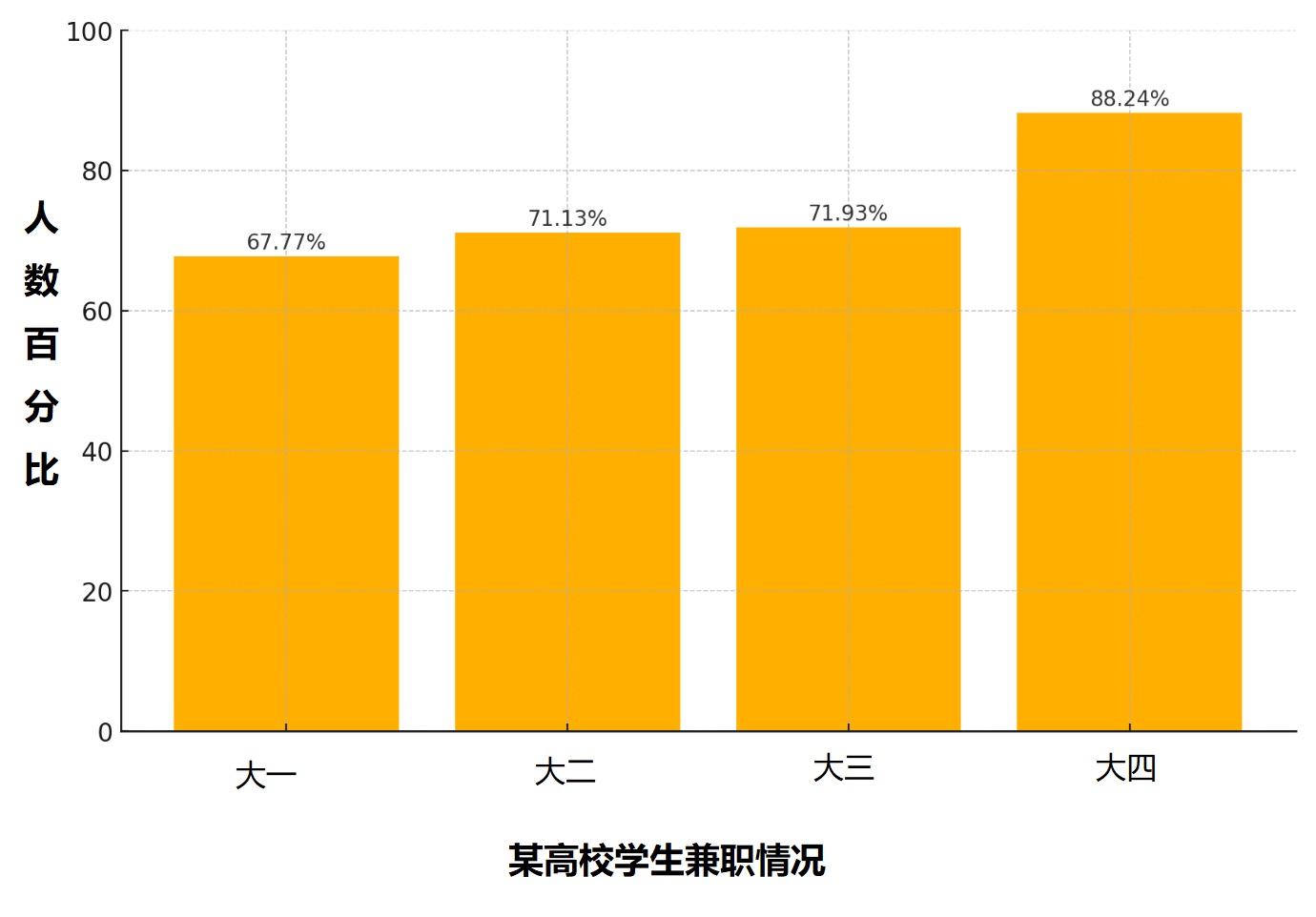
Write an essay based on the following chart. In your writing, you should
1)interpret the chart, and
2)give your comments.
You should write about 150 words on the ANSWER SHEET. (15 points)
Write an essay based on the following chart. In your writing, you should
1)interpret the chart, and
2)give your comments.
You should write about 150 words on the ANSWER SHEET. (15 points)
全卷客观题答案速查
考研英语二2013年真题全卷客观题参考答案速查如下表,按卷面顺序逐题型列出;写作、翻译等主观题无标准答案,参考范文与逐题解析见对应题型解析页。
| 题型(卷面位置) | 参考答案 |
|---|---|
| 完形填空(四选一) Section I (1–20 题) | 1 B However · 2 D around · 3 B concept · 4 A reverse · 5 C slow · 6 B against · 7 A expensive · 8 D dominant · 9 C provide · 10 A give up · 11 A before · 12 C withdrawn · 13 B Because · 14 D raise · 15 C stored · 16 D uncommon · 17 A steal · 18 B prevention · 19 D cope with · 20 C trail (逐题解析见 完形填空(四选一)解析页 ) |
| 阅读理解(四选一) Section II Part A (1) (21–25 题) | 21 A · 22 D · 23 B · 24 B · 25 C (逐题解析见 阅读理解(四选一)解析页 ) |
| 阅读理解(四选一) Section II Part A (2) (26–30 题) | 26 A · 27 C · 28 C · 29 B · 30 D (逐题解析见 阅读理解(四选一)解析页 ) |
| 阅读理解(四选一) Section II Part A (3) (31–35 题) | 31 D · 32 A · 33 B · 34 C · 35 B (逐题解析见 阅读理解(四选一)解析页 ) |
| 阅读理解(四选一) Section II Part A (4) (36–40 题) | 36 B · 37 C · 38 A · 39 D · 40 C (逐题解析见 阅读理解(四选一)解析页 ) |
| 段落小标题(7选5) Section II Part B (41–45 题) | 41 F · 42 E · 43 G · 44 C · 45 D (逐题解析见 段落小标题(7选5)解析页 ) |
| 英译汉(段落翻译) Section III | 主观题 · 参考范文与逐题解析见 英译汉(段落翻译)解析页 |
| 写作 Section IV Part A | 主观题 · 参考范文与逐题解析见 写作解析页 |
| 写作 Section IV Part B | 主观题 · 参考范文与逐题解析见 写作解析页 |
全卷构成
- Section I 完形填空(四选一)
- Section II Part A (1) 阅读理解(四选一)
- Section II Part A (2) 阅读理解(四选一)
- Section II Part A (3) 阅读理解(四选一)
- Section II Part A (4) 阅读理解(四选一)
- Section II Part B 段落小标题(7选5)
- Section III 英译汉(段落翻译)
- Section IV Part A 写作
- Section IV Part B 写作
关于考研英语二 2013年 真题(整卷)的常见问题
- 2013年考研英语二真题由哪些题型构成?
- 2013年考研英语二真题分四个部分:Section I 完形填空(四选一)20题、Section II Part A 仔细阅读4篇每篇5题共20题、Section II Part B 段落小标题5题(41-45题)、Section III 英译中翻译1篇、Section IV 写作2篇(小作文+大作文)。全卷客观选择题45道,外加翻译与两篇作文,不设听力。
- 2013年考研英语二真题的阅读文章难度(CEFR)怎么分布?
- 2013年考研英语二的5篇主体文章按CEFR划分为B2三篇、C1两篇。完形填空篇(电子货币)、阅读Text 1(自动化)、Text 4(女性配额)为B2级;移民主题的Text 2与快速决策主题的Text 3为C1级,整体属中高级英语水平。
- 2013年考研英语二真题的阅读文章总词量是多少?
- 2013年考研英语二5篇主体文章合计约1849词。其中完形填空篇353词、阅读Text 1约379词、Text 2约377词、Text 3约381词、Text 4约359词,单篇均在350至380词区间,体量适中。
- 2013年考研英语二完形填空篇章里出现最多的词是哪些?
- 2013年考研英语二完形填空篇(无现金社会主题)中,payment 与 electronic 各出现9次,为最高频实词;means、check、paper、several 各出现4次,money、system、access、concern 等也反复出现,紧扣电子支付与现金的话题。
- 2013年考研英语二仔细阅读和新题型各考多少题、占多少分?
- 2013年考研英语二Section II Part A 仔细阅读共4篇文章(Text 1至Text 4),每篇配5道四选一选择题,合计20题40分;Section II Part B 段落小标题(新题型)为41-45题共5题10分。两部分相加,阅读理解整体占50分。
- 2013年考研英语二完形填空考的是什么主题?
- 2013年考研英语二完形填空(Section I)讲无现金社会(cashless society)为何迟迟未到来。文章先点出电子货币的优势,再从建设计算机与电信网络成本高、纸质支票能提供凭据并带来数日浮存期(float)利息、以及安全与隐私担忧三方面,解释纸质支付系统为何难以消失。
- 2013年考研英语二阅读Text 1和Text 2分别讲了什么?
- 2013年考研英语二阅读Text 1选自《纽约时报》文章 "Average Is Over"(告别平庸),讲全球化与信息技术革命加速用机器和外国劳工取代普通劳动力,以"一个人和一条狗"看守自动化纺织厂的笑话开篇,主旨是平庸已经结束、人人要找到独特价值,最佳标题为 "Average Is Over"。Text 2选自《华盛顿邮报》,谈美国移民政策,批评把移民一刀切分为合法或非法的做法,主张承认在灰色地带打拼的"候鸟移民"(birds of passage)。
- 2013年考研英语二阅读Text 3和Text 4分别围绕什么议题?
- 2013年考研英语二阅读Text 3选自《纽约时报》,主题是快速决策与过激反应,指出人脑会在毫秒间做"快速判断",但评估性格、做消费决定时应稍作停顿,用快餐标志实验和婚姻专家Gottman的"薄切/厚切"信息说明三思能逆转负面影响。Text 4选自Project Syndicate,讨论欧盟拟立法强制公司董事会设女性配额,提到欧洲女性仅占公司董事会职位的14%,作者认为在打破"玻璃天花板"的现实障碍下强制配额是暂时必要之举。
- 2013年考研英语二段落小标题(新题型)讲的是什么内容?
- 2013年考研英语二段落小标题(Section II Part B,41-45题)的文章来自人气博客 Skint Foodie,记录Tony靠每周60英镑生活、用其中40英镑吃好的省钱心得。7个备选小标题包括 "Planning is everything"、"Stick to what you need"、"Waste not, want not"、"Shopkeepers are your friends"、"Remember to treat yourself" 等,需为5个段落各选最合适的一个,另有两个干扰项不用。
- 2013年考研英语二翻译(英译中)考的是什么内容?
- 2013年考研英语二翻译(Section III,15分)是一段关于超强记忆力的第一人称自述:作者能瞬间记起过去53年中任意一天自己身在何处、新闻发生了什么、甚至那天是星期几,自4岁起就有此能力,并谈到强记忆并不会让悲伤情绪更敏锐。原文约116词,长难句不多,难点在"信息被整齐归档""情绪不会更敏锐或鲜活"等表达的准确翻译。
- 2013年考研英语二的大小作文题目分别是什么?
- 2013年考研英语二小作文(Section IV Part A,10分)要求以"李明"名义给同学写一封约100词的电子邮件,告知班级为需要帮助的孩子举办慈善义卖(charity sale)的细节并鼓励大家参加;大作文(Part B,15分)是图表作文,要求根据图表描述某大学学生兼职情况并发表评论,约150词。
- 2013年考研英语二的四篇阅读文章都选自哪些外刊?
- 2013年考研英语二四篇仔细阅读均选自英美主流外刊:Text 1出自《纽约时报》"Average Is Over"(告别平庸)、Text 2出自《华盛顿邮报》(移民合法或非法议题)、Text 3出自《纽约时报》(拒绝快速决策)、Text 4出自Project Syndicate(女性董事配额);段落小标题文章源自英国博客 Skint Foodie,完形填空篇为电子货币与无现金社会主题。
- 2013年考研英语二难不难?
- 2013年考研英语二整体难度中等偏下,机构普遍评价当年阅读难度比2012年略低。5篇文章CEFR为B2三篇、C1两篇;翻译是约116词的记忆力主题短文、长难句不多;大作文是较易把握的图表(学生兼职)作文。话题集中在就业、移民、性别平等、消费决策等社会议题,词汇与逻辑较为常规。
- 2013年考研英语二真题的答案、参考译文和作文范文在哪里看?
- 2013年考研英语二官方不公布标准答案,网传答案均为各考研机构的参考版本,个别完形或阅读选项不同机构可能有出入。在懒笔记整卷页可查看2013考研英语二的试卷排版、完形与四篇阅读原文、段落小标题与翻译原文及逐题解析;翻译参考译文与作文范文建议对照多家机构版本综合参考,不宜以单一来源为准。
- 2013年考研英语二真题原文和PDF/Word在哪里查看或下载?
- 2013年考研英语二真题原文可在懒笔记整卷页直接在线阅读:完形填空篇、Text 1至Text 4阅读全文、段落小标题与英译中翻译原文均有干净排版,并配题干、选项与精读解析;试卷排版页另提供整卷的可下载版本,方便打印练习与对答案。
- 2013年考研英语二真题里哪几篇文章最值得精读?
- 2013年考研英语二最值得精读的是两篇C1级文章:移民主题的Text 2(《华盛顿邮报》,birds of passage 候鸟移民、长难句多)和快速决策主题的Text 3(《纽约时报》,snap decision、thin slice 等抽象表达)。完形填空篇(电子支付)适合积累经济金融词汇,翻译的记忆力短文则适合练习地道断句与意译。