
考研英语二 2023年 · 真题整卷
按真题原卷顺序的全部题型,逐题型可进试卷排版、题目解析、原文精读;整卷可免费下载电子版(真题 PDF、解析版 PDF 与 Word)。
整卷试卷排版
考研英语二 · 英语二真题 · 2023年
考研英语二2023年真题
Directions:
Read the following text. Choose the best word(s) for each numbered blank and mark A, B, C or D on the ANSWER SHEET. (10 points)
Read the following text. Choose the best word(s) for each numbered blank and mark A, B, C or D on the ANSWER SHEET. (10 points)
Here's a common scenario that any number of entrepreneurs face today: you're the CEO of a small business, and though you're making a nice 1 , you need to find a way to take it to the next level. What you need to do is 2 growth by establishing a growth team. A growth team is made up of members from different departments within your company, and it harnesses the power of collaboration to focus 3 on finding ways to grow.
Let's look at a real-world 4 . Prior to forming a growth team, the software company BitTorrent had 50 employees working in the 5 departments of engineering, marketing and product development. This brought them good results until 2012, when their growth plateaued. The 6 was that too many customers were using the basic, free version of their product. And 7 improvements to the premium, paid version, few people were making the upgrade.
Things changed, 8 , when an innovative project-marketing manager came aboard, 9 a growth team and sparked the kind of 10 perspective they needed. By looking at engineering issues from a marketing point of view, it became clear that the 11 of upgrades wasn't due to a quality issue. Most customers were simply unaware of the premium version and what it offered.
Armed with this 12 , the marketing and engineering teams joined forces to raise awareness by prominently 13 the premium version to users of the free version. 14 , upgrades skyrocketed, and revenue increased by 92 percent.
But in order for your growth team to succeed, it needs to have a strong leader. It needs someone who can 15 the interdisciplinary team and keep them on course for improvement. This leader will 16 the target area, set clear goals and establish a time frame for the 17 of these goals.
The growth leader is also 18 for keeping the team focused on moving forward and steering them clear of distractions. 19 attractive, new ideas can be distracting; the team leader must recognize when these ideas don't 20 the current goal and need to be put on the back burner.
1.
[ A ]purchase
[ B ]profit
[ C ]connection
[ D ]bet
2.
[ A ]define
[ B ]predict
[ C ]prioritize
[ D ]appreciate
3.
[ A ]exclusively
[ B ]temporarily
[ C ]potentially
[ D ]initially
4.
[ A ]experiment
[ B ]proposal
[ C ]debate
[ D ]example
5.
[ A ]identical
[ B ]marginal
[ C ]provisional
[ D ]traditional
6.
[ A ]rumor
[ B ]secret
[ C ]myth
[ D ]problem
7.
[ A ]despite
[ B ]unlike
[ C ]through
[ D ]besides
8.
[ A ]moreover
[ B ]however
[ C ]therefore
[ D ]again
9.
[ A ]inspected
[ B ]created
[ C ]expanded
[ D ]reformed
10.
[ A ]cultural
[ B ]objective
[ C ]fresh
[ D ]personal
11.
[ A ]end
[ B ]burden
[ C ]lack
[ D ]decrease
12.
[ A ]policy
[ B ]suggestion
[ C ]purpose
[ D ]insight
13.
[ A ]contributing
[ B ]allocating
[ C ]promoting
[ D ]transferring
14.
[ A ]As a result
[ B ]At any rate
[ C ]By the way
[ D ]In a sense
15.
[ A ]unite
[ B ]finance
[ C ]follow
[ D ]choose
16.
[ A ]share
[ B ]identify
[ C ]divide
[ D ]broaden
17.
[ A ]announcement
[ B ]assessment
[ C ]adjustment
[ D ]accomplishment
18.
[ A ]famous
[ B ]responsible
[ C ]available
[ D ]respectable
19.
[ A ]Before
[ B ]Once
[ C ]While
[ D ]Unless
20.
[ A ]serve
[ B ]limit
[ C ]summarize
[ D ]alter
考研英语二2023年真题
Directions:
Read the following four texts. Answer the questions after each text by choosing A, B, C or D. Mark your answers on the ANSWER SHEET. (40 points)
Read the following four texts. Answer the questions after each text by choosing A, B, C or D. Mark your answers on the ANSWER SHEET. (40 points)
Text 1
In the quest for the perfect lawn, homeowners across the country are taking a shortcut—and it is the environment that is paying the price. About eight million square metres of plastic grass is sold each year but opposition has now spread to the highest gardening circles. The Chelsea Flower Show has banned fake grass from this year's event, declaring it to be not part of its ethos. The Royal Horticultural Society (RHS), which runs the annual show in west London, says it has introduced the ban because of the damage plastic grass does to the environment and biodiversity.
Ed Home, of the RHS, said: "We launched our sustainability strategy last year and fake grass is just not in line with our ethos and views on plastic. We recommend using real grass because of its environmental benefits, which include supporting wildlife, alleviating flooding and cooling the environment."
The RHS's decision comes as campaigners try to raise awareness of the problems fake grass causes. A Twitter account, which claims to "cut through the greenwash" of artificial grass, already has more than 20,000 followers. It is trying to encourage people to sign two petitions, one calling for a ban on the sale of plastic grass and another calling for an "ecological damage" tax on such lawns. They have gathered 7,276 and 11,282 signatures.
However, supporters of fake grass point out that there is also an environmental impact with natural lawns, which need mowing and therefore usually consume electricity or petrol. The industry also points out that real grass requires considerable amounts of water, weed killer or other treatments and that people who lay fake grass tend to use their garden more. The industry also claims that people who lay fake grass spend an average of £500 on trees or shrubs for their garden, which provides habitat for insects.
In response to another petition last year about banning fake lawns, which gathered 30,000 signatures, the government responded that it has "no plans to ban the use of artificial grass".
It added: "We prefer to help people and organisations make the right choice rather than legislating on such matters. However, the use of artificial grass must comply with the legal and policy safeguards in place to protect biodiversity and ensure sustainable drainage, while measures such as the strengthened biodiversity duty should serve to encourage public authorities to consider sustainable alternatives."
21.
The RHS thinks that plastic grass_____.
[ A ]is harmful to the environment
[ B ]is a hot topic in gardening circles
[ C ]is overpraised in the annual show
[ D ]is ruining the view of west London
22.
The petitions mentioned in Paragraph 3 reveal the campaigners'_____.
[ A ]disappointment with the RHS
[ B ]resistance to fake grass use
[ C ]anger over the proposed tax
[ D ]concern about real grass supply
23.
In Paragraph 4, supporters of fake grass point out_____.
[ A ]the necessity to lower the costs of fake grass
[ B ]the disadvantages of growing real grass
[ C ]the way to take care of artificial lawns
[ D ]the challenges of insect habitat protection
24.
What would the government do with regard to artificial grass?
[ A ]Urge legislation to restrict its use.
[ B ]Take measures to guarantee its quality.
[ C ]Remind its users to obey existing rules.
[ D ]Replace it with sustainable alternatives.
25.
It can be learned from the text that fake grass_____.
[ A ]is being improved continuously
[ B ]has seen a market share decline
[ C ]is becoming increasingly affordable
[ D ]has been a controversial product
Text 2
It's easy to dismiss as absurd the federal government's ideas for plugging the chronic funding gap of our national parks. Can anyone really think it's a good idea to allow Amazon deliveries to your tent in Yosemite or food trucks to line up under the redwood trees at Sequoia National Park?
But the government is right about one thing: U.S. national parks are in crisis. Collectively, they have a maintenance backlog of more than $12 billion. Roads, trails, restrooms, visitor centers and other infrastructure are crumbling.
But privatizing and commercializing the campgrounds would not be a cure-all. Campgrounds are a tiny portion of the overall infrastructure backlog, and businesses in the parks hand over, on average, only about 5% of their revenues to the National Park Service.
Moreover, increased privatization would certainly undercut one of the major reasons why 300 million visitors come to the parks each year: to enjoy nature and get a break from the commercial drumbeat that overwhelms daily life.
The real problem is that the parks have been chronically starved of funding. An economic survey of 700 U.S. taxpayers found that people would be willing to pay a significant amount of money to make sure the parks and their programs are kept intact. Some 81% of respondents said they would be willing to pay additional taxes for the next 10 years to avoid any cuts to the national parks.
The national parks provide great value to U.S. residents both as places to escape and as symbols of nature. On top of this, they produce value from their extensive educational programs, their positive impact on the climate through carbon sequestration, their contribution to our cultural and artistic life, and of course through tourism. The parks also help keep America's past alive, working with thousands of local jurisdictions around the country to protect historical sites and to bring the stories of these places to life.
The parks do all this on a shoestring. Congress allocates only $3 billion a year to the national park system—an amount that has been flat since 2001 (in inflation-adjusted dollars) with the exception of a onetime boost in 2009. Meanwhile, the number of annual visitors has increased by more than 50% since 1980, and now stands at 330 million visitors per year.
26.
What problem are U.S. national parks faced with?
[ A ]Decline of business profits.
[ B ]Inadequate commercialization.
[ C ]Lack of transportation services.
[ D ]Poorly maintained infrastructure.
27.
Increased privatization of the campgrounds may_____.
[ A ]spoil visitor experience
[ B ]help preserve nature
[ C ]bring operational pressure
[ D ]boost visits to parks
28.
According to Paragraph 5, most respondents in the survey would_____.
[ A ]go to the national parks on a regular basis
[ B ]advocate a bigger budget for the national parks
[ C ]agree to pay extra for the national parks
[ D ]support the national parks' recent reforms
29.
The national parks are valuable in that they_____.
[ A ]lead the way in tourism
[ B ]have historical significance
[ C ]sponsor research on climate
[ D ]provide an income for the locals
30.
It can be concluded from the text that the national park system _____.
[ A ]is able to cope with staff shortages
[ B ]is able to meet visitors' demands
[ C ]is in need of a new pricing policy
[ D ]is in need of a funding increase
Text 3
The Internet may be changing merely what we remember, not our capacity to do so, suggests Columbia University psychology professor Betsy Sparrow. In 2011, Sparrow led a study in which participants were asked to record 40 factoids in a computer ("an ostrich's eye is bigger than its brain," for example). Half of the participants were told the information would be erased, while the other half were told it would be saved. Guess what? The latter group made no effort to recall the information when quizzed on it later, because they knew they could find it on their computers. In the same study, a group was asked to remember both the information and the folders it was stored in. They didn't remember the information, but they remembered how to find the folders. In other words, human memory is not deteriorating but "adapting to new communications technology," Sparrow says.
In a very practical way, the Internet is becoming an external hard drive for our memories, a process known as "cognitive offloading." Traditionally, this role was fulfilled by data banks, libraries, and other humans. Your father may never remember birthdays because your mother does, for instance. Some worry that this is having a destructive effect on society, but Sparrow sees an upside. Perhaps, she suggests, the trend will change our approach to learning from a focus on individual facts and memorization to an emphasis on more conceptual thinking—something that is not available on the Internet. "I personally have never seen all that much intellectual value in memorizing things," Sparrow says, adding that we haven't lost our ability to do it.
Still other experts say it's too soon to understand how the Internet affects our brains. There is no experimental evidence showing that it interferes with our ability to focus, for instance, wrote psychologists Christopher Chabris and Daniel J. Simons. And surfing the web exercised the brain more than reading did among computer-savvy older adults in a 2008 study involving 24 participants at the Semel Institute for Neuroscience and Human Behavior at the University of California, Los Angeles.
"There may be costs associated with our increased reliance on the Internet, but I'd have to imagine that overall the benefits are going to outweigh those costs," observes psychology professor Benjamin Storm. "It seems pretty clear that memory is changing, but is it changing for the better? At this point, we don't know."
31.
Sparrow's study shows that with the Internet, the human brain will_____.
[ A ]analyze information in detail
[ B ]collect information efficiently
[ C ]switch its focus of memory
[ D ]extend its memory duration
32.
The process of "cognitive offloading" _____.
[ A ]helps us identify false information
[ B ]keeps our memory from failing
[ C ]enables us to classify trivial facts
[ D ]lessens our memory burdens
33.
Which of the following would Sparrow support about the Internet?
[ A ]It may reform our learning approach.
[ B ]It may impact our society negatively.
[ C ]It may enhance our adaptability to technology.
[ D ]It may interfere with our conceptual thinking.
34.
It is indicated in Paragraph 3 that how the Internet affects our brains_____.
[ A ]requires further academic research
[ B ]is most studied in older adults
[ C ]is reflected in our reading speed
[ D ]depends on our web-surfing habits
35.
Neither Sparrow nor Storm would agree that_____.
[ A ]our reliance on the Internet will be costly
[ B ]the Internet is weakening our memory
[ C ]memory exercise is a must for our brains
[ D ]our ability to focus declines with age
Text 4
Teenagers are paradoxical. That's a mild and detached way of saying something that parents often express with considerably stronger language. But the paradox is scientific as well as personal. In adolescence, helpless and dependent children who have relied on grown-ups for just about everything become independent people who can take care of themselves and help each other. At the same time, once cheerful and compliant children become rebellious teenage risk-takers.
A new study published in the journal Child Development, by Eveline Crone of the University of Leiden and colleagues, suggests that the positive and negative sides of teenagers go hand in hand. The study is part of a new wave of thinking about adolescence. For a long time, scientists and policy makers concentrated on the idea that teenagers were a problem that needed to be solved. The new work emphasizes that adolescence is a time of opportunity as well as risk.
The researchers studied "prosocial" and rebellious traits in more than 200 children and young adults, ranging from 11 to 28 years old. The participants filled out questionnaires about how often they did things that were altruistic and positive, like sacrificing their own interests to help a friend, or rebellious and negative, like getting drunk or staying out late.
Other studies have shown that rebellious behavior increases as you become a teenager and then fades away as you grow older. But the new study shows that, interestingly, the same pattern holds for prosocial behavior. Teenagers were more likely than younger children or adults to report that they did things like unselfishly helping a friend.
Most significantly, there was a positive correlation between prosociality and rebelliousness. The teenagers who were more rebellious were also more likely to help others. The good and bad sides of adolescence seem to develop together.
Is there some common factor that underlies these apparently contradictory developments? One idea is that teenage behavior is related to what researchers call "reward sensitivity." Decision-making always involves balancing rewards and risks, benefits and costs. "Reward sensitivity" measures how much reward it takes to outweigh risk.
Teenagers are particularly sensitive to social rewards—winning the game, impressing a new friend, getting that boy to notice you. Reward sensitivity, like prosocial behavior and risk-taking, seems to go up in adolescence and then down again as we age. Somehow, when you hit 30, the chance that something exciting and new will happen at that party just doesn't seem to outweigh the effort of getting up off the couch.
36.
According to Paragraph 1, children growing into adolescence tend to_____.
[ A ]develop opposite personality traits
[ B ]see the world in an unreasonable way
[ C ]have fond memories of their past
[ D ]show affection for their parents
37.
It can be learned from Paragraph 2 that Crone's study_____.
[ A ]explores teenagers' social responsibilities
[ B ]examines teenagers' emotional problems
[ C ]provides a new insight into adolescence
[ D ]highlights negative adolescent behavior
38.
What does Crone's study find about prosocial behavior?
[ A ]It results from the wish to cooperate.
[ B ]It is cultivated through education.
[ C ]It is subject to family influence.
[ D ]It tends to peak in adolescence.
39.
It can be learned from the last two paragraphs that teenagers_____.
[ A ]overstress their influence on others
[ B ]care a lot about social recognition
[ C ]become anxious about their future
[ D ]endeavor to live a joyful life
40.
What is the text mainly about?
[ A ]Why teenagers are self-contradictory.
[ B ]Why teenagers are risk-sensitive.
[ C ]How teenagers develop prosociality.
[ D ]How teenagers become independent.
Directions:
Read the following text and match each of the numbered items in the left column to its corresponding information in the right column. There are two extra choices in the right column. Mark your answers on the ANSWER SHEET. (10 points)
Read the following text and match each of the numbered items in the left column to its corresponding information in the right column. There are two extra choices in the right column. Mark your answers on the ANSWER SHEET. (10 points)
Net-Zero Rules Set to Send Cost of New Homes and Extensions Soaring
New building regulations aimed at improving energy efficiency are set to increase the price of new homes, as well as those of extensions and loft conversions on existing ones.
The rules, which came into effect on Wednesday in England, are part of government plans to reduce the UK's carbon emissions to net zero by 2050. They set new standards for ventilation, energy efficiency and heating, and state that new residential buildings must have charging points for electric vehicles.
The moves are the most significant change to building regulations in years, and industry experts say they will inevitably lead to higher prices at a time when a shortage of materials and high labour costs are already driving up bills.
Brian Berry, chief executive of the Federation of Master Builders, says the measures will require new materials, testing methods, products and systems to be installed. "All this comes at an increased cost during a time when prices are already sky high. Inevitably, consumers will have to pay more," he says.
Gareth Belsham, of surveyors Naismiths, says people who are upgrading, or extending their home, will be directly affected. "The biggest changes relate to heating and insulation," he explains. "There are new rules concerning the amount of glazing used in extensions, and any new windows or doors must be highly insulated."
Windows and doors will have to adhere to higher standards, while there are new limits on the amount of glazing you can have to reduce unwanted heat from the sun.
Thomas Goodman, of MyJobQuote, says this will bring in new restrictions for extensions. "Glazing on windows, doors and roof lights must cover no more than 25% of the floor area to prevent heat loss," he says.
As the rules came into effect last Wednesday, property developers were rushing to file plans just before the deadline. Any plans submitted before that date are considered to be under the previous rules, and can go ahead as long as work starts before 15 June next year.
Builders which have costed projects, but have not filed the paperwork, may need to go back and submit fresh estimates, says Marcus Jefford of Build Aviator.
Materials prices are already up 25% in the last two years. How much overall prices will increase as a result of the rule changes is not clear. "Whilst admirable in their intentions, they will add to the cost of housebuilding at a time when many already feel that they are priced out of homeownership," says Jonathan Rolande of the National Association of Property Buyers. "An average extension will probably see around £3,000 additional cost thanks to the new regs."
John Kelly, a construction lawyer at Freeths law firm, believes prices will eventually come down. But not in the immediate future. "As the marketplace adapts to the new requirements, and the technologies that support them, the scaling up of these technologies will eventually bring costs down, but in the short term, we will all have to pay the price of the necessary transition," he says.
However, the long-term effects of the changes will be more comfortable and energy-efficient homes, adds Andrew Mellor, of PRP architects. "Homeowners will probably recoup that cost over time in energy bill savings. It will obviously be very volatile at the moment, but they will have that benefit over time."
[ A ] The rise of home prices is a temporary matter. | |
41. Brian Berry | [ B ] Builders possibly need to submit new estimates of their projects. |
42. Gareth Belsham | [ C ] There will be specific limits on home extensions to prevent heat loss. |
43. Marcus Jefford | [ D ] The new rules will take home prices to an even higher level. |
44. John Kelly | [ E ] Many people feel that home prices are already beyond what they can afford. |
45. Andrew Mellor | [ F ] The new rules will affect people whose home extensions include new windows or doors. |
[ G ] The rule changes will benefit homeowners eventually. |
考研英语二2023年真题
46.
Directions:
Translate the following text into Chinese. Write your translation on the ANSWER SHEET. (15 points)
Translate the following text into Chinese. Write your translation on the ANSWER SHEET. (15 points)
In the late 18th century, William Wordsworth became famous for his poems about nature. And he was one of the founders of a movement called Romanticism, which celebrated the wonders of the natural world.
Poetry is powerful. Its energy and rhythm can capture a reader, transport them to another world and make them see things differently. Through carefully selected words and phrases, poems can be dramatic, funny, beautiful, moving and inspiring.
No one knows for sure when poetry began but it has been around for thousands of years, even before people could write. It was a way to tell stories and pass down history. It is closely related to song and even when written it is usually created to be performed out loud. Poems really come to life when they are recited. This can also help with understanding them too, because the rhythm and sounds of the words become clearer.
考研英语二2023年真题
47.
Directions:
An art exhibition and a robot show are to be held on Sunday, and your friend David asks you which one he should go to. Write him an email to
1) make a suggestion, and
2) give your reason(s).
Write your answer in about 100 words on the ANSWER SHEET.
Do not use your own name in your email, use “Li Ming" instead. (10 points)
An art exhibition and a robot show are to be held on Sunday, and your friend David asks you which one he should go to. Write him an email to
1) make a suggestion, and
2) give your reason(s).
Write your answer in about 100 words on the ANSWER SHEET.
Do not use your own name in your email, use “Li Ming" instead. (10 points)
48.
Directions:
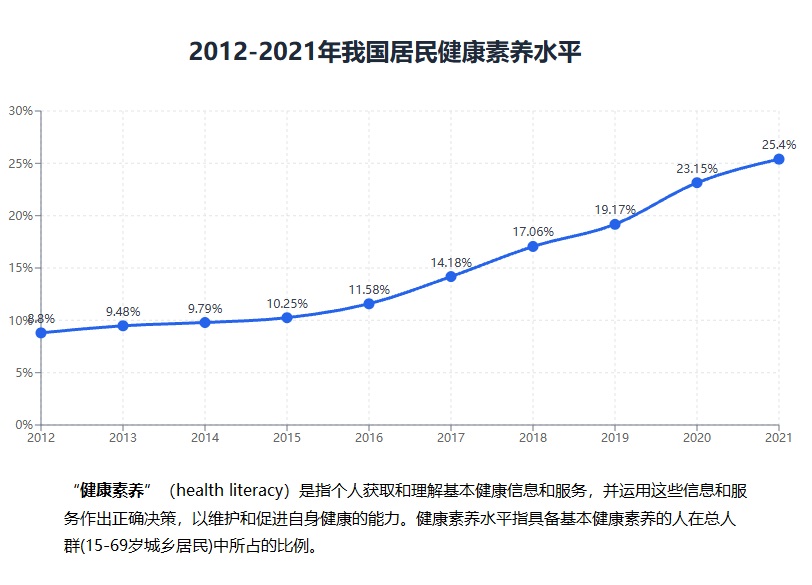
Write an essay based on the chart below. In your essay, you should
1) describe and interpret the chart, and
2) give your comments.
Write your answer in about 150 words on the ANSWER SHEET. (15 points)
Write an essay based on the chart below. In your essay, you should
1) describe and interpret the chart, and
2) give your comments.
Write your answer in about 150 words on the ANSWER SHEET. (15 points)
全卷客观题答案速查
考研英语二2023年真题全卷客观题参考答案速查如下表,按卷面顺序逐题型列出;写作、翻译等主观题无标准答案,参考范文与逐题解析见对应题型解析页。
| 题型(卷面位置) | 参考答案 |
|---|---|
| 完形填空(四选一) Section I (1–20 题) | 1 B profit · 2 C prioritize · 3 A exclusively · 4 D example · 5 D traditional · 6 D problem · 7 A despite · 8 B however · 9 B created · 10 C fresh · 11 C lack · 12 D insight · 13 C promoting · 14 A As a result · 15 A unite · 16 B identify · 17 D accomplishment · 18 B responsible · 19 C While · 20 A serve (逐题解析见 完形填空(四选一)解析页 ) |
| 阅读理解(四选一) Section II Part A (1) (21–25 题) | 21 A · 22 B · 23 B · 24 C · 25 D (逐题解析见 阅读理解(四选一)解析页 ) |
| 阅读理解(四选一) Section II Part A (2) (26–30 题) | 26 D · 27 A · 28 C · 29 B · 30 D (逐题解析见 阅读理解(四选一)解析页 ) |
| 阅读理解(四选一) Section II Part A (3) (31–35 题) | 31 C · 32 D · 33 A · 34 A · 35 B (逐题解析见 阅读理解(四选一)解析页 ) |
| 阅读理解(四选一) Section II Part A (4) (36–40 题) | 36 A · 37 C · 38 D · 39 B · 40 A (逐题解析见 阅读理解(四选一)解析页 ) |
| 多项对应(信息匹配) Section II Part B (41–45 题) | 41 D · 42 F · 43 B · 44 A · 45 G (逐题解析见 多项对应(信息匹配)解析页 ) |
| 英译汉(段落翻译) Section III | 主观题 · 参考范文与逐题解析见 英译汉(段落翻译)解析页 |
| 写作 Section IV Part A | 主观题 · 参考范文与逐题解析见 写作解析页 |
| 写作 Section IV Part B | 主观题 · 参考范文与逐题解析见 写作解析页 |
全卷构成
- Section I 完形填空(四选一)
- Section II Part A (1) 阅读理解(四选一)
- Section II Part A (2) 阅读理解(四选一)
- Section II Part A (3) 阅读理解(四选一)
- Section II Part A (4) 阅读理解(四选一)
- Section II Part B 多项对应(信息匹配)
- Section III 英译汉(段落翻译)
- Section IV Part A 写作
- Section IV Part B 写作
关于考研英语二 2023年 真题(整卷)的常见问题
- 2023年考研英语二真题由哪些题型构成?
- 2023年考研英语二真题由五大板块构成:完形填空(四选一)1篇20题、仔细阅读(四选一)4篇共20题、多项对应(信息匹配)1篇5题、英译中翻译1篇、写作2篇(一封约100词的电子邮件小作文 + 一篇约150词的图表大作文)。全卷含45道编号客观题,阅读理解部分对应试卷的 Section I 与 Section II。
- 2023年考研英语二真题阅读材料的难度(CEFR)分布如何?
- 2023年考研英语二全卷6篇阅读材料按 CEFR 分布为:B2 共4篇、C1 共1篇、B1 共1篇。最难的 C1 是讲美国国家公园资金危机的 Text 2;最易的 B1 是英译中翻译所用的诗歌主题短文;完形填空与 Text 1、Text 3、Text 4 均为 B2。整体属考研英语二常见的中等偏上区间,无超纲难篇。
- 2023年考研英语二真题的阅读文章总词量是多少?
- 2023年考研英语二全卷6篇阅读材料合计约2086词。其中完形填空篇约351词、Text 1(人造草坪)约395词、Text 2(国家公园)约379词、Text 3(互联网与记忆)约397词、Text 4(青少年悖论)约414词、翻译短文(诗歌)约150词。单篇仔细阅读普遍在380至415词区间。
- 2023年考研英语二完形填空篇里哪些单词出现得最频繁?
- 2023年考研英语二完形填空篇(讲增长团队的商业短文)中,出现频率最高的实义词是 team(9次)、growth(8次)、version(5次)、leader(4次),其次是 make、goal、clear、premium、upgrade、marketing、engineering(各约3次)。这些高频词直接反映文章主线——组建跨部门「增长团队」推动公司业务升级。
- 2023年考研英语二仔细阅读和多项对应各有几道题、占多少分?
- 2023年考研英语二的 Section II Part A 仔细阅读为4篇文章、每篇5题、共20题,每题2分合计40分;Part B 多项对应(信息匹配)为1篇文章、5题,共10分。完形填空20题占10分、英译中翻译占15分、两篇写作分别占10分和15分,全卷满分100分。
- 2023年考研英语二翻译考的是什么内容?
- 2023年考研英语二英译中翻译(Section III)考的是一篇关于「诗歌的力量」的科普短文,约150词。开篇以18世纪末因自然题材诗歌成名、并作为浪漫主义(Romanticism)运动创始人之一的英国诗人威廉·华兹华斯(William Wordsworth)引入,随后阐述诗歌的感染力(其能量与节奏能打动读者、带其进入另一个世界),以及诗歌起源久远、与歌唱相关、适合朗诵的本质。
- 2023年考研英语二完形填空讲的是什么主题?
- 2023年考研英语二完形填空(Section I)是一篇商业管理短文,主题是「增长团队」(growth team)。文章先提出小企业CEO如何把业务推向新台阶,给出答案是组建由跨部门成员构成的增长团队;再以软件公司 BitTorrent 为例,说明其2012年增长停滞后靠营销视角发现免费版用户不知道付费高级版,经推广使升级量激增、营收增长92%;最后强调增长团队需要强有力的领导者来统一团队、设定目标并排除干扰。
- 2023年考研英语二四篇仔细阅读(Text 1至Text 4)分别讲什么?
- 2023年考研英语二四篇仔细阅读主题各不相同:Text 1 讲人造草坪(塑料草)因破坏环境与生物多样性而引发争议,切尔西花展(Chelsea Flower Show)将其禁用;Text 2 讲美国国家公园因长期资金不足陷入维护积压超120亿美元的危机,批驳联邦政府私有化露营地的方案;Text 3 讲互联网时代「认知卸载」改变的是人脑记忆的内容而非能力;Text 4 讲青少年的叛逆性与亲社会性相伴而生,根源在于较高的「奖励敏感性」。
- 2023年考研英语二多项对应(信息匹配)那篇文章讲的是什么?
- 2023年考研英语二多项对应题(Section II Part B)的文章标题是《Net-Zero Rules Set to Send Cost of New Homes and Extensions Soaring》,主题是英国新出台的、旨在2050年实现碳净零排放的建筑节能法规将推高新房及加建/阁楼改造的成本。文章引述多位行业人士(Brian Berry、Gareth Belsham、Marcus Jefford、John Kelly、Andrew Mellor 等)的观点:新规对供暖与隔热、玻璃用量、电动车充电桩等提出更高标准,短期内必然抬高造价,但长远能让房屋更节能、业主可在能源账单上回本。
- 2023年考研英语二大作文考的是什么图表?
- 2023年考研英语二大作文(Section IV Part B)是一篇约150词的图表作文,要求描述并解读所给图表、再给出评论。据广泛流传的真题版本,该图表是一张反映中国居民健康素养水平(2011至2021年)逐年上升的折线图。写作可按「描述上升趋势—分析原因(经济基础、政府投入、个人意识、媒体宣传等)—点明健康重要性」三段展开。
- 2023年考研英语二小作文要求写什么?
- 2023年考研英语二小作文(Section IV Part A)要求写一封约100词的电子邮件:朋友 David 询问周日该去看艺术展(art exhibition)还是机器人展(robot show),你需在邮件中给出建议并说明理由。题目明确要求落款用「Li Ming」、不得使用考生本人姓名,属典型的建议类应用文写作。
- 2023年考研英语二整体难度怎么样?
- 2023年考研英语二整体被普遍评价为中等、对多数考生较友好。六篇阅读材料中仅 Text 2(美国国家公园)达 C1,其余完形、Text 1/3/4 与翻译均为 B2 或 B1,无生僻超纲长篇;翻译与作文题材(诗歌、艺术展与机器人展、健康素养图表)贴近日常、不偏门。难点主要落在 Text 2 的论证逻辑与多项对应的信息定位上。
- 2023年考研英语二翻译难不难、好拿分吗?
- 2023年考研英语二翻译(约150词、占15分)被广泛认为偏简单、性价比高。短文主题是诗歌的力量,CEFR 仅 B1,除开篇人名 William Wordsworth(威廉·华兹华斯)和 Romanticism(浪漫主义)需准确译出外,句子结构简单、几乎无复杂从句或生词,是全卷较容易稳拿分的板块。建议把人名、专有名词译准并保持中文通顺即可。
- 2023年考研英语二真题的答案、解析和参考译文在哪里能看到?
- 2023年考研英语二为完形20题、仔细阅读20题、多项对应5题的客观选择 + 英译中翻译 + 两篇写作的题型结构。需提醒的是:考研英语官方不公布标准答案,网传各题选项(如第21题选某项)均为各培训机构的参考答案,存在分歧、不能视为官方定论。在懒笔记整卷页可查看试卷原文排版、各题题干与选项全文、阅读原文精读、翻译原文逐句,以及题目解析,参考译文同样以机构版本呈现。
- 2023年考研英语二阅读里哪篇文章最难、考生反映最棘手?
- 2023年考研英语二阅读中难度最高的是 Text 2,讲美国国家公园的资金危机,CEFR 达 C1,是全卷唯一的 C1 篇。该文涉及联邦政府拨款、私有化露营地、维护积压超120亿美元、81%受访纳税人愿加税等数据与论证,逻辑层次多、观点立场需细辨,是失分高发篇。相比之下,讲诗歌的翻译短文(B1)和讲增长团队的完形(B2)明显更易处理。