
2004年考研英语(2010 前)写作(大作文) · 题目、范文与解析
本页是 2004年考研英语(2010 前)真题 写作 的写作真题页(图表 / 漫画大作文)—— 与试卷排版同一卷面:完整写作要求(Directions,词数要求 约 200 词) 与真题配图(附中文图意) 连续排印 ,卷面下方直接给出参考范文(211 词)与整篇中译、逐段拆解,另附审题立意、谋篇句架与评分自检 。
写作题和范文
本页写作题面、参考范文与逐段解析由懒笔记基于2004年 考研英语(2010 前)写作原卷整理。与试卷排版同一卷面:完整写作要求(Directions,含主题、文体、词数与署名约束)、真题配图连续排印。写作是生产性任务、无 ABCD 标准答案——题面即整道题;卷面下方直接给出满足全部硬约束的参考范文、整篇中译与逐段拆解。
Study the following drawing carefully and write an essay in which you should
1. describe the drawing,
2. interpret its meaning, and
3. support your view with examples.
You should write about 200 words neatly on ANSWER SHEET 2 (20 points)
【参考范文 · 211 词】写作无唯一标准答案,以下为达标示范
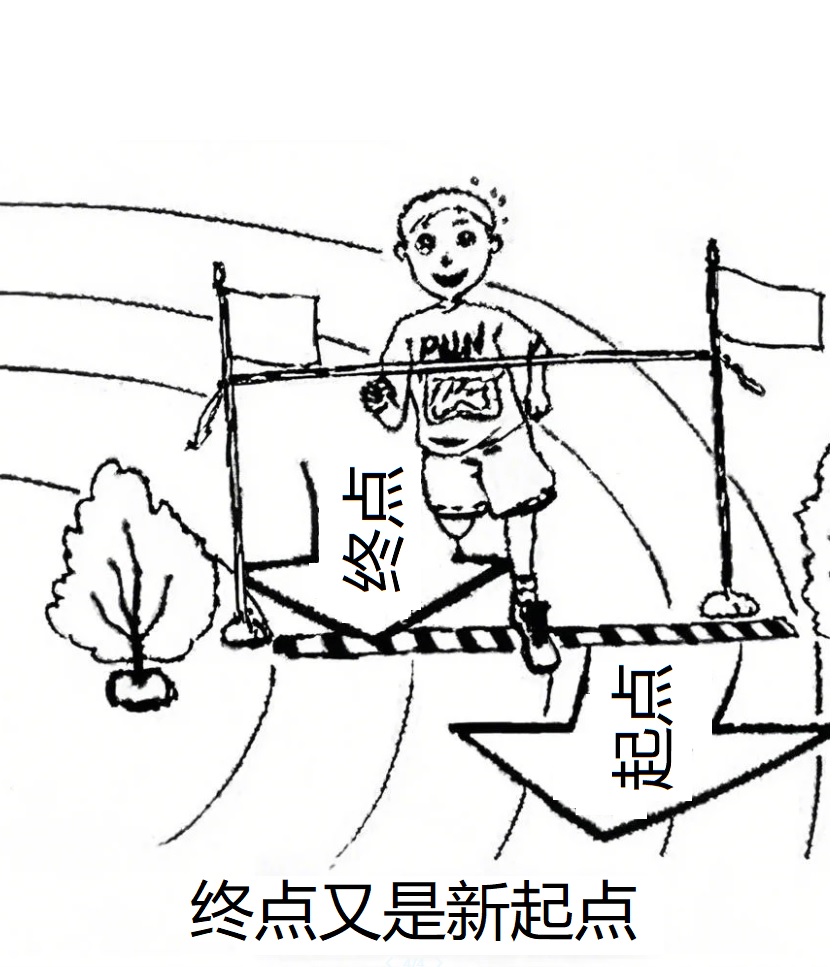
As is vividly depicted in the cartoon, a boy in a T-shirt printed with the word "RUN" is crossing a finish line. Behind him stands an arrow marked "finish", while another arrow just ahead of him points into the distance, labeled "start". The title, "The finish line is also a new starting point", captures the scene at a glance.
Simple as the drawing is, it conveys a thought-provoking message about how we should treat success and achievement. The boy has clearly reached a goal, yet the picture reminds us that every ending is merely the beginning of another journey. In other words, no accomplishment should be regarded as a final destination; rather, it ought to serve as a fresh springboard from which we set off toward higher aims.
History offers abundant evidence for this view. Many outstanding athletes, after winning an Olympic gold medal, immediately begin preparing for the next competition instead of resting on their laurels. Likewise, a student who is admitted to a top university soon faces new courses and tougher challenges rather than the end of study. Therefore, we should never be content with what we have gained. Only by treating each finish line as a new start can we keep moving forward and realize our full potential.
【参考译文】
正如漫画生动描绘的,一个穿着印有“RUN”字样T恤的男孩正跨过终点线。他身后立着一个标着“终点”的箭头,而就在他前方,另一个箭头指向远方,写着“起点”。标题“终点又是新起点”一眼道出了画面。
画面虽简单,却传递出一个发人深省的信息,关乎我们该如何看待成功与成就。男孩显然已抵达一个目标,但画面提醒我们:每一个结束不过是另一段旅程的开始。换言之,任何成就都不应被视为最终归宿,而应成为一块新的跳板,让我们由此奔向更高的目标。
历史为这一观点提供了大量佐证。许多杰出的运动员在赢得奥运金牌之后,会立刻投入下一场比赛的备战,而不是躺在功劳簿上。同样,一名考入顶尖大学的学生,随之而来的是新课程与更艰巨的挑战,而非学业的终点。因此,我们绝不该满足于已有的收获。唯有把每一条终点线都当作新的起点,我们才能不断前行,实现自身全部的潜能。
【第 1 段】描图段落实白描。开篇 As is vividly depicted... 引入,逐一写男孩跨线、T恤 RUN 字样、finish 与 start 两个反向箭头,纯客观描述、不掺评论,落实了 describe the drawing。
【第 2 段】主题句立寓意。Simple as the drawing is, it conveys... 一句主题句把“终点即新起点”亮出,再用 In other words 递进解释为什么,落实了 interpret its meaning。
【第 3 段】两例支撑并收束。用奥运冠军夺金后备战下一场、学生升入名校两个例子支撑观点,末句 Only by... 收尾呼应寓意,落实了 support your view with examples。
这道题到底要写什么、立意是什么
动笔前先钉死本题的核心写作任务与读者语域、读懂配图 ,再定中心立意与要展开的要点 —— 这些是本题特有的内容判断,不是通用套路。
三步走:描图—释义—举例
本题要写一篇图画评论:先客观 describe the drawing,再 interpret its meaning,最后 support your view with examples。三件事对应三段,而全篇的中心寓意已被标题 终点又是新起点 钉死——到达终点即是新起点。
写给阅卷人的正式议论文
本题无具体收信人,是看图大作文,面向阅卷人使用正式书面语即可:不用第二人称套近乎、不用缩写和口语,多用完整从句与书面连接词;无需写称呼、也无需署名。
跨终点线的男孩+两个反向箭头
可写素材:一个穿着印有“RUN”字样T恤的男孩正在跨过终点线。真正的点睛在两个方向相反的箭头——终点线的后面有一个写着“终点”的箭头指向终点,而 终点线的前面有一个写着“起点”的箭头指向远方。标题 终点又是新起点 已把寓意直接点破。
终点是新征程的起点
中心论点:任何成就都不该被当成终点,而应成为迈向更高目标的新起点,正如标题 终点又是新起点 所示。
- 先客观描述画面三要素 第一段落点:男孩跨过终点线、身后指“终点”的箭头、身前指向远方的“起点”箭头,即 终点线的前面有一个写着“起点”的箭头指向远方,据实白描、不作评论。
- 释义:成功即新征程 第二段核心:由画面引申出道理——每一次抵达都只是下一段旅程的开端,不应躺在功劳簿上。这是阅卷得分眼,必须有一句主题句立住。
- 举例支撑并收束 第三段用运动员夺冠后备战下一场、学生升入名校后面对新挑战等具体例子支撑观点,结尾呼应“把每个终点当作新起点”。
怎么分段、每段写什么、能套哪些句架
按写作家族给出现成的段落框架(每段承担什么功能),并为每段配可直接套用的 功能句架(留出填本题内容的空位)。段序与上方参考范文一一对应。
- 第 1 段 描述画面 客观白描漫画:男孩跨终点线与两个方向相反的箭头,对应 describe the drawing。
- 第 2 段 阐释寓意 由画面引申出中心论点——终点即新起点,对应 interpret its meaning。
- 第 3 段 举例+结论 用具体例子支撑观点并收束,对应 support your view with examples。
落点:印有 RUN 的男孩正跨过终点线,身后箭头指“终点”、身前箭头指向远方的“起点”,即 终点线的后面有一个写着“终点”的箭头指向终点 与前方起点箭头的对照。
- 引入画面 As is vividly depicted in the cartoon, __(画面主体在做什么).
- 补充对比细节 Behind him __, while ahead of him __(另一要素,形成对比).
- 标题点题 The title, __, captures the scene at a glance.
落点:男孩虽已抵达一个目标,但画面提醒我们每个结束都是另一段旅程的开始;任何成就都应是通向更高目标的跳板,而非最终归宿。
- 亮明寓意 Simple as the drawing is, it conveys a thought-provoking message about __.
- 递进解释 In other words, __ should not be regarded as __; rather, it __.
落点:奥运冠军夺金后立即备战下一场、而非躺在功劳簿上;学生考入名校后随之面对更难的课程;据此得出“永不满足于已得、把每个终点当作新起点”的结论。
- 引出例证 History offers abundant evidence for this view: __(第一个例子).
- 并列举第二例 Likewise, __ also __(第二个例子,同一逻辑).
- 收束呼吁 Therefore, only by __ can we __(回扣中心的建议).
本题在四个评分维度怎样算达标、容易在哪丢分
按阅卷四维(内容切题 / 结构连贯 / 语言准确 / 字数格式)给出本题达标要点,并把最容易踩的低分写法摆出来 + 给改法 —— 这是写作版的「狠拆诱人错项」。
- 内容切题 三任务缺一即失分 本题必须同时做到 describe the drawing、interpret its meaning 和 support your view with examples,其中最易被漏掉的是第二层释义。
- 结构连贯 三段对应三任务 描述、寓意、举例各自独立成段,切忌三任务混在一段,那样阅卷人难以辨认要点、结构分会被扣。
- 语言准确 描述现在时+书面连接 描图宜用一般现在时(is crossing, points),避免中式逐字直译,例如别把“指向远方”硬译成 point to far,应写 points into the distance。
- 字数格式 约两百词分三段 本题要求 write about 200 words,且须分三段、卷面整洁,字数明显偏离或不分段都会失分。
- 只写画面无寓意 反面示例:There is a boy crossing the finish line. There are two arrows near him. One says finish and the other says start. That is the whole picture. 全是描述、无一句道理。改法:补上主题句——The cartoon reminds us that every finish line is in fact a new starting point.
- 臆造观众与表情 反面示例:The exhausted boy smiles happily at the cheering crowd standing around the track. 画面里并没有观众和表情。改法:只写据实内容——A boy in a RUN T-shirt is crossing the finish line, with two arrows pointing in opposite directions.
- 万能开头堆砌 反面示例:With the rapid development of society, this picture is very meaningful and gives us a lot of deep thinking. 空洞无信息。改法:直接进入具体寓意——The drawing conveys a simple yet profound truth about how we should treat success.
常见问题
围绕本题的写作题目与要求、作文类型、配图说明、立意要点、参考范文、谋篇分段与评分丢分,逐条给出可核对的答案。
- 2004年考研英语(2010 前)真题 写作的写作题目是什么?要求写多少字?
- 2004年考研英语(2010 前)真题 写作(Section III)的写作要求为:Study the following drawing carefully and write an essay in which you should 1. describe the drawing, 2. interpret its meaning, and 3. support your view with examples. You should write about 200 words neatly on ANSWER SHEET 2 (20 points) 本题要求约 200 词。
- 2004年考研英语(2010 前)真题 写作属于哪种类型的作文、有什么格式要求?
- 2004年考研英语(2010 前)真题 写作 是考研大作文(图表描述 / 漫画评论,先读图再评论)。写作要求约 200 词。题目配有一幅漫画,动笔前需先读懂漫画意再展开。
- 2004年考研英语(2010 前)真题 写作的漫画画的是什么、说明了什么?
- 2004年考研英语(2010 前)真题 写作的漫画内容为:这是一幅黑白漫画,标题是“终点又是新起点”。画面中,一个穿着印有“RUN”字样T恤的男孩正在跨过终点线,终点线的后面有一个写着“终点”的箭头指向终点,终点线的前面有一个写着“起点”的箭头指向远方。 就本题而言,可写素材:一个穿着印有“RUN”字样T恤的男孩正在跨过终点线。真正的点睛在两个方向相反的箭头——终点线的后面有一个写着“终点”的箭头指向终点,而 终点线的前面有一个写着“起点”的箭头指向远方。标题 终点又是新起点 已把寓意直接点破。
- 2004年考研英语(2010 前)真题 写作(三步走:描图—释义—举例)应该怎么立意、写哪几个要点?
- 2004年考研英语(2010 前)真题 写作的中心立意是中心论点:任何成就都不该被当成终点,而应成为迈向更高目标的新起点,正如标题 终点又是新起点 所示。可展开的要点:第一段落点:男孩跨过终点线、身后指“终点”的箭头、身前指向远方的“起点”箭头,即 终点线的前面有一个写着“起点”的箭头指向远方,据实白描、不作评论;第二段核心:由画面引申出道理——每一次抵达都只是下一段旅程的开端,不应躺在功劳簿上。这是阅卷得分眼,必须有一句主题句立住;第三段用运动员夺冠后备战下一场、学生升入名校后面对新挑战等具体例子支撑观点,结尾呼应“把每个终点当作新起点”。
- 2004年考研英语(2010 前)真题 写作(三步走:描图—释义—举例)的参考范文是怎样的?多少词?
- 2004年考研英语(2010 前)真题 写作的参考范文(211 词):As is vividly depicted in the cartoon, a boy in a T-shirt printed with the word "RUN" is crossing a finish line. Behind him stands an arrow marked "finish", while another arrow just ahead of him points into the distance, labeled "start". The title, "The finish line is also a new starting point", captures the scene at a glance. Simple as the drawing is, it conveys a thought-provoking message about how we should treat success and achievement. The boy has clearly reached a goal, yet the picture reminds us that every ending is merely the beginning of another journey. In other words, no accomplishment should be regarded as a final destination; rather, it ought to serve as a fresh springboard from which we set off toward higher aims. History offers abundant evidence for this view. Many outstanding athletes, after winning an Olympic gold medal, immediately begin preparing for the next competition instead of resting on their laurels. Likewise, a student who is admitted to a top university soon faces new courses and tougher challenges rather than the end of study. Therefore, we should never be content with what we have gained. Only by treating each finish line as a new start can we keep moving forward and realize our full potential.
- 2004年考研英语(2010 前)真题 写作(三步走:描图—释义—举例)这篇作文怎么分段、每段写什么?
- 2004年考研英语(2010 前)真题 写作的参考范文共 3 段:第 1 段(描述画面)客观白描漫画:男孩跨终点线与两个方向相反的箭头,对应 describe the drawing;第 2 段(阐释寓意)由画面引申出中心论点——终点即新起点,对应 interpret its meaning;第 3 段(举例+结论)用具体例子支撑观点并收束,对应 support your view with examples。
- 2004年考研英语(2010 前)真题 写作(三步走:描图—释义—举例)作文容易在哪丢分?
- 按内容切题 / 结构连贯 / 语言准确 / 字数格式四维评分,本题达标要点:内容切题——本题必须同时做到 describe the drawing、interpret its meaning 和 support your view with examples,其中最易被漏掉的是第二层释义;结构连贯——描述、寓意、举例各自独立成段,切忌三任务混在一段,那样阅卷人难以辨认要点、结构分会被扣;语言准确——描图宜用一般现在时(is crossing, points),避免中式逐字直译,例如别把“指向远方”硬译成 point to far,应写 points into the distance;字数格式——本题要求 write about 200 words,且须分三段、卷面整洁,字数明显偏离或不分段都会失分。 典型低分写法(须避免):反面示例:There is a boy crossing the finish line. There are two arrows near him. One says finish and the other says start. That is the whole picture. 全是描述、无一句道理。改法:补上主题句——The cartoon reminds us that every finish line is in fact a new starting point;反面示例:The exhausted boy smiles happily at the cheering crowd standing around the track. 画面里并没有观众和表情。改法:只写据实内容——A boy in a RUN T-shirt is crossing the finish line, with two arrows pointing in opposite directions;反面示例:With the rapid development of society, this picture is very meaningful and gives us a lot of deep thinking. 空洞无信息。改法:直接进入具体寓意——The drawing conveys a simple yet profound truth about how we should treat success。