
考研英语二 2021年 · 真题整卷
按真题原卷顺序的全部题型,逐题型可进试卷排版、题目解析、原文精读;整卷可免费下载电子版(真题 PDF、解析版 PDF 与 Word)。
整卷试卷排版
考研英语二 · 英语二真题 · 2021年
考研英语二2021年真题
Directions:
Read the following text. Choose the best word(s) for each numbered blank and mark A, B, C or D on the ANSWER SHEET. (10 points)
Read the following text. Choose the best word(s) for each numbered blank and mark A, B, C or D on the ANSWER SHEET. (10 points)
It's not difficult to set targets for staff. It is much harder, 1 , to understand their negative consequences. Most work-related behaviors have multiple components. 2 one and the others become distorted.
Travel on a London bus and you'll 3 see how this works with drivers. Watch people get on and show their tickets. Are they carefully inspected? Never. Do people get on without paying? Of course! Are there inspectors to 4 that people have paid? Possibly, but very few. And people who run for the bus? They are 5 . How about jumping lights? Buses do so almost as frequently as cyclists.
Why? Because the target is 6 . People complained that buses were late and infrequent. 7 , the number of buses and bus lanes was increased, and drivers were 8 or punished according to the time they took. And drivers hit these targets. But they 9 hit cyclists. If the target was changed to 10 , you would have more inspectors and more sensitive pricing. If the criterion changed to safety, you would get more 11 drivers who obeyed traffic laws. But both these criteria would be at the expense of time.
There is another 12 : people became immensely inventive in hitting targets. Have you 13 that you can leave on a flight an hour late but still arrive on time? Tailwinds? Of course not! Airlines have simply changed the time a 14 is meant to take. A one-hour flight is now billed as a two-hour flight.
The 15 of the story is simple. Most jobs are multidimensional, with multiple criteria. Choose one criterion and you may well 16 others. Everything can be done faster and made cheaper, but there is a 17 . Setting targets can and does have unforeseen negative consequences.
This is not an argument against target-setting. But it is an argument for exploring consequences first. All good targets should have multiple criteria 18 critical factors such as time, money, quality and customer feedback. The trick is not only to 19 just one or even two dimensions of the objective, but also to understand how to help people better 20 the objective.
1.
[ A ]therefore
[ B ]however
[ C ]again
[ D ]moreover
2.
[ A ]Emphasize
[ B ]Identify
[ C ]Assess
[ D ]Explain
3.
[ A ]nearly
[ B ]curiously
[ C ]eagerly
[ D ]quickly
4.
[ A ]claim
[ B ]prove
[ C ]check
[ D ]recall
5.
[ A ]threatened
[ B ]ignored
[ C ]mocked
[ D ]blamed
6.
[ A ]punctuality
[ B ]hospitality
[ C ]competition
[ D ]innovation
7.
[ A ]Yet
[ B ]So
[ C ]Besides
[ D ]Still
8.
[ A ]hired
[ B ]trained
[ C ]rewarded
[ D ]grouped
9.
[ A ]only
[ B ]rather
[ C ]once
[ D ]also
10.
[ A ]comfort
[ B ]revenue
[ C ]efficiency
[ D ]security
11.
[ A ]friendly
[ B ]quiet
[ C ]cautious
[ D ]diligent
12.
[ A ]purpose
[ B ]problem
[ C ]prejudice
[ D ]policy
13.
[ A ]reported
[ B ]revealed
[ C ]admitted
[ D ]noticed
14.
[ A ]break
[ B ]trip
[ C ]departure
[ D ]transfer
15.
[ A ]moral
[ B ]background
[ C ]style
[ D ]form
16.
[ A ]interpret
[ B ]criticize
[ C ]sacrifice
[ D ]tolerate
17.
[ A ]task
[ B ]secret
[ C ]product
[ D ]cost
18.
[ A ]leading to
[ B ]calling for
[ C ]relating to
[ D ]accounting for
19.
[ A ]specify
[ B ]predict
[ C ]restore
[ D ]create
20.
[ A ]modify
[ B ]review
[ C ]present
[ D ]achieve
考研英语二2021年真题
Directions:
Read the following four texts. Answer the questions after each text by choosing A, B, C or D. Mark your answers on the ANSWER SHEET. (40 points)
Read the following four texts. Answer the questions after each text by choosing A, B, C or D. Mark your answers on the ANSWER SHEET. (40 points)
Text 1
"Reskilling" is something that sounds like a buzzword but is actually a requirement if we plan to have a future where a lot of would-be workers do not get left behind. We know we are moving into a period where the jobs in demand will change rapidly, as will the requirements of the jobs that remain. Research by the World Economic Forum finds that on average 42 per cent of the "core skills" within job roles will change by 2022. That is a very short timeline.
The question of who should pay for reskilling is a thorny one. For individual companies, the temptation is always to let go of workers whose skills are no longer in demand and replace them with those whose skills are. That does not always happen. AT&T is often given as the gold standard of a company who decided to do a massive reskilling program rather than go with a fire-and-hire strategy. Other companies including Amazon and Disney had also pledged to create their own plans. When the skills mismatch is in the broader economy though, the focus usually turns to government to handle. Efforts in Canada and elsewhere have been arguably languid at best, and have given us a situation where we frequently hear of employers begging for workers, even at times and in regions where unemployment is high.
With the pandemic, unemployment is very high indeed. In February, at 3.5 per cent and 5.5 per cent respectively, unemployment rates in Canada and the United States were at generational lows and worker shortages were everywhere. As of May, those rates had spiked up to 13.3 per cent and 13.7 per cent, and although many worker shortages had disappeared, not all had done so. In the medical field, to take an obvious example, the pandemic meant that there were still clear shortages of doctors, nurses and other medical personnel.
Of course, it is not like you can take an unemployed waiter and train him to be a doctor in a few weeks, no matter who pays for it. But even if you cannot close that gap, maybe you can close others, and doing so would be to the benefit of all concerned. That seems to be the case in Sweden: When forced to furlough 90 per cent of their cabin staff, Scandinavian Airlines decided to start up a short retraining program that reskilled the laid-off workers to support hospital staff. The effort was a collective one and involved other companies as well as a Swedish university.
21.
Research by the World Economic Forum suggests____.
[ A ]an increase in full-time employment
[ B ]an urgent demand for new job skills
[ C ]a steady growth of job opportunities
[ D ]a controversy about the "core skills"
22.
AT&T is cited to show____.
[ A ]an alternative to the fire-and-hire strategy
[ B ]an immediate need for government support
[ C ]the importance of staff appraisal standards
[ D ]the characteristics of reskilling programs
23.
Efforts to resolve the skills mismatch in Canada____.
[ A ]have driven up labour costs
[ B ]have proved to be inconsistent
[ C ]have met with fierce opposition
[ D ]have appeared to be insufficient
24.
We can learn from Paragraph 3 that there was____.
[ A ]a call for policy adjustment
[ B ]a change in hiring practices
[ C ]a lack of medical workers
[ D ]a sign of economic recovery
25.
Scandinavian Airlines decided to____.
[ A ]create job vacancies for the unemployed
[ B ]prepare their laid-off workers for other jobs
[ C ]retrain their cabin staff for better services
[ D ]finance their staff's college education
Text 2
With the global population predicted to hit close to 10 billion by 2050, and forecasts that agricultural production in some regions will need to nearly double to keep pace, food security is increasingly making headlines. In the UK, it has become a big talking point recently too, for a rather particular reason: Brexit.
Brexit is seen by some as an opportunity to reverse a recent trend towards the UK importing food. The country produces only about 60 per cent of the food it eats, down from almost three-quarters in the late 1980s. A move back to self-sufficiency, the argument goes, would boost the farming industry, political sovereignty and even the nation's health. Sounds great—but how feasible is this vision?
According to a report on UK food production from the University of Leeds, UK, 85 per cent of the country's total land area is associated with meat and dairy production. That supplies 80 per cent of what is consumed, so even covering the whole country in livestock farms wouldn't allow us to cover all our meat and dairy needs.
There are many caveats to those figures, but they are still grave. To become much more self-sufficient, the UK would need to drastically reduce its consumption of animal foods, and probably also farm more intensively—meaning fewer green fields and more factory-style production.
But switching to a mainly plant-based diet wouldn't help. There is a good reason why the UK is dominated by animal husbandry: most of its terrain doesn't have the right soil or climate to grow crops on a commercial basis. Just 25 per cent of the country's land is suitable for crop-growing, most of which is already occupied by arable fields. Even if we converted all the suitable land to fields of fruit and veg—which would involve taking out all the nature reserves and removing thousands of people from their homes—we would achieve only a 30 per cent boost in crop production.
Just 23 per cent of the fruit and vegetables consumed in the UK are currently home-grown, so even with the most extreme measures we could meet only 30 per cent of our fresh produce needs. That is before we look for the space to grow the grains, sugars, seeds and oils that provide us with the vast bulk of our current calorie intake.
26.
Some people argue that food self-sufficiency in the UK would____.
[ A ]be hindered by its population growth
[ B ]contribute to the nation's well-being
[ C ]become a priority of the government
[ D ]pose a challenge to its farming industry
27.
The report by the University of Leeds shows that in the UK____.
[ A ]farmland has been inefficiently utilized
[ B ]factory-style production needs reforming
[ C ]most land is used for meat and dairy production
[ D ]more green fields will be converted for farming
28.
Crop-growing in the UK is restricted due to____.
[ A ]its farming technology
[ B ]its dietary tradition
[ C ]its natural conditions
[ D ]its commercial interests
29.
It can be learned from the last paragraph that British people____.
[ A ]rely largely on imports for fresh produce
[ B ]enjoy a steady rise in fruit consumption
[ C ]are seeking effective ways to cut calorie intake
[ D ]are trying to grow new varieties of grains
30.
The author's attitude to food self-sufficiency in the UK is____.
[ A ]defensive
[ B ]doubtful
[ C ]tolerant
[ D ]optimistic
Text 3
When Microsoft bought task management app Wunderlist and mobile calendar Sunrise in 2015, it picked two newcomers that were attracting considerable buzz in Silicon Valley. Microsoft's own Office dominates the market for "productivity" software, but the start-ups represented a new wave of technology designed from the ground up for the smartphone world.
Both apps, however, were later scrapped, after Microsoft said it had used their best features in its own products. Their teams of engineers stayed on, making them two of the many "acqui-hires" that the biggest companies have used to feed their great hunger for tech talent.
To Microsoft's critics, the fates of Wunderlist and Sunrise are examples of a remorseless drive by Big Tech to chew up any innovative companies that lie in their path. "They bought the seedlings and closed them down," complained Paul Arnold, a partner at San Francisco-based Switch Ventures, putting an end to businesses that might one day turn into competitors. Microsoft declined to comment.
Like other start-up investors, Mr. Arnold's own business often depends on selling start-ups to larger tech companies, though he admits to mixed feelings about the result: "I think these things are good for me, if I put my selfish hat on. But are they good for the American economy? I don't know."
The US Federal Trade Commission says it wants to find the answer to that question. This week, it asked the five most valuable US tech companies for information about their many small acquisitions over the past decade. Although only a research project at this stage, the request has raised the prospect of regulators wading into early-stage tech markets that until now have been beyond their reach.
Given their combined market value of more than $5.5 trillion, rifling through such small deals—many of them much less prominent than Wunderlist and Sunrise—might seem beside the point. Between them, the five biggest tech companies have spent an average of only $3.4 billion a year on sub-$1 billion acquisitions over the past five years—a drop in the ocean compared with their massive financial reserves, and the more than $130 billion of venture capital that was invested in the US last year.
However, critics say the big companies use such deals to buy their most threatening potential competitors before their businesses have a chance to gain momentum, in some cases as part of a "buy and kill" tactic to simply close them down.
31.
What is true about Wunderlist and Sunrise after their acquisitions?
[ A ]Their engineers were retained.
[ B ]Their market values declined.
[ C ]Their tech features improved.
[ D ]Their products were re-priced.
32.
Microsoft's critics believe that the big tech companies tend to____.
[ A ]exaggerate their product quality
[ B ]eliminate their potential competitors
[ C ]treat new tech talent unfairly
[ D ]ignore public opinions
33.
Paul Arnold is concerned that small acquisitions might____.
[ A ]weaken big tech companies
[ B ]worsen market competition
[ C ]harm the national economy
[ D ]discourage start-up investors
34.
The US Federal Trade Commission intends to____.
[ A ]limit Big Tech's expansion
[ B ]encourage research collaboration
[ C ]examine small acquisitions
[ D ]supervise start-ups' operation
35.
For the five biggest tech companies, their small acquisitions have____.
[ A ]brought little financial pressure
[ B ]raised few management challenges
[ C ]set an example for future deals
[ D ]generated considerable profits
Text 4
We're fairly good at judging people based on first impressions, thin slices of experience ranging from a glimpse of a photo to five-minute interaction, and deliberation can be not only extraneous but intrusive. In one study of the ability she called "thin slicing," the late psychologist Nalini Ambady asked participants to watch silent 10-second video clips of professors and to rate the instructor's overall effectiveness. Their ratings correlated strongly with students' end-of-semester ratings. Another set of participants had to count backward from 1,000 by nines as they watched the clips, occupying their conscious working memory. Their ratings were just as accurate, demonstrating the intuitive nature of the social processing.
Critically, another group was asked to spend a minute writing down reasons for their judgment, before giving the rating. Accuracy dropped dramatically. Ambady suspected that deliberation focused them on vivid but misleading cues, such as certain gestures or utterances, rather than letting the complex interplay of subtle signals form a holistic impression. She found similar interference when participants watched 15-second clips of pairs of people and judged whether they were strangers, friends, or dating partners.
Other research shows we're better at detecting deception from thin slices when we rely on intuition instead of reflection. "It's as if you're driving a stick shift," says Judith Hall, a psychologist at Northeastern University, "and if you start thinking about it too much, you can't remember what you're doing. But if you go on automatic pilot, you're fine. Much of our social life is like that."
Thinking too much can also harm our ability to form preferences. College students' ratings of strawberry jams and college courses aligned better with experts' opinions when the students weren't asked to analyze their rationale. And people made car-buying decisions that were both objectively better and more personally satisfying when asked to focus on their feelings rather than on details, but only if the decision was complex—when they had a lot of information to process.
Intuition's special powers are unleashed only in certain circumstances. In one study, participants completed a battery of eight tasks, including four that tapped reflective thinking (discerning rules, comprehending vocabulary) and four that tapped intuition and creativity (generating new products or figures of speech). Then they rated the degree to which they had used intuition ("gut feelings," "hunches," "my heart"). Use of their gut hurt their performance on the first four tasks, as expected, and helped them on the rest. Sometimes the heart is smarter than the head.
36.
Nalini Ambady's study deals with____.
[ A ]the power of people's memory
[ B ]the reliability of first impressions
[ C ]Instructor-student interaction
[ D ]people's ability to influence others
37.
In Ambady's study, rating accuracy dropped when participants____.
[ A ]focused on specific details
[ B ]gave the rating in limited time
[ C ]watched shorter video clips
[ D ]discussed with one another
38.
Judith Hall mentions driving to show that____.
[ A ]reflection can be distracting
[ B ]memory may be selective
[ C ]social skills must be cultivated
[ D ]deception is difficult to detect
39.
When you are making complex decisions, it is advisable to____.
[ A ]collect enough data
[ B ]list your preferences
[ C ]seek expert advice
[ D ]follow your feelings
40.
What can we learn from the last paragraph?
[ A ]Generating new products takes time.
[ B ]Intuition may affect reflective tasks.
[ C ]Vocabulary comprehension needs creativity.
[ D ]Objective thinking may boost intuitiveness.
Directions:
Read the following text and answer the questions by choosing the most suitable subheading from the list A-G for each of the numbered paragraphs (41-45). There are two extra subheadings which you do not need to use. Mark your answers on the ANSWER SHEET. (10 points)
Read the following text and answer the questions by choosing the most suitable subheading from the list A-G for each of the numbered paragraphs (41-45). There are two extra subheadings which you do not need to use. Mark your answers on the ANSWER SHEET. (10 points)
How to disagree with someone more powerful than you
Your boss proposes a new initiative you think won't work. Your senior colleague outlines a project timeline you believe is unrealistic. What do you say when you disagree with someone who has more power than you do? How do you decide whether it's worth speaking up? And if you do, what exactly should you say? Here's how to disagree with someone more powerful than you.
(41)占位符这是等待完型填空的句子位置
You may decide it's best to hold off on voicing your opinion. Maybe you haven't finished thinking the problem through, or you want to get a clearer sense of what the group thinks. If you think other people are going to disagree, too, you might want to gather your army first. People can contribute experience or information to your thinking—all the things that would make the disagreement stronger or more valid. It's also a good idea to delay the conversation if you are in a meeting or other public space. Discussing the issue in private will make the powerful person feel less threatened.
(42)占位符这是等待完型填空的句子位置
Before you share your thoughts, think about what the powerful person cares about—it may be the credibility of their team or getting a project done on time. You're more likely to be heard if you can connect your disagreement to a higher purpose. When you do speak up, don't assume the link will be clear. You'll want to state it overtly, contextualizing your statements so that you're seen not as a disagreeable subordinate but as a colleague who's trying to advance a common objective. The discussion will then become more like a chess game than a boxing match.
(43)占位符这是等待完型填空的句子位置
This step may sound overly deferential, but it's a smart way to give the powerful person psychological safety and control. You can say something like, "I know we seem to be moving toward a first-quarter commitment here. I have reasons to think that won't work. I'd like to lay out my reasoning. Would that be OK?" This gives the person a choice, allowing him to verbally opt in. And, assuming he says yes, it will make you feel more confident about voicing your disagreement.
(44)占位符这是等待完型填空的句子位置
You might feel your heart racing or your face turning red, but do whatever you can to remain neutral in both your words and actions. When your body language communicates reluctance or anxiety, it undercuts the message. It sends a mixed message, and your counterpart gets to choose what signals to read. Deep breaths can help, as can speaking more slowly and deliberately. When we feel panicky, we tend to talk louder and faster. Simply slowing the pace and talking in an even tone helps the other person cool down and does the same for you. It also makes you seem confident, even if you aren't.
(45)占位符这是等待完型填空的句子位置
Emphasize that you're only offering your opinion, not gospel truth. It may be a well-informed, well-researched opinion, but it's still an opinion, so talk tentatively and slightly understate your confidence. Instead of saying: "If we set an end-of-quarter deadline, we will never make it," say, "This is just my opinion, but I don't see how we will make that deadline." Having asserted your opinion (as a position, not as a fact), demonstrate equal curiosity about other views. Remind the person that this is your point of view, and then invite critique. Be open to hearing other opinions.
[ A ]Stay calm.
[ B ]Stay humble.
[ C ]Decide whether to wait.
[ D ]Be realistic about the risks.
[ E ]Don't make judgements.
[ F ]Identify a shared goal.
[ G ]Ask permission to disagree.
考研英语二2021年真题
46.
Directions:
Translate the following text into Chinese. Write your translation on the ANSWER SHEET. (15 points)
Translate the following text into Chinese. Write your translation on the ANSWER SHEET. (15 points)
We tend to think that friends and family members are our biggest sources of connection, laughter, and warmth. While that may well be true, researchers have also recently found that interacting with strangers actually brings a boost in mood and feelings of belonging that we didn't expect.
In one series of studies, researchers instructed Chicago-area commuters using public transportation to strike up a conversation with someone near them. On average, participants who followed this instruction felt better than those who had been told to stand or sit in silence. The researchers also argued that when we shy away from casual interactions with strangers, it is often due to a misplaced anxiety that they might not want to talk to us. Much of the time, however, this belief is false. As it turns out, many people are actually perfectly willing to talk—and may even be flattered to receive your attention.
考研英语二2021年真题
47.
Directions:
Suppose you are organizing an online meeting. Write an email to Jack, an international student, to
1)invite him to participate, and
2)tell him the details.
You should write about 100 words on the ANSWER SHEET. Do not use your own name. Use “Li Ming” instead.(10 points)
Do not use your own name. Use “Li Ming" instead. (10 points)
Suppose you are organizing an online meeting. Write an email to Jack, an international student, to
1)invite him to participate, and
2)tell him the details.
You should write about 100 words on the ANSWER SHEET. Do not use your own name. Use “Li Ming” instead.(10 points)
Do not use your own name. Use “Li Ming" instead. (10 points)
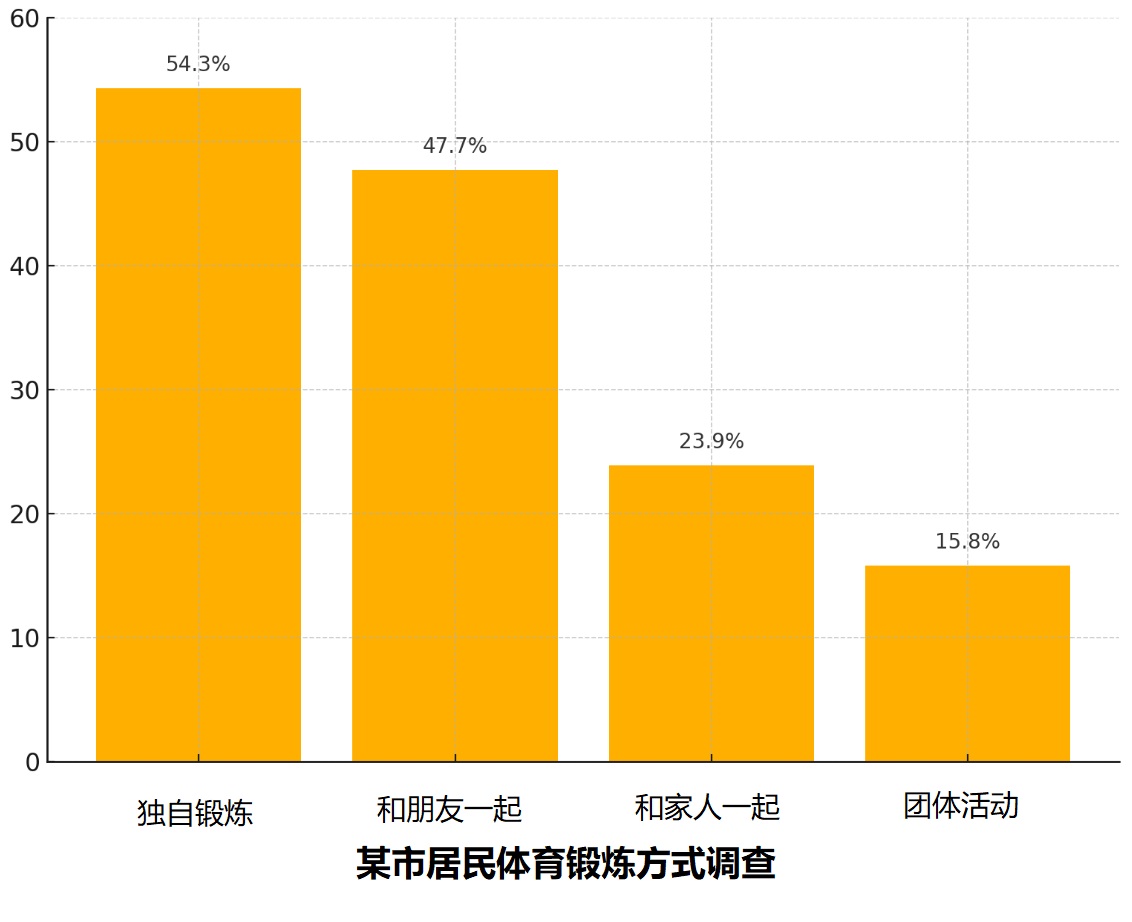
48.
Directions:
Write an essay based on the chart below. In your writing, you should
1)interpret the chart, and
2)give your comments.
You should write about 150 words on the ANSWER SHEET.(15 points)
Write an essay based on the chart below. In your writing, you should
1)interpret the chart, and
2)give your comments.
You should write about 150 words on the ANSWER SHEET.(15 points)
全卷客观题答案速查
考研英语二2021年真题全卷客观题参考答案速查如下表,按卷面顺序逐题型列出;写作、翻译等主观题无标准答案,参考范文与逐题解析见对应题型解析页。
| 题型(卷面位置) | 参考答案 |
|---|---|
| 完形填空(四选一) Section I (1–20 题) | 1 B however · 2 A Emphasize · 3 D quickly · 4 C check · 5 B ignored · 6 A punctuality · 7 B So · 8 C rewarded · 9 D also · 10 B revenue · 11 C cautious · 12 B problem · 13 D noticed · 14 B trip · 15 A moral · 16 C sacrifice · 17 D cost · 18 C relating to · 19 A specify · 20 D achieve (逐题解析见 完形填空(四选一)解析页 ) |
| 阅读理解(四选一) Section II Part A (1) (21–25 题) | 21 B · 22 A · 23 D · 24 C · 25 B (逐题解析见 阅读理解(四选一)解析页 ) |
| 阅读理解(四选一) Section II Part A (2) (26–30 题) | 26 B · 27 C · 28 C · 29 A · 30 B (逐题解析见 阅读理解(四选一)解析页 ) |
| 阅读理解(四选一) Section II Part A (3) (31–35 题) | 31 A · 32 B · 33 C · 34 C · 35 A (逐题解析见 阅读理解(四选一)解析页 ) |
| 阅读理解(四选一) Section II Part A (4) (36–40 题) | 36 B · 37 A · 38 A · 39 D · 40 B (逐题解析见 阅读理解(四选一)解析页 ) |
| 段落小标题(7选5) Section II Part B (41–45 题) | 41 C · 42 F · 43 G · 44 A · 45 B (逐题解析见 段落小标题(7选5)解析页 ) |
| 英译汉(段落翻译) Section III | 主观题 · 参考范文与逐题解析见 英译汉(段落翻译)解析页 |
| 写作 Section IV Part A | 主观题 · 参考范文与逐题解析见 写作解析页 |
| 写作 Section IV Part B | 主观题 · 参考范文与逐题解析见 写作解析页 |
全卷构成
- Section I 完形填空(四选一)
- Section II Part A (1) 阅读理解(四选一)
- Section II Part A (2) 阅读理解(四选一)
- Section II Part A (3) 阅读理解(四选一)
- Section II Part A (4) 阅读理解(四选一)
- Section II Part B 段落小标题(7选5)
- Section III 英译汉(段落翻译)
- Section IV Part A 写作
- Section IV Part B 写作
关于考研英语二 2021年 真题(整卷)的常见问题
- 2021年考研英语二真题由哪几部分组成、各有多少题?
- 2021年考研英语二真题共五个部分、40道客观编号题。Section I 完形填空 20 空(10 分);Section II Part A 仔细阅读 4 篇文章共 20 题(21—40 题,40 分);Section II Part B 段落小标题新题型 5 题(41—45 题,10 分);Section III 英译中翻译 1 篇(15 分);Section IV 写作 2 篇——小作文一封邮件(10 分)与大作文一篇图表作文(15 分),满分 100 分。
- 2021年考研英语二阅读文章一共有多少词、难度分布如何?
- 2021年考研英语二的 5 篇阅读语篇(完形 1 篇 + 仔细阅读 4 篇)合计约 1971 词,按 CEFR 欧标难度划分为 B2 级 3 篇、C1 级 2 篇。具体为:完形填空篇约 353 词(B2)、Text 1 约 420 词(B2)、Text 2 约 385 词(B2)、Text 3 约 401 词(C1)、Text 4 约 412 词(C1)——后两篇科技与心理学题材语篇难度明显偏高。
- 2021年考研英语二完形填空有多少空、高频词是哪些?
- 2021年考研英语二完形填空(Section I)为 20 空、四选一,全篇约 353 词。文中复现最高的实义词是 target(目标,出现 7 次)与 people(7 次),其次是 criterion(标准,5 次)、time(5 次)、driver(司机,4 次)、consequence(后果,3 次)——围绕「设定目标的副作用」反复展开,考点集中在逻辑衔接词与近义动词辨析。
- 2021年考研英语二各题型分值是怎么分配的?
- 2021年考研英语二总分 100 分,分值分配为:完形填空 10 分(20 空,每空 0.5 分)、四篇仔细阅读 40 分(20 题,每题 2 分)、段落小标题新题型 10 分(5 题,每题 2 分)、英译中翻译 15 分、小作文 10 分、大作文 15 分。阅读理解 Part A 的 40 分是单项占比最高的部分。
- 2021年考研英语二完形填空讲的是什么主题?
- 2021年考研英语二完形填空讲的是「设定目标会带来不可预见的负面后果」,选自 Business Spotlight 网站文章《Setting targets can have unforeseen negative consequences》。文章以伦敦公交为例:当把准点率(punctuality)定为唯一目标后,司机为赶时间闯红灯、撞到骑行者;又以航空公司把一小时航程改标为两小时来「准点」为例,说明大多数工作是多维度的,只盯一个标准就会牺牲其他维度,主张设目标前先探究其连带后果。
- 2021年考研英语二阅读 Text 1 讲的是什么内容?
- 2021年考研英语二阅读 Text 1 讨论「技能再培训」(reskilling),选自《环球邮报》(The Globe and Mail)2020 年文章《Is now the time for a reskilling revolution?》。文章指出世界经济论坛预测到 2022 年各岗位平均 42% 的「核心技能」会改变,再培训由谁买单是难题;以 AT&T 的大规模再培训项目对照「先裁后招」策略,并举疫情期间北欧航空(Scandinavian Airlines)让 90% 停薪客舱员工转岗支援医院的例子,说明再培训能有效缓解技能供需错配。
- 2021年考研英语二阅读 Text 2 讲的是什么内容?
- 2021年考研英语二阅读 Text 2 探讨「英国靠脱欧实现粮食自给自足是否可行」,选自《新科学家》(New Scientist)文章《Brexit Ideas of UK Food Self-Sufficiency Are Just Pipe Dreams》。文章用利兹大学报告的数据反驳这一设想:英国 85% 土地用于肉类与乳制品生产却只满足 80% 消费,仅 25% 土地适合种植,即便全部改种果蔬也只能增产 30%;作者态度偏怀疑(doubtful),认为受自然条件所限粮食自足只是空想。
- 2021年考研英语二阅读 Text 3 讲的是什么内容?
- 2021年考研英语二阅读 Text 3 批评大型科技公司的「买了即杀」(buy and kill)并购策略,选自《金融时报》(Financial Times)文章《Big Tech's 'buy and kill' tactics come under scrutiny》。文章以微软 2015 年收购任务管理应用 Wunderlist 和日历应用 Sunrise 后将其关停、只留工程师(acqui-hire)为例,指出科技巨头借小额收购扼杀潜在竞争对手;美国联邦贸易委员会(FTC)已要求五大科技公司提供过去十年小额收购的信息,开始介入调查。
- 2021年考研英语二阅读 Text 4 讲的是什么内容?
- 2021年考研英语二阅读 Text 4 讲「直觉」(intuition)有时比深思更准确,选自《今日心理学》(Psychology Today)文章《8 Truths About Intuition》。文章援引已故心理学家 Nalini Ambady 的「行为薄片撷取」(thin slicing)研究:受试者看 10 秒无声视频给教授评分,结果与学生期末评价高度吻合;一旦让人写下评判理由,准确度骤降。文章还举觉察欺骗、草莓酱与买车偏好等例,说明在复杂或创造性情境下凭直觉往往更可靠。
- 2021年考研英语二新题型(段落小标题)考的是什么文章?
- 2021年考研英语二新题型为段落小标题(Section II Part B),文章题为《How to disagree with someone more powerful than you》(如何与比你更有权力的人意见相左)。要求为 41—45 题这 5 个段落从 A—G 七个小标题中各选最合适的一个、含两个多余选项。七个备选标题为:Stay calm、Stay humble、Decide whether to wait、Be realistic about the risks、Don't make judgements、Identify a shared goal、Ask permission to disagree。
- 2021年考研英语二翻译考的是什么内容?
- 2021年考研英语二翻译(Section III,15 分)要求把一段英文译成中文,主题是「与陌生人交谈会带来意想不到的好心情和归属感」。原文先说人们往往以为亲友才是联系、欢笑与温暖的最大来源,再引研究:让芝加哥地区乘坐公共交通的通勤者主动与身边人攀谈,结果他们的心情比保持沉默的人更好;作者指出人们回避与陌生人闲聊多源于「对方不想搭理我」的错位焦虑,而事实上很多人其实乐意交谈,甚至会因你的关注而感到受用。
- 2021年考研英语二大作文和小作文的题目是什么?
- 2021年考研英语二写作部分为两篇。小作文(Part A,10 分):假设你正在组织一场线上会议,给国际学生 Jack 写一封电子邮件,邀请他参加并告知具体安排,约 100 词,落款统一用「Li Ming」;它考的是邀请类电子邮件。大作文(Part B,15 分):根据所给图表写一篇约 150 词的短文,先描述图表信息再发表评论,属于图表作文。懒笔记整卷页可对照试卷原始排版查看图表与题目要求。
- 2021年考研英语二难不难?
- 2021年考研英语二整体难度中等。客观依据:5 篇阅读语篇按 CEFR 划分为 B2 级 3 篇、C1 级 2 篇,难点集中在 Text 3(科技巨头并购,C1)和 Text 4(心理学直觉研究,C1)这两篇句长、抽象词多的语篇;完形填空围绕「目标设定的副作用」,逻辑衔接与近义辨析为主,整体不偏。翻译题材为日常社交心理,句式平实,是相对容易拿分的部分。懒笔记整卷页按题型拆分原文与解析,可逐篇核对难点。
- 2021年考研英语二真题答案和解析在哪里看?
- 需要说明的是,考研英语官方不公布标准答案,网传答案均为各机构的参考版本,不同机构对个别题目(尤其完形与新题型)存在分歧,应交叉比对。2021年考研英语二共 40 道客观编号题(完形 20 + 阅读 20)外加翻译与两篇写作。懒笔记整卷页与题型详情页提供试卷原始排版、逐题题干还原与原文精读,可据此理解每道题的出处与解题逻辑,而非只背一个答案字母。
- 2021年考研英语二翻译参考译文哪里找?
- 2021年考研英语二翻译为英译中、15 分,原文讲「与陌生人交谈带来好心情与归属感」(含芝加哥通勤者攀谈实验)。需提醒:翻译没有唯一标准译文,各机构参考译文措辞不同,评分看意思是否准确、表达是否通顺。懒笔记听力与翻译详情页提供英文原文逐句呈现,便于自己先译再对照核对译法,比直接抄一份译文更利于备考提分。
- 2021年考研英语二阅读文章原文出处和真题原文在哪看?
- 2021年考研英语二的阅读语篇均来自英文媒体原刊:完形选自 Business Spotlight,Text 1 选自《环球邮报》,Text 2 选自《新科学家》,Text 3 选自《金融时报》,Text 4 选自《今日心理学》,新题型《How to disagree with someone more powerful than you》改编自管理类专栏。懒笔记整卷页与各题型详情页收录了完整英文原文、题干还原与高频词解析,可在线逐篇阅读,无需另找扫描版试卷。