
英语六级 2015年12月·第3套 · 真题整卷
按真题原卷顺序的全部题型,逐题型可进试卷排版、题目解析、原文精读;整卷可免费下载电子版(真题 PDF、解析版 PDF 与 Word)。
整卷试卷排版
六级 · 真题卷第3套 · 2015年12月
英语六级2015年12月·第3套真题
Directions: For this part, you are allowed 30 minutes to write a short essay based on the picture below. You should focus on the difficulty in acquiring useful information in spite of advanced information technology. You are required to write at least 150 words but no more than 200 words.
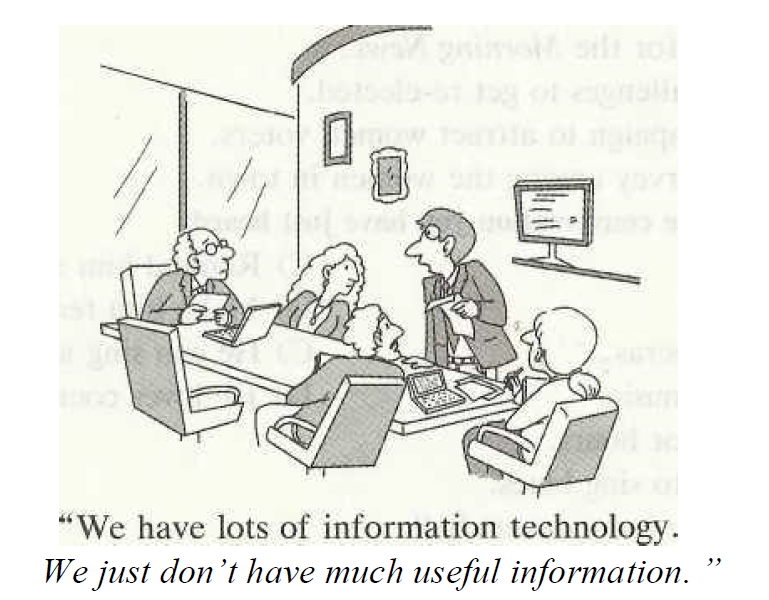
英语六级2015年12月·第3套真题
Directions: In this section, you will hear two long conversations. At the end of each conversation, you will hear four questions. Both the conversation and the questions will be spoken only once. After you hear a question, you must choose the best answer from the four choices marked A), B), C) and D). Then mark the corresponding letter on Answer Sheet 1 with a single line through the centre.
Questions 1 to 4 are based on the conversation you have just heard.
1.
A)To test how responsive dolphins are to various signals.
B)To see if dolphins can learn to communicate with each other.
C)To examine how long it takes dolphins to acquire a skill.
D)To find out if the female dolphin is cleverer than the male one.
2.
A)Raise their heads above the water.
B)Swim straight into the same tank.
C)Press the right-hand lever first.
D)Produce the appropriate sound.
3.
A)Raise their heads above the water.
B)Swim straight into the same tank.
C)Press the right-hand lever first.
D)Produce the appropriate sound.
4.
A)Both the dolphins did a perfect job and were rewarded with fish.
B)The male dolphin failed to press the levers in the correct order.
C)The female dolphin made a mistake when communicating with the male dolphin.
D)Dr. Bastian was surprised to see the dolphins weren't as smart as expected.
Questions 5 to 8 are based on the conversation you have just heard.
5.
A)In a resort town.
B)In a lecture room.
C)On a cattle farm.
D)In a botanical garden.
6.
A)It is an ideal place for people to retire to.
B)It has kept many traditions from Victorian times.
C)It is at the centre of the fashion industry.
D)It remains very attractive with its mineral waters.
7.
A)It is located in the eastern part of Harrogate.
B)It will be used as a centre for athletic training.
C)It was named after a land owner in the old days.
D)It is protected as parkland by a special law.
8.
A)The beautiful flowers.
B)The vast grassland.
C)The refreshing air.
D)The mineral waters.
Directions: In this section, you will hear two passages. At the end of each passage, you will hear three or four questions. Both the passage and the questions will be spoken only once. After you hear a question, you must choose the best answer from the four choices marked A), B), C) and D). Then mark the corresponding letter on Answer Sheet 1 with a single line through the centre.
Questions 9 to 12 are based on the passage you have just heard.
9.
A)He provides counseling for university students.
B)He teaches psychology at Ohio State University.
C)He specializes in interpersonal relationships.
D)He has experience tutoring black students.
10.
A)Students who scored low on standardized tests.
B)Students who are accustomed to living in dorms.
C)Black students from families with low incomes.
D)Black freshmen with high standardized test scores.
11.
A)They generally spent more time together than white pairs.
B)They moved out of the college dorms at the end of the semester.
C)They were more appreciative of the university's housing policy.
D)They broke up more often than same-race roommates.
12.
A)Their test scores rose gradually.
B)They started doing similar activities.
C)They grew bored of each other.
D)Their racial attitudes improved.
Questions 13 to 15 are based on the passage you have just heard.
13.
A)It can help solve global food crises.
B)It will change the concept of food.
C)It has attracted worldwide attention.
D)It will become popular gradually.
14.
A)It will become popular gradually.
B)It comes regularly from its donors.
C)It has been increased over the years.
D)It is still far from being sufficient.
15.
A)They are not as natural as we believed.
B)They are less healthy than we expected.
C)They are more nutritious and delicious.
D)They are not as expensive as before.
Directions: In this section, you will hear three recordings of lectures or talks followed by three or four questions. The recordings will be played only once. After you hear a question, you must choose the best answer from the four choices marked A), B), C) and D). Then mark the corresponding letter on Answer Sheet I with a single line through the centre.
Questions 16 to 18 are based on the recording you have just heard.
16.
A)Exhausting jobs and wasted time.
B)Wrong eating habits and wasted time.
C)Pollution and cognitive decline.
D)Exhausting jobs and wrong eating habits.
17.
A)Adequate sleep.
B)Laugh or smile.
C)Music.
D)Exercise.
18.
A)Massage helps to improve physical function and reduce stress.
B)Massage plays a role in mood-boosting and is good for sleep.
C)Essential oils used in massage help to eliminate various diseases.
D)Essential oils used in massage do good to your memory and thinking.
Questions 19 to 22 are based on the recording you have just heard.
19.
A)They spent more money in promoting their political candidates.
B)They attracted more members and focused on candidates' characters.
C)They had more influence over the selection of political candidates.
D)They received more money from sponsors as campaign funds.
20.
A)It made politics seem more intimate to citizens.
B)It provided detailed information about a candidate's behaviour.
C)It allowed news coverage of political candidates.
D)It placed political issues within a historical context.
21.
A)Politicians dislike explaining their own positions on specific issues to citizens.
B)Politicians make claims without providing arguments for the claims.
C)Politicians enjoy explaining issues and arguing with competitors.
D)Politicians take stronger positions on political issues than in the past.
22.
A)They can obtain more television coverage for themselves.
B)They can create more time to discuss political issues.
C)They can spend more time talking to citizens in person.
D)They can engage in debates with their opponents.
Questions 23 to 25 are based on the recording you have just heard.
23.
A)They are not based on a representative sampling.
B)They are used only on television broadcasting.
C)They are not carefully worded and organized.
D)They reflect political opinions from the public.
24.
A)A large number of respondents taking part in the survey.
B)Carefully worded and understandable questions.
C)An interviewer's ability to understand respondents' feelings.
D)A sociologist who is able to interpret the results.
25.
A)Live interviews cost less money and energy.
B)Live interviews can obtain more information.
C)Live interviews are easier to carry out.
D)Live interviews minimize the influence of the researcher.
英语六级2015年12月·第3套真题
Directions: In this section, there is a passage with ten blanks. You are required to select one word for each blank from a list of choices given in a word bank following the passage. Read the passage through carefully before making your choices. Each choice in the bank is identified by a letter. Please mark the corresponding letter for each item on Answer Sheet 2 with a single line through the centre. You may not use any of the words in the bank more than once.
As it is, sleep is so undervalued that getting by on fewer hours has become a badge of honor. Plus, we live in a culture that 26 to the late-nighter, from 24-hour grocery stores to online shopping sites that never close. It's no surprise, then, that more than half of American adults don't get the 7 to 9 hours of shut-eye every night as 27 by sleep experts.
Whether or not we can catch up on sleep—on the weekend, say—is a hotly 28 topic among sleep researchers. The latest evidence suggests that while it isn't 29 , it might help. When Liu, the UCLA sleep researcher and professor of medicine, brought 30 sleep-restricted people into the lab for a weekend of sleep during which they logged about 10 hours per night, they showed 31 in the ability of insulin(胰岛素) to process blood sugar. That suggests that catch-up sleep may undo some but not all of the damage that sleep 32 causes, which is encouraging given how many adults don't get the hours they need each night. Still, Liu isn't 33 to endorse the habit of sleeping less and making up for it later.
Sleeping pills, while helpful for some, are not 34 an effective remedy either. "A sleeping pill will 35 one area of the brain, but there's never going to be a perfect sleeping pill, because you couldn't really replicate(复制) the different chemicals moving in and out of different parts of the brain to go through the different stages of sleep," says Dr. Nancy Collop, director of the Emory University Sleep Center.
A)alternatively
B)caters
C)chronically
D)debated
E)deprivation
F)ideal
G)improvements
H)necessarily
I)negotiated
J)pierce
K)presumption
L)ready
M)recommended
N)surpasses
O)target
Directions: In this section, you are going to read a passage with ten statements attached to it. Each statement contains information given in one of the paragraphs. Identify the paragraph from which the information is derived. You may choose a paragraph more than once. Each paragraph is marked with a letter. Answer the questions by marking the corresponding letter on Answer Sheet 2.
Climate change may be real, but it's still not easy being green
How do we convince our inner caveman to be greener? We ask some outstanding social scientists.
A)
The road to climate hell is paved with our good intentions. Politicians may tackle polluters while scientists do battle with carbon emissions. But the most pervasive problem is less obvious: our own behaviour. We get distracted before we can turn down the heating. We break our promise not to fly after hearing about a neighbour's trip to India. Ultimately, we can't be bothered to change our attitude. Fortunately for the planet, social science and behavioural economics may be able to do that for us.
B)
Despite mournful polar bears and charts showing carbon emissions soaring, most people find it hard to believe that global warming will affect them personally. Recent polls by the Pew Research Centre in Washington, DC, found that 75-80 percent of participants regarded climate change as an important issue. But respondents ranked it last on a list of priorities.
C)
This inconsistency largely stems from a feeling of powerlessness. "When we can't actually remove the source of our fear, we tend to adapt psychologically by adopting a range of defense mechanisms," says Tom Crompton, change strategist for the environmental organization World Wide Fund for Nature.
D)
Part of the fault lies with our inner caveman. Evolution has programmed humans to pay most attention to issues that will have an immediate impact. "We worry most about now because if we don't survive for the next minute, we're not going to be around in ten years' time," says Professor Elke Weber of the Centre for Research on Environmental Decisions at Columbia University in New York. If the Thames were lapping around Big Ben, Londoners would face up to the problem of emissions pretty quickly. But in practice, our brain discounts the risks—and benefits—associated with issues that lie some way ahead.
E)
Matthew Rush worth, of the Department of Experimental Psychology at the University of Oxford, sees this in his lab every day. "One of the ways in which all agents seem to make decisions is that they assign a lower weighting to outcomes that are going to be further away in the future," he says. "This is a very sensible way for an animal to make decisions in the wild and would have been very helpful for humans for thousands of years."
F)
Not any longer. By the time we wake up to the threat posed by climate change, it could well be too late. And if we're not going to make rational decisions about the future, others may have to help us to do so.
G)
Few political libraries are without a copy of Nudge: Improving Decisions About Health, Wealth and Happiness, by Richard Thaler and Cass Sunstein. They argue that governments should persuade us into making better decisions—such as saving more in our pension plans—by changing the default options. Professor Weber believes that environmental policy can make use of similar tactics. If, for example, building codes included green construction guidelines, most developers would be too lazy to challenge them.
H)
Defaults are certainly part of the solution. But social scientists are most concerned about crafting messages that exploit our group mentality(心态). "We need to understand what motivates people, what it is that allows them to make change," says Professor Neil Adger, of the Tyndall Centre for Climate Change Research in Norwich. "It is actually about what their peers think of them, what their social norms are, what is seen as desirable in society." In other words, our inner caveman is continually looking over his shoulder to see what the rest of the tribe are up to.
I)
The passive attitude we have to climate change as individuals can be altered by counting us in—and measuring us against—our peer group. "Social norms are primitive and elemental," says Dr. Robert Cialdini, author of Influence: The Psychology of Persuasion. "Birds flock together, fish school together, cattle herd together…" just perceiving norms is enough to cause people to adjust their behavior in the direction of the crowd.
J)
These norms can take us beyond good intentions. Cialdini conducted a study in San Diego in which coat hangers bearing messages about saving energy were hung on people's doors. Some of the messages mentioned the environment, some financial savings, others social responsibility. But it was the ones that mentioned the actions of neighbours that drove down power use.
K)
Other studies show that simply providing the facility for people to compare their energy use with the local average is enough to cause them to modify their behaviour. The Conservatives plan to adopt this strategy by making utility companies print the average local electricity and gas usage on people's bills.
L)
Social science can also teach politicians how to avoid our collective capacity for self-destructive behaviour. Environmental campaigns that tell us how many people drive SUVs unwittingly(不经意地) imply that this behaviour is widespread and thus permissible. Cialdini recommends some careful framing of the message. "Instead of normalising the undesirable behaviour, the message needs to marginalise it, for example, by stating that if even one person buys yet another SUV, it reduces our ability to be energy-independent."
M)
Tapping into how we already see ourselves is crucial. The most successful environmental strategy will marry the green message to our own sense of identity. Take your average trade union member, chances are they will be politically motivated and be used to collective action—much like Erica Gregory. A retired member of the Public and Commercial Services Union, she is setting up one of 1,100 action groups with the support of Climate Solidarity, a two-year environmental campaign aimed at trade unionists.
N)
Erica is proof that a great-grandmother can help to lead the revolution if you get the psychology right—in this case, by matching her enthusiasm for the environment with a fondness for organising groups. "I think it's a terrific idea," she says of the campaign. "The union backing it makes members think there must be something in it." She is expecting up to 20 people at the first meeting she has called, at her local pub in the Cornish village of Polperro.
O)
Nick Perks, project director for Climate Solidarity, believes this sort of activity is where the future of environmental action lies. "Using existing civil society structures or networks is a more effective way of creating change… and obviously trade unions are one of the biggest civil society networks in the UK," he says. The "Love Food, Hate Waste" campaign entered into a collaboration last year with another such network—the Women's Institute. Londoner Rachel Taylor joined the campaign with the aim of making new friends. A year on, the meetings have made lasting changes to what she throws away in her kitchen. "It's always more of an incentive if you're doing it with other people," she says. "It motivates you more if you know that you've got to provide feedback to a group."
P)
The power of such simple psychology in fighting climate change is attracting attention across the political establishment. In the US, the House of Representatives Science Committee has approved a bill allocating $10 million a year to studying energy-related behaviour. In the UK, new studies are in development and social scientists are regularly spotted in British government offices. With the help of psychologists, there is fresh hope that we might go green after all.
36.
When people find they are powerless to change a situation, they tend to live with it.
37.
To be effective, environmental messages should be carefully framed.
38.
It is the government's responsibility to persuade people into making environment-friendly decisions.
39.
Politicians are beginning to realise the importance of enlisting psychologists' help in fighting climate change.
40.
To find effective solutions to climate change, it is necessary to understand what motivates people to make change.
41.
In their evolution, humans have learned to pay attention to the most urgent issues instead of long-term concerns.
42.
One study shows that our neighbours' actions are influential in changing our behaviour.
43.
Despite clear signs of global warming, it is not easy for most people to believe climate change will affect their own lives.
44.
We should take our future into consideration in making decisions concerning climate change before it is too late.
45.
Existing social networks can be more effective in creating change in people's behaviour.
Directions: There are 2 passages in this section.Each passage is followed by some questions or unfinished statements.For each of them there are four choices marked A),B),C)and D).You should decide on the best choice and mark the corresponding letter on Answer Sheet 2 with a single line through the centre.
Passage One
Questions 46 to 50 are based on the following passage.
More than a decade ago, cognitive scientists John Bransford and Daniel Schwartz, both then at Vanderbilt University, found that what distinguished young adults from children was not the ability to retain facts or apply prior knowledge to a new situation but a quality they called "preparation for future learning." The researchers asked fifth graders and college students to create a recovery plan to protect bald eagles from extinction. Shockingly, the two groups came up with plans of similar quality (though the college students had better spelling skills). From the standpoint of a traditional educator, this outcome indicated that schooling had failed to help students think about ecosystems and extinction, major scientific ideas.
The researchers decided to go deeper, however. They asked both groups to generate questions about important issues needed to create recovery plans. On this task, they found large differences. College students focused on critical issues of interdependence between eagles and their habitat(栖息地). Fifth graders tended to focus on features of individual eagles ("How big are they?" and "What do they eat?"). The college students had cultivated the ability to ask questions, the cornerstone of critical thinking. They had learned how to learn.
Museums and other institutions of informal learning may be better suited to teach this skill than elementary and secondary schools. At the Exploratorium in San Francisco, we recently studied how learning to ask good questions can affect the quality of people's scientific inquiry. We found that when we taught participants to ask "What if?" and "How can?" questions that nobody present would know the answer to and that would spark exploration, they engaged in better inquiry at the next exhibit—asking more questions, performing more experiments and making better interpretations of their results. Specifically, their questions became more comprehensive at the new exhibit. Rather than merely asking about something they wanted to try, they tended to include both cause and effect in their question. Asking juicy questions appears to be a transferable skill for deepening collaborative inquiry into the science content found in exhibits.
This type of learning is not confined to museums or institutional settings. Informal learning environment tolerates failure better than schools. Perhaps many teachers have too little time to allow students to form and pursue their own questions and too much ground to cover in the curriculum. But people must acquire this skill somewhere. Our society depends on them being able to make critical decisions about their own medical treatment, say, or what we must do about global energy needs and demands. For that, we have a robust informal system that gives no grades, takes all comers, and is available even on holidays and weekends.
46.
What is traditional educators' interpretation of the research outcome mentioned in the first paragraph?
A)Students are not able to apply prior knowledge to new problems.
B)College students are no better than fifth graders in memorizing issues.
C)Education has not paid enough attention to major environmental issues.
D)Education has failed to lead students to think about major scientific ideas.
47.
In what way are college students different from children?
A)They have learned to think critically.
B)They are concerned about social issues.
C)They are curious about specific features.
D)They have learned to work independently.
48.
What is the benefit of asking questions with no ready answers?
A)It arouses students' interest in things around them.
B)It cultivates students' ability to make scientific inquiries.
C)It trains students' ability to design scientific experiments.
D)It helps students realize not every question has an answer.
49.
What is said to be the advantage of informal learning?
A)It allows for failures.
B)It is entertaining.
C)It charges no tuition.
D)It meets practical need.
50.
What does the author seem to encourage educators to do at the end of the passage?
A)Train students to think about global issues.
B)Design more interactive classroom activities.
C)Make full use of informal learning resources.
D)Include collaborative inquiry in the curriculum.
Passage Two
Questions 51 to 55 are based on the following passage.
"There's an old saying in the space world: amateurs talk about technology, professionals talk about insurance." In an interview last year with The Economist, George Whitesides, chief executive of space-tourism firm Virgin Galactic, was placing his company in the latter category. But insurance will be cold comfort following the failure on October 31st of VSS Enterprise, resulting in the death of one pilot and the severe injury to another.
On top of the tragic loss of life, the accident in California will cast a long shadow over the future of space tourism, even before it has properly begun.
The notion of space tourism took hold in 2001 with a $20 million flight aboard a Russian spacecraft by Dennis Tito, a millionaire engineer with an adventurous streak. Just half a dozen holiday-makers have reached orbit since then, for similarly astronomical price tags. But more recently, companies have begun to plan more affordable "suborbital" flights—briefer ventures just to the edge of space's vast darkness. Virgin Galactic had, prior to this week's accident, seemed closest to starting regular flights. The company has already taken deposits from around 800 would-be space tourists, including Stephen Hawking.
After being dogged by technical delays for years, Sir Richard Branson, Virgin Galactic's founder, had recently suggested that a SpaceShipTwo craft would carry its first paying customers as soon as February 2015. That now seems an impossible timeline. In July, a sister craft of the crashed spaceplane was reported to be about half-finished. The other half will have to wait, as authorities of America's Federal Aviation Administration (FAA) and National Transportation Safety Board work out what went wrong.
In the meantime, the entire space tourism industry will be on tenterhooks(坐立不安). The 2004 Commercial Space Launch Amendments Act, intended to encourage private space vehicles and services, prohibits the transportation secretary (and thereby the FAA) from regulating the design or operation of private spacecraft, unless they have resulted in a serious or fatal injury to crew or passengers. That means that the FAA could suspend Virgin Galactic's license to fly. It could also insist on checking private manned spacecraft as thoroughly as it does commercial aircraft. While that may make suborbital travel safer, it would add significant cost and complexity to an emerging industry that has until now operated largely as the playground of billionaires and dreamy engineers.
How Virgin Galactic, regulators and the public respond to this most recent tragedy will determine whether and how soon private space travel can transcend that playground. There is no doubt that spaceflight entails risks, and to pioneer a new mode of travel is to free those risks, and to reduce them with the benefit of hard-won experience.
51.
What is said about the failure of VSS Enterprise?
A)It may lead to the bankruptcy of Virgin Galactic.
B)It has a strong negative impact on space tourism.
C)It may discourage rich people from space travel.
D)It has aroused public attention to safety issues.
52.
What do we learn about the space-tourism firm Virgin Galactic?
A)It has just built a craft for commercial flights.
B)It has sent half a dozen passengers into space.
C)It was about ready to start regular business.
D)It is the first to launch "suborbital" flights.
53.
What is the purpose of the 2004 Commercial Space Launch Amendments Act?
A)To ensure space travel safety.
B)To limit the FAA's functions.
C)To legalize private space explorations.
D)To promote the space tourism industry.
54.
What might the FAA do after the recent accident in California?
A)Impose more rigid safety standards.
B)Stop certifying new space-tourist agencies.
C)Amend its 2004 Commercial Space Launch Amendments Act.
D)Suspend Virgin Galactic's licence to take passengers into space.
55.
What does the author think of private space travel?
A)It is worth promoting despite the risks involved.
B)It should not be confined to the rich only.
C)It should be strictly regulated.
D)It is too risky to carry on.
英语六级2015年12月·第3套真题
Directions: For this part, you are allowed 30 minutes to translate a passage from Chinese into English. You should write your answer on Answer Sheet 2.
最近,中国政府决定将其工业升级。中国现在涉足建造高速列车、远洋船舶、机器人,甚至飞机。不久前,中国获得了在印度尼西亚(Indonesia)建造一条高铁的合同;中国还与马来西亚(Malaysia)签署了为其提供高速列车的合同。这证明人们信赖中国造产品。 中国造产品越来越受欢迎。中国为此付出了代价,但这确实有助于消除贫困,同时还为世界各地的人们提供了就业机会。这是一件好事,值得称赞。下次你去商店时,可能想看一看你所购商品的出产国名。很有可能这件商品是中国造的。
全卷客观题答案速查
英语六级2015年12月·第3套真题全卷客观题参考答案速查如下表,按卷面顺序逐题型列出;写作、翻译等主观题无标准答案,参考范文与逐题解析见对应题型解析页。
| 题型(卷面位置) | 参考答案 |
|---|---|
| 写作 Part I | 主观题 · 参考范文与逐题解析见 写作解析页 |
| 听力 Part II (1–25 题) | 1 B · 2 C · 3 C · 4 A · 5 A · 6 A · 7 D · 8 A · 9 B · 10 D · 11 D · 12 D · 13 A · 14 D · 15 A · 16 D · 17 C · 18 A · 19 C · 20 D · 21 B · 22 A · 23 A · 24 B · 25 B (逐题解析见 听力解析页 ) |
| 完形填空(选词填空) Part III Section A (26–35 题) | 26 B caters · 27 M recommended · 28 D debated · 29 F ideal · 30 C chronically · 31 G improvements · 32 E deprivation · 33 L ready · 34 H necessarily · 35 O target (逐题解析见 完形填空(选词填空)解析页 ) |
| 长篇阅读(信息匹配) Part III Section B (36–45 题) | 36 C · 37 L · 38 G · 39 P · 40 H · 41 D · 42 J · 43 B · 44 F · 45 O (逐题解析见 长篇阅读(信息匹配)解析页 ) |
| 阅读理解(四选一) Part III Section C (1) (46–50 题) | 46 D · 47 A · 48 B · 49 A · 50 C (逐题解析见 阅读理解(四选一)解析页 ) |
| 阅读理解(四选一) Part III Section C (2) (51–55 题) | 51 B · 52 C · 53 D · 54 D · 55 A (逐题解析见 阅读理解(四选一)解析页 ) |
| 汉译英(段落翻译) Part IV | 主观题 · 参考范文与逐题解析见 汉译英(段落翻译)解析页 |
全卷构成
- Part I 写作
- Part II 听力
- Part III Section A 完形填空(选词填空)
- Part III Section B 长篇阅读(信息匹配)
- Part III Section C (1) 阅读理解(四选一)
- Part III Section C (2) 阅读理解(四选一)
- Part IV 汉译英(段落翻译)
关于英语六级 2015年12月·第3套 真题(整卷)的常见问题
- 2015年12月英语六级真题第3套包含哪些题型、各有多少?
- 2015年12月英语六级真题第3套由写作、听力、选词填空、长篇阅读(信息匹配)、仔细阅读(四选一)、翻译共6类题型、13个模块组成:写作1篇、听力7个录音模块、选词填空1篇、长篇阅读1篇、仔细阅读2篇、汉译英翻译1篇,编号题合计45道。
- 2015年12月英语六级真题第3套阅读文章的难度和总词量是多少?
- 2015年12月英语六级真题第3套4篇阅读文章总计2343词,CEFR难度为B2一篇、C1三篇:选词填空文章为B2(262词),长篇阅读匹配篇与两篇仔细阅读均为C1(分别1196、441、444词)。整体阅读以C1为主,属六级偏难档。
- 2015年12月英语六级真题第3套听力有多少道题、由哪些环节组成?
- 2015年12月英语六级真题第3套听力共25道题、7个录音模块:2段长对话(第1-8题)、2篇短文(第9-15题)、3段讲座或讲话(第16-25题),题号覆盖第1至第25题。
- 2015年12月英语六级真题第3套长篇阅读文章里哪些词出现最频繁?
- 2015年12月英语六级真题第3套长篇阅读(信息匹配)文章《Climate change may be real, but it's still not easy being green》约1196词,是全卷最长阅读篇章,主题词高度集中:change 出现20次、people 14次、climate 13次、social 9次、message 7次。
- 2015年12月英语六级真题第3套听力讲座里出现最多的关键词是什么?
- 2015年12月英语六级真题第3套听力第16-18题的压力管理讲座中 stress 出现19次为最高频词,围绕 music、meditation、massage、sleep、exercise 等自然减压方式展开;第19-22题电视与政治讲座里 political 出现19次、television 12次、politician 11次。
- 2015年12月英语六级真题第3套翻译考的什么主题?
- 2015年12月英语六级真题第3套的汉译英翻译主题是『中国工业升级』:中国政府决定升级工业,涉足建造高速列车、远洋船舶、机器人甚至飞机,并拿下印度尼西亚高铁合同、与马来西亚签署高速列车合同,说明中国造产品日益受欢迎、有助于消除贫困并为世界各地的人提供就业。要求30分钟内完成,答案写在答题卡2上。
- 2015年12月英语六级真题第3套的作文题目是什么?
- 2015年12月英语六级真题第3套写作为看图作文,要求围绕『在信息技术高度发达的今天,获取有用信息反而变得困难』(the difficulty in acquiring useful information in spite of advanced information technology)这一主题写一篇短文,限时30分钟、字数150至200词。
- 2015年12月英语六级真题第3套的长篇阅读(信息匹配)讲了什么?
- 2015年12月英语六级真题第3套长篇阅读标题为《Climate change may be real, but it's still not easy being green》,探讨如何用社会科学与行为经济学说服人们采取环保行为:文章指出人类『内在穴居人』倾向只关注眼前问题、对气候变化有无力感,并借 Nudge 默认选项、社会规范、邻里用电对比等心理学策略推动绿色改变。全篇配10道段落信息匹配题。
- 2015年12月英语六级真题第3套仔细阅读第46-50题的文章主题是什么?
- 2015年12月英语六级真题第3套仔细阅读第一篇(第46-50题)主题是『为未来学习做准备』:认知科学家 Bransford 与 Schwartz 发现,区分大学生与小学生的不是记忆事实的能力,而是提出问题的能力;文章以拯救白头鹰的恢复计划实验为例,主张博物馆等非正式学习环境比中小学校更能培养提问这一批判性思维基石。
- 2015年12月英语六级真题第3套仔细阅读第51-55题讲的是什么?
- 2015年12月英语六级真题第3套仔细阅读第二篇(第51-55题)以太空旅游公司 Virgin Galactic 的 VSS Enterprise 试飞失事(一名飞行员遇难、另一名重伤)为切入,讨论事故给刚起步的太空旅游业蒙上阴影、2004年《商业太空发射修正案》下 FAA 的监管权限,以及私人太空旅行的前景与风险。
- 2015年12月英语六级真题第3套的选词填空文章讲什么?
- 2015年12月英语六级真题第3套选词填空(Section A)是一篇关于『睡眠』的短文:指出熬夜被当成荣誉勋章、超半数美国成年人睡不够专家建议的7至9小时,并讨论周末补觉能否弥补睡眠不足、以及安眠药并非有效良方。文章约262词、设10个空,需从15个选项词库中选填。
- 2015年12月英语六级真题第3套听力对话和短文分别讲了哪些话题?
- 2015年12月英语六级真题第3套听力两段长对话分别讲 Jarvis Bastian 博士训练雄海豚 Buss 与雌海豚 Doris 隔屏交流的实验、以及英国约克郡小镇 Harrogate 及其中心公园 the Stray;两篇短文讲 Ohio State 心理学教授 Russell Fazio 关于跨种族室友的研究、以及 Mironov 博士的人造(培养)肉研究;三段讲座依次为压力管理、电视如何改变美国政治、以及社会调查的方法。
- 2015年12月英语六级真题第3套难度怎么样?
- 2015年12月英语六级真题第3套阅读难度偏高:4篇阅读文章中3篇达CEFR C1、仅选词填空1篇为B2,最长的气候变化匹配篇达1196词;听力含2长对话+2短文+3讲座,题材涉及海豚实验、跨种族室友、人造肉、太空旅游等学术性话题,词汇与信息密度较大。
- 2015年12月英语六级真题第3套的听力原文和翻译参考在哪里看?
- 2015年12月英语六级真题第3套的听力原文可在懒笔记听力详情页查看全部7段录音的逐句文字稿;翻译(中国工业升级)中文原文、各篇阅读全文与题目排版可在懒笔记整卷页查看。需注意六级官方从不公布标准答案,网传答案均为培训机构参考版本。
- 2015年12月英语六级真题第3套的答案和解析去哪找?
- 2015年12月英语六级真题第3套含写作、听力25题、选词填空10空、长篇匹配10题、仔细阅读10题、翻译,合计45道编号题,可在懒笔记整卷页查看试卷排版、题目与原文精读。六级官方不公布标准答案,市面『标准答案』均为机构参考,做题后宜以原文定位与逻辑复核。
全卷共 6 篇录音0:00 / 0:00