
考研英语(旧卷) 2008年 · 真题整卷
按真题原卷顺序的全部题型,逐题型可进试卷排版、题目解析、原文精读;整卷可免费下载电子版(真题 PDF、解析版 PDF 与 Word)。
整卷试卷排版
考研(旧) · 考研真题 · 2008年
考研英语(旧卷)2008年真题
Directions:
Read the following text. Choose the best word(s) for each numbered blank and mark A, B, C or D on the ANSWER SHEET. (10 points)
Read the following text. Choose the best word(s) for each numbered blank and mark A, B, C or D on the ANSWER SHEET. (10 points)
The idea that some groups of people may be more intelligent than others is one of those hypotheses that dare not speak its name. But Gregory Cochran is 1 to say it anyway. He is that 2 bird, a scientist who works independently 3 any institution. He helped popularize the idea that some diseases not 4 thought to have a bacterial cause were actually infections, which aroused much controversy when it was first suggested.
5 he, however, might tremble at the 6 of what he is about to do. Together with another two scientists, he is publishing a paper which not only 7 that one group of humanity is more intelligent than the others, but explains the process that has brought this about. The group in 8 is a particular people originated from central Europe. The process is natural selection.
This group generally does well in IQ test, 9 12-15 points above the 10 value of 100, and has contributed 11 to the intellectual and cultural life of the West, as the 12 of their elites, including several world-renowned scientists, 13 . They also suffer more often than most people from a number of nasty genetic diseases, such as breast cancer. These facts, 14 , have previously been thought unrelated. The former has been 15 to social effects, such as a strong tradition of 16 education. The latter was seen as a (an) 17 of genetic isolation. Dr. Cochran suggests that the intelligence and diseases are intimately 18 . His argument is that the unusual history of these people has 19 them to unique evolutionary pressures that have resulted in this 20 state of affairs.
1.
[ A ]selected
[ B ]prepared
[ C ]obliged
[ D ]pleased
2.
[ A ]unique
[ B ]particular
[ C ]special
[ D ]rare
3.
[ A ]of
[ B ]with
[ C ]in
[ D ]against
4.
[ A ]subsequently
[ B ]presently
[ C ]previously
[ D ]lately
5.
[ A ]Only
[ B ]So
[ C ]Even
[ D ]Hence
6.
[ A ]thought
[ B ]sight
[ C ]cost
[ D ]risk
7.
[ A ]advises
[ B ]suggests
[ C ]protests
[ D ]objects
8.
[ A ]progress
[ B ]fact
[ C ]need
[ D ]question
9.
[ A ]attaining
[ B ]scoring
[ C ]reaching
[ D ]calculating
10.
[ A ]normal
[ B ]common
[ C ]mean
[ D ]total
11.
[ A ]unconsciously
[ B ]disproportionately
[ C ]indefinitely
[ D ]unaccountably
12.
[ A ]missions
[ B ]fortunes
[ C ]interests
[ D ]careers
13.
[ A ]affirm
[ B ]witness
[ C ]observe
[ D ]approve
14.
[ A ]moreover
[ B ]therefore
[ C ]however
[ D ]meanwhile
15.
[ A ]given up
[ B ]got over
[ C ]carried on
[ D ]put down
16.
[ A ]assessing
[ B ]supervising
[ C ]administering
[ D ]valuing
17.
[ A ]development
[ B ]origin
[ C ]consequence
[ D ]instrument
18.
[ A ]linked
[ B ]integrated
[ C ]woven
[ D ]combined
19.
[ A ]limited
[ B ]subjected
[ C ]converted
[ D ]directed
20.
[ A ]paradoxical
[ B ]incompatible
[ C ]inevitable
[ D ]continuous
考研英语(旧卷)2008年真题
Directions:
Read the following four texts. Answer the questions after each text by choosing A, B, C or D. Mark your answers on the ANSWER SHEET. (40 points)
Read the following four texts. Answer the questions after each text by choosing A, B, C or D. Mark your answers on the ANSWER SHEET. (40 points)
Text 1
While still catching up to men in some spheres of modern life, women appear to be way ahead in at least one undesirable category. "Women are particularly susceptible to developing depression and anxiety disorders in response to stress compared to men," according to Dr. Yehuda, chief psychiatrist at New York's Veteran's Administration Hospital.
Studies of both animals and humans have shown that sex hormones somehow affect the stress response, causing females under stress to produce more of the trigger chemicals than do males under the same conditions. In several of the studies, when stressed-out female rats had their ovaries (the female reproductive organs) removed, their chemical responses became equal to those of the males.
Adding to a woman's increased dose of stress chemicals, are her increased "opportunities" for stress. "It's not necessarily that women don't cope as well. It's just that they have so much more to cope with," says Dr. Yehuda. "Their capacity for tolerating stress may even be greater than men's," she observes, "it's just that they're dealing with so many more things that they become worn out from it more visibly and sooner."
Dr. Yehuda notes another difference between the sexes. "I think that the kinds of things that women are exposed to tend to be in more of a chronic or repeated nature. Men go to war and are exposed to combat stress. Men are exposed to more acts of random physical violence. The kinds of interpersonal violence that women are exposed to tend to be in domestic situations, by, unfortunately, parents or other family members, and they tend not to be one-shot deals. The wear-and-tear that comes from these longer relationships can be quite devastating."
Adeline Alvarez married at 18 and gave birth to a son, but was determined to finish college. "I struggled a lot to get the college degree. I was living in so much frustration that that was my escape, to go to school, and get ahead and do better." Later, her marriage ended and she became a single mother. "It's the hardest thing to take care of a teenager, have a job, pay the rent, pay the car payment, and pay the debt. I lived from paycheck to paycheck."
Not everyone experiences the kinds of severe chronic stresses Alvarez describes. But most women today are coping with a lot of obligations, with few breaks, and feeling the strain. Alvarez's experience demonstrates the importance of finding ways to diffuse stress before it threatens your health and your ability to function.
21.
Which of the following is true according to the first two paragraphs?
[ A ]Women are biologically more vulnerable to stress.
[ B ]Women are still suffering much stress caused by men.
[ C ]Women are more experienced than men in coping with stress.
[ D ]Men and women show different inclinations when faced with stress.
22.
Dr. Yehuda's research suggests that women____
[ A ]need extra doses of chemicals to handle stress.
[ B ]have limited capacity for tolerating stress.
[ C ]are more capable of avoiding stress.
[ D ]are exposed to more stress.
23.
According to Paragraph 4, the stress women confront tends to be____
[ A ]domestic and temporary.
[ B ]irregular and violent.
[ C ]durable and frequent.
[ D ]trivial and random.
24.
The sentence "I lived from paycheck to paycheck." (Line 6, Para. 5) shows that____
[ A ]Alvarez cared about nothing but making money.
[ B ]Alvarez's salary barely covered her household expenses.
[ C ]Alvarez got paychecks from different jobs.
[ D ]Alvarez paid practically everything by check.
25.
Which of the following would be the best title for the text?
[ A ]Strain of Stress: No Way Out?
[ B ]Responses to Stress: Gender Difference
[ C ]Stress Analysis: What Chemicals Say
[ D ]Gender Inequality: Women Under Stress
Text 2
It used to be so straightforward. A team of researchers working together in the laboratory would submit the results of their research to a journal. A journal editor would then remove the authors' names and affiliations from the paper and send it to their peers for review. Depending on the comments received, the editor would accept the paper for publication or decline it. Copyright rested with the journal publisher, and researchers seeking knowledge of the results would have to subscribe to the journal.
No longer. The Internet – and pressure from funding agencies, who are questioning why commercial publishers are making money from government-funded research by restricting access to it – is making free access to scientific results a reality. The Organization for Economic Co-operation and Development (OECD) has just issued a report describing the far-reaching consequences of this. The report, by John Houghton of Victoria University in Australia and Graham Vickery of the OECD, makes heavy reading for publishers who have, so far, made handsome profits. But it goes further than that. It signals a change in what has, until now, been a key element of scientific endeavour.
The value of knowledge and the return on the public investment in research depend, in part, upon wide distribution and ready access. It is big business. In America, the core scientific publishing market is estimated at between $7 billion and $11 billion. The International Association of Scientific, Technical and Medical Publishers says that there are more than 2,000 publishers worldwide specializing in these subjects. They publish more than 1.2 million articles each year in some 16,000 journals.
This is now changing. According to the OECD report, some 75% of scholarly journals are now online. Entirely new business models are emerging; three main ones were identified by the report's authors. There is the so-called big deal, where institutional subscribers pay for access to a collection of online journal titles through site-licensing agreements. There is open-access publishing, typically supported by asking the author (or his employer) to pay for the paper to be published. Finally, there are open-access archives, where organizations such as universities or international laboratories support institutional repositories. Other models exist that are hybrids of these three, such as delayed open-access, where journals allow only subscribers to read a paper for the first six months, before making it freely available to everyone who wishes to see it. All this could change the traditional form of the peer-review process, at least for the publication of papers.
26.
In the first paragraph, the author discusses____
[ A ]the background information of journal editing.
[ B ]the publication routine of laboratory reports.
[ C ]the relations of authors with journal publishers.
[ D ]the traditional process of journal publication.
27.
Which of the following is true of the OECD report?
[ A ]It criticizes government-funded research.
[ B ]It introduces an effective means of publication.
[ C ]It upsets profit-making journal publishers.
[ D ]It benefits scientific research considerably.
28.
According to the text, online publication is significant in that____
[ A ]it provides an easier access to scientific results.
[ B ]it brings huge profits to scientific researchers.
[ C ]it emphasizes the crucial role of scientific knowledge.
[ D ]it facilitates public investment in scientific research.
29.
With the open-access publishing model, the author of a paper is required to____
[ A ]cover the cost of its publication.
[ B ]subscribe to the journal publishing it.
[ C ]allow other online journals to use it freely.
[ D ]complete the peer-review before submission.
30.
Which of the following best summarizes the text?
[ A ]The Internet is posing a threat to publishers.
[ B ]A new mode of publication is emerging.
[ C ]Authors welcome the new channel for publication.
[ D ]Publication is rendered easier by online service.
Text 3
In the early 1960s Wilt Chamberlain was one of the only three players in the National Basketball Association (NBA) listed at over seven feet. If he had played last season, however, he would have been one of 42. The bodies playing major professional sports have changed dramatically over the years, and managers have been more than willing to adjust team uniforms to fit the growing numbers of bigger, longer frames.
The trend in sports, though, may be obscuring an unrecognized reality: Americans have generally stopped growing. Though typically about two inches taller now than 140 years ago, today's people – especially those born to families who have lived in the U.S. for many generations – apparently reached their limit in the early 1960s. And they aren't likely to get any taller. "In the general population today, at this genetic, environmental level, we've pretty much gone as far as we can go," says anthropologist William Cameron Chumlea of Wright State University. In the case of NBA players, their increase in height appears to result from the increasingly common practice of recruiting players from all over the world.
Growth, which rarely continues beyond the age of 20, demands calories and nutrients – notably, protein – to feed expanding tissues. At the start of the 20th century, under-nutrition and childhood infections got in the way. But as diet and health improved, children and adolescents have, on average, increased in height by about an inch and a half every 20 years, a pattern known as the secular trend in height. Yet according to the Centers for Disease Control and Prevention, average height – 5′9″ for men, 5′4″ for women – hasn't really changed since 1960.
Genetically speaking, there are advantages to avoiding substantial height. During childbirth, larger babies have more difficulty passing through the birth canal. Moreover, even though humans have been upright for millions of years, our feet and back continue to struggle with bipedal posture and cannot easily withstand repeated strain imposed by oversize limbs. "There are some real constraints that are set by the genetic architecture of the individual organism," says anthropologist William Leonard of Northwestern University.
Genetic maximums can change, but don't expect this to happen soon. Claire C. Gordon, senior anthropologist at the Army Research Center in Natick, Mass., ensures that 90 percent of the uniforms and workstations fit recruits without alteration. She says that, unlike those for basketball, the length of military uniforms has not changed for some time. And if you need to predict human height in the near future to design a piece of equipment, Gordon says that by and large, "you could use today's data and feel fairly confident."
31.
Wilt Chamberlain is cited as an example to____
[ A ]illustrate the change of height of NBA players.
[ B ]show the popularity of NBA players in the U.S.
[ C ]compare different generations of NBA players.
[ D ]assess the achievements of famous NBA players.
32.
Which of the following plays a key role in body growth according to the text?
[ A ]Genetic modification.
[ B ]Natural environment.
[ C ]Living standards.
[ D ]Daily exercise.
33.
On which of the following statements would the author most probably agree?
[ A ]Non-Americans add to the average height of the nation.
[ B ]Human height is conditioned by the upright posture.
[ C ]Americans are the tallest on average in the world.
[ D ]Larger babies tend to become taller in adulthood.
34.
We learn from the last paragraph that in the near future____
[ A ]the garment industry will reconsider the uniform size.
[ B ]the design of military uniforms will remain unchanged.
[ C ]genetic testing will be employed in selecting sportsmen.
[ D ]the existing data of human height will still be applicable.
35.
The text intends to tell us that____
[ A ]the change of human height follows a cyclic pattern.
[ B ]human height is becoming even more predictable.
[ C ]Americans have reached their genetic growth limit.
[ D ]the genetic pattern of Americans has altered.
Text 4
In 1784, five years before he became president of the United States, George Washington, 52, was nearly toothless. So he hired a dentist to transplant nine teeth into his jaw – having extracted them from the mouths of his slaves.
That's a far different image from the cherry-tree-chopping George most people remember from their history books. But recently, many historians have begun to focus on the role slavery played in the lives of the founding generation. They have been spurred in part by DNA evidence made available in 1998, which almost certainly proved Thomas Jefferson had fathered at least one child with his slave Sally Hemings. And only over the past 30 years have scholars examined history from the bottom up. Works of several historians reveal the moral compromises made by the nation's early leaders and the fragile nature of the country's infancy. More significantly, they argue that many of the Founding Fathers knew slavery was wrong – and yet most did little to fight it.
More than anything, the historians say, the founders were hampered by the culture of their time. While Washington and Jefferson privately expressed distaste for slavery, they also understood that it was part of the political and economic bedrock of the country they helped to create.
For one thing, the South could not afford to part with its slaves. Owning slaves was "like having a large bank account," says Wiencek, author of An Imperfect God: George Washington, His Slaves, and the Creation of America. The southern states would not have signed the Constitution without protections for the "peculiar institution," including a clause that counted a slave as three fifths of a man for purposes of congressional representation.
And the statesmen's political lives depended on slavery. The three-fifths formula handed Jefferson his narrow victory in the presidential election of 1800 by inflating the votes of the southern states in the Electoral College. Once in office, Jefferson extended slavery with the Louisiana Purchase in 1803; the new land was carved into 13 states, including three slave states.
Still, Jefferson freed Hemings's children – though not Hemings herself or his approximately 150 other slaves. Washington, who had begun to believe that all men were created equal after observing the bravery of the black soldiers during the Revolutionary War, overcame the strong opposition of his relatives to grant his slaves their freedom in his will. Only a decade earlier, such an act would have required legislative approval in Virginia.
36.
George Washington's dental surgery is mentioned to____
[ A ]show the primitive medical practice in the past.
[ B ]demonstrate the cruelty of slavery in his days.
[ C ]stress the role of slaves in the U.S. history.
[ D ]reveal some unknown aspect of his life.
37.
We may infer from the second paragraph that____
[ A ]DNA technology has been widely applied to history research.
[ B ]in its early days the U.S. was confronted with delicate situations.
[ C ]historians deliberately made up some stories of Jefferson's life.
[ D ]political compromises are easily found throughout the U.S. history.
38.
What do we learn about Thomas Jefferson?
[ A ]His political view changed his attitude towards slavery.
[ B ]His status as a father made him free the child slaves.
[ C ]His attitude towards slavery was complex.
[ D ]His affair with a slave stained his prestige.
39.
Which of the following is true according to the text?
[ A ]Some Founding Fathers benefit politically from slavery.
[ B ]Slaves in the old days did not have the right to vote.
[ C ]Slaves owners usually had large savings accounts.
[ D ]Slavery was regarded as a peculiar institution.
40.
Washington's decision to free slaves originated from his____
[ A ]moral considerations.
[ B ]military experience.
[ C ]financial conditions.
[ D ]political stand.
Directions:
In the following text, some segments have been removed. For Questions 41-45, choose the most suitable one from the list A-G to fit into each of the numbered blanks. There are two extra choices, which do not fit in any of the blanks. Mark your answers on ANSWER SHEET 1. (10 points)
In the following text, some segments have been removed. For Questions 41-45, choose the most suitable one from the list A-G to fit into each of the numbered blanks. There are two extra choices, which do not fit in any of the blanks. Mark your answers on ANSWER SHEET 1. (10 points)
The time for sharpening pencils, arranging your desk, and doing almost anything else instead of writing has ended. The first draft will appear on the page only if you stop avoiding the inevitable and sit, stand up, or lie down to write. (41)占位符这是等待完型填空的句子位置
Be flexible. Your outline should smoothly conduct you from one point to the next, but do not permit it to railroad you. If a relevant and important idea occurs to you now, work it into the draft. (42)占位符这是等待完型填空的句子位置 Grammar, punctuation, and spelling can wait until you revise. Concentrate on what you are saying. Good writing most often occurs when you are in hot pursuit of an idea rather than in a nervous search for errors.
(43)占位符这是等待完型填空的句子位置 Your pages will be easier to keep track of that way, and, if you have to clip a paragraph to place it elsewhere, you will not lose any writing on the other side.
If you are working on a word processor, you can take advantage of its capacity to make additions and deletions as well as move entire paragraphs by making just a few simple keyboard commands. Some software programs can also check spelling and certain grammatical elements in your writing. (44)占位符这是等待完型填空的句子位置 These printouts are also easier to read than the screen when you work on revisions.
Once you have a first draft on paper, you can delete material that is unrelated to your thesis and add material necessary to illustrate your points and make your paper convincing. The student who wrote "The A&P as a State of Mind" wisely dropped a paragraph that questioned whether Sammy displays chauvinistic attitudes toward women. (45)占位符这是等待完型填空的句子位置
Remember that your initial draft is only that. You should go through the paper many times – and then again – working to substantiate and clarify your ideas. You may even end up with several entire versions of the paper. Rewrite. The sentences within each paragraph should be related to a single topic. Transitions should connect one paragraph to the next so that there are no abrupt or confusing shifts. Awkward or wordy phrasing or unclear sentences and paragraphs should be mercilessly poked and prodded into shape.
[ A ]To make revising easier, leave wide margins and extra space between lines so that you can easily add words, sentences, and corrections. Write on only one side of the paper.
[ B ]After you have clearly and adequately developed the body of your paper, pay particular attention to the introductory and concluding paragraphs. It's probably best to write the introduction last, after you know precisely what you are introducing. Concluding paragraphs demand equal attention because they leave the reader with a final impression.
[ C ]It's worth remembering, however, that though a clean copy fresh off a printer may look terrific, it will read only as well as the thinking and writing that have gone into it. Many writers prudently store their data on disks and print their pages each time they finish a draft to avoid losing any material because of power failures or other problems.
[ D ]It makes no difference how you write, just so you do. Now that you have developed a topic into a tentative thesis, you can assemble your notes and begin to flesh out whatever outline you have made.
[ E ]Although this is an interesting issue, it has nothing to do with the thesis, which explains how the setting influences Sammy's decision to quit his job. Instead of including that paragraph, she added one that described Lengel's crabbed response to the girls so that she could lead up to the A & P "policy" he enforces.
[ F ]In the final paragraph about the significance of the setting in "A&P," the student brings together the reasons Sammy quit his job by referring to his refusal to accept Lengel's store policies.
[ G ]By using the first draft as a means of thinking about what you want to say, you will very likely discover more than your notes originally suggested. Plenty of good writers don't use outlines at all but discover ordering principles as they write. Do not attempt to compose a perfectly correct draft the first time around.
Directions:
Read the following text carefully and then translate the underlined segments into Chinese. Write your answers on the ANSWER SHEET. ( 10 points)
Read the following text carefully and then translate the underlined segments into Chinese. Write your answers on the ANSWER SHEET. ( 10 points)
In his autobiography, Darwin himself speaks of his intellectual powers with extraordinary modesty. He points out that he always experienced much difficulty in expressing himself clearly and concisely, but (46)he believes that this very difficulty may have had the compensating advantage of forcing him to think long and intently about every sentence, and thus enabling him to detect errors in reasoning and in his own observations. He disclaimed the possession of any great quickness of apprehension or wit, such as distinguished Huxley. (47)He asserted, also, that his power to follow a long and purely abstract train of thought was very limited, for which reason he felt certain that he never could have succeeded with mathematics. His memory, too, he described as extensive, but hazy. So poor in one sense was it that he never could remember for more than a few days a single date or a line of poetry. (48)On the other hand, he did not accept as well founded the charge made by some of his critics that, while he was a good observer, he had no power of reasoning. This, he thought, could not be true, because the "Origin of Species" is one long argument from the beginning to the end, and has convinced many able men. No one, he submits, could have written it without possessing some power of reasoning. He was willing to assert that "I have a fair share of invention, and of common sense or judgment, such as every fairly successful lawyer or doctor must have, but not, I believe, in any higher degree." (49)He adds humbly that perhaps he was "superior to the common run of men in noticing things which easily escape attention, and in observing them carefully."
Writing in the last year of his life, he expressed the opinion that in two or three respects his mind had changed during the preceding twenty or thirty years. Up to the age of thirty or beyond it poetry of many kinds gave him great pleasure. Formerly, too, pictures had given him considerable, and music very great, delight. In 1881, however, he said: "Now for many years I cannot endure to read a line of poetry. I have also almost lost my taste for pictures or music." (50)Darwin was convinced that the loss of these tastes was not only a loss of happiness, but might possibly be injurious to the intellect, and more probably to the moral character.
考研英语(旧卷)2008年真题
51.
Directions:
You have just come back from Canada and found a music CD in your luggage that you forgot to return to Bob, your landlord there. Write him a letter to
1)make an apology, and
2)suggest a solution.
You should write about 100 words on ANSWER SHEET 2.
Do not sign your own name at the end of the letter, use “Li Ming ” instead.
Do not write the address. (10 points)
You have just come back from Canada and found a music CD in your luggage that you forgot to return to Bob, your landlord there. Write him a letter to
1)make an apology, and
2)suggest a solution.
You should write about 100 words on ANSWER SHEET 2.
Do not sign your own name at the end of the letter, use “Li Ming ” instead.
Do not write the address. (10 points)
52.
Directions:
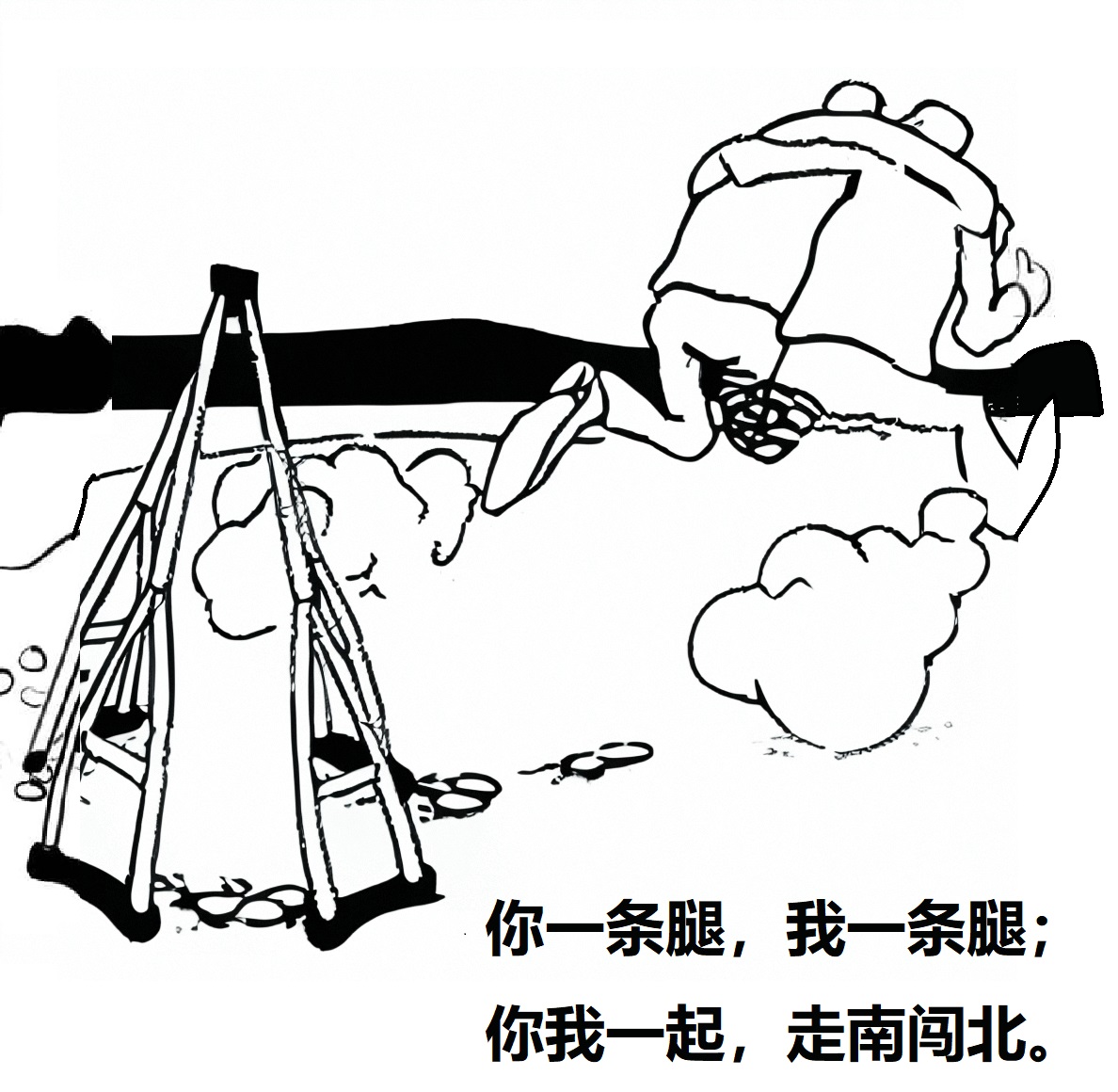
Write an essay of 160-200 words based on the following drawing. In your essay, you should
1)describe the drawing briefly,
2)explain its intended meaning, and then 3)give your comments.
You should write neatly on ANSWER SHEET 2. (20 points)
Write an essay of 160-200 words based on the following drawing. In your essay, you should
1)describe the drawing briefly,
2)explain its intended meaning, and then 3)give your comments.
You should write neatly on ANSWER SHEET 2. (20 points)
全卷客观题答案速查
考研英语(旧卷)2008年真题全卷客观题参考答案速查如下表,按卷面顺序逐题型列出;写作、翻译等主观题无标准答案,参考范文与逐题解析见对应题型解析页。
| 题型(卷面位置) | 参考答案 |
|---|---|
| 完形填空(四选一) Section I (1–20 题) | 1 B prepared · 2 D rare · 3 A of · 4 C previously · 5 C Even · 6 A thought · 7 B suggests · 8 D question · 9 B scoring · 10 C mean · 11 B disproportionately · 12 D careers · 13 A affirm · 14 C however · 15 D put down · 16 D valuing · 17 C consequence · 18 A linked · 19 B subjected · 20 A paradoxical (逐题解析见 完形填空(四选一)解析页 ) |
| 阅读理解(四选一) Section II Part A (1) (21–25 题) | 21 A · 22 D · 23 C · 24 B · 25 D (逐题解析见 阅读理解(四选一)解析页 ) |
| 阅读理解(四选一) Section II Part A (2) (26–30 题) | 26 D · 27 C · 28 A · 29 A · 30 B (逐题解析见 阅读理解(四选一)解析页 ) |
| 阅读理解(四选一) Section II Part A (3) (31–35 题) | 31 A · 32 C · 33 B · 34 D · 35 C (逐题解析见 阅读理解(四选一)解析页 ) |
| 阅读理解(四选一) Section II Part A (4) (36–40 题) | 36 D · 37 B · 38 C · 39 A · 40 B (逐题解析见 阅读理解(四选一)解析页 ) |
| 选句填空(7选5) Section II Part B (41–45 题) | 41 D · 42 G · 43 A · 44 C · 45 E (逐题解析见 选句填空(7选5)解析页 ) |
| 英译汉(划线句子翻译) Section II Part C | 主观题 · 参考范文与逐题解析见 英译汉(划线句子翻译)解析页 |
| 写作 Section III Part A | 主观题 · 参考范文与逐题解析见 写作解析页 |
| 写作 Section III Part B | 主观题 · 参考范文与逐题解析见 写作解析页 |
全卷构成
- Section I 完形填空(四选一)
- Section II Part A (1) 阅读理解(四选一)
- Section II Part A (2) 阅读理解(四选一)
- Section II Part A (3) 阅读理解(四选一)
- Section II Part A (4) 阅读理解(四选一)
- Section II Part B 选句填空(7选5)
- Section II Part C 英译汉(划线句子翻译)
- Section III Part A 写作
- Section III Part B 写作
关于考研英语(旧卷) 2008年 真题(整卷)的常见问题
- 2008年考研英语(旧卷)真题包含哪些题型、各多少题?
- 2008年考研英语(旧卷)真题共5种题型、9个模块:完形填空(四选一)20题(10分)、仔细阅读(四选一)4篇文章共20题(40分)、选句填空新题型从A-G中选句填5空(第41-45题、含2个干扰项,10分)、英译汉划线翻译5句(10分)、写作2篇(约100词小作文10分加160-200词大作文20分),全卷满分100分,不含听力。
- 2008年考研英语(旧卷)的阅读篇章难度(CEFR)怎么分布?
- 2008年考研英语(旧卷)整体偏C1高级难度:5篇文章中4篇为C1、1篇为B2。C1级包括完形填空文章及仔细阅读Text 2、Text 3、Text 4;唯一B2级为Text 1(压力下的女性)。
- 2008年考研英语(旧卷)各阅读篇章有多长、总词量多少?
- 2008年考研英语(旧卷)阅读篇章合计约1959词。完形填空文章273词;仔细阅读Text 1 共418词、Text 2 共414词、Text 3 共444词、Text 4 共410词,其中Text 3最长、完形文章最短。
- 2008年考研英语(旧卷)阅读各篇的高频核心词反映了什么主题?
- 2008年考研英语(旧卷)各篇高频词直接点出主题:Text 1 中 stress 出现22次、woman 14次(压力与女性);Text 2 中 journal 14次、publication 10次、scientific 9次(科学期刊出版);Text 3 中 height 12次、player 7次(身高);Text 4 中 slave 15次、slavery 10次(奴隶制)。
- 2008年考研英语(旧卷)的英译汉翻译考的是什么内容?
- 2008年考研英语(旧卷)划线翻译(Section II Part C,10分)选自一篇关于达尔文的文章,要求把5处划线句译成中文。内容取自达尔文自传:达尔文以极谦逊的口吻评述自己的智力,自称表达不够清晰简洁、抽象推理能力有限、记忆力广博却模糊,但反驳了部分批评者说他"善于观察却无推理能力"的说法,并以《物种起源》为一篇贯穿始终的长篇论证来佐证自己具备推理能力。
- 2008年考研英语(旧卷)的大作文和小作文题目分别是什么?
- 2008年考研英语(旧卷)写作分两部分:小作文(Part A,约100词,10分)要求以"Li Ming"名义给加拿大房东Bob写一封信,就行李里忘还的一张音乐CD道歉并提出解决办法(不写地址、不签真名);大作文(Part B,160-200词,20分)为看图作文,要求先描述图画、再阐释其寓意、最后给出评论。
- 2008年考研英语(旧卷)完形填空的文章讲了什么?
- 2008年考研英语(旧卷)完形填空(Section I,20题10分)选自《经济学人》(The Economist) 题为 The Evolution of Intelligence 的科普说明文。文章介绍科学家 Gregory Cochran 的观点:某一源自中欧的特定族群(智商平均高出标准值100约12-15分)比其他族群更聪明,并主张其高智力与所患遗传疾病(如乳腺癌)经由自然选择带来的独特进化压力而紧密关联。
- 2008年考研英语(旧卷)阅读Text 1 讲的是什么主题?
- 2008年考研英语(旧卷)阅读Text 1 选自Discovery探索频道"健康"板块、题为 Gender Inequality: Women Under Stress 的文章,主题是压力下的女性。文章引用精神科医生Yehuda的观点,从生理(性激素使女性在压力下分泌更多触发性化学物质)和社会(女性承受的慢性、重复性压力更多)两方面,分析女性为何比男性更易因压力患抑郁与焦虑,并以单亲母亲Alvarez的经历佐证。Text 1 是全卷唯一B2难度文章。
- 2008年考研英语(旧卷)阅读Text 2 讲的是什么?
- 2008年考研英语(旧卷)阅读Text 2 选自《经济学人》题为 Scientific Publishing — The Paperless Library 的文章,讨论科学期刊在线出版(开放获取)带来的变革。文章指出约75%的学术期刊已上线,并介绍三种新商业模式——机构订阅的"big deal"、作者付费的开放获取出版、大学与国际实验室的开放获取存档;这将冲击靠订阅获利的出版商并改变传统同行评审。美国核心科学出版市场规模估计在70亿至110亿美元之间。
- 2008年考研英语(旧卷)阅读Text 3 讲的是什么?
- 2008年考研英语(旧卷)阅读Text 3 选自《科学美国人》题为 Napoleon's Revenge 的文章,主题是美国人身高已触及基因上限。文章以NBA球员身高增长(实为全球招募球员所致)反衬一个被忽视的事实:美国人整体自1960年代初已基本停止长高,男性平均5英尺9英寸、女性5英尺4英寸自1960年起几乎未变;并从基因角度解释避免过高身材反而有利(如分娩时大婴儿更难通过产道、双足直立姿势难承受过大肢体的反复负荷)。
- 2008年考研英语(旧卷)阅读Text 4 讲的是什么?
- 2008年考研英语(旧卷)阅读Text 4 选自《美国新闻与世界报道》题为 The Sorry Legacy of the Founders 的文章,主题是美国开国元勋与奴隶制。文章以华盛顿1784年雇牙医从自己奴隶口中拔牙、移植到自己颌部开篇,借历史学家的新视角揭示华盛顿、杰斐逊等元勋对奴隶制态度复杂——明知其错却受制于时代文化与政治经济利益(如宪法将奴隶按"五分之三"计入国会代表名额、1800年大选靠南方选票获胜);华盛顿最终立遗嘱解放其奴隶。
- 2008年考研英语(旧卷)选句填空新题型的文章话题是什么?
- 2008年考研英语(旧卷)选句填空(Section II Part B,第41-45题10分)的文章讲的是英语写作中"修改草稿"的方法。文章建议:留宽页边距和行距便于增删、只在纸张一面书写、先完成正文再写引言与结尾、用第一稿理清思路、借助文字处理软件增删与移动段落、把稿件打印出来便于校对,并以学生修改 "The A&P as a State of Mind" 一文为例说明如何删去与主题无关的段落。考生需从A-G七个选项中选5句填入空格,余下2项为干扰项。
- 2008年考研英语分英语(一)和英语(二)吗?
- 不分。2008年考研英语为全国统考一份卷(即"旧卷"),英语(一)与英语(二)的分卷自2010年考研起才开始施行。因此2008年所有考生使用同一份试卷,结构为完形填空、仔细阅读4篇、选句填空新题型、英译汉划线翻译、小作文与大作文,全卷满分100分。
- 2008年考研英语(旧卷)阅读难度大吗?
- 2008年考研英语(旧卷)整体偏难,以C1(欧标高级)为主:5篇文章中4篇C1、1篇B2,全部选自《经济学人》《科学美国人》《美国新闻与世界报道》等英文原刊。题材涵盖智力进化、压力与女性、科学出版、人类身高、美国奴隶制,长难句多、社科与学术词汇密集;翻译选段(达尔文自传)抽象推理表述尤其拗口。
- 2008年考研英语(旧卷)有听力吗?答案和解析去哪里看?
- 2008年考研英语(旧卷)不含听力,全卷为完形填空、阅读、选句填空、翻译、写作的笔试题。官方不公布标准答案,网传答案均为各培训机构的参考版本;可在懒笔记整卷页查看试卷排版、逐题题干与选项、四篇阅读及完形与翻译原文精读,对照机构参考答案自行核对。