
考研英语一 2010年 · 真题整卷
按真题原卷顺序的全部题型,逐题型可进试卷排版、题目解析、原文精读;整卷可免费下载电子版(真题 PDF、解析版 PDF 与 Word)。
整卷试卷排版
考研英语一 · 英语一真题 · 2010年
考研英语一2010年真题
Directions:
Read the following text. Choose the best word(s) for each numbered blank and mark A, B, C or D on the ANSWER SHEET. (10 points)
Read the following text. Choose the best word(s) for each numbered blank and mark A, B, C or D on the ANSWER SHEET. (10 points)
In 1924 America's National Research Council sent two engineers to supervise a series of experiments at a telephone-parts factory called the Hawthorne Plant near Chicago. It hoped they would learn how shop-floor lighting 1 workers' productivity. Instead, the studies ended 2 giving their name to the "Hawthorne effect," the extremely influential idea that the very 3 of being experimented upon changed subjects' behavior.
The idea arose because of the 4 behavior of the women in the plant. According to 5 of the experiments, their hourly output rose when lighting was increased, but also when it was dimmed. It did not 6 what was done in the experiment; 7 something was changed, productivity rose. A(n) 8 that they were being experimented upon seemed to be 9 to alter workers' behavior 10 itself.
After several decades, the same data were 11 to econometric analysis. The Hawthorne experiments had another surprise in store. 12 the descriptions on record, no systematic 13 was found that levels of productivity were related to changes in lighting.
It turns out that the peculiar way of conducting the experiments may have led to 14 interpretations of what happened. 15 , lighting was always changed on a Sunday. When work started again on Monday, output 16 rose compared with the previous Saturday and 17 to rise for the next couple of days. 18 , a comparison with data for weeks when there was no experimentation showed that output always went up on Mondays. Workers 19 to be diligent for the first few days of the week in any case, before 20 a plateau and then slackening off. This suggests that the alleged "Hawthorne effect" is hard to pin down.
1.
[ A ]affected
[ B ]achieved
[ C ]extracted
[ D ]restored
2.
[ A ]at
[ B ]up
[ C ]with
[ D ]off
3.
[ A ]truth
[ B ]sight
[ C ]act
[ D ]proof
4.
[ A ]controversial
[ B ]perplexing
[ C ]mischievous
[ D ]ambiguous
5.
[ A ]requirements
[ B ]explanations
[ C ]accounts
[ D ]assessments
6.
[ A ]conclude
[ B ]matter
[ C ]indicate
[ D ]work
7.
[ A ]as far as
[ B ]for fear that
[ C ]in case that
[ D ]so long as
8.
[ A ]awareness
[ B ]expectation
[ C ]sentiment
[ D ]illusion
9.
[ A ]suitable
[ B ]excessive
[ C ]enough
[ D ]abundant
10.
[ A ]about
[ B ]for
[ C ]on
[ D ]by
11.
[ A ]compared
[ B ]shown
[ C ]subjected
[ D ]conveyed
12.
[ A ]Contrary to
[ B ]Consistent with
[ C ]Parallel with
[ D ]Peculiar to
13.
[ A ]evidence
[ B ]guidance
[ C ]implication
[ D ]source
14.
[ A ]disputable
[ B ]enlightening
[ C ]reliable
[ D ]misleading
15.
[ A ]In contrast
[ B ]For example
[ C ]In consequence
[ D ]As usual
16.
[ A ]duly
[ B ]accidentally
[ C ]unpredictably
[ D ]suddenly
17.
[ A ]failed
[ B ]ceased
[ C ]started
[ D ]continued
18.
[ A ]Therefore
[ B ]Furthermore
[ C ]However
[ D ]Meanwhile
19.
[ A ]attempted
[ B ]tended
[ C ]chose
[ D ]intended
20.
[ A ]breaking
[ B ]climbing
[ C ]surpassing
[ D ]hitting
考研英语一2010年真题
Directions:
Read the following four texts. Answer the questions after each text by choosing A, B, C or D. Mark your answers on the ANSWER SHEET. (40 points)
Read the following four texts. Answer the questions after each text by choosing A, B, C or D. Mark your answers on the ANSWER SHEET. (40 points)
Text 1
Of all the changes that have taken place in English-language newspapers during the past quarter-century, perhaps the most far-reaching has been the inexorable decline in the scope and seriousness of their arts coverage.
It is difficult to the point of impossibility for the average reader under the age of forty to imagine a time when high-quality arts criticism could be found in most big-city newspapers. Yet a considerable number of the most significant collections of criticism published in the 20th century consisted in large part of newspaper reviews. To read such books today is to marvel at the fact that their learned contents were once deemed suitable for publication in general-circulation dailies.
We are even farther removed from the unfocused newspaper reviews published in England between the turn of the 20th century and the eve of World War II, at a time when newsprint was dirt-cheap and stylish arts criticism was considered an ornament to the publications in which it appeared. In those far-off days, it was taken for granted that the critics of major papers would write in detail and at length about the events they covered. Theirs was a serious business, and even those reviewers who wore their learning lightly, like George Bernard Shaw and Ernest Newman, could be trusted to know what they were about. These men believed in journalism as a calling, and were proud to be published in the daily press. "So few authors have brains enough or literary gift enough to keep their own end up in journalism," Newman wrote, "that I am tempted to define 'journalism' as 'a term of contempt applied by writers who are not read to writers who are'."
Unfortunately, these critics are virtually forgotten. Neville Cardus, who wrote for the Manchester Guardian from 1917 until shortly before his death in 1975, is now known solely as a writer of essays on the game of cricket. During his lifetime, though, he was also one of England's foremost classical-music critics, and a stylist so widely admired that his Autobiography (1947) became a best-seller. He was knighted in 1967, the first music critic to be so honored. Yet only one of his books is now in print, and his vast body of writings on music is unknown save to specialists.
Is there any chance that Cardus's criticism will enjoy a revival? The prospect seems remote. Journalistic tastes had changed long before his death, and postmodern readers have little use for the richly upholstered Vicwardian prose in which he specialized. Moreover, the amateur tradition in music criticism has been in headlong retreat.
21.
It is indicated in Paragraphs 1 and 2 that____
[ A ]arts criticism has disappeared from big-city newspapers.
[ B ]English-language newspapers used to carry more arts reviews.
[ C ]high-quality newspapers retain a large body of readers.
[ D ]young readers doubt the suitability of criticism on dailies.
22.
Newspaper reviews in England before World War II were characterized by____
[ A ]free themes.
[ B ]casual style.
[ C ]elaborate layout.
[ D ]radical viewpoints.
23.
Which of the following would Shaw and Newman most probably agree on?
[ A ]It is writers' duty to fulfill journalistic goals.
[ B ]It is contemptible for writers to be journalists.
[ C ]Writers are likely to be tempted into journalism.
[ D ]Not all writers are capable of journalistic writing.
24.
What can be learned about Cardus according to the last two paragraphs?
[ A ]His music criticism may not appeal to readers today.
[ B ]His reputation as a music critic has long been in dispute.
[ C ]His style caters largely to modern specialists.
[ D ]His writings fail to follow the amateur tradition.
25.
What would be the best title for the text?
[ A ]Newspapers of the Good Old Days
[ B ]The Lost Horizon in Newspapers
[ C ]Mournful Decline of Journalism
[ D ]Prominent Critics in Memory
Text 2
Over the past decade, thousands of patents have been granted for what are called business methods. Amazon.com received one for its "one-click" online payment system. Merrill Lynch got legal protection for an asset allocation strategy. One inventor patented a technique for lifting a box.
Now the nation's top patent court appears completely ready to scale back on business-method patents, which have been controversial ever since they were first authorized 10 years ago. In a move that has intellectual-property lawyers abuzz, the U.S. Court of Appeals for the Federal Circuit said it would use a particular case to conduct a broad review of business-method patents. In re Bilski, as the case is known, is "a very big deal," says Dennis D. Crouch of the University of Missouri School of Law. It "has the potential to eliminate an entire class of patents."
Curbs on business-method claims would be a dramatic about-face, because it was the Federal Circuit itself that introduced such patents with its 1998 decision in the so-called State Street Bank case, approving a patent on a way of pooling mutual-fund assets. That ruling produced an explosion in business-method patent filings, initially by emerging Internet companies trying to stake out exclusive rights to specific types of online transactions. Later, more established companies raced to add such patents to their files, if only as a defensive move against rivals that might beat them to the punch. In 2005, IBM noted in a court filing that it had been issued more than 300 business-method patents, despite the fact that it questioned the legal basis for granting them. Similarly, some Wall Street investment firms armed themselves with patents for financial products, even as they took positions in court cases opposing the practice.
The Bilski case involves a claimed patent on a method for hedging risk in the energy market. The Federal Circuit issued an unusual order stating that the case would be heard by all 12 of the court's judges, rather than a typical panel of three, and that one issue it wants to evaluate is whether it should "reconsider" its State Street Bank ruling.
The Federal Circuit's action comes in the wake of a series of recent decisions by the Supreme Court that have narrowed the scope of protections for patent holders. Last April, for example, the justices signaled that too many patents were being upheld for "inventions" that are obvious. The judges on the Federal Circuit are "reacting to the anti-patent trend at the Supreme Court," says Harold C. Wegner, a patent attorney and professor at George Washington University Law School.
26.
Business-method patents have recently aroused concern because of____
[ A ]their limited value to businesses.
[ B ]their connection with asset allocation.
[ C ]the possible restriction on their granting.
[ D ]the controversy over their authorization.
27.
Which of the following is true of the Bilski case?
[ A ]Its ruling complies with the court decisions.
[ B ]It involves a very big business transaction.
[ C ]It has been dismissed by the Federal Circuit.
[ D ]It may change the legal practices in the U.S.
28.
The word "about-face" (Line 1, Para. 3) most probably means____
[ A ]loss of goodwill.
[ B ]increase of hostility.
[ C ]change of attitude.
[ D ]enhancement of dignity.
29.
We learn from the last two paragraphs that business-method patents____
[ A ]are immune to legal challenges.
[ B ]are often unnecessarily issued.
[ C ]lower the esteem for patent holders.
[ D ]increase the incidence of risks.
30.
Which of the following would be the subject of the text?
[ A ]A looming threat to business-method patents.
[ B ]Protection for business-method patent holders.
[ C ]A legal case regarding business-method patents.
[ D ]A prevailing trend against business-method patents.
Text 3
In his book The Tipping Point, Malcolm Gladwell argues that "social epidemics" are driven in large part by the actions of a tiny minority of special individuals, often called influentials, who are unusually informed, persuasive, or well connected. The idea is intuitively compelling, but it doesn't explain how ideas actually spread.
The supposed importance of influentials derives from a plausible-sounding but largely untested theory called the "two-step flow of communication": Information flows from the media to the influentials and from them to everyone else. Marketers have embraced the two-step flow because it suggests that if they can just find and influence the influentials, those select people will do most of the work for them. The theory also seems to explain the sudden and unexpected popularity of certain looks, brands, or neighborhoods. In many such cases, a cursory search for causes finds that some small group of people was wearing, promoting, or developing whatever it is before anyone else paid attention. Anecdotal evidence of this kind fits nicely with the idea that only certain special people can drive trends.
In their recent work, however, some researchers have come up with the finding that influentials have far less impact on social epidemics than is generally supposed. In fact, they don't seem to be required at all.
The researchers' argument stems from a simple observation about social influence: With the exception of a few celebrities like Oprah Winfrey – whose outsize presence is primarily a function of media, not interpersonal, influence – even the most influential members of a population simply don't interact with that many others. Yet it is precisely these non-celebrity influentials who, according to the two-step-flow theory, are supposed to drive social epidemics, by influencing their friends and colleagues directly. For a social epidemic to occur, however, each person so affected must then influence his or her own acquaintances, who must in turn influence theirs, and so on; and just how many others pay attention to each of these people has little to do with the initial influential. If people in the network just two degrees removed from the initial influential prove resistant, for example, the cascade of change won't propagate very far or affect many people.
Building on this basic truth about interpersonal influence, the researchers studied the dynamics of social influence by conducting thousands of computer simulations of populations, manipulating a number of variables relating to people's ability to influence others and their tendency to be influenced. They found that the principal requirement for what is called "global cascades" – the widespread propagation of influence through networks – is the presence not of a few influentials but, rather, of a critical mass of easily influenced people.
31.
By citing the book The Tipping Point, the author intends to____
[ A ]analyze the consequences of social epidemics.
[ B ]discuss influentials' function in spreading ideas.
[ C ]exemplify people's intuitive response to social epidemics.
[ D ]describe the essential characteristics of influentials.
32.
The author suggests that the "two-step-flow theory" ____
[ A ]serves as a solution to marketing problems.
[ B ]has helped explain certain prevalent trends.
[ C ]has won support from influentials.
[ D ]requires solid evidence for its validity.
33.
What the researchers have observed recently shows that____
[ A ]the power of influence goes with social interactions.
[ B ]interpersonal links can be enhanced through the media.
[ C ]influentials have more channels to reach the public.
[ D ]most celebrities enjoy wide media attention.
34.
The underlined phrase "these people" in Paragraph 4 refers to the ones who____
[ A ]stay outside the network of social influence.
[ B ]have little contact with the source of influence.
[ C ]are influenced and then influence others.
[ D ]are influenced by the initial influential.
35.
What is the essential element in the dynamics of social influence?
[ A ]The eagerness to be accepted.
[ B ]The impulse to influence others.
[ C ]The readiness to be influenced.
[ D ]The inclination to rely on others.
Text 4
Bankers have been blaming themselves for their troubles in public. Behind the scenes, they have been taking aim at someone else: the accounting standard-setters. Their rules, moan the banks, have forced them to report enormous losses, and it's just not fair. These rules say they must value some assets at the price a third party would pay, not the price managers and regulators would like them to fetch.
Unfortunately, banks' lobbying now seems to be working. The details may be unknowable, but the independence of standard-setters, essential to the proper functioning of capital markets, is being compromised. And, unless banks carry toxic assets at prices that attract buyers, reviving the banking system will be difficult.
After a bruising encounter with Congress, America's Financial Accounting Standards Board (FASB) rushed through rule changes. These gave banks more freedom to use models to value illiquid assets and more flexibility in recognizing losses on long-term assets in their income statements. Bob Herz, the FASB's chairman, cried out against those who "question our motives." Yet bank shares rose and the changes enhance what one lobbying group politely calls "the use of judgment by management."
European ministers instantly demanded that the International Accounting Standards Board (IASB) do likewise. The IASB says it does not want to act without overall planning, but the pressure to fold when it completes its reconstruction of rules later this year is strong. Charlie McCreevy, a European commissioner, warned the IASB that it did "not live in a political vacuum" but "in the real world" and that Europe could yet develop different rules.
It was banks that were on the wrong planet, with accounts that vastly overvalued assets. Today they argue that market prices overstate losses, because they largely reflect the temporary illiquidity of markets, not the likely extent of bad debts. The truth will not be known for years. But banks' shares trade below their book value, suggesting that investors are skeptical. And dead markets partly reflect the paralysis of banks which will not sell assets for fear of booking losses, yet are reluctant to buy all those supposed bargains.
To get the system working again, losses must be recognized and dealt with. America's new plan to buy up toxic assets will not work unless banks mark assets to levels which buyers find attractive. Successful markets require independent and even combative standard-setters. The FASB and IASB have been exactly that, cleaning up rules on stock options and pensions, for example, against hostility from special interests. But by giving in to critics now they are inviting pressure to make more concessions.
36.
Bankers complained that they were forced to____
[ A ]follow unfavorable asset evaluation rules.
[ B ]collect payments from third parties.
[ C ]cooperate with the price managers.
[ D ]reevaluate some of their assets.
37.
According to the author, the rule changes of the FASB may result in____
[ A ]the diminishing role of management.
[ B ]the revival of the banking system.
[ C ]the banks' long-term asset losses.
[ D ]the weakening of its independence.
38.
According to Paragraph 4, McCreevy objects to the IASB's attempt to____
[ A ]keep away from political influences.
[ B ]evade the pressure from their peers.
[ C ]act on their own in rule-setting.
[ D ]take gradual measures in reform.
39.
The author thinks the banks were "on the wrong planet" in that they____
[ A ]misinterpreted market price indicators.
[ B ]exaggerated the real value of their assets.
[ C ]neglected the likely existence of bad debts.
[ D ]denied booking losses in their sale of assets.
40.
The author's attitude towards standard-setters is one of____
[ A ]satisfaction.
[ B ]skepticism.
[ C ]objectiveness.
[ D ]sympathy.
Directions:
For questions 41-45, choose the most suitable paragraphs from the list A-G and fill them into the numbered boxes to form a coherent text. Paragraph E has been correctly placed. There is one paragraph which does not fit in with the text. Mark your answers on ANSWER SHEET 1. (10 points)
For questions 41-45, choose the most suitable paragraphs from the list A-G and fill them into the numbered boxes to form a coherent text. Paragraph E has been correctly placed. There is one paragraph which does not fit in with the text. Mark your answers on ANSWER SHEET 1. (10 points)
[ A ]
The first and most important is the consumer's growing preference for eating out: the consumption of food and drink in places other than homes has risen from about 32 percent of total consumption in 1995 to 35 percent in 2000 and is expected to approach 38 percent by 2005. This development is boosting wholesale demand from the food service segment by 4 to 5 percent a year across Europe, compared with growth in retail demand of 1 to 2 percent. Meanwhile, as the recession is looming large, people are getting anxious. They tend to keep a tighter hold on their purse and consider eating at home a realistic alternative.
[ B ]
Retail sales of food and drink in Europe's largest markets are at a standstill, leaving European grocery retailers hungry for opportunities to grow. Most leading retailers have already tried e-commerce, with limited success, and expansion abroad. But almost all have ignored the big, profitable opportunity in their own backyard: the wholesale food and drink trade, which appears to be just the kind of market retailers need.
[ C ]
Will such variations bring about a change in the overall structure of the food and drink market? Definitely not. The functioning of the market is based on flexible trends dominated by potential buyers. In other words, it is up to the buyer, rather than the seller, to decide what to buy. At any rate, this change will ultimately be acclaimed by an ever-growing number of both domestic and international consumers, regardless of how long the current consumer pattern will take hold.
[ D ]
All in all, this clearly seems to be a market in which big retailers could profitably apply their gigantic scale, existing infrastructure, and proven skills in the management of product ranges, logistics, and marketing intelligence. Retailers that master the intricacies of wholesaling in Europe may well expect to rake in substantial profits thereby. At least, that is how it looks as a whole. Closer inspection reveals important differences among the biggest national markets, especially in their customer segments and wholesale structures, as well as the competitive dynamics of individual food and drink categories. Big retailers must understand these differences before they can identify the segments of European wholesaling in which their particular abilities might unseat smaller but entrenched competitors. New skills and unfamiliar business models are needed too.
[ E ]
Despite variations in detail, wholesale markets in the countries that have been closely examined—France, Germany, Italy and Spain—are made out of the same building blocks. Demand comes mainly from two sources: independent mom-and-pop grocery stores which, unlike large retail chains, are too small to buy straight from producers, and food service operators that cater to consumers when they don't eat at home. Such food service operators range from snack machines to large institutional catering ventures, but most of these businesses are known in the trade as "horeca":hotels, restaurants, and cafés. Overall, Europe's wholesale market for food and drink is growing at the same sluggish pace as the retail market, but the figures, when added together, mask two opposing trends.
[ F ]
For example, wholesale food and drink sales came to $268 billion in France, Germany, Italy, Spain, and the United Kingdom in 2000 – more than 40 percent of retail sales. Moreover, average overall margins are higher in wholesale than in retail; wholesale demand from the food service sector is growing quickly as more Europeans eat out more often; and changes in the competitive dynamics of this fragmented industry are at last making it feasible for wholesalers to consolidate.
[ G ]
However, none of these requirements should deter large retailers (and even some large food producers and existing wholesalers) from trying their hand, for those that master the intricacies of wholesaling in Europe stand to reap considerable gains.
41.→42.→43.→44.→E→45.
Directions:
Read the following text carefully and then translate the underlined segments into Chinese. Write your answers on the ANSWER SHEET. ( 10 points)
Read the following text carefully and then translate the underlined segments into Chinese. Write your answers on the ANSWER SHEET. ( 10 points)
One basic weakness in a conservation system based wholly on economic motives is that most members of the land community have no economic value. Yet these creatures are members of the biotic community and, if its stability depends on its integrity, they are entitled to continuance.
When one of these noneconomic categories is threatened and, if we happen to love it, we invent excuses to give it economic importance. At the beginning of the century songbirds were supposed to be disappearing. (46)Scientists jumped to the rescue with some distinctly shaky evidence to the effect that insects would eat us up if birds failed to control them. The evidence had to be economic in order to be valid.
It is painful to read these roundabout accounts today. We have no land ethic yet, (47)but we have at least drawn nearer the point of admitting that birds should continue as a matter of intrinsic right, regardless of the presence or absence of economic advantage to us.
A parallel situation exists in respect of predatory mammals and fish-eating birds. (48)Time was when biologists somewhat overworked the evidence that these creatures preserve the health of game by killing the physically weak, or that they prey only on "worthless" species. Here again, the evidence had to be economic in order to be valid. It is only in recent years that we hear the more honest argument that predators are members of the community, and that no special interest has the right to exterminate them for the sake of benefit, real or fancied, to itself.
Some species of trees have been "read out of the party" by economics-minded foresters because they grow too slowly, or have too low a sale value to pay as timber crops. (49)In Europe, where forestry is ecologically more advanced, the noncommercial tree species are recognized as members of the native forest community, to be preserved as such, within reason. Moreover, some have been found to have a valuable function in building up soil fertility. The interdependence of the forest and its constituent tree species, ground flora, and fauna is taken for granted.
To sum up: a system of conservation based solely on economic self-interest is hopelessly lopsided. (50)It tends to ignore, and thus eventually to eliminate, many elements in the land community that lack commercial value, but that are essential to its healthy functioning. It assumes, falsely, that the economic parts of the biotic clock will function without the uneconomic parts.
考研英语一2010年真题
51.
Directions:
You are supposed to write for the Postgraduates’ Association a notice to recruit volunteers for an international conference on globalization. The notice should include the basic qualifications for applicants and the other information which you think is relevant.
You should write about 100 words on ANSWER SHEET 2.
Do not sign your own name at the end of the notice. Use “Postgraduates’ Association” instead. (10 points)
You are supposed to write for the Postgraduates’ Association a notice to recruit volunteers for an international conference on globalization. The notice should include the basic qualifications for applicants and the other information which you think is relevant.
You should write about 100 words on ANSWER SHEET 2.
Do not sign your own name at the end of the notice. Use “Postgraduates’ Association” instead. (10 points)
52.
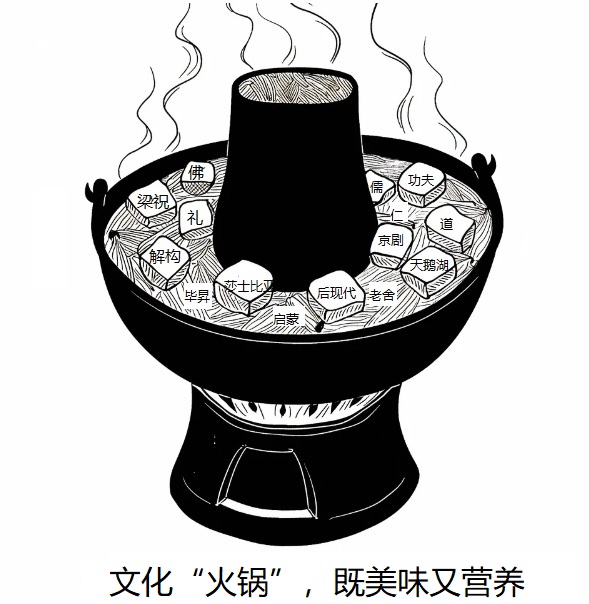
Directions:
Write an essay of 160-200 words based on the following drawing. In your essay, you should
1)describe the drawing briefly,
2)explain its intended meaning, and
3)give your comments.
You should write neatly on ANSWER SHEET 2. (20 points)
Write an essay of 160-200 words based on the following drawing. In your essay, you should
1)describe the drawing briefly,
2)explain its intended meaning, and
3)give your comments.
You should write neatly on ANSWER SHEET 2. (20 points)
全卷客观题答案速查
考研英语一2010年真题全卷客观题参考答案速查如下表,按卷面顺序逐题型列出;写作、翻译等主观题无标准答案,参考范文与逐题解析见对应题型解析页。
| 题型(卷面位置) | 参考答案 |
|---|---|
| 完形填空(四选一) Section I (1–20 题) | 1 A affected · 2 B up · 3 C act · 4 B perplexing · 5 C accounts · 6 B matter · 7 D so long as · 8 A awareness · 9 C enough · 10 D by · 11 C subjected · 12 A Contrary to · 13 A evidence · 14 D misleading · 15 B For example · 16 A duly · 17 D continued · 18 C However · 19 B tended · 20 D hitting (逐题解析见 完形填空(四选一)解析页 ) |
| 阅读理解(四选一) Section II Part A (1) (21–25 题) | 21 B · 22 A · 23 D · 24 A · 25 B (逐题解析见 阅读理解(四选一)解析页 ) |
| 阅读理解(四选一) Section II Part A (2) (26–30 题) | 26 C · 27 D · 28 C · 29 B · 30 A (逐题解析见 阅读理解(四选一)解析页 ) |
| 阅读理解(四选一) Section II Part A (3) (31–35 题) | 31 B · 32 D · 33 A · 34 C · 35 C (逐题解析见 阅读理解(四选一)解析页 ) |
| 阅读理解(四选一) Section II Part A (4) (36–40 题) | 36 A · 37 D · 38 C · 39 B · 40 D (逐题解析见 阅读理解(四选一)解析页 ) |
| 段落排序 Section II Part B | 41=B → 42=F → 43=D → 44=G → 预给E → 45=A (逐题解析见 段落排序解析页 ) |
| 英译汉(划线句子翻译) Section II Part C | 主观题 · 参考范文与逐题解析见 英译汉(划线句子翻译)解析页 |
| 写作 Section III Part A | 主观题 · 参考范文与逐题解析见 写作解析页 |
| 写作 Section III Part B | 主观题 · 参考范文与逐题解析见 写作解析页 |
全卷构成
- Section I 完形填空(四选一)
- Section II Part A (1) 阅读理解(四选一)
- Section II Part A (2) 阅读理解(四选一)
- Section II Part A (3) 阅读理解(四选一)
- Section II Part A (4) 阅读理解(四选一)
- Section II Part B 段落排序
- Section II Part C 英译汉(划线句子翻译)
- Section III Part A 写作
- Section III Part B 写作
关于考研英语一 2010年 真题(整卷)的常见问题
- 2010年考研英语一真题由哪些题型构成、各占多少分?
- 2010年考研英语一全卷满分100分,由五个板块构成:完形填空20题(10分)、仔细阅读(四选一)4篇共20题(40分)、段落排序新题型1篇5题(10分)、英译汉划线翻译5处(10分),以及小作文与大作文各1篇(共30分)。其中阅读理解 A 节的四篇文章是分值主体,单项占到40分。
- 2010年考研英语一阅读部分有几篇文章、总词量和难度如何?
- 2010年考研英语一共含6篇英文篇章、合计约2427词:完形填空1篇(282词)、仔细阅读4篇(Text 1—4,各约429—448词)、翻译文章1篇(410词)。按CEFR难度评估,6篇中有5篇为C1、1篇为C2;难度最高的C2篇章是Text 1(报纸艺术评论衰落,约429词),措辞典雅、句式多变,是全卷阅读拉分点。
- 2010年考研英语一仔细阅读(Text 1—4)一共考多少道题?
- 2010年考研英语一仔细阅读 A 节共4篇文章、每篇5题,合计20道四选一选择题,编号为21—40,单项40分。四篇主题依次为:报纸艺术评论的衰落、美国商业方法专利之争、社会流行潮中的“有影响力人士”、银行与会计准则之争。
- 2010年考研英语一完形填空讲的是什么、哪个词反复出现?
- 2010年考研英语一完形填空选自《经济学人》一篇质疑“霍桑效应”(Hawthorne effect)的文章,全文约282词、设20个空。文中出现频次最高的实义词是 experiment(实验,出现7次),其次是 change、lighting、when 等各4次,behavior、output、productivity、worker 等各3次——词频与“照明—工人产出—行为变化”的实验论证主线高度一致。
- 2010年考研英语一的新题型(Part B)是哪种考法、考几道题?
- 2010年考研英语一新题型 Part B 考的是“段落排序”:给出A—G共7个段落,要求为41—45题选出最合适的段落填入编号空格,其中E段已给定位置、另有1段为干扰项不填入,满分10分。文章主题是欧洲食品饮料批发市场的机会与零售商的扩张。
- 2010年考研英语一翻译(英译汉)考的是什么主题?
- 2010年考研英语一英译汉划线翻译选自美国生态学家奥尔多·利奥波德(Aldo Leopold)的《沙乡年鉴》(A Sand County Almanac)中的“土地伦理”部分,全文约410词、设5处划线句翻译,满分10分。主题是批驳“完全基于经济动机的生态保护制度”,论证缺乏商业价值的生物同样是生物共同体成员、对生态稳定不可或缺;考点集中在固定结构、各类从句嵌套、被动语态与上下文词义判断。
- 2010年考研英语一Text 1讲了什么内容?
- 2010年考研英语一Text 1选自《评论》杂志一篇题为 The Amateur as Critic(业余评论家)的文章,主旨是英语报刊艺术评论“不可遏制的衰落”。文章以倒叙展开,回顾20世纪上半叶报纸艺术评论曾是高水准的“严肃事业”,并以乐评家 Neville Cardus(曾为《曼彻斯特卫报》撰稿、1967年首位被封爵的乐评家)为例,说明这些评论家如今几乎被遗忘,业余评论传统已全面退潮。Text 1 被评为全卷难度最高的C2级文章。
- 2010年考研英语一Text 2在讨论什么话题?
- 2010年考研英语一Text 2选自《商业周刊》一篇题为 A Pending Threat to Patents 的文章,讨论美国“商业方法专利”(business-method patents)面临的重大转向。文章以 In re Bilski 一案为线索,说明曾在1998年 State Street Bank 案中确立此类专利的联邦巡回上诉法院,如今准备大幅收紧商业方法专利,并呼应最高法院近年缩小专利权保护范围的反专利趋势。文中 patent 一词出现23次,是 Text 2 的核心高频词。
- 2010年考研英语一Text 3和Text 4分别讲了什么?
- 2010年考研英语一这两篇主题如下:Text 3选自《哈佛商业评论》The Accidental Influentials,批驳格拉德威尔《引爆点》一书“社会流行潮主要由少数‘有影响力人士’推动”的两级传播理论,提出真正关键的是“易受影响的大众”(critical mass of easily influenced people);Text 4选自《经济学人》一篇关于银行与会计准则的文章,讲银行游说迫使 FASB、IASB 放松“按市价计量有毒资产”的会计规则,作者主张准则制定者应保持独立、甚至好斗的立场。
- 2010年考研英语一的大作文和小作文题目是什么?
- 2010年考研英语一作文为两篇:小作文(Part A,10分)要求以“研究生协会”(Postgraduates’ Association)名义写一则通知,为一场关于全球化(globalization)的国际会议招募志愿者,需写明申请者基本条件及相关信息、约100词、不得署真名;大作文(Part B,20分)是图画作文,画面是一口盛满中外文化元素的“文化火锅”,配文“文化‘火锅’,既美味又营养”,要求描述图画、阐释“文化交融”的寓意并加以评论、写约160—200词。
- 2010年考研英语一段落排序(新题型)的文章在讲什么?
- 2010年考研英语一段落排序文章讲的是欧洲食品饮料批发市场(wholesale food and drink trade)的商机:欧洲主要市场的食品饮料零售已陷入停滞,大型零售商纷纷转向自家“后院”——批发贸易;文中给出2000年法、德、意、西、英五国批发销售额达2680亿美元、占零售额40%以上等数据,并指出在外就餐比例上升带动批发需求增长,零售商若掌握批发运营的复杂性可获可观利润。
- 2010年考研英语一难度大吗、哪个部分最难?
- 2010年考研英语一整体偏难,难点集中在阅读与翻译。阅读 A 节四篇全部取材英美原版报刊(《评论》《商业周刊》《哈佛商业评论》《经济学人》),其中Text 1为CEFR C2级、用词典雅句式多变,是公认最难篇章;翻译取自《沙乡年鉴》的“土地伦理”,长难句嵌套、抽象词义多,是失分重灾区。完形填空(霍桑效应)逻辑连贯、相对常规。各篇原文、题目与逐句精读可在懒笔记整卷页核对。
- 2010年考研英语一的答案和解析在哪里看?
- 2010年考研英语一为完形20题、阅读20题、排序5题、翻译5处划线句、作文2篇的标准结构,可在懒笔记整卷页查看试卷原排版、逐题题干选项与每篇文章的精读解析、翻译参考译文及考点拆解。需提示:考研英语官方不单独公布逐题标准答案,网络流传的答案与译文均为各培训机构的参考版本,存在细微差异,建议以多方解析相互印证。
- 2010年考研英语一有听力吗?
- 2010年考研英语一不考听力。考研英语一全程为笔试,2010年试卷由完形填空、阅读理解(含四选一、段落排序、英译汉)与写作三大部分构成,没有任何听力或口语环节;听力仅出现在部分院校的复试阶段,与初试统考的英语一无关。备考重心应放在阅读速度、长难句翻译与图画作文上。
- 2010年考研英语一翻译的参考译文和原文出处是什么?
- 2010年考研英语一翻译5处划线句出自奥尔多·利奥波德《沙乡年鉴》(A Sand County Almanac)“土地伦理”一节,原文约410词、核心论点是“完全以经济价值衡量物种的保护制度存在根本缺陷”。懒笔记整卷页提供翻译篇完整英文原文、5处划线句的逐句结构分析与参考译文,可据此核对自己的译法;由于官方不公布标准译文,市面参考译文以达意为准、措辞各有出入,宜对照原句语法关系自行判断。