
考研英语二 2012年 · 真题整卷
按真题原卷顺序的全部题型,逐题型可进试卷排版、题目解析、原文精读;整卷可免费下载电子版(真题 PDF、解析版 PDF 与 Word)。
整卷试卷排版
考研英语二 · 英语二真题 · 2012年
考研英语二2012年真题
Directions:
Read the following text. Choose the best word(s) for each numbered blank and mark A, B, C or D on the ANSWER SHEET. (10 points)
Read the following text. Choose the best word(s) for each numbered blank and mark A, B, C or D on the ANSWER SHEET. (10 points)
Millions of Americans and foreigners see G.I. Joe as a mindless war toy, the symbol of American military adventurism, but that's not how it used to be. To the men and women who 1 in World War II and the people they liberated, the G.I. was the 2 man grown into hero, the poor farm kid torn away from his home, the guy who 3 all the burdens of battle, who slept in cold foxholes, who went without the 4 of food and shelter, who stuck it out and drove back the Nazi reign of murder. This was not a volunteer soldier, not someone well paid, 5 an average guy, up 6 the best trained, best equipped, fiercest, most brutal enemies seen in centuries.
His name isn't much. G.I. is just a military abbreviation 7 Government Issue, and it was on all of the articles 8 to soldiers. And Joe? A common name for a guy who never 9 it to the top. Joe Blow, Joe Palooka, Joe Magrac…a working class name. The United States has 10 had a president or vice-president or secretary of state Joe.
G.I. Joe had a 11 career fighting German, Japanese, and Korean troops. He appears as a character, or a 12 of American personalities, in the 1945 movie The Story of G.I. Joe, based on the last days of war correspondent Ernie Pyle. Some of the soldiers Pyle 13 portrayed themselves in the film. Pyle was famous for covering the 14 side of the war, writing about the dirt-snow-and-mud soldiers, not how many miles were 15 or what towns were captured or liberated. His reports 16 the "Willie" cartoons of famed Stars and Stripes artist Bill Mauldin. Both men 17 the dirt and exhaustion of war, the 18 of civilization that the soldiers shared with each other and the civilians: coffee, tobacco, whiskey, shelter, sleep. 19 Egypt, France, and a dozen more countries, G.I. Joe was any American soldier, 20 the most important person in their lives.
1.
[ A ]served
[ B ]performed
[ C ]rebelled
[ D ]betrayed
2.
[ A ]actual
[ B ]common
[ C ]special
[ D ]normal
3.
[ A ]loaded
[ B ]eased
[ C ]removed
[ D ]bore
4.
[ A ]necessities
[ B ]facilities
[ C ]commodities
[ D ]properties
5.
[ A ]and
[ B ]nor
[ C ]but
[ D ]hence
6.
[ A ]for
[ B ]into
[ C ]from
[ D ]against
7.
[ A ]implying
[ B ]meaning
[ C ]symbolizing
[ D ]claiming
8.
[ A ]handed out
[ B ]turned over
[ C ]brought back
[ D ]passed down
9.
[ A ]pushed
[ B ]got
[ C ]made
[ D ]managed
10.
[ A ]ever
[ B ]never
[ C ]either
[ D ]neither
11.
[ A ]disguised
[ B ]disturbed
[ C ]disputed
[ D ]distinguished
12.
[ A ]company
[ B ]community
[ C ]collection
[ D ]colony
13.
[ A ]employed
[ B ]appointed
[ C ]interviewed
[ D ]questioned
14.
[ A ]human
[ B ]military
[ C ]political
[ D ]ethical
15.
[ A ]ruined
[ B ]commuted
[ C ]patrolled
[ D ]gained
16.
[ A ]paralleled
[ B ]counteracted
[ C ]duplicated
[ D ]contradicted
17.
[ A ]neglected
[ B ]emphasized
[ C ]avoided
[ D ]admired
18.
[ A ]stages
[ B ]illusions
[ C ]fragments
[ D ]advances
19.
[ A ]With
[ B ]To
[ C ]Among
[ D ]Beyond
20.
[ A ]on the contrary
[ B ]by this means
[ C ]from the outset
[ D ]at that point
考研英语二2012年真题
Directions:
Read the following four texts. Answer the questions after each text by choosing A, B, C or D. Mark your answers on the ANSWER SHEET. (40 points)
Read the following four texts. Answer the questions after each text by choosing A, B, C or D. Mark your answers on the ANSWER SHEET. (40 points)
Text 1
Homework has never been terribly popular with students and even many parents, but in recent years it has been particularly scorned. School districts across the country, most recently Los Angeles Unified, are revising their thinking on this educational ritual. Unfortunately, L.A. Unified has produced an inflexible policy which mandates that with the exception of some advanced courses, homework may no longer count for more than 10% of a student's academic grade.
This rule is meant to address the difficulty that students from impoverished or chaotic homes might have in completing their homework. But the policy is unclear and contradictory. Certainly, no homework should be assigned that students cannot complete on their own or that they cannot do without expensive equipment. But if the district is essentially giving a pass to students who do not do their homework because of complicated family lives, it is going riskily close to the implication that standards need to be lowered for poor children.
District administrators say that homework will still be a part of schooling; teachers are allowed to assign as much of it as they want. But with homework counting for no more than 10% of their grades, students can easily skip half their homework and see very little difference on their report cards. Some students might do well on state tests without completing their homework, but what about the students who performed well on the tests and did their homework? It is quite possible that the homework helped. Yet rather than empowering teachers to find what works best for their students, the policy imposes a flat, across-the-board rule.
At the same time, the policy addresses none of the truly thorny questions about homework. If the district finds homework to be unimportant to its students' academic achievement, it should move to reduce or eliminate the assignments, not make them count for almost nothing. Conversely, if homework matters, it should account for a significant portion of the grade. Meanwhile, this policy does nothing to ensure that the homework students receive is meaningful or appropriate to their age and the subject, or that teachers are not assigning more than they are willing to review and correct.
The homework rules should be put on hold while the school board, which is responsible for setting educational policy, looks into the matter and conducts public hearings. It is not too late for L.A. Unified to do homework right.
21.
It is implied in Paragraph 1 that nowadays homework____.
[ A ]is receiving more criticism
[ B ]is gaining more preferences
[ C ]is no longer an educational ritual
[ D ]is not required for advanced courses
22.
L.A. Unified has made the rule about homework mainly because poor students ____.
[ A ]tend to have moderate expectations for their education
[ B ]have asked for a different educational standard
[ C ]may have problems finishing their homework
[ D ]have voiced their complaints about homework
23.
According to Paragraph 3, one problem with the policy is that it may____.
[ A ]result in students' indifference to their report cards
[ B ]undermine the authority of state tests
[ C ]restrict teachers' power in education
[ D ]discourage students from doing homework
24.
As mentioned in Paragraph 4, a key question unanswered about homework is whether____.
[ A ]it should be eliminated
[ B ]it counts much in schooling
[ C ]it places extra burdens on teachers
[ D ]it is important for grades
25.
A suitable title for this text could be____.
[ A ]A Faulty Approach to Homework
[ B ]A Welcomed Policy for Poor Students
[ C ]Thorny Questions about Homework
[ D ]Wrong Interpretations of an Educational Policy
Text 2
Pretty in pink: adult women do not remember being so obsessed with the colour, yet it is pervasive in our young girls' lives. It is not that pink is intrinsically bad, but it is such a tiny slice of the rainbow and, though it may celebrate girlhood in one way, it also repeatedly and firmly fuses girls' identity to appearance. Then it presents that connection, even among two-year-olds, between girls as not only innocent but as evidence of innocence. Looking around, I despaired at the singular lack of imagination about girls' lives and interests.
Girls' attraction to pink may seem unavoidable, somehow encoded in their DNA, but according to Jo Paoletti, an associate professor of American Studies, it is not. Children were not colour-coded at all until the early 20th century: in the era before domestic washing machines all babies wore white as a practical matter, since the only way of getting clothes clean was to boil them. What's more, both boys and girls wore what were thought of as gender-neutral dresses. When nursery colours were introduced, pink was actually considered the more masculine colour, a pastel version of red, which was associated with strength. Blue, with its intimations of the Virgin Mary, constancy and faithfulness, symbolised femininity. It was not until the mid-1980s, when amplifying age and sex differences became a dominant children's marketing strategy, that pink fully came into its own, when it began to seem inherently attractive to girls, part of what defined them as female, at least for the first few critical years.
I had not realised how profoundly marketing trends dictated our perception of what is natural to kids, including our core beliefs about their psychological development. Take the toddler. I assumed that phase was something experts developed after years of research into children's behaviour: wrong. Turns out, according to Daniel Cook, a historian of childhood consumerism, it was popularised as a marketing trick by clothing manufacturers in the 1930s.
Trade publications counselled department stores that, in order to increase sales, they should create a "third stepping stone" between infant wear and older kids' clothes. It was only after "toddler" became a common shoppers' term that it evolved into a broadly accepted developmental stage. Splitting kids, or adults, into ever-tinier categories has proved a sure-fire way to boost profits. And one of the easiest ways to segment a market is to magnify gender differences – or invent them where they did not previously exist.
26.
By saying "it is…the rainbow" (Line 3, Para. 1), the author means pink ____.
[ A ]cannot explain girls' lack of imagination
[ B ]should not be associated with girls' innocence
[ C ]should not be the sole representation of girlhood
[ D ]cannot influence girls' lives and interests
27.
According to Paragraph 2, which of the following is true of colours?
[ A ]Colours are encoded in girls' DNA.
[ B ]Blue used to be regarded as the colour for girls.
[ C ]White is preferred by babies.
[ D ]Pink used to be a neutral colour in symbolising genders.
28.
The author suggests that our perception of children's psychological development was much influenced by ____.
[ A ]the observation of children's nature
[ B ]the marketing of products for children
[ C ]researches into children's behaviour
[ D ]studies of childhood consumption
29.
We may learn from Paragraph 4 that department stores were advised to_____.
[ A ]classify consumers into smaller groups
[ B ]attach equal importance to different genders
[ C ]focus on infant wear and older kids' clothes
[ D ]create some common shoppers' terms
30.
It can be concluded that girls' attraction to pink seems to be ___.
[ A ]fully understood by clothing manufacturers
[ B ]clearly explained by their inborn tendency
[ C ]mainly imposed by profit-driven businessmen
[ D ]well interpreted by psychological experts
Text 3
In 2010, a federal judge shook America's biotech industry to its core. Companies had won patents for isolated DNA for decades – by 2005 some 20% of human genes were patented. But in March 2010 a judge ruled that genes were unpatentable. Executives were violently agitated. The Biotechnology Industry Organisation (BIO), a trade group, assured members that this was just a "preliminary step" in a longer battle.
On July 29th they were relieved, at least temporarily. A federal appeals court overturned the prior decision, ruling that Myriad Genetics could indeed hold patents to two genes that help forecast a woman's risk of breast cancer. The chief executive of Myriad, a company in Utah, said the ruling was a blessing to firms and patients alike.
But as companies continue their attempts at personalised medicine, the courts will remain rather busy. The Myriad case itself is probably not over. Critics make three main arguments against gene patents: a gene is a product of nature, so it may not be patented; gene patents suppress innovation rather than reward it; and patents' monopolies restrict access to genetic tests such as Myriad's. A growing number seem to agree. Last year a federal task-force urged reform for patents related to genetic tests. In October the Department of Justice filed a brief in the Myriad case, arguing that an isolated DNA molecule "is no less a product of nature…than are cotton fibres that have been separated from cotton seeds."
Despite the appeals court's decision, big questions remain unanswered. For example, it is unclear whether the sequencing of a whole genome violates the patents of individual genes within it. The case may yet reach the Supreme Court.
As the industry advances, however, other suits may have an even greater impact. Companies are unlikely to file many more patents for human DNA molecules – most are already patented or in the public domain. Firms are now studying how genes interact, looking for correlations that might be used to determine the causes of disease or predict a drug's efficacy. Companies are eager to win patents for "connecting the dots," explains Hans Sauer, a lawyer for the BIO.
Their success may be determined by a suit related to this issue, brought by the Mayo Clinic, which the Supreme Court will hear in its next term. The BIO recently held a convention which included sessions to coach lawyers on the shifting landscape for patents. Each meeting was packed.
31.
It can be learned from Paragraph 1 that the biotech companies would like____.
[ A ]genes to be patentable
[ B ]the BIO to issue a warning
[ C ]their executives to be active
[ D ]judges to rule out gene patenting
32.
Those who are against gene patents believe that____.
[ A ]genetic tests are not reliable
[ B ]only man-made products are patentable
[ C ]patents on genes depend much on innovation
[ D ]courts should restrict access to genetic tests
33.
According to Hans Sauer, companies are eager to win patents for____.
[ A ]discovering gene interactions
[ B ]establishing disease correlations
[ C ]drawing pictures of genes
[ D ]identifying human DNA
34.
By saying "Each meeting was packed" (Line 4, Para. 6), the author means that ____.
[ A ]the supreme court was authoritative
[ B ]the BIO was a powerful organisation
[ C ]gene patenting was a great concern
[ D ]lawyers were keen to attend conventions
35.
Generally speaking, the author's attitude toward gene patenting is ____.
[ A ]critical
[ B ]supportive
[ C ]scornful
[ D ]objective
Text 4
The great recession may be over, but this era of high joblessness is probably beginning. Before it ends, it will likely change the life course and character of a generation of young adults. And ultimately, it is likely to reshape our politics, our culture, and the character of our society for years.
No one tries harder than the jobless to find silver linings in this national economic disaster. Many said that unemployment, while extremely painful, had improved them in some ways: they had become less materialistic and more financially prudent; they were more aware of the struggles of others. In limited respects, perhaps the recession will leave society better off. At the very least, it has awoken us from our national fever dream of easy riches and bigger houses, and put a necessary end to an era of reckless personal spending.
But for the most part, these benefits seem thin, uncertain, and far off. In The Moral Consequences of Economic Growth, the economic historian Benjamin Friedman argues that both inside and outside the U.S., lengthy periods of economic stagnation or decline have almost always left society more mean-spirited and less inclusive, and have usually stopped or reversed the advance of rights and freedoms. Anti-immigrant sentiment typically increases, as does conflict between races and classes.
Income inequality usually falls during a recession, but it has not shrunk in this one. Indeed, this period of economic weakness may reinforce class divides, and decrease opportunities to cross them – especially for young people. The research of Till Von Wachter, the economist at Columbia University, suggests that not all people graduating into a recession see their life chances dimmed: those with degrees from elite universities catch up fairly quickly to where they otherwise would have been if they had graduated in better times; it is the masses beneath them that are left behind.
In the Internet age, it is particularly easy to see the resentment that has always been hidden within American society. More difficult, in the moment, is discerning precisely how these lean times are affecting society's character. In many respects, the U.S. was more socially tolerant entering this recession than at any time in its history, and a variety of national polls on social conflict since then have shown mixed results. We will have to wait and see exactly how these hard times will reshape our social fabric. But they certainly will reshape it, and all the more so the longer they extend.
36.
By saying "to find silver linings" (Line 1, Para. 2) the author suggests that the jobless try to____.
[ A ]seek subsidies from the government
[ B ]make profits from the troubled economy
[ C ]explore reasons for the unemployment
[ D ]look on the bright side of the recession
37.
According to Paragraph 2, the recession has made people ____.
[ A ]struggle against each other
[ B ]realize the national dream
[ C ]challenge their prudence
[ D ]reconsider their lifestyle
38.
Benjamin Friedman believes that economic recessions may ____.
[ A ]impose a heavier burden on immigrants
[ B ]bring out more evils of human nature
[ C ]promote the advance of rights and freedoms
[ D ]ease conflicts between races and classes
39.
The research of Till Von Wachter suggests that in the recession graduates from elite universities tend to____.
[ A ]lag behind the others due to decreased opportunities
[ B ]catch up quickly with experienced employees
[ C ]see their life chances as dimmed as the others'
[ D ]recover more quickly than the others
40.
The author thinks that the influence of hard times on society is ____.
[ A ]trivial
[ B ]positive
[ C ]certain
[ D ]destructive
Directions:
Read the following text and match each of the numbered items in the left column to its corresponding information in the right column. There are two extra choices in the right column. Mark your answers on the ANSWER SHEET. (10 points)
Read the following text and match each of the numbered items in the left column to its corresponding information in the right column. There are two extra choices in the right column. Mark your answers on the ANSWER SHEET. (10 points)
"Universal history, the history of what man has accomplished in this world, is at bottom the History of the Great Men who have worked here," wrote the Victorian sage Thomas Carlyle. Well, not any more it is not.
Suddenly, Britain looks to have fallen out with its favorite historical form. This could be no more than a passing literary craze, but it also points to a broader truth about how we now approach the past: less concerned with learning from our forefathers and more interested in feeling their pain. Today, we want empathy, not inspiration.
From the earliest days of the Renaissance, the writing of history meant recounting the exemplary lives of great men. In 1337, Petrarch began work on his rambling writing De Viris Illustribus – On Famous Men, highlighting the virtus (or virtue) of classical heroes. Petrarch celebrated their greatness in conquering fortune and rising to the top. This was the biographical tradition which Niccolò Machiavelli turned on its head. In The Prince, he championed cunning, ruthlessness, and boldness, rather than virtue, mercy and justice, as the skills of successful leaders.
Over time, the attributes of greatness shifted. The Romantics commemorated the leading painters and authors of their day, stressing the uniqueness of the artist's personal experience rather than public glory. By contrast, the Victorian author Samuel Smiles wrote Self-Help as a catalogue of the worthy lives of engineers, industrialists and explorers. "The valuable examples which they furnish of the power of self-help, of patient purpose, resolute working, and steadfast integrity, issuing in the formation of truly noble and manly character, exhibit," wrote Smiles, "what it is in the power of each to accomplish for himself." His biographies of James Watt, Richard Arkwright and Josiah Wedgwood were held up as beacons to guide the working man through his difficult life.
This was all a bit bourgeois for Thomas Carlyle, who focused his biographies on the truly heroic lives of Martin Luther, Oliver Cromwell and Napoleon Bonaparte. These epochal figures represented lives hard to imitate, but to be acknowledged as possessing higher authority than mere mortals.
Not everyone was convinced by such bombast. "The history of all hitherto existing society is the history of class struggles," wrote Marx and Engels in The Communist Manifesto. For them, history did nothing, it possessed no immense wealth nor waged battles: "It is man, real, living man who does all that." And history should be the story of the masses and their record of struggle. As such, it needed to appreciate the economic realities, the social contexts and power relations in which each epoch stood. For: "Men make their own history, but they do not make it just as they please; they do not make it under circumstances chosen by themselves, but under circumstances directly found, given and transmitted from the past."
This was the tradition which revolutionised our appreciation of the past. In place of Thomas Carlyle, Britain nurtured Christopher Hill, EP Thompson and Eric Hobsbawm. History from below stood alongside biographies of great men. Whole new realms of understanding – from gender to race to cultural studies – were opened up as scholars unpicked the multiplicity of lost societies. And it transformed public history too: downstairs became just as fascinating as upstairs.
[ A ] emphasized the virtue of classical heroes. | |
41. Petrarch | [ B ] highlighted the public glory of the leading artists. |
42. Niccolò Machiavelli | [ C ] focused on epochal figures whose lives were hard to imitate. |
43. Samuel Smiles | [ D ] opened up new realms of understanding the great men in history. |
44. Thomas Carlyle | [ E ] held that history should be the story of the masses and their record of struggle. |
45. Marx and Engels | [ F ] dismissed virtue as unnecessary for successful leaders. |
[ G ] depicted the worthy lives of engineers, industrialists and explorers. |
考研英语二2012年真题
46.
Directions:
Translate the following text into Chinese. Write your translation on the ANSWER SHEET. (15 points)
Translate the following text into Chinese. Write your translation on the ANSWER SHEET. (15 points)
When people in developing countries worry about migration, they are usually concerned at the prospect of their best and brightest departure to Silicon Valley or to hospitals and universities in the developed world. These are the kind of workers that countries like Britain, Canada and Australia try to attract by using immigration rules that privilege college graduates.
Lots of studies have found that well-educated people from developing countries are particularly likely to emigrate. A big survey of Indian households in 2004 found that nearly 40% of emigrants had more than a high-school education, compared with around 3.3% of all Indians over the age 25. This "brain drain" has long bothered policymakers in poor countries. They fear that it hurts their economies, depriving them of much-needed skilled workers who could have taught at their universities, worked in their hospitals and come up with clever new products for their factories to make.
考研英语二2012年真题
47.
Directions:
Suppose you have found something wrong with the electronic dictionary that you bought from an online store the other day. Write an email to the customer service center to
1) make a complaint, and
2) demand a prompt solution.
You should write about 100 words on ANSWER SHEET 2.
Do not sign your own name at the end of the letter. Use “Zhang Wei” instead.
Do not write your address. (10 points)
Suppose you have found something wrong with the electronic dictionary that you bought from an online store the other day. Write an email to the customer service center to
1) make a complaint, and
2) demand a prompt solution.
You should write about 100 words on ANSWER SHEET 2.
Do not sign your own name at the end of the letter. Use “Zhang Wei” instead.
Do not write your address. (10 points)
48.
Directions:
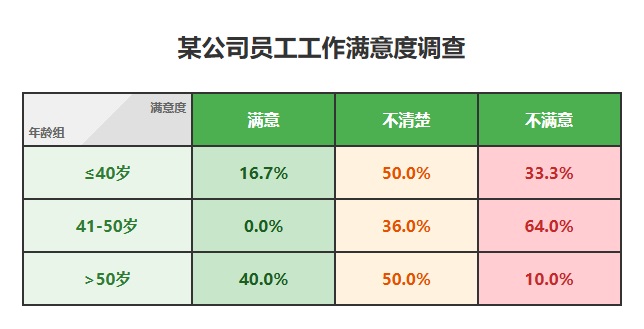
Write an essay based on the following table. In your writing, you should
1) describe the table, and
2) give your comments.
You should write at least 150 words.
Write your essay on ANSWER SHEET 2. (15 points)
Write an essay based on the following table. In your writing, you should
1) describe the table, and
2) give your comments.
You should write at least 150 words.
Write your essay on ANSWER SHEET 2. (15 points)
全卷客观题答案速查
考研英语二2012年真题全卷客观题参考答案速查如下表,按卷面顺序逐题型列出;写作、翻译等主观题无标准答案,参考范文与逐题解析见对应题型解析页。
| 题型(卷面位置) | 参考答案 |
|---|---|
| 完形填空(四选一) Section I (1–20 题) | 1 A served · 2 B common · 3 D bore · 4 A necessities · 5 C but · 6 D against · 7 B meaning · 8 A handed out · 9 C made · 10 B never · 11 D distinguished · 12 C collection · 13 C interviewed · 14 A human · 15 D gained · 16 A paralleled · 17 B emphasized · 18 C fragments · 19 B To · 20 D at that point (逐题解析见 完形填空(四选一)解析页 ) |
| 阅读理解(四选一) Section II Part A (1) (21–25 题) | 21 A · 22 C · 23 D · 24 B · 25 A (逐题解析见 阅读理解(四选一)解析页 ) |
| 阅读理解(四选一) Section II Part A (2) (26–30 题) | 26 C · 27 B · 28 B · 29 A · 30 C (逐题解析见 阅读理解(四选一)解析页 ) |
| 阅读理解(四选一) Section II Part A (3) (31–35 题) | 31 A · 32 B · 33 A · 34 C · 35 D (逐题解析见 阅读理解(四选一)解析页 ) |
| 阅读理解(四选一) Section II Part A (4) (36–40 题) | 36 D · 37 D · 38 B · 39 D · 40 C (逐题解析见 阅读理解(四选一)解析页 ) |
| 多项对应(信息匹配) Section II Part B (41–45 题) | 41 A · 42 F · 43 G · 44 C · 45 E (逐题解析见 多项对应(信息匹配)解析页 ) |
| 英译汉(段落翻译) Section III | 主观题 · 参考范文与逐题解析见 英译汉(段落翻译)解析页 |
| 写作 Section IV Part A | 主观题 · 参考范文与逐题解析见 写作解析页 |
| 写作 Section IV Part B | 主观题 · 参考范文与逐题解析见 写作解析页 |
全卷构成
- Section I 完形填空(四选一)
- Section II Part A (1) 阅读理解(四选一)
- Section II Part A (2) 阅读理解(四选一)
- Section II Part A (3) 阅读理解(四选一)
- Section II Part A (4) 阅读理解(四选一)
- Section II Part B 多项对应(信息匹配)
- Section III 英译汉(段落翻译)
- Section IV Part A 写作
- Section IV Part B 写作
关于考研英语二 2012年 真题(整卷)的常见问题
- 2012年考研英语二真题由哪些题型组成、各考多少题?
- 2012年考研英语二真题共9个模块、45道编号客观题,外加翻译与两篇写作。具体为:完形填空(四选一)1篇20题(10分)、仔细阅读(四选一)4篇共20题(40分)、多项对应新题型1篇5题(10分)、英译汉翻译1段(15分)、写作两篇——小作文1篇(10分)与大作文1篇(15分)。
- 2012年考研英语二真题的阅读篇章按CEFR难度怎样分布?
- 2012年考研英语二真题5篇文章按CEFR分为B2两篇、C1三篇。B2为完形填空的G.I. Joe短文和Text 4经济衰退一篇;C1为Text 1家庭作业政策、Text 2粉色与女孩、Text 3基因专利三篇。整体偏中上难度,文章总阅读词量1962词。
- 2012年考研英语二真题各篇阅读文章有多长?
- 2012年考研英语二真题各篇词数为:完形填空短文336词,Text 1家庭作业400词,Text 2粉色409词,Text 3基因专利406词,Text 4经济衰退411词,五篇合计1962词。四篇仔细阅读单篇均在400词上下,篇幅相当均衡。
- 2012年考研英语二真题Text 1(家庭作业)中出现最频繁的实词有哪些?
- 2012年考研英语二真题Text 1里 homework(家庭作业)出现25次居首,其后是 student 15次、policy 9次、their 9次、teacher 5次、educational 5次、should 5次。围绕作业的高频词清楚标出篇章主线——洛杉矶联合学区的作业新政与师生争议。
- 2012年考研英语二真题新题型(多项对应)篇章的高频词反映什么主题?
- 2012年考研英语二真题多项对应新题型篇章中 history(历史)出现13次、man 10次、life 7次,virtue(美德)、great、write 各4次。高频词集中在历史书写与伟人,对应新题型篇章主题:历史撰述传统如何从颂扬伟人转向关注大众与底层。
- 2012年考研英语二真题的翻译(英译汉)考的是什么主题?
- 2012年考研英语二真题翻译考的是发展中国家的人才流失(brain drain)。原文谈到发展中国家最优秀的人才往往移居硅谷或发达国家的医院与高校,英国、加拿大、澳大利亚等国用倾向大学毕业生的移民政策吸引这些人;2004年一项印度家庭调查显示近40%的移民拥有高中以上学历,远高于25岁以上印度人约3.3%的水平,令贫穷国家的决策者忧心经济受损。
- 2012年考研英语二真题完形填空讲了什么内容?
- 2012年考研英语二真题完形填空讲美国大兵的象征 G.I. Joe。短文指出许多人把G.I. Joe视作无脑的战争玩具、美国军事冒险主义的象征,但它本是二战中普通士兵成长为英雄的写照;G.I.源自军用缩写 Government Issue,Joe则是工人阶级的普通名字,并提到1945年电影 The Story of G.I. Joe 与战地记者 Ernie Pyle。
- 2012年考研英语二真题四篇仔细阅读分别讲什么?
- 2012年考研英语二真题四篇仔细阅读主题为:Text 1,洛杉矶联合学区的家庭作业新政——规定作业最多只占学业成绩10%,作者批其僵化矛盾(源自《洛杉矶时报》);Text 2,粉色如何借儿童营销策略垄断小女孩市场、把女孩身份绑定于外表(源自《卫报》);Text 3,Myriad基因专利之争与生物技术行业的专利前景(源自《经济学人》);Text 4,大衰退后的高失业时代将如何重塑美国的政治、文化与社会(源自《大西洋月刊》)。
- 2012年考研英语二真题Text 3的基因专利之争具体讲了什么?
- 2012年考研英语二真题Text 3讲美国基因专利的法律拉锯。2010年一名联邦法官裁定基因不可申请专利,震动生物技术业;随后联邦上诉法院推翻原判,裁定Myriad Genetics可持有两项预测女性乳腺癌风险的基因专利。批评者提出三大反对理由:基因是自然产物、专利抑制创新、垄断限制基因检测的可及性。文章指出全基因组测序是否侵权仍不明朗,案件或上诉至最高法院。
- 2012年考研英语二真题的两篇作文题目是什么?
- 2012年考研英语二真题写作两篇:小作文(Section IV Part A)要求就网店购得的电子词典出问题,给客服中心写一封约100词的邮件——既要投诉、又要求尽快解决,落款用 Zhang Wei、不写地址;大作文(Section IV Part B)是图表作文,要求根据一张表格描述数据并发表评论,至少150词。
- 2012年考研英语二真题新题型(多项对应)考的是什么文章?
- 2012年考研英语二真题多项对应新题型考一篇关于历史撰述传统的文章,要求把五位人物与其历史观主张配对(右栏有两个多余选项)。文中梳理:彼特拉克颂扬古典英雄的美德,马基雅维利在《君主论》中推崇狡黠、果决而非美德,塞缪尔·斯迈尔斯记述工程师与实业家的可贵人生,托马斯·卡莱尔聚焦难以效仿的英雄人物,马克思和恩格斯在《共产党宣言》中主张历史应是大众及其斗争的记录。
- 2012年考研英语二真题难不难?
- 从篇章难度看,2012年考研英语二真题属中上水平:5篇文章中3篇达C1、2篇为B2,文章总词量1962词,四篇仔细阅读篇幅均衡在400词上下。题材偏社会评论与议论(作业政策、基因专利、经济衰退、历史观),长难句与抽象论证较多,但翻译(人才流失)话题熟悉、词汇相对友好。完整试卷排版与逐题原文精读可在懒笔记整卷页查看。
- 2012年考研英语二真题的答案和解析在哪里看?
- 官方从不公布考研英语标准答案,网上流传的2012年考研英语二答案均为考研机构的参考版本,需谨慎比对。就试卷本身而言,2012年考研英语二真题含完形20题、仔细阅读20题、多项对应5题、翻译1段及两篇作文。懒笔记整卷页提供试卷排版还原、逐题题干与选项、以及五篇原文精读,可据此自行核对与精读。
- 2012年考研英语二真题翻译的参考译文哪里找?brain drain 怎么翻?
- 2012年考研英语二真题翻译段落出自一篇谈发展中国家移民的文章,核心术语 brain drain 通译为“人才流失”。该段讲发展中国家担忧最优秀人才外流至发达国家,并以2004年印度家庭调查的数据佐证。完整英文原文与逐句精读可在懒笔记整卷页查看;网络参考译文版本不一,建议对照原文理解后再润色成符合中文表达的译法。
- 2012年考研英语二真题大作文是图表作文吗?考的什么图表?
- 是图表作文。2012年考研英语二真题大作文(Section IV Part B)要求根据一张表格描述数据并发表评论,至少150词,延续了英语二大作文常考图表(柱状/表格)的命题传统。同套小作文则是一封投诉电子词典质量、要求客服尽快解决的邮件,落款 Zhang Wei。完整作文指令可在懒笔记整卷页查看。