
考研英语二 2016年 · 真题整卷
按真题原卷顺序的全部题型,逐题型可进试卷排版、题目解析、原文精读;整卷可免费下载电子版(真题 PDF、解析版 PDF 与 Word)。
整卷试卷排版
考研英语二 · 英语二真题 · 2016年
考研英语二2016年真题
Directions:
Read the following text. Choose the best word(s) for each numbered blank and mark A, B, C or D on the ANSWER SHEET. (10 points)
Read the following text. Choose the best word(s) for each numbered blank and mark A, B, C or D on the ANSWER SHEET. (10 points)
Happy people work differently. They're more productive, more creative, and willing to take greater risks. And new research suggests that happiness might influence 1 firms work, too.
Companies located in places with happier people invest more, according to a recent research paper. 2 , firms in happy places spend more on R&D (research and development). That's because happiness is linked to the kind of longer-term thinking 3 for making investments for the future.
The researchers wanted to know if the 4 and inclination for risk-taking that come with happiness would 5 the way companies invested. So they compared U.S. cities' average happiness 6 by Gallup polling with the investment activity of publicly traded firms in those areas.
7 enough, firms' investment and R&D intensity were correlated with the happiness of the area in which they were 8 . But is it really happiness that's linked to investment, or could something else about happier cities 9 why firms there spend more on R&D? To find out, the researchers controlled for various 10 that might make firms more likely to invest – like size, industry, and sales – and for indicators that a place was 11 to live in, like growth in wages or population. The link between happiness and investment generally 12 even after accounting for these things.
The correlation between happiness and investment was particularly strong for younger firms, which the authors 13 to "less codified decision making process" and the possible presence of "younger and less 14 managers who are more likely to be influenced by sentiment." The relationship was 15 stronger in places where happiness was spread more 16 . Firms seem to invest more in places where most people are relatively happy, rather than in places with happiness inequality.
17 this doesn't prove that happiness causes firms to invest more or to take a longer-term view, the authors believe it at least 18 at that possibility. It's not hard to imagine that local culture and sentiment would help 19 how executives think about the future. "It surely seems plausible that happy people would be more forward-thinking and creative and 20 R&D more than the average," said one researcher.
1.
[ A ]why
[ B ]how
[ C ]where
[ D ]when
2.
[ A ]In return
[ B ]In particular
[ C ]In contrast
[ D ]In conclusion
3.
[ A ]necessary
[ B ]famous
[ C ]perfect
[ D ]sufficient
4.
[ A ]individualism
[ B ]realism
[ C ]optimism
[ D ]modernism
5.
[ A ]miss
[ B ]echo
[ C ]spoil
[ D ]change
6.
[ A ]imagined
[ B ]measured
[ C ]assumed
[ D ]invented
7.
[ A ]Sure
[ B ]Odd
[ C ]Unfortunate
[ D ]Often
8.
[ A ]divided
[ B ]advertised
[ C ]overtaxed
[ D ]headquartered
9.
[ A ]summarize
[ B ]overstate
[ C ]explain
[ D ]emphasize
10.
[ A ]factors
[ B ]stages
[ C ]levels
[ D ]methods
11.
[ A ]desirable
[ B ]sociable
[ C ]reliable
[ D ]reputable
12.
[ A ]resumed
[ B ]emerged
[ C ]held
[ D ]broke
13.
[ A ]assign
[ B ]attribute
[ C ]transfer
[ D ]compare
14.
[ A ]serious
[ B ]civilized
[ C ]ambitious
[ D ]experienced
15.
[ A ]instead
[ B ]thus
[ C ]also
[ D ]never
16.
[ A ]rapidly
[ B ]directly
[ C ]regularly
[ D ]equally
17.
[ A ]While
[ B ]Until
[ C ]After
[ D ]Since
18.
[ A ]arrives
[ B ]jumps
[ C ]hints
[ D ]strikes
19.
[ A ]share
[ B ]rediscover
[ C ]simplify
[ D ]shape
20.
[ A ]pray for
[ B ]lean towards
[ C ]send out
[ D ]give away
考研英语二2016年真题
Directions:
Read the following four texts. Answer the questions after each text by choosing A, B, C or D. Mark your answers on the ANSWER SHEET. (40 points)
Read the following four texts. Answer the questions after each text by choosing A, B, C or D. Mark your answers on the ANSWER SHEET. (40 points)
Text 1
It's true that high-school coding classes aren't essential for learning computer science in college. Students without experience can catch up after a few introductory courses, said Tom Cortina, the assistant dean at Carnegie Mellon's School of Computer Science.
However, Cortina said, early exposure is beneficial. When younger kids learn computer science, they learn that it's not just a confusing, endless string of letters and numbers – but a tool to build apps, or create artwork, or test hypotheses. It's not as hard for them to transform their thought processes as it is for older students. Breaking down problems into bite-sized chunks and using code to solve them becomes normal. Giving more children this training could increase the number of people interested in the field and help fill the jobs gap, Cortina said.
Students also benefit from learning something about coding before they get to college, where introductory computer-science classes are packed to the brim, which can drive the less-experienced or less-determined students away.
The Flatiron School, where people pay to learn programming, started as one of the many coding bootcamps that have become popular for adults looking for a career change. The high-schoolers get the same curriculum, but "we try to gear lessons toward things they're interested in," said Victoria Friedman, an instructor. For instance, one of the apps the students are developing suggests movies based on your mood.
The students in the Flatiron class probably won't drop out of high school and build the next Facebook. Programming languages have a quick turnover, so the "Ruby on Rails" language they learned may not even be relevant by the time they enter the job market. But the skills they learn – how to think logically through a problem and organize the results – apply to any coding language, said Deborah Seehorn, an education consultant for the state of North Carolina.
Indeed, the Flatiron students might not go into IT at all. But creating a future army of coders is not the sole purpose of the classes. These kids are going to be surrounded by computers – in their pockets, in their offices, in their homes – for the rest of their lives. The younger they learn how computers think, how to coax the machine into producing what they want – the earlier they learn that they have the power to do that – the better.
21.
Cortina holds that early exposure to computer science makes it easier to____.
[ A ]complete future job training
[ B ]remodel the way of thinking
[ C ]formulate logical hypotheses
[ D ]perfect artwork production
22.
In delivering lessons for high-schoolers, Flatiron has considered their____.
[ A ]experience
[ B ]interest
[ C ]career prospects
[ D ]academic backgrounds
23.
Deborah Seehorn believes that the skills learned at Flatiron will____.
[ A ]help students learn other computer languages
[ B ]have to be upgraded when new technologies come
[ C ]need improving when students look for jobs
[ D ]enable students to make big quick money
24.
According to the last paragraph, Flatiron students are expected to____.
[ A ]bring forth innovative computer technologies
[ B ]stay longer in the information technology industry
[ C ]become better prepared for the digitalized world
[ D ]compete with a future army of programmers
25.
The word "coax" (Line 4, Para. 6) is closest in meaning to____.
[ A ]persuade
[ B ]frighten
[ C ]misguide
[ D ]challenge
Text 2
Biologists estimate that as many as 2 million lesser prairie chickens – a kind of bird living on stretching grasslands – once lent red to the often grey landscape of the midwestern and southwestern United States. But just some 22,000 birds remain today, occupying about 16% of the species' historic range.
The crash was a major reason the U.S. Fish and Wildlife Service (USFWS) decided to formally list the bird as threatened. "The lesser prairie chicken is in a desperate situation," said USFWS Director Daniel Ashe. Some environmentalists, however, were disappointed. They had pushed the agency to designate the bird as "endangered," a status that gives federal officials greater regulatory power to crack down on threats. But Ashe and others argued that the "threatened" tag gave the federal government flexibility to try out new, potentially less confrontational conservation approaches. In particular, they called for forging closer collaborations with western state governments, which are often uneasy with federal action, and with the private landowners who control an estimated 95% of the prairie chicken's habitat.
Under the plan, for example, the agency said it would not prosecute landowners or businesses that unintentionally kill, harm, or disturb the bird, as long as they had signed a range-wide management plan to restore prairie chicken habitat. Negotiated by USFWS and the states, the plan requires individuals and businesses that damage habitat as part of their operations to pay into a fund to replace every acre destroyed with 2 new acres of suitable habitat. The fund will also be used to compensate landowners who set aside habitat. USFWS also set an interim goal of restoring prairie chicken populations to an annual average of 67,000 birds over the next 10 years. And it gives the Western Association of Fish and Wildlife Agencies (WAFWA), a coalition of state agencies, the job of monitoring progress. Overall, the idea is to let "states remain in the driver's seat for managing the species," Ashe said.
Not everyone buys the win-win rhetoric. Some Congress members are trying to block the plan, and at least a dozen industry groups, four states, and three environmental groups are challenging it in federal court. Not surprisingly, industry groups and states generally argue it goes too far; environmentalists say it doesn't go far enough. "The federal government is giving responsibility for managing the bird to the same industries that are pushing it to extinction," says biologist Jay Lininger.
26.
The major reason for listing the lesser prairie chicken as threatened is____.
[ A ]its drastically decreased population
[ B ]the underestimate of the grassland acreage
[ C ]a desperate appeal from some biologists
[ D ]the insistence of private landowners
27.
The "threatened" tag disappointed some environmentalists in that it____.
[ A ]was a give-in to governmental pressure
[ B ]would involve fewer agencies in action
[ C ]granted less federal regulatory power
[ D ]went against conservation policies
28.
It can be learned from Paragraph 3 that unintentional harm-doers will not be prosecuted if they____.
[ A ]agree to pay a sum for compensation
[ B ]volunteer to set up an equally big habitat
[ C ]offer to support the WAFWA monitoring job
[ D ]promise to raise funds for USFWS operations
29.
According to Ashe, the leading role in managing the species is____.
[ A ]the federal government
[ B ]the wildlife agencies
[ C ]the landowners
[ D ]the states
30.
Jay Lininger would most likely support____.
[ A ]industry groups
[ B ]the win-win rhetoric
[ C ]environmental groups
[ D ]the plan under challenge
Text 3
That everyone's too busy these days is a cliché. But one specific complaint is made especially mournfully: There's never any time to read.
What makes the problem thornier is that the usual time-management techniques don't seem sufficient. The web's full of articles offering tips on making time to read: "Give up TV" or "Carry a book with you at all times." But in my experience, using such methods to free up the odd 30 minutes doesn't work. Sit down to read and the flywheel of work-related thoughts keeps spinning – or else you're so exhausted that a challenging book's the last thing you need. The modern mind, Tim Parks, a novelist and critic, writes, "is overwhelmingly inclined toward communication… It is not simply that one is interrupted; it is that one is actually inclined to interruption." Deep reading requires not just time, but a special kind of time which can't be obtained merely by becoming more efficient.
In fact, "becoming more efficient" is part of the problem. Thinking of time as a resource to be maximised means you approach it instrumentally, judging any given moment as well spent only in so far as it advances progress toward some goal. Immersive reading, by contrast, depends on being willing to risk inefficiency, goallessness, even time-wasting. Try to slot it in as a to-do list item and you'll manage only goal-focused reading – useful, sometimes, but not the most fulfilling kind. "The future comes at us like empty bottles along an unstoppable and nearly infinite conveyor belt," writes Gary Eberle in his book Sacred Time, and "we feel a pressure to fill these different-sized bottles (days, hours, minutes) as they pass, for if they get by without being filled, we will have wasted them." No mind-set could be worse for losing yourself in a book.
So what does work? Perhaps surprisingly, scheduling regular times for reading. You'd think this might fuel the efficiency mind-set, but in fact, Eberle notes, such ritualistic behaviour helps us "step outside time's flow" into "soul time." You could limit distractions by reading only physical books, or on single-purpose e-readers. "Carry a book with you at all times" can actually work, too – providing you dip in often enough, so that reading becomes the default state from which you temporarily surface to take care of business, before dropping back down. On a really good day, it no longer feels as if you're "making time to read," but just reading, and making time for everything else.
31.
The usual time-management techniques don't work because____.
[ A ]what they can offer does not ease the modern mind
[ B ]what challenging books demand is repetitive reading
[ C ]what people often forget is carrying a book with them
[ D ]what deep reading requires cannot be guaranteed
32.
The "empty bottles" metaphor illustrates that people feel a pressure to____.
[ A ]update their to-do lists
[ B ]make passing time fulfilling
[ C ]carry their plans through
[ D ]pursue carefree reading
33.
Eberle would agree that scheduling regular times for reading helps____.
[ A ]encourage the efficiency mind-set
[ B ]develop online reading habits
[ C ]promote ritualistic reading
[ D ]achieve immersive reading
34.
"Carry a book with you at all times" can work if____.
[ A ]reading becomes your primary business of the day
[ B ]all the daily business has been promptly dealt with
[ C ]you are able to drop back to business after reading
[ D ]time can be evenly split for reading and business
35.
The best title for this text could be____.
[ A ]How to Enjoy Easy Reading
[ B ]How to Find Time to Read
[ C ]How to Set Reading Goals
[ D ]How to Read Extensively
Text 4
Against a backdrop of drastic changes in economy and population structure, younger Americans are drawing a new 21st-century road map to success, the latest poll has found.
Across generational lines, Americans continue to prize many of the same traditional milestones of a successful life, including getting married, having children, owning a home, and retiring in their sixties. But while young and old mostly agree on what constitutes the finish line of a fulfilling life, they offer strikingly different paths for reaching it.
Young people who are still getting started in life were more likely than older adults to prioritize personal fulfillment in their work, to believe they will advance their careers most by regularly changing jobs, to favor communities with more public services and a faster pace of life, to agree that couples should be financially secure before getting married or having children, and to maintain that children are best served by two parents working outside the home, the survey found.
From career to community and family, these contrasts suggest that in the aftermath of the searing Great Recession, those just starting out in life are defining priorities and expectations that will increasingly spread through virtually all aspects of American life, from consumer preferences to housing patterns to politics.
Young and old converge on one key point: Overwhelming majorities of both groups said they believe it is harder for young people today to get started in life than it was for earlier generations. While younger people are somewhat more optimistic than their elders about the prospects for those starting out today, big majorities in both groups believe those "just getting started in life" face a tougher climb than earlier generations in reaching such signpost achievements as securing a good-paying job, starting a family, managing debt, and finding affordable housing.
Pete Schneider considers the climb tougher today. Schneider, a 27-year-old auto technician from the Chicago suburbs, says he struggled to find a job after graduating from college. Even now that he is working steadily, he said, "I can't afford to pay my monthly mortgage payments on my own, so I have to rent rooms out to people to make that happen." Looking back, he is struck that his parents could provide a comfortable life for their children even though neither had completed college when he was young. "I still grew up in an upper middle-class home with parents who didn't have college degrees," Schneider said. "I don't think people are capable of that anymore."
36.
One cross-generation mark of a successful life is____.
[ A ]trying out different lifestyles
[ B ]having a family with children
[ C ]working beyond retirement age
[ D ]setting up a profitable business
37.
It can be learned from Paragraph 3 that young people tend to____.
[ A ]favor a slower life pace
[ B ]hold an occupation longer
[ C ]attach importance to pre-marital finance
[ D ]give priority to childcare outside the home
38.
The priorities and expectations defined by the young will____.
[ A ]become increasingly clear
[ B ]focus on materialistic issues
[ C ]depend largely on political preferences
[ D ]reach almost all aspects of American life
39.
Both young and old agree that____.
[ A ]good-paying jobs are less available
[ B ]the old made more life achievements
[ C ]housing loans today are easy to obtain
[ D ]getting established is harder for the young
40.
Which of the following is true about Schneider?
[ A ]He found a dream job after graduating from college.
[ B ]His parents believe working steadily is a must for success.
[ C ]His parents' good life has little to do with a college degree.
[ D ]He thinks his job as a technician quite challenging.
Directions:
Read the following text and answer the questions by choosing the most suitable subheading from the list A-G for each of the numbered paragraphs (41-45). There are two extra subheadings which you do not need to use. Mark your answers on the ANSWER SHEET. (10 points)
Read the following text and answer the questions by choosing the most suitable subheading from the list A-G for each of the numbered paragraphs (41-45). There are two extra subheadings which you do not need to use. Mark your answers on the ANSWER SHEET. (10 points)
Act Your Shoe Size, Not Your Age
As adults, it seems that we are constantly pursuing happiness, often with mixed results. Yet children appear to have it down to an art – and for the most part they don't need self-help books or therapy. Instead, they look after their wellbeing instinctively, and usually more effectively than we do as grownups. Perhaps it's time to learn a few lessons from them.
(41)占位符这是等待完型填空的句子位置
What does a child do when he's sad? He cries. When he's angry? He shouts. Scared? Probably a bit of both. As we grow up, we learn to control our emotions so they are manageable and don't dictate our behaviours, which is in many ways a good thing. But too often we take this process too far and end up suppressing emotions, especially negative ones. That's about as effective as brushing dirt under a carpet and can even make us ill. What we need to do is find a way to acknowledge and express what we feel appropriately, and then – again, like children – move on.
(42)占位符这是等待完型填空的句子位置
A couple of Christmases ago, my youngest stepdaughter, who was nine years old at the time, got a Superman T-shirt for Christmas. It cost less than a fiver but she was overjoyed, and couldn't stop talking about it. Too often we believe that a new job, bigger house or better car will be the magic silver bullet that will allow us to finally be content, but the reality is these things have very little lasting impact on our happiness levels. Instead, being grateful for small things every day is a much better way to improve wellbeing.
(43)占位符这是等待完型填空的句子位置
Have you ever noticed how much children laugh? If we adults could indulge in a bit of silliness and giggling, we would reduce the stress hormones in our bodies, increase good hormones like endorphins, improve blood flow to our hearts and even have a greater chance of fighting off infection. All of which would, of course, have a positive effect on our happiness levels.
(44)占位符这是等待完型填空的句子位置
The problem with being a grownup is that there's an awful lot of serious stuff to deal with – work, mortgage payments, figuring out what to cook for dinner. But as adults we also have the luxury of being able to control our own diaries and it's important that we schedule in time to enjoy the things we love. Those things might be social, sporting, creative or completely random (dancing around the living room, anyone?) – it doesn't matter, so long as they're enjoyable, and not likely to have negative side effects, such as drinking too much alcohol or going on a wild spending spree if you're on a tight budget.
(45)占位符这是等待完型填空的句子位置
Having said all of the above, it's important to add that we shouldn't try too hard to be happy. Scientists tell us this can backfire and actually have a negative impact on our wellbeing. As the Chinese philosopher Chuang Tzu is reported to have said: "Happiness is the absence of striving for happiness." And in that, once more, we need to look to the example of our children, to whom happiness is not a goal but a natural byproduct of the way they live.
[ A ]Be silly
[ B ]Have fun
[ C ]Ask for help
[ D ]Express your emotions
[ E ]Don't overthink it
[ F ]Be easily pleased
[ G ]Notice things
考研英语二2016年真题
46.
Directions:
Translate the following text into Chinese. Write your translation on the ANSWER SHEET. (15 points)
Translate the following text into Chinese. Write your translation on the ANSWER SHEET. (15 points)
The supermarket is designed to lure customers into spending as much time as possible within its doors. The reason for this is simple: The longer you stay in the store, the more stuff you'll see, and the more stuff you see, the more you'll buy. And supermarkets contain a lot of stuff. The average supermarket, according to the Food Marketing Institute, carries some 44,000 different items, and many carry tens of thousands more. The sheer volume of available choice is enough to send shoppers into a state of information overload. According to brain-scan experiments, the demands of so much decision-making quickly become too much for us. After about 40 minutes of shopping, most people stop struggling to be rationally selective, and instead begin shopping emotionally – which is the point at which we accumulate the 50 percent of stuff in our cart that we never intended buying.
考研英语二2016年真题
47.
Directions:
Suppose you won a translation contest and your friend, Jack, wrote an email to congratulate you and ask for advice on translation. Write him a reply to
1)thank him, and
2)give your advice.
You should write about 100 words on the ANSWER SHEET.
Do not use your own name. Use “Li Ming” instead.
Do not write your address. (10 points)
Suppose you won a translation contest and your friend, Jack, wrote an email to congratulate you and ask for advice on translation. Write him a reply to
1)thank him, and
2)give your advice.
You should write about 100 words on the ANSWER SHEET.
Do not use your own name. Use “Li Ming” instead.
Do not write your address. (10 points)
48.
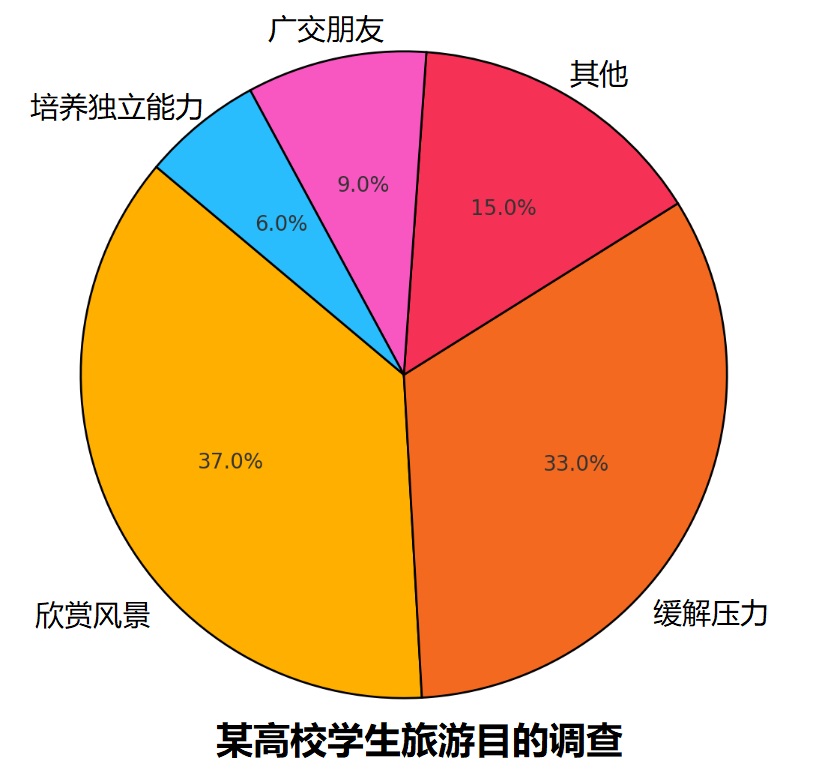
Directions:
Write an essay based on the chart below. In your writing, you should
1)interpret the chart, and
2)give your comments.
You should write about 150 words on the ANSWER SHEET. (15 points)
Write an essay based on the chart below. In your writing, you should
1)interpret the chart, and
2)give your comments.
You should write about 150 words on the ANSWER SHEET. (15 points)
全卷客观题答案速查
考研英语二2016年真题全卷客观题参考答案速查如下表,按卷面顺序逐题型列出;写作、翻译等主观题无标准答案,参考范文与逐题解析见对应题型解析页。
| 题型(卷面位置) | 参考答案 |
|---|---|
| 完形填空(四选一) Section I (1–20 题) | 1 B how · 2 B In particular · 3 A necessary · 4 C optimism · 5 D change · 6 B measured · 7 A Sure · 8 D headquartered · 9 C explain · 10 A factors · 11 A desirable · 12 C held · 13 B attribute · 14 D experienced · 15 C also · 16 D equally · 17 A While · 18 C hints · 19 D shape · 20 B lean towards (逐题解析见 完形填空(四选一)解析页 ) |
| 阅读理解(四选一) Section II Part A (1) (21–25 题) | 21 B · 22 B · 23 A · 24 C · 25 A (逐题解析见 阅读理解(四选一)解析页 ) |
| 阅读理解(四选一) Section II Part A (2) (26–30 题) | 26 A · 27 C · 28 A · 29 D · 30 C (逐题解析见 阅读理解(四选一)解析页 ) |
| 阅读理解(四选一) Section II Part A (3) (31–35 题) | 31 D · 32 B · 33 D · 34 A · 35 B (逐题解析见 阅读理解(四选一)解析页 ) |
| 阅读理解(四选一) Section II Part A (4) (36–40 题) | 36 B · 37 C · 38 D · 39 D · 40 C (逐题解析见 阅读理解(四选一)解析页 ) |
| 段落小标题(7选5) Section II Part B (41–45 题) | 41 D · 42 F · 43 A · 44 B · 45 E (逐题解析见 段落小标题(7选5)解析页 ) |
| 英译汉(段落翻译) Section III | 主观题 · 参考范文与逐题解析见 英译汉(段落翻译)解析页 |
| 写作 Section IV Part A | 主观题 · 参考范文与逐题解析见 写作解析页 |
| 写作 Section IV Part B | 主观题 · 参考范文与逐题解析见 写作解析页 |
全卷构成
- Section I 完形填空(四选一)
- Section II Part A (1) 阅读理解(四选一)
- Section II Part A (2) 阅读理解(四选一)
- Section II Part A (3) 阅读理解(四选一)
- Section II Part A (4) 阅读理解(四选一)
- Section II Part B 段落小标题(7选5)
- Section III 英译汉(段落翻译)
- Section IV Part A 写作
- Section IV Part B 写作
关于考研英语二 2016年 真题(整卷)的常见问题
- 2016年考研英语二真题由哪些题型构成,各占多少分?
- 2016年考研英语二真题共五个部分、9 个模块、40 道编号客观题:完形填空 1 篇 20 空(10 分)、阅读理解 Part A 仔细阅读 4 篇共 20 题(40 分)、Part B 段落小标题 1 篇 5 题(10 分)、英译汉翻译 1 篇(15 分)、写作 2 篇即小作文加大作文(25 分)。客观题集中在前 45 题,主观题为翻译与两篇作文。
- 2016年考研英语二真题的仔细阅读有几篇文章、多少道题?
- 2016年考研英语二真题 Section II Part A 仔细阅读共 4 篇文章(Text 1 至 Text 4),每篇配 5 道四选一选择题,合计 20 题、40 分,对应第 21 至 40 题,是整卷分值最高的单一题型。
- 2016年考研英语二真题阅读篇章的难度(CEFR)如何分布?
- 2016年考研英语二真题 5 篇主阅读篇章按 CEFR 标定为 B2 三篇、C1 两篇:完形填空原文、Text 1(青少年编程)、Text 4(年轻人定义成功)为 B2;Text 2(小草原榛鸡保护)与 Text 3(如何找时间阅读)为 C1,是全卷语言难度偏高的两篇。
- 2016年考研英语二真题的阅读总词量有多大,各篇多长?
- 2016年考研英语二真题 5 篇核心篇章合计约 1984 词:完形填空原文约 360 词,Text 1 约 394 词,Text 2 约 401 词,Text 3 约 416 词,Text 4 约 413 词。单篇普遍在 360 至 416 词区间,篇幅相近。
- 2016年考研英语二真题完形填空的高频词有哪些?
- 2016年考研英语二真题完形填空原文围绕“幸福与企业投资”,高频实词集中在 happiness(11 次)、firm(9 次)、investment 与 invest(合计约 11 次)、happy(6 次)、place(6 次)、research/researcher(多次)。掌握 happiness、invest、firm、R&D 等词是读懂该完形逻辑的关键。
- 2016年考研英语二真题翻译考的是什么主题?
- 2016年考研英语二真题英译汉(Section III,15 分)讲的是“超市如何诱导顾客消费”。原文指出超市被设计成让顾客尽可能久地停留,停留越久、看到的商品越多、买得越多;据美国食品营销协会(Food Marketing Institute)统计,普通超市约有 44000 种商品;面对海量选择,购物约 40 分钟后多数人从理性挑选转为情绪化购物,购物车里约 50% 是计划外购买的商品。
- 2016年考研英语二真题完形填空讲了什么内容?
- 2016年考研英语二真题完形填空选自《哈佛商业评论》(Harvard Business Review)2015 年文章《Companies in Happy Cities Invest More for the Long Term》,主题是“城市幸福指数与企业投资的关系”。研究用盖洛普民调测量美国各城市平均幸福度,与上市公司投资活动对比,发现幸福指数高的地区公司投资和研发(R&D)支出更多,对年轻企业以及幸福分布更均衡的地区相关性尤其明显。
- 2016年考研英语二真题四篇仔细阅读分别讲什么?
- 2016年考研英语二真题 Text 1 选自《大西洋月刊》,讲教青少年学编程的经济意义,以 Flatiron 编程学校和卡内基梅隆 Cortina 为例;Text 2 选自《科学》(Science),讲美国鱼类及野生动物管理局(USFWS)将小草原榛鸡列为“受威胁”物种引发的各方争议;Text 3 选自《卫报》,讲“如何找时间阅读”,主张把阅读当固定仪式而非挤碎片时间;Text 4 选自《大西洋月刊》,讲美国年轻一代如何重新定义成功之路。
- 2016年考研英语二真题段落小标题(Part B)那篇文章讲什么?
- 2016年考研英语二真题 Section II Part B 段落小标题题选用文章《Act Your Shoe Size, Not Your Age》,主题是“成年人应向孩子学习如何获得幸福”。文章给出 7 个备选小标题(如 Be silly、Have fun、Express your emotions、Be easily pleased、Don't overthink it 等),考生需为第 41 至 45 段各选最合适的标题,另有两个多余选项不用。
- 2016年考研英语二真题小作文(Section IV Part A)的题目要求是什么?
- 2016年考研英语二真题小作文要求写一封回信:假设你在一次翻译竞赛中获奖,朋友 Jack 发邮件祝贺并请教翻译建议,你需回信做到两点——一是对他表示感谢,二是给出你的翻译建议,约 100 词,落款统一用“Li Ming”,不写地址。考点是祝贺/感谢类回信加给建议的应用文写作。
- 2016年考研英语二真题大作文(Section IV Part B)考的是什么图表?
- 2016年考研英语二真题大作文是图表作文,要求根据所给图表写约 150 词的短文,先描述图表、再发表评论。该图表呈现某高校学生外出旅游目的的调查数据,主要选项集中在“欣赏自然风景”和“缓解压力放松心情”等占比较高的项,属于英语二常考的单一统计图描述加评论类作文。
- 2016年考研英语二真题难不难?
- 2016年考研英语二真题整体难度适中、低于同年英语一。多数考生反馈完形与翻译(超市营销话题)较易上手,大作文图表标题清晰好写;难点主要落在 Text 2(小草原榛鸡保护,含 USFWS、WAFWA 等机构与法律术语)和 Text 3(深度阅读,含较多抽象论述)两篇 C1 难度文章。词汇以经济、科技、社会生活类为主,长难句频率适中。
- 2016年考研英语二真题的标准答案和解析在哪里看?
- 2016年考研英语二真题中,完形、仔细阅读、段落小标题为客观题,翻译与两篇作文为主观题。需要说明的是,教育部考试中心不公布官方标准答案,网络流传的答案均为各培训机构的参考版本,不同机构个别题目可能有分歧。在懒笔记整卷页可查看试卷完整排版、逐篇原文与题目精读,按题型对照原文定位依据,比单纯背答案字母更稳妥。
- 2016年考研英语二真题翻译的参考译文哪里找?
- 2016年考研英语二真题翻译为“超市诱导消费”主题,参考译文可在懒笔记翻译详情页对照英文逐句查看。需注意翻译为主观题、官方不发布标准译文,各机构译文措辞略有差异,评分看意思准确与中文通顺。建议先自己产出译文,再对照参考版核对“lure(诱导)”“44000 种商品”“信息过载”“情绪化购物”等关键信息点是否译全。
- 2016年考研英语二真题有没有听力,题型和英语一一样吗?
- 2016年考研英语二真题不含听力,全卷为完形、阅读理解(仔细阅读加段落小标题)、英译汉翻译、写作四类笔试题型,与英语一结构相近但有差异:英语二阅读 Part B 为段落小标题、翻译为约 150 词整段英译汉、大作文为图表作文,整体难度低于英语一。懒笔记整卷页按 Section I 至 Section IV 完整还原 2016年考研英语二的真实排版。