
考研英语二 2018年 · 真题整卷
按真题原卷顺序的全部题型,逐题型可进试卷排版、题目解析、原文精读;整卷可免费下载电子版(真题 PDF、解析版 PDF 与 Word)。
整卷试卷排版
考研英语二 · 英语二真题 · 2018年
考研英语二2018年真题
Directions:
Read the following text. Choose the best word(s) for each numbered blank and mark A, B, C or D on the ANSWER SHEET. (10 points)
Read the following text. Choose the best word(s) for each numbered blank and mark A, B, C or D on the ANSWER SHEET. (10 points)
Why do people read negative Internet comments and do other things that will obviously be painful? Because humans have an inherent need to 1 uncertainty, according to a recent study in Psychological Science. The new research reveals that the need to know is so strong that people will 2 to satisfy their curiosity even when it is clear the answer will 3 .
In a series of four experiments, behavioral scientists at the University of Chicago and the Wisconsin School of Business tested students' willingness to 4 themselves to unpleasant stimuli in an effort to satisfy curiosity. For one 5 , each participant was shown a pile of pens that the researcher claimed were from a previous experiment. The twist? Half of the pens would 6 an electric shock when clicked.
Twenty-seven students were told which pens were electrified; another twenty-seven were told only that some were electrified. 7 left alone in the room, the students who did not know which ones would shock them clicked more pens and incurred more shocks than the students who knew what would 8 . Subsequent experiments reproduced this effect with other stimuli, 9 the sound of fingernails on a chalkboard and photographs of disgusting insects.
The drive to 10 is deeply rooted in humans, much the same as the basic drives for 11 or shelter, says Christopher Hsee of the University of Chicago. Curiosity is often considered a good instinct – it can 12 new scientific advances, for instance – but sometimes such 13 can backfire. The insight that curiosity can drive you to do 14 things is a profound one.
Unhealthy curiosity is possible to 15 , however. In a final experiment, participants who were encouraged to 16 how they would feel after viewing an unpleasant picture were less likely to 17 to see such an image. These results suggest that imagining the 18 of following through on one's curiosity ahead of time can help determine 19 it is worth the endeavor. "Thinking about long-term 20 is key to reducing the possible negative effects of curiosity," Hsee says. In other words, don't read online comments.
1.
[ A ]protect
[ B ]resolve
[ C ]discuss
[ D ]ignore
2.
[ A ]refuse
[ B ]wait
[ C ]regret
[ D ]seek
3.
[ A ]hurt
[ B ]last
[ C ]mislead
[ D ]rise
4.
[ A ]alert
[ B ]tie
[ C ]treat
[ D ]expose
5.
[ A ]message
[ B ]review
[ C ]trial
[ D ]concept
6.
[ A ]remove
[ B ]weaken
[ C ]interrupt
[ D ]deliver
7.
[ A ]When
[ B ]If
[ C ]Though
[ D ]Unless
8.
[ A ]continue
[ B ]happen
[ C ]disappear
[ D ]change
9.
[ A ]rather than
[ B ]regardless of
[ C ]such as
[ D ]owing to
10.
[ A ]discover
[ B ]forgive
[ C ]forget
[ D ]disagree
11.
[ A ]pay
[ B ]marriage
[ C ]schooling
[ D ]food
12.
[ A ]lead to
[ B ]rest on
[ C ]learn from
[ D ]begin with
13.
[ A ]withdrawal
[ B ]persistence
[ C ]inquiry
[ D ]diligence
14.
[ A ]self-reliant
[ B ]self-destructive
[ C ]self-evident
[ D ]self-deceptive
15.
[ A ]define
[ B ]resist
[ C ]replace
[ D ]trace
16.
[ A ]overlook
[ B ]predict
[ C ]design
[ D ]conceal
17.
[ A ]remember
[ B ]promise
[ C ]choose
[ D ]pretend
18.
[ A ]relief
[ B ]plan
[ C ]duty
[ D ]outcome
19.
[ A ]why
[ B ]whether
[ C ]where
[ D ]how
20.
[ A ]consequences
[ B ]investments
[ C ]strategies
[ D ]limitations
考研英语二2018年真题
Directions:
Read the following four texts. Answer the questions after each text by choosing A, B, C or D. Mark your answers on the ANSWER SHEET. (40 points)
Read the following four texts. Answer the questions after each text by choosing A, B, C or D. Mark your answers on the ANSWER SHEET. (40 points)
Text 1
It is curious that Stephen Koziatek feels almost as though he has to justify his efforts to give his students a better future.
Mr. Koziatek is part of something pioneering. He is a teacher at a New Hampshire high school where learning is not something of books and tests and mechanical memorization, but practical. When did it become accepted wisdom that students should be able to name the 13th president of the United States but be utterly overwhelmed by a broken bike chain?
As Koziatek knows, there is learning in just about everything. Nothing is necessarily gained by forcing students to learn geometry at a graffitied desk stuck with generations of discarded chewing gum. They can also learn geometry by assembling a bicycle.
But he's also found a kind of insidious prejudice. Working with your hands is seen as almost a mark of inferiority. Schools in the family of vocational education "have that stereotype…that it's for kids who can't make it academically," he says.
On one hand, that viewpoint is a logical product of America's evolution. Manufacturing is not the economic engine that it once was. The job security that the US economy once offered to high school graduates has largely evaporated. More education is the new principle. We want more for our kids, and rightfully so.
But the headlong push into bachelor's degrees for all – and the subtle devaluing of anything less – misses an important point: That's not the only thing the American economy needs. Yes, a bachelor's degree opens more doors. But even now, 54 percent of the jobs in the country are middle-skill jobs, such as construction and high-skill manufacturing. But only 44 percent of workers are adequately trained.
In other words, at a time when the working class has turned the country on its political head, frustrated that the opportunity that once defined America is vanishing, one obvious solution is staring us in the face. There is a gap in working-class jobs, but the workers who need those jobs most aren't equipped to do them. Koziatek's Manchester School of Technology High School is trying to fill that gap.
Koziatek's school is a wake-up call. When education becomes one-size-fits-all, it risks overlooking a nation's diversity of gifts.
21.
A broken bike chain is mentioned to show students' lack of____.
[ A ]practical ability
[ B ]academic training
[ C ]pioneering spirit
[ D ]mechanical memorization
22.
There exists the prejudice that vocational education is for kids who____.
[ A ]have a stereotyped mind
[ B ]have no career motivation
[ C ]are not academically successful
[ D ]are financially disadvantaged
23.
We can infer from Paragraph 5 that high school graduates____.
[ A ]used to have big financial concerns
[ B ]used to have more job opportunities
[ C ]are reluctant to work in manufacturing
[ D ]are entitled to more educational privileges
24.
The headlong push into bachelor's degrees for all____.
[ A ]helps create a lot of middle-skill jobs
[ B ]may narrow the gap in working-class jobs
[ C ]is expected to yield a better-trained workforce
[ D ]indicates the overvaluing of higher education
25.
The author's attitude toward Koziatek's school can be described as____.
[ A ]supportive
[ B ]tolerant
[ C ]disappointed
[ D ]cautious
Text 2
While fossil fuels – coal, oil, gas – still generate roughly 85 percent of the world's energy supply, it's clearer than ever that the future belongs to renewable sources such as wind and solar. The move to renewables is picking up momentum around the world: They now account for more than half of new power sources going on line.
Some growth stems from a commitment by governments and farsighted businesses to fund cleaner energy sources. But increasingly the story is about the plummeting prices of renewables, especially wind and solar. The cost of solar panels has dropped by 80 percent and the cost of wind turbines by close to one-third in the past eight years.
In many parts of the world renewable energy is already a principal energy source. In Scotland, for example, wind turbines provide enough electricity to power 95 percent of homes. While the rest of the world takes the lead, notably China and Europe, the United States is also seeing a remarkable shift. In March, for the first time, wind and solar power accounted for more than 10 percent of the power generated in the US, reported the US Energy Information Administration.
President Trump has underlined fossil fuels – especially coal – as the path to economic growth. In a recent speech in Iowa, he dismissed wind power as an unreliable energy source. But that message did not play well with many in Iowa, where wind turbines dot the fields and provide 36 percent of the state's electricity generation – and where tech giants like Microsoft are being attracted by the availability of clean energy to power their data centers.
The question "what happens when the wind doesn't blow or the sun doesn't shine?" has provided a quick put-down for skeptics. But a boost in the storage capacity of batteries is making their ability to keep power flowing around the clock more likely.
The advance is driven in part by vehicle manufacturers, who are placing big bets on battery-powered electric vehicles. Although electric cars are still a rarity on roads now, this massive investment could change the picture rapidly in coming years.
While there's a long way to go, the trend lines for renewables are spiking. The pace of change in energy sources appears to be speeding up – perhaps just in time to have a meaningful effect in slowing climate change. What Washington does – or doesn't do – to promote alternative energy may mean less and less at a time of a global shift in thought.
26.
The word "plummeting" (Line 3, Para. 2) is closest in meaning to____.
[ A ]stabilizing
[ B ]changing
[ C ]falling
[ D ]rising
27.
According to Paragraph 3, the use of renewable energy in America____.
[ A ]is progressing notably
[ B ]is as extensive as in Europe
[ C ]faces many challenges
[ D ]has proved to be impractical
28.
It can be learned that in Iowa, ____.
[ A ]wind is a widely used energy source
[ B ]wind energy has replaced fossil fuels
[ C ]tech giants are investing in clean energy
[ D ]there is a shortage of clean energy supply
29.
Which of the following is true about clean energy according to Paragraphs 5&6?
[ A ]Its application has boosted battery storage.
[ B ]It is commonly used in car manufacturing.
[ C ]Its continuous supply is becoming a reality.
[ D ]Its sustainable exploitation will remain difficult.
30.
It can be inferred from the last paragraph that renewable energy____.
[ A ]will bring the US closer to other countries
[ B ]will accelerate global environmental change
[ C ]is not really encouraged by the US government
[ D ]is not competitive enough with regard to its cost
Text 3
The power and ambition of the giants of the digital economy are astonishing—Amazon has just announced the purchase of the upmarket grocery chain Whole Foods for $13.5bn, but two years ago Facebook paid even more than that to acquire the WhatsApp messaging service, which doesn't have any physical product at all. What WhatsApp offered Facebook was an intricate and finely detailed web of its users' friendships and social lives.
Facebook promised the European commission then that it would not link phone numbers to Facebook identities, but it broke the promise almost as soon as the deal went through. Even without knowing what was in the messages, the knowledge of who sent them and to whom was enormously revealing and still could be. What political journalist, what party whip, would not want to know the makeup of the WhatsApp groups in which Theresa May's enemies are currently plotting? It may be that the value of Whole Foods to Amazon is not so much the 460 shops it owns, but the records of which customers have purchased what.
Competition law appears to be the only way to address these imbalances of power. But it is clumsy. For one thing, it is very slow compared to the pace of change within the digital economy. By the time a problem has been addressed and remedied it may have vanished in the marketplace, to be replaced by new abuses of power. But there is a deeper conceptual problem, too. Competition law as presently interpreted deals with financial disadvantage to consumers and this is not obvious when the users of these services don't pay for them. The users of their services are not their customers. That would be the people who buy advertising from them – and Facebook and Google, the two virtual giants, dominate digital advertising to the disadvantage of all other media and entertainment companies.
The product they're selling is data, and we, the users, convert our lives to data for the benefit of the digital giants. Just as some ants farm the bugs called aphids for the honeydew they produce when they feed, so Google farms us for the data that our digital lives yield. Ants keep predatory insects away from where their aphids feed; Gmail keeps the spammers out of our inboxes. It doesn't feel like a human or democratic relationship, even if both sides benefit.
31.
According to Paragraph 1, Facebook acquired WhatsApp for its____.
[ A ]digital products
[ B ]user information
[ C ]physical assets
[ D ]quality service
32.
Linking phone numbers to Facebook identities may____.
[ A ]worsen political disputes
[ B ]mess up customer records
[ C ]pose a risk to Facebook users
[ D ]mislead the European commission
33.
According to the author, competition law____.
[ A ]should serve the new market powers
[ B ]may worsen the economic imbalance
[ C ]should not provide just one legal solution
[ D ]cannot keep pace with the changing market
34.
Competition law as presently interpreted can hardly protect Facebook users because____.
[ A ]they are not defined as customers
[ B ]they are not financially reliable
[ C ]the services are generally digital
[ D ]the services are paid for by advertisers
35.
The ants analogy is used to illustrate____.
[ A ]a win-win business model between digital giants
[ B ]a typical competition pattern among digital giants
[ C ]the benefits provided for digital giants' customers
[ D ]the relationship between digital giants and their users
Text 4
To combat the trap of putting a premium on being busy, Cal Newport, author of Deep Work: Rules for Focused Success in a Distracted World, recommends building a habit of "deep work" – the ability to focus without distraction.
There are a number of approaches to mastering the art of deep work – be it lengthy retreats dedicated to a specific task; developing a daily ritual; or taking a "journalistic" approach to seizing moments of deep work when you can throughout the day. Whichever approach, the key is to determine your length of focus time and stick to it.
Newport also recommends "deep scheduling" to combat constant interruptions and get more done in less time. "At any given point, I should have deep work scheduled for roughly the next month. Once on the calendar, I protect this time like I would a doctor's appointment or important meeting", he writes.
Another approach to getting more done in less time is to rethink how you prioritise your day – in particular how we craft our to-do lists. Tim Harford, author of Messy: The Power of Disorder to Transform Our Lives, points to a study in the early 1980s that divided undergraduates into two groups: some were advised to set out monthly goals and study activities; others were told to plan activities and goals in much more detail, day by day.
While the researchers assumed that the well-structured daily plans would be most effective when it came to the execution of tasks, they were wrong: the detailed daily plans demotivated students. Harford argues that inevitable distractions often render the daily to-do list ineffective, while leaving room for improvisation in such a list can reap the best results.
In order to make the most of our focus and energy, we also need to embrace downtime, or as Newport suggests, "be lazy".
"Idleness is not just a vacation, an indulgence or a vice; it is as indispensable to the brain as vitamin D is to the body…[idleness] is, paradoxically, necessary to getting any work done," he argues.
Srini Pillay, an assistant professor of psychiatry at Harvard Medical School, believes this counterintuitive link between downtime and productivity may be due to the way our brains operate. When our brains switch between being focused and unfocused on a task, they tend to be more efficient.
"What people don't realise is that in order to complete these tasks they need to use both the focus and unfocus circuits in their brain," says Pillay.
36.
The key to mastering the art of deep work is to____.
[ A ]keep to your focus time
[ B ]list your immediate tasks
[ C ]make specific daily plans
[ D ]seize every minute to work
37.
The study in the early 1980s cited by Harford shows that____.
[ A ]distractions may actually increase efficiency
[ B ]daily schedules are indispensable to studying
[ C ]students are hardly motivated by monthly goals
[ D ]detailed plans may not be as fruitful as expected
38.
According to Newport, idleness is____.
[ A ]a desirable mental state for busy people
[ B ]a major contributor to physical health
[ C ]an effective way to save time and energy
[ D ]an essential factor in accomplishing any work
39.
Pillay believes that our brains' shift between being focused and unfocused____.
[ A ]can result in psychological well-being
[ B ]can bring about greater efficiency
[ C ]is aimed at better balance in work
[ D ]is driven by task urgency
40.
This text is mainly about____.
[ A ]ways to relieve the tension of busy life
[ B ]approaches to getting more done in less time
[ C ]the key to eliminating distractions
[ D ]the cause of the lack of focus time
Directions:
Read the following text and answer the questions by choosing the most suitable subheading from the list A-G for each of the numbered paragraphs (41-45). There are two extra subheadings which you do not need to use. Mark your answers on the ANSWER SHEET. (10 points)
Read the following text and answer the questions by choosing the most suitable subheading from the list A-G for each of the numbered paragraphs (41-45). There are two extra subheadings which you do not need to use. Mark your answers on the ANSWER SHEET. (10 points)
Five ways to make conversation with anyone
Conversations are links, which means when you have a conversation with a new person a link gets formed and every conversation you have after that moment will strengthen the link.
You meet new people every day: the grocery worker, the cab driver, new people at work or the security guard at the door. Simply starting a conversation with them will form a link.
Here are five simple ways that you can make the first move and start a conversation with strangers.
(41)占位符这是等待完型填空的句子位置
Suppose you are in a room with someone you don't know and something within you says "I want to talk with this person" – this is something that mostly happens with all of us. You wanted to say something – the first word – but it just won't come out, it feels like it is stuck somewhere. I know the feeling and here is my advice: just get it out.
Just think: what is the worst that could happen? They won't talk with you? Well, they are not talking with you now! So keep it simple: "Hi", "Hey" or "Hello" – do the best you can to gather all of the enthusiasm and energy you can, put on a big smile and say "Hi".
(42)占位符这是等待完型填空的句子位置
It is a problem all of us face; you have limited time with the person that you want to talk with and you want to make this talk memorable.
Honestly, if we got stuck in the rut of "hi", "hello", "how are you?" and "what is going on?", you will fail to give the initial jolt to the conversation that can make it so memorable.
So don't be afraid to ask more personal questions. Trust me, you'll be surprised to see how much people are willing to share if you just ask.
(43)占位符这是等待完型填空的句子位置
When you meet a person for the first time, make an effort to find the things which you and that person have in common so that you can build the conversation from that point. When you start conversation from there and then move outwards, you'll find all of a sudden that the conversation becomes a lot easier.
(44)占位符这是等待完型填空的句子位置
Imagine you are pouring your heart out to someone and they are just busy on their phone, and if you ask for their attention you get the response "I can multitask".
So when someone tries to communicate with you, just be in that communication wholeheartedly. Make eye contact. Trust me, eye contact is where all the magic happens. When you make eye contact, you can feel the conversation.
(45)占位符这是等待完型填空的句子位置
You all came into a conversation where you first met the person, but after some time you may have met again and have forgotten their name. Isn't that awkward! So, remember the little details of the people you met or you talked with; perhaps the places they have been to, the places they want to go, the things they like, the things they hate – whatever you talk about.
When you remember such things you can automatically become an investor in their wellbeing. So they feel a responsibility to you to keep that relationship going.
That's it. Five amazing ways that you can make conversation with almost anyone. Every person is a really good book to read, or to have a conversation with!
[ A ]Just say it
[ B ]Be present
[ C ]Pay a unique compliment
[ D ]Name, places, things
[ E ]Find the "me too"s
[ F ]Skip the small talk
[ G ]Ask for an opinion
考研英语二2018年真题
46.
Directions:
Translate the following text into Chinese. Write your translation on the ANSWER SHEET. (15 points)
Translate the following text into Chinese. Write your translation on the ANSWER SHEET. (15 points)
A fifth grader gets a homework assignment to select his future career path from a list of occupations. He ticks "astronaut" but quickly adds "scientist" to the list and selects it as well. The boy is convinced that if he reads enough, he can explore as many career paths as he likes. And so he reads – everything from encyclopedias to science fiction novels. He reads so passionately that his parents have to institute a "no reading policy" at the dinner table.
That boy was Bill Gates, and he hasn't stopped reading yet – not even after becoming one of the most successful people on the planet. Nowadays, his reading material has changed from science fiction and reference books: recently, he revealed that he reads at least 50 nonfiction books a year. Gates chooses nonfiction titles because they explain how the world works. "Each book opens up new avenues of knowledge to explore", Gates says.
考研英语二2018年真题
47.
Directions:
Suppose you have to cancel your travel plan and will not be able to visit Professor Smith. Write him an email to
1)apologize and explain the situation, and
2)suggest a future meeting.
You should write about 100 words on the ANSWER SHEET.
Do not use your own name. Use “Li Ming” instead.
Do not write your address. (10 points)
Suppose you have to cancel your travel plan and will not be able to visit Professor Smith. Write him an email to
1)apologize and explain the situation, and
2)suggest a future meeting.
You should write about 100 words on the ANSWER SHEET.
Do not use your own name. Use “Li Ming” instead.
Do not write your address. (10 points)
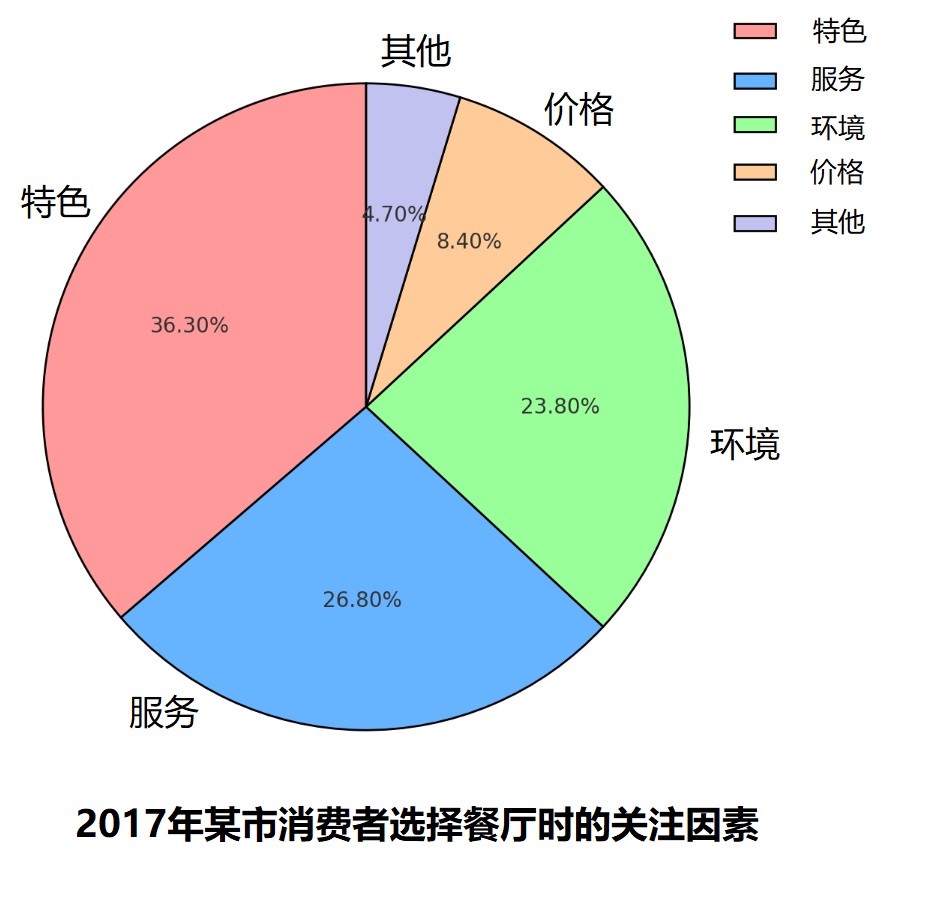
48.
Directions:
Write an essay based on the chart below. In your writing, you should
1)interpret the chart, and
2)give your comments.
You should write about 150 words on the ANSWER SHEET. (15 points)
Write an essay based on the chart below. In your writing, you should
1)interpret the chart, and
2)give your comments.
You should write about 150 words on the ANSWER SHEET. (15 points)
全卷客观题答案速查
考研英语二2018年真题全卷客观题参考答案速查如下表,按卷面顺序逐题型列出;写作、翻译等主观题无标准答案,参考范文与逐题解析见对应题型解析页。
| 题型(卷面位置) | 参考答案 |
|---|---|
| 完形填空(四选一) Section I (1–20 题) | 1 B resolve · 2 D seek · 3 A hurt · 4 D expose · 5 C trial · 6 D deliver · 7 A When · 8 B happen · 9 C such as · 10 A discover · 11 D food · 12 A lead to · 13 C inquiry · 14 B self-destructive · 15 B resist · 16 B predict · 17 C choose · 18 D outcome · 19 B whether · 20 A consequences (逐题解析见 完形填空(四选一)解析页 ) |
| 阅读理解(四选一) Section II Part A (1) (21–25 题) | 21 A · 22 C · 23 B · 24 D · 25 A (逐题解析见 阅读理解(四选一)解析页 ) |
| 阅读理解(四选一) Section II Part A (2) (26–30 题) | 26 C · 27 A · 28 A · 29 C · 30 C (逐题解析见 阅读理解(四选一)解析页 ) |
| 阅读理解(四选一) Section II Part A (3) (31–35 题) | 31 B · 32 C · 33 D · 34 A · 35 D (逐题解析见 阅读理解(四选一)解析页 ) |
| 阅读理解(四选一) Section II Part A (4) (36–40 题) | 36 A · 37 D · 38 D · 39 B · 40 B (逐题解析见 阅读理解(四选一)解析页 ) |
| 段落小标题(7选5) Section II Part B (41–45 题) | 41 A · 42 F · 43 E · 44 B · 45 D (逐题解析见 段落小标题(7选5)解析页 ) |
| 英译汉(段落翻译) Section III | 主观题 · 参考范文与逐题解析见 英译汉(段落翻译)解析页 |
| 写作 Section IV Part A | 主观题 · 参考范文与逐题解析见 写作解析页 |
| 写作 Section IV Part B | 主观题 · 参考范文与逐题解析见 写作解析页 |
全卷构成
- Section I 完形填空(四选一)
- Section II Part A (1) 阅读理解(四选一)
- Section II Part A (2) 阅读理解(四选一)
- Section II Part A (3) 阅读理解(四选一)
- Section II Part A (4) 阅读理解(四选一)
- Section II Part B 段落小标题(7选5)
- Section III 英译汉(段落翻译)
- Section IV Part A 写作
- Section IV Part B 写作
关于考研英语二 2018年 真题(整卷)的常见问题
- 2018年考研英语二真题由哪些题型构成、各占多少分?
- 2018年考研英语二真题共五个部分、满分100分:Section I 完形填空(四选一)10分,Section II Part A 四篇仔细阅读40分,Section II Part B 段落小标题新题型10分,Section III 英译汉翻译15分,Section IV 写作(小作文10分+大作文15分)共25分。全卷为纯笔试,不含听力。
- 2018年考研英语二真题一共有多少道客观题?
- 2018年考研英语二真题客观题共45道:完形填空20个编号空格(第1—20题),四篇仔细阅读各5题、合计20道选择题(第21—40题),段落小标题新题型5题(第41—45题,从A—G七个标题中选五个、含两个干扰项)。此外还有1篇英译汉翻译和2篇写作(道歉邮件+图表作文)。
- 2018年考研英语二真题各篇阅读材料的难度(CEFR)如何分布?
- 2018年考研英语二真题五篇主体文章按 CEFR 分为 B2 三篇、C1 两篇。B2 的是完形填空(好奇心)、Text 1(实践教育)、Text 2(可再生能源);难度更高的 C1 是 Text 3(数字巨头攫取用户数据,选自《卫报》)与 Text 4(深度工作,选自 BBC)。
- 2018年考研英语二真题的阅读总词量大约多少?
- 2018年考研英语二真题五篇主体文章合计约1953词。其中完形填空篇约351词,Text 1约372词,Text 2约421词(最长),Text 3约394词,Text 4约415词。这还不含段落小标题新题型(Five ways to make conversation with anyone)与翻译篇(比尔·盖茨阅读)。
- 2018年考研英语二真题完形填空篇出现频率最高的词是什么?
- 2018年考研英语二真题完形填空篇的核心高频词是 curiosity(好奇心),全篇出现7次;其次 experiment(实验)出现4次,pen(笔)出现4次,shock、student、would 等也反复出现。词频直接对应主题——人类为满足好奇心而甘愿承受不愉快刺激的系列实验。
- 2018年考研英语二翻译(Section III)考的是什么内容?
- 2018年考研英语二翻译(英译汉、15分)讲的是比尔·盖茨的阅读习惯。短文从一名五年级学生的职业作业写起:他相信只要读得足够多就能探索任意多条职业道路,从百科全书读到科幻小说,读得入迷到父母在餐桌上立下"禁读规定"——而这个男孩正是比尔·盖茨,如今他每年至少读50本非虚构图书,因为这类书能解释世界如何运转。译文需处理 "no reading policy"、nonfiction、avenues of knowledge 等表达。
- 2018年考研英语二完形填空(Section I)讲了什么主题?
- 2018年考研英语二完形填空选自《科学美国人》文章 Curiosity Is Not Intrinsically Good,主题是好奇心未必是好事。芝加哥大学等机构通过四组实验(让学生面对带电的笔、指甲刮黑板声、恶心昆虫图片等不愉快刺激)发现:不知道结果的人反而更想一探究竟,即使明知答案会带来痛苦;结论是事先设想后果有助于抑制不健康的好奇心,作者末句调侃"别去读网上的评论"。
- 2018年考研英语二四篇仔细阅读(Text 1—4)分别讲什么?
- 2018年考研英语二四篇仔细阅读主题各异:Text 1 讲美国新罕布什尔州一所高中的实践型职业教育,反驳"动手即低人一等"的偏见(选自《基督教科学箴言报》);Text 2 讲风能、太阳能等可再生能源成本骤降、已成大势,与特朗普政府力挺化石燃料形成反差;Text 3 讲数字巨头(Facebook 收购 WhatsApp、亚马逊收购 Whole Foods)的本质是攫取用户数据、而现行竞争法难以规范(选自《卫报》);Text 4 讲应管理精力而非时间,培养"深度工作"习惯(援引 Cal Newport 等观点,选自 BBC)。
- 2018年考研英语二新题型(段落小标题)考的文章是什么?
- 2018年考研英语二新题型(Section II Part B,10分)是段落小标题匹配,文章标题为 Five ways to make conversation with anyone(与任何人开启对话的五种方法)。考生需为第41—45段从七个备选小标题中选出最合适的五个、并排除两个干扰项,七个标题为 Just say it、Be present、Pay a unique compliment、Name, places, things、Find the "me too"s、Skip the small talk、Ask for an opinion。
- 2018年考研英语二小作文(Section IV Part A)的题目要求是什么?
- 2018年考研英语二小作文要求写一封电子邮件:假设你不得不取消旅行计划、无法拜访 Professor Smith,需向他致歉并说明情况,同时建议未来再约见面,约100词,统一署名 "Li Ming"、不写地址,满分10分。属于书信/邮件类应用文,重点在道歉与提议两个功能。
- 2018年考研英语二大作文(Section IV Part B)写的是什么?
- 2018年考研英语二大作文是图表作文,要求根据给定图表写约150词的短文,先描述/解读图表数据,再给出自己的评论,满分15分。这是英语二大作文的固定考法(图表/表格描述+评论),不同于英语一的图画作文。
- 2018年考研英语二真题难度怎么样?
- 2018年考研英语二真题整体难度居中。完形填空(好奇心)题源科普、逻辑清晰;四篇阅读题材为教育、能源、数据隐私、效率,C1 难度的 Text 3(《卫报》数字巨头)与 Text 4(BBC 深度工作)句子较长、抽象词偏多;翻译(比尔·盖茨阅读)叙事性强、相对友好。部分生词稍难,但题型分值结构与往年一致。
- 2018年考研英语二真题的答案和解析在哪里看?
- 需要说明的是,考研英语官方不公布标准答案,网上流传的答案与解析均为各培训机构的参考版本、彼此可能略有出入。在懒笔记整卷页可查看 2018年考研英语二真题的试卷排版、完整题目与逐题解析,以及完形、四篇阅读、新题型、翻译各篇的原文精读,便于对照机构答案核验思路。
- 2018年考研英语二翻译和阅读的参考译文哪里找?
- 2018年考研英语二翻译篇(比尔·盖茨每年读50本书)的参考译文,以及完形、四篇仔细阅读、新题型的原文与中文对照精读,均可在懒笔记整卷页查看。各篇均标注了题源出处(如《科学美国人》《基督教科学箴言报》《卫报》、BBC),便于核对英文原文与译法。
- 2018年考研英语二真题有听力部分吗?
- 没有。2018年考研英语二真题是纯笔试,不含听力,全卷由完形填空、四篇仔细阅读、段落小标题新题型、英译汉翻译、小作文与大作文六块构成、满分100分、考试时长180分钟。考研英语(无论英语一还是英语二)均不设听力科目,这是与四六级、雅思托福的关键区别。