
考研英语二 2022年 · 真题整卷
按真题原卷顺序的全部题型,逐题型可进试卷排版、题目解析、原文精读;整卷可免费下载电子版(真题 PDF、解析版 PDF 与 Word)。
整卷试卷排版
考研英语二 · 英语二真题 · 2022年
考研英语二2022年真题
Directions:
Read the following text. Choose the best word(s) for each numbered blank and mark A, B, C or D on the ANSWER SHEET. (10 points)
Read the following text. Choose the best word(s) for each numbered blank and mark A, B, C or D on the ANSWER SHEET. (10 points)
Harlan Coben believes that if you're a writer, you'll find the time; and that if you can't find the time, then writing isn't a priority and you're not a writer. For him, writing is a 1 job—a job like any other. He has 2 it with plumbing, pointing out that a plumber doesn't wake up and say that he can't work with pipes today.
3 , like most writers these days, you're holding down a job to pay the bills, it's not 4 to find the time to write. But it's not impossible. It requires determination and single-mindedness. 5 that most bestselling authors began writing when they were doing other things to earn a living. And today, even writers who are fairly 6 often have to do other work to 7 their writing income.
As Harlan Coben has suggested, it's a 8 of priorities. To make writing a priority, you'll have to 9 some of your day-to-day activities and some things you really enjoy. Depending on your 10 and your lifestyle, that might mean spending less time watching television or listening to music, though some people can write 11 they listen to music. You might have to 12 the amount of exercise or sport you do. You'll have to make social media an 13 activity rather than a daily, time-consuming 14 . There'll probably have to be less socialising with your friends and less time with your family. It's a 15 learning curve and it won't always make you popular.
There's just one thing you should try to keep at least some time for, 16 your writing—and that's reading. Any writer needs to read as much and as widely as they can; it's the one 17 supporter—something you can't do without.
Time is finite. The older you get, the 18 it seems to go. We need to use it as carefully and as 19 as we can, that means prioritising our activities so that we spend most time on the things we really want to do. If you're a writer, that means— 20 writing.
1.
[ A ]difficult
[ B ]normal
[ C ]steady
[ D ]pleasant
2.
[ A ]combined
[ B ]compared
[ C ]confused
[ D ]confronted
3.
[ A ]If
[ B ]Though
[ C ]Once
[ D ]Unless
4.
[ A ]enough
[ B ]strange
[ C ]wrong
[ D ]easy
5.
[ A ]Accept
[ B ]Explain
[ C ]Remember
[ D ]Suppose
6.
[ A ]well-known
[ B ]well-advised
[ C ]well-informed
[ D ]well-chosen
7.
[ A ]donate
[ B ]generate
[ C ]supplement
[ D ]calculate
8.
[ A ]cause
[ B ]purpose
[ C ]question
[ D ]condition
9.
[ A ]highlight
[ B ]sacrifice
[ C ]continue
[ D ]explore
10.
[ A ]relations
[ B ]interests
[ C ]memories
[ D ]skills
11.
[ A ]until
[ B ]because
[ C ]while
[ D ]before
12.
[ A ]put up with
[ B ]make up for
[ C ]hang on to
[ D ]cut down on
13.
[ A ]intelligent
[ B ]occasional
[ C ]intensive
[ D ]emotional
14.
[ A ]habit
[ B ]test
[ C ]decision
[ D ]plan
15.
[ A ]tough
[ B ]gentle
[ C ]rapid
[ D ]funny
16.
[ A ]in place of
[ B ]in charge of
[ C ]in response to
[ D ]in addition to
17.
[ A ]indispensable
[ B ]innovative
[ C ]invisible
[ D ]instant
18.
[ A ]duller
[ B ]harder
[ C ]quieter
[ D ]quicker
19.
[ A ]peacefully
[ B ]generously
[ C ]productively
[ D ]gratefully
20.
[ A ]at most
[ B ]in turn
[ C ]on average
[ D ]above all
考研英语二2022年真题
Directions:
Read the following four texts. Answer the questions after each text by choosing A, B, C or D. Mark your answers on the ANSWER SHEET. (40 points)
Read the following four texts. Answer the questions after each text by choosing A, B, C or D. Mark your answers on the ANSWER SHEET. (40 points)
Text 1
On a recent sunny day, 13,000 chickens roam over Larry Brown's 40 windswept acres in Shiner, Texas. Some rest in the shade of a parked car. Others drink water with the cows. This all seems random, but it's by design, part of what the $6.1 billion U.S. egg industry bets will be its next big thing: climate-friendly eggs.
These eggs, which are making their debut now on shelves for as much as $8 a dozen, are still labeled organic and animal-friendly, but they're also from birds that live on farms using regenerative agriculture—special techniques to cultivate rich soils that can trap greenhouse gases. Such eggs could be marketed as helping to fight climate change.
"I'm excited about our progress," says Brown, who harvests eggs for Denver-based Nest Fresh Eggs and is adding more cover crops that draw worms and crickets for the chickens to eat. The birds' waste then fertilizes fields. Such improvements "allow our hens to forage for higher-quality natural feed that will be good for the land, the hens, and the eggs that we supply to our customers."
The egg industry's push is the first major test of whether animal products from regenerative farms can become the next premium offering. In barely more than a decade, organic eggs went from being dismissed as a niche product in natural foods stores to being sold at Walmart. More recently there were similar doubts about probiotics and plant-based meats, but both have exploded into major supermarket categories. If the sustainable-egg rollout is successful, it could open the floodgates for regenerative beef, broccoli, and beyond.
Regenerative products could be a hard sell, because the concept is tough to define quickly, says Julie Stanton, associate professor of agricultural economics at Pennsylvania State University Brandywine. Such farming also brings minimal, if any, improvement to the food products (though some producers say their eggs have more protein).
The industry is betting that the same consumers paying more for premium attributes such as free-range, non-GMO, and pasture-raised eggs will embrace sustainability. Surveys show that younger generations are more concerned about climate change, and some of the success of plant-based meat can be chalked up to shoppers wanting to signal their desire to protect the environment. Young adults "really care about the planet," says John Brunnquell, president of Egg Innovations. "They are absolutely altering the food chain beyond what I think even they understand what they're doing."
21.
The climate-friendly eggs are produced____
[ A ]at a considerably low cost.
[ B ]at the demand of regular shoppers.
[ C ]as a replacement for organic eggs.
[ D ]on specially designed farms.
22.
Larry Brown is excited about his progress in____
[ A ]reducing the damage of worms.
[ B ]accelerating the disposal of waste.
[ C ]creating a sustainable system.
[ D ]attracting customers to his products.
23.
The example of organic eggs is used in Paragraph 4 to suggest____
[ A ]the doubts over natural feeds.
[ B ]the setbacks in the egg industry.
[ C ]the potential of regenerative products.
[ D ]the promotional success of supermarkets.
24.
It can be learned from the last paragraph that young people____
[ A ]are reluctant to change their diet.
[ B ]are likely to buy climate-friendly eggs.
[ C ]are curious about new food.
[ D ]are amazed at agriculture advances.
25.
John Brunnquell would disagree with Julie Stanton over regenerative products'____
[ A ]market prospects.
[ B ]standard definition.
[ C ]nutritional value.
[ D ]moral implication.
Text 2
More Americans are opting to work well into retirement, a growing trend that threatens to upend the old workforce model.
One in three Americans who are at least 40 have or plan to have a job in retirement to prepare for a longer life, according to a survey conducted by Harris Poll for TD Ameritrade. Even more surprising is that more than half of "unretirees"—those who plan to work in retirement or went back to work after retiring—said they would be employed in their later years even if they had enough money to settle down, the survey showed.
Financial needs aren't the only culprit for the "unretirement" trend. Other reasons, according to the study, include personal fulfillment such as staying mentally fit, preventing boredom or avoiding depression. About 72% of "unretiree" respondents said that they would return to work once retired to keep mentally fit while 59% said it would be tied to making ends meet.
"The concept of retirement is evolving," said Christine Russell, senior manager of retirement at TD Ameritrade. "It's not just about finances. The value of work is also driving folks to continue working past retirement."
One reason for the change in retirement patterns: Americans are living longer. The share of the population 65 and older was 16% in 2018, up 32% from the prior year, according to the U.S. Census Bureau. That's also up 30.2% since 2010. Older Americans are also the fastest-growing segment of the US workforce, and boomers are expected to live longer than previous generations. The percentage of retirement-age people in the labor force has doubled over the past three decades. About 20% of people 65 and older were in the workforce in February, up from an all-time low of 10% in January 1985, according to money manager United Income.
Because of longer life spans, Americans are also boosting their savings to preserve their nest eggs, the TD Ameritrade study showed, which surveyed 2000 adults between 40 and 79. Six in 10 "unretirees" are increasing their savings in anticipation of a longer life, according to the survey. Among the most popular ways they are doing this, the company said, is by reducing their overall expenses, securing life insurance or maximizing their contributions to retirement accounts.
Unfortunately, many people who are opting to work in retirement are preparing to do so because they are worried about making ends meet in their later years, said Brent Weiss, a co-founder at Baltimore-based financial-planning firm Facet Wealth. He suggested that preretirees should speak with a financial adviser to set long-term financial goals.
"The most challenging moments in life are getting married, starting a family and ultimately retiring," Weiss said. "It's not just a financial decision, but an emotional one. Many people believe they can't retire."
26.
The survey conducted by Harris Poll indicates that____
[ A ]over half of the retirees are physically fit for work.
[ B ]the old workforce is as active as the younger one.
[ C ]one in three Americans enjoy earlier retirement.
[ D ]more Americans are willing to work in retirement.
27.
It can be inferred from Paragraph 3 that Americans tend to think that____
[ A ]retirement may cause problems for them.
[ B ]boredom can be relieved after retirement.
[ C ]the mental health of retirees is overlooked.
[ D ]"unretirement" contributes to the economy.
28.
Retirement patterns are changing partly due to____
[ A ]labor shortage.
[ B ]population growth.
[ C ]longer life expectancy.
[ D ]rising living costs.
29.
Many "unretirees" are increasing their savings by____
[ A ]investing more in stocks.
[ B ]taking up odd jobs.
[ C ]getting well-paid work.
[ D ]spending less.
30.
With regard to retirement, Brent Weiss thinks that many people are____
[ A ]unprepared.
[ B ]unafraid.
[ C ]disappointed.
[ D ]enthusiastic.
Text 3
We have all encountered them, in both our personal and professional lives. Think about the times you felt tricked or frustrated by a membership or subscription that had a seamless sign-up process but was later difficult to cancel. Something that should be simple and transparent can be complicated, intentionally or unintentionally, in ways that impair consumer choice. These are examples of dark patterns.
First coined in 2010 by user experience expert Harry Brignull, "dark patterns" is a catch-all term for practices that manipulate user interfaces to influence the decision-making ability of users. Brignull identifies 12 types of common dark patterns, ranging from misdirection and hidden costs to "roach motel", where a user experience seems easy and intuitive at the start, but turns difficult when the user tries to get out.
In a 2019 study of 53,000 product pages and 11,000 websites, researchers found that about one in 10 employs these design practices. Though widely prevalent, the concept of dark patterns is still not well understood. Business and nonprofit leaders should be aware of dark patterns and try to avoid the gray areas they engender.
Where is the line between ethical, persuasive design and dark patterns? Businesses should engage in conversations with IT, compliance, risk, and legal teams to review their privacy policy, and include in the discussion the customer/user experience designers and coders responsible for the company's user interface, as well as the marketers and advertisers responsible for sign-ups, checkout baskets, pricing, and promotions. Any or all these teams can play a role in creating or avoiding "digital deception."
Lawmakers and regulators are slowly starting to address the ambiguity around dark patterns, most recently at the state level. In March, the California Attorney General announced the approval of additional regulations under the California Consumer Privacy Act (CCPA) that "ensure that consumers will not be confused or misled when seeking to exercise their data privacy rights. The regulations aim to ban dark patterns—this means prohibiting companies from using confusing language or unnecessary steps such as forcing them to click through multiple screens or listen to reasons why they shouldn't opt out."
As more states consider promulgating additional regulations, there is a need for greater accountability from within the business community. Dark patterns also can be addressed on a self-regulatory basis, but only if organizations hold themselves accountable, not just to legal requirements but also to industry best practices and standards.
31.
It can be learned from the first two paragraphs that dark patterns____
[ A ]improve user experiences
[ B ]leak user information for profit
[ C ]undermine users' decision-making
[ D ]remind users of hidden costs
32.
The 2019 study on dark patterns is mentioned to show____
[ A ]their major flaws
[ B ]their complex designs
[ C ]their severe damage
[ D ]their strong presence
33.
To handle digital deception, businesses should____
[ A ]listen to customer feedback
[ B ]talk with relevant teams
[ C ]turn to independent agencies
[ D ]rely on professional training
34.
The additional regulations under the CCPA are intended to____
[ A ]guide users through opt-out processes
[ B ]protect consumers from being tricked
[ C ]grant companies data privacy rights
[ D ]restrict access to problematic content
35.
According to the last paragraph, a key to coping with dark patterns is ____
[ A ]new legal requirements
[ B ]businesses' self-discipline
[ C ]strict regulatory standards
[ D ]consumers' safety awareness
Text 4
Although ethics classes are common around the world, scientists are unsure if their lessons can actually change behavior; evidence either way is weak, relying on contrived laboratory tests or sometimes unreliable self-reports. But a new study published in Cognition found that, in at least one real-world situation, a single ethics lesson may have had lasting effects.
The researchers investigated one class session's impact on eating meat. They chose this particular behavior for three reasons, according to study co-author Eric Schwitzgebel, a philosopher at the University of California, Riverside: students' attitudes on the topic are variable and unstable, behavior is easily measurable, and ethics literature largely agrees that eating less meat is good because it reduces environmental harm and animal suffering. Half of the students in four large philosophy classes read an article on the ethics of factory-farmed meat, optionally watched an 11-minute video on the topic and joined a 50-minute discussion. The other half focused on charitable giving instead. Then, unknown to the students, the researchers studied their anonymized meal-card purchases for that semester—nearly 14,000 receipts for almost 500 students.
Schwitzgebel predicted the intervention would have no effect; he had previously found that ethics professors do not differ from other professors on a range of behaviors, including voting rates, blood donation and returning library books. But among student subjects who discussed meat ethics, meal purchases containing meat decreased from 52 to 45 percent—and this effect held steady for the study's duration of several weeks. Purchases from the other group remained at 52 percent.
"That's actually a pretty large effect for a pretty small intervention," Schwitzgebel says. Psychologist Nina Strohminger at the University of Pennsylvania, who was not involved in the study, says she wants the effect to be real but cannot rule out some unknown confounding variable. And if real, she notes, it might be reversible by another nudge: "Easy come, easy go."
Schwitzgebel suspects the greatest impact came from social influence—classmates or teaching assistants leading the discussions may have shared their own vegetarianism, showing it as achievable or more common. Second, the video may have had an emotional impact. Least rousing, he thinks, was rational argument, although his co-authors say reason might play a bigger role. Now the researchers are probing the specific effects of teaching style, teaching assistants' eating habits and students' video exposure. Meanwhile, Schwitzgebel—who had predicted no effect—will be eating his words.
36.
Scientists generally believe that the effects of ethics classes are____
[ A ]hard to determine.
[ B ]narrowly interpreted.
[ C ]difficult to ignore.
[ D ]poorly summarized.
37.
Which of the following is a reason for the researchers to study meat eating?
[ A ]It is common among students.
[ B ]It is a behavior easy to measure.
[ C ]It is important to students' health.
[ D ]It is a hot topic in ethics classes.
38.
Eric Schwitzgebel's previous findings suggest that ethics professors____
[ A ]are seldom critical of their students.
[ B ]are less sociable than other professors.
[ C ]are not sensitive to political issues.
[ D ]are not necessarily ethically better.
39.
Nina Strohminger thinks that the effect of the intervention is____
[ A ]permanent.
[ B ]predictable.
[ C ]uncertain.
[ D ]unrepeatable.
40.
Eric Schwitzgebel suspects that the students' change in behavior____
[ A ]can bring psychological benefits.
[ B ]can be analyzed statistically.
[ C ]is a result of multiple factors.
[ D ]is a sign of self-development.
Directions:
Read the following text and answer the questions by choosing the most suitable subheading from the list A-G for each of the numbered paragraphs (41-45). There are two extra subheadings which you do not need to use. Mark your answers on the ANSWER SHEET. (10 points)
Read the following text and answer the questions by choosing the most suitable subheading from the list A-G for each of the numbered paragraphs (41-45). There are two extra subheadings which you do not need to use. Mark your answers on the ANSWER SHEET. (10 points)
How to Get Active Again
Getting back into exercise can be a challenge in the best of times, but with gyms and in-person exercise classes off-limits to many people these days, it can be tricky to know where to start. And it's important to get the right dose of activity. "Too much too soon either results in injury or burnout," says Mary Yoke, PhD, a faculty member in the kinesiology department at Indiana University in Bloomington. The following simple strategies will help you return to exercise safely after a break.
(41)占位符这是等待完型填空的句子位置
Don't try to go back to what you were doing before your break. If you were walking 3 miles a day, playing 18 holes of golf three times a week, or lifting 10-pound dumbbells for three sets of 10 reps, reduce activity to half a mile every other day, or nine holes of golf once a week with short walks on other days, or use 5-pound dumbbells for one set of 10 reps. Increase time, distance, and intensity gradually. "This isn't something you can do overnight," says Keri L. Denay, MD, lead author of a recent American College of Sports Medicine advisory that encourages Americans to not overlook the benefits of activity during the pandemic. But you will reap benefits such as less anxiety and improve sleep right away.
(42)占位符这是等待完型填空的句子位置
If you're breathing too hard to talk in complete sentences, back off. If you feel good, go a little longer or faster. Feeling wiped out after a session? Go easier next time. And stay alert to serious symptoms, such as chest pain or pressure, severe shortness of breath or dizziness, or faintness, and seek medical attention immediately.
(43)占位符这是等待完型填空的句子位置
Consistency is the key to getting stronger and building endurance and stamina. Ten minutes of activity per day is a good start, says Marcus Jackovitz, DPT, a physical therapist at the University of Miami Hospital. All the experts we spoke with highly recommend walking because it's the easiest, most accessible form of exercise. Although it can be a workout on its own, if your goal is to get back to Zumba classes, tennis, cycling, or any other activity, walking is also a great first step.
(44)占位符这是等待完型填空的句子位置
Even if you can't yet do a favorite activity, you can practice the moves. With or without a club or racket, swing like you're hitting the ball. Paddle like you're in a kayak or canoe. Mimic your favorite swimming strokes. The action will remind you of the joy the activity brought you and prime your muscles for when you can get out there again.
(45)占位符这是等待完型填空的句子位置
Exercising with others "can keep you accountable and make it more fun, so you're more likely to do it again," Jackovitz says. You can do activities such as golf and tennis or take a walk with others and still be socially distant. But when you can't connect in person, consider using technology. Chat on the phone with a friend while you walk around your neighborhood. FaceTime with a relative as you strength train or stretch at home. You can also join a livestream or on-demand exercise class.
[ A ]Make It a Habit.
[ B ]Don't Go It Alone.
[ C ]Start Low, Go Slow.
[ D ]Talk With Your Doctor.
[ E ]Listen to Your Body.
[ F ]Go Through the Motions.
[ G ]Round Out Your Routine.
考研英语二2022年真题
46.
Directions:
Translate the following text into Chinese. Write your translation on the ANSWER SHEET. (15 points)
Translate the following text into Chinese. Write your translation on the ANSWER SHEET. (15 points)
Although we try our best, sometimes our paintings rarely turn out as originally planned. Changes in the light, the limitations of your painting materials, and the lack of experience and technique mean that what you start out trying to achieve may not come to life the way that you expected.
Although this can be frustrating and disappointing, it turns out that this can actually be good for you. Unexpected results have two benefits: you pretty quickly learn to deal with disappointment and realise that when one door closes, another opens. You also quickly learn to adapt and come up with creative solutions to the problems the painting presents, and thinking outside the box will become your second nature.
In fact, creative problem-solving skills are incredibly useful in daily life, with which you're more likely to be able to find a solution when a problem arises.
考研英语二2022年真题
47.
Directions:
Suppose you are planning a campus food festival. Write an e-mail to the international students in your university to
1) introduce the food festival, and
2) invite them to participate.
You should write about 100 words on the ANSWER SHEET.
Do not use your own name. Use “Li Ming" instead. (10 points)
Suppose you are planning a campus food festival. Write an e-mail to the international students in your university to
1) introduce the food festival, and
2) invite them to participate.
You should write about 100 words on the ANSWER SHEET.
Do not use your own name. Use “Li Ming" instead. (10 points)
48.
Directions:
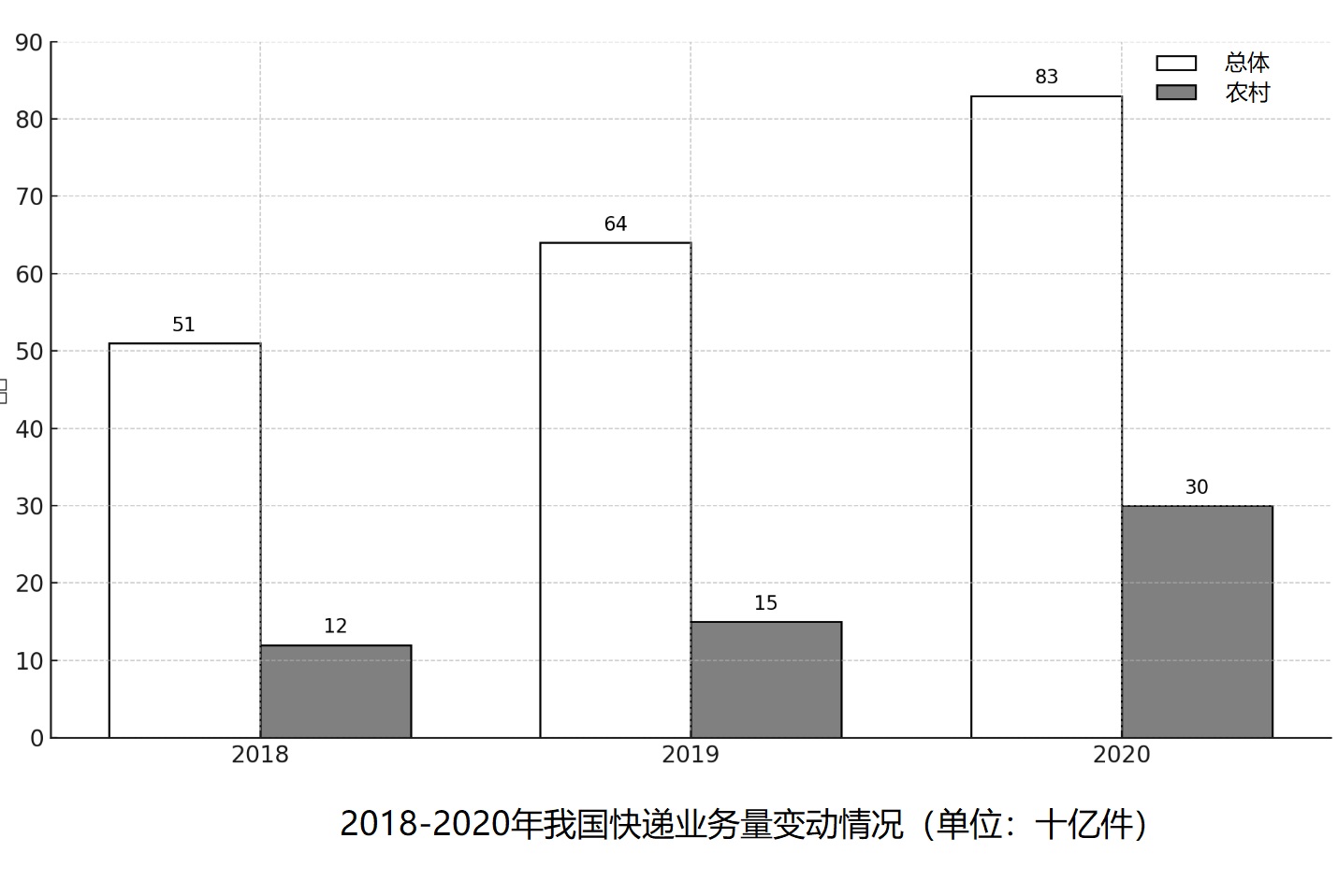
Write an essay based on the following chart. In your writing, you should
1) interpret the chart, and
2) give your comments.
You should write about 150 words on the ANSWER SHEET. (15 points)
Write an essay based on the following chart. In your writing, you should
1) interpret the chart, and
2) give your comments.
You should write about 150 words on the ANSWER SHEET. (15 points)
全卷客观题答案速查
考研英语二2022年真题全卷客观题参考答案速查如下表,按卷面顺序逐题型列出;写作、翻译等主观题无标准答案,参考范文与逐题解析见对应题型解析页。
| 题型(卷面位置) | 参考答案 |
|---|---|
| 完形填空(四选一) Section I (1–20 题) | 1 B normal · 2 B compared · 3 A If · 4 D easy · 5 C Remember · 6 A well-known · 7 C supplement · 8 C question · 9 B sacrifice · 10 B interests · 11 C while · 12 D cut down on · 13 B occasional · 14 A habit · 15 A tough · 16 D in addition to · 17 A indispensable · 18 D quicker · 19 C productively · 20 D above all (逐题解析见 完形填空(四选一)解析页 ) |
| 阅读理解(四选一) Section II Part A (1) (21–25 题) | 21 D · 22 C · 23 C · 24 B · 25 A (逐题解析见 阅读理解(四选一)解析页 ) |
| 阅读理解(四选一) Section II Part A (2) (26–30 题) | 26 D · 27 A · 28 C · 29 D · 30 A (逐题解析见 阅读理解(四选一)解析页 ) |
| 阅读理解(四选一) Section II Part A (3) (31–35 题) | 31 C · 32 D · 33 B · 34 B · 35 B (逐题解析见 阅读理解(四选一)解析页 ) |
| 阅读理解(四选一) Section II Part A (4) (36–40 题) | 36 A · 37 B · 38 D · 39 C · 40 C (逐题解析见 阅读理解(四选一)解析页 ) |
| 段落小标题(7选5) Section II Part B (41–45 题) | 41 C · 42 E · 43 A · 44 F · 45 B (逐题解析见 段落小标题(7选5)解析页 ) |
| 英译汉(段落翻译) Section III | 主观题 · 参考范文与逐题解析见 英译汉(段落翻译)解析页 |
| 写作 Section IV Part A | 主观题 · 参考范文与逐题解析见 写作解析页 |
| 写作 Section IV Part B | 主观题 · 参考范文与逐题解析见 写作解析页 |
全卷构成
- Section I 完形填空(四选一)
- Section II Part A (1) 阅读理解(四选一)
- Section II Part A (2) 阅读理解(四选一)
- Section II Part A (3) 阅读理解(四选一)
- Section II Part A (4) 阅读理解(四选一)
- Section II Part B 段落小标题(7选5)
- Section III 英译汉(段落翻译)
- Section IV Part A 写作
- Section IV Part B 写作
关于考研英语二 2022年 真题(整卷)的常见问题
- 2022年考研英语二真题由哪些题型构成?
- 2022年考研英语二真题由五大题型构成:完形填空、四篇仔细阅读(四选一)、段落小标题、英译汉翻译、两篇写作,全卷共40道编号题。其中完形填空挖空20处(1–20),四篇阅读 Text 1–4 各5题(21–40),段落小标题为41–45题,翻译与两篇作文不计编号小题。
- 2022年考研英语二真题各部分的分值是多少?
- 2022年考研英语二真题满分100分,分值为:完形填空10分,四篇仔细阅读合计40分,段落小标题(新题型)10分,英译汉翻译15分,小作文(应用文)10分,大作文(图表作文)15分。阅读理解与写作两大块各占50分左右,是拉开分差的重点。
- 2022年考研英语二真题的阅读篇章难度(CEFR)如何分布?
- 2022年考研英语二真题六篇文章按CEFR分级为五篇B2、一篇C1。唯一的C1篇章是 Text 4(探讨一节道德课对学生吃肉行为的影响,源自《科学美国人》),其余完形原文、Text 1–3 及翻译段落均为B2,整体处于中高级英语水平。
- 2022年考研英语二真题的英文文章总词量有多少?
- 2022年考研英语二真题阅读类文章总词量约2145词。其中最长的是 Text 2(不退休话题,459词),完形填空原文346词,Text 1(气候友好型鸡蛋)400词、Text 3(黑暗模式)399词、Text 4(道德课实验)396词,翻译段落最短,仅145词。
- 2022年考研英语二真题完形填空原文围绕哪些高频词展开?
- 2022年考研英语二真题完形填空原文高频词集中在写作主题上:time 出现7次,writing、writer、your 各6次,priority、activity 等各3次。这与文章核心一致——借作家哈兰·科本的观点谈如何把写作当作优先项、挤出时间来写作。
- 2022年考研英语二真题的翻译(英译汉)考的是什么内容?
- 2022年考研英语二真题翻译考的是一段关于绘画与创造性解决问题的短文(145词)。原文说画作常常画不出最初设想的样子,光线变化、绘画材料的局限和经验技巧的缺乏都会让成品不如预期;但意外结果反而有益,能让人学会面对失望、学会适应并想出创造性的解决办法,跳出固有思维(thinking outside the box)将成为第二天性,而这种创造性解决问题的能力在日常生活中极为有用。
- 2022年考研英语二真题四篇阅读 Text 1 到 Text 4 分别讲什么主题?
- 2022年考研英语二真题四篇阅读各有主题:Text 1 讲气候友好型鸡蛋与再生农业,蛋品行业押注其为下一个风口(彭博社);Text 2 讲越来越多美国人退休后继续工作的不退休(unretirement)潮流及其原因(《今日美国》);Text 3 讲在线消费中的黑暗模式(dark patterns)及监管应对(《福布斯》);Text 4 讲一项研究发现一节道德课可能持久改变学生吃肉行为(《科学美国人》)。
- 2022年考研英语二真题 Text 3 里的 "dark patterns(黑暗模式)"指什么?
- 2022年考研英语二真题 Text 3 中的黑暗模式(dark patterns)由用户体验专家 Harry Brignull 于2010年提出,指操纵用户界面、影响用户决策能力的设计手法,共12种,涵盖误导、隐藏费用到"蟑螂旅馆"(注册顺畅但退订极难)等。文章引用一项2019年针对53000个产品页面、11000个网站的研究,发现约十分之一采用此类设计,并介绍加州依据《加州消费者隐私法》(CCPA)出台新规予以规范。
- 2022年考研英语二真题完形填空的文章主旨是什么?
- 2022年考研英语二真题完形填空原文 On Writing 主旨是:作家应把写作当作首要任务。文章借畅销作家哈兰·科本的观点指出,找不到时间写作就说明写作不是你的优先项;要把写作设为优先,就得牺牲部分日常活动与爱好(少看电视、少刷社交媒体、减少社交),但唯有阅读必须保留时间。结尾点题——时间有限,应把时间花在真正想做的事上,对作家而言首先就是写作。
- 2022年考研英语二真题段落小标题(新题型)的文章讲什么?
- 2022年考研英语二真题段落小标题部分的文章题为 How to Get Active Again(如何重新动起来),讲在健身房和线下课受限的情况下如何安全恢复运动。文章给出从低强度慢慢开始、倾听身体信号、把运动养成习惯、做模拟动作、不要独自锻炼等策略;A–G 七个备选小标题中需为41–45段各选一个,另有两个为干扰项。
- 2022年考研英语二真题的小作文(应用文)题目是什么?
- 2022年考研英语二真题小作文要求写一封电子邮件:假设你正在筹办一个校园美食节(campus food festival),给学校的国际学生写信,需做到两点——介绍这个美食节,并邀请他们参加。字数约100词,落款统一用 Li Ming,不得使用考生本人姓名,满分10分。
- 2022年考研英语二真题的大作文(图表作文)要求写什么?
- 2022年考研英语二真题大作文是图表作文,要求根据所给图表写一篇约150词的短文,需做到两点:解读图表数据,并给出自己的评论。该题满分15分,是写作部分分值最高的一题,重点考查对图表趋势的概括与说理能力。
- 2022年考研英语二真题整体难度怎么样,比往年难吗?
- 从公开点评看,2022年考研英语二真题整体难度与往年持平,阅读理解略低于前几年。完形填空原文346词,九成以上考点为词义辨析,难度与往年相当;四篇阅读题材贴近生活(鸡蛋与农业、退休、网络消费、道德实验),以细节事实题和推理题为主,但词汇量较上一年略增、含个别长难句;翻译为145词短文、句式不算复杂。具体题型构成、原文与逐题解析可在懒笔记整卷页查看。
- 2022年考研英语二真题的答案和翻译参考译文在哪里看?
- 考研英语官方不公布标准答案,市面流传的2022年考研英语二答案与翻译参考译文均为各培训机构整理的版本,不同机构在个别题上可能有出入,使用时需注意核对。在懒笔记整卷页可以查看 2022年考研英语二的完整试卷排版、题目原文(含完形、四篇阅读、段落小标题、翻译与作文指令)以及阅读文章的精读解析,便于对照机构答案理解考点。
- 2022年考研英语二真题有听力部分吗?
- 2022年考研英语二真题没有听力部分。考研英语(含英语二)属于纯笔试,全卷由完形填空、阅读理解(四篇仔细阅读+段落小标题)、英译汉翻译和写作四大板块组成,共40道编号题、满分100分,全程不考听力和口语。