
考研英语一 2013年 · 真题整卷
按真题原卷顺序的全部题型,逐题型可进试卷排版、题目解析、原文精读;整卷可免费下载电子版(真题 PDF、解析版 PDF 与 Word)。
整卷试卷排版
考研英语一 · 英语一真题 · 2013年
考研英语一2013年真题
Directions:
Read the following text. Choose the best word(s) for each numbered blank and mark A, B, C or D on the ANSWER SHEET. (10 points)
Read the following text. Choose the best word(s) for each numbered blank and mark A, B, C or D on the ANSWER SHEET. (10 points)
People are, on the whole, poor at considering background information when making individual decisions. At first glance this might seem like a strength that 1 the ability to make judgments which are unbiased by 2 factors. But Dr Uri Simonsohn speculated that an inability to consider the big 3 was leading decision-makers to be biased by the daily samples of information they were working with. 4 , he theorised that a judge 5 of appearing too soft 6 crime might be more likely to send someone to prison 7 he had already sentenced five or six other defendants only to forced community service on that day.
To 8 this idea, he turned to the university-admissions process. In theory, the 9 of an applicant should not depend on the few others 10 randomly for interview during the same day, but Dr Simonsohn suspected the truth was 11 .
He studied the results of 9,323 MBA interviews 12 by 31 admissions officers. The interviewers had 13 applicants on a scale of one to five. This scale 14 numerous factors into consideration. The scores were 15 used in conjunction with an applicant's score on the Graduate Management Admission Test, or GMAT, a standardised exam which is 16 out of 800 points, to make a decision on whether to accept him or her.
Dr Simonsohn found if the score of the previous candidate in a daily series of interviewees was 0.75 points or more higher than that of the one 17 that, then the score for the next applicant would 18 by an average of 0.075 points. This might sound small, but to 19 the effects of such a decrease a candidate would need 30 more GMAT points than would otherwise have been 20 .
1.
[ A ]grants
[ B ]submits
[ C ]transmits
[ D ]delivers
2.
[ A ]minor
[ B ]external
[ C ]crucial
[ D ]objective
3.
[ A ]issue
[ B ]vision
[ C ]picture
[ D ]moment
4.
[ A ]Above all
[ B ]On average
[ C ]In principle
[ D ]For example
5.
[ A ]fond
[ B ]fearful
[ C ]capable
[ D ]thoughtless
6.
[ A ]in
[ B ]for
[ C ]to
[ D ]on
7.
[ A ]if
[ B ]until
[ C ]though
[ D ]unless
8.
[ A ]test
[ B ]emphasize
[ C ]share
[ D ]promote
9.
[ A ]decision
[ B ]quality
[ C ]status
[ D ]success
10.
[ A ]found
[ B ]studied
[ C ]chosen
[ D ]identified
11.
[ A ]otherwise
[ B ]defensible
[ C ]replaceable
[ D ]exceptional
12.
[ A ]inspired
[ B ]expressed
[ C ]conducted
[ D ]secured
13.
[ A ]assigned
[ B ]rated
[ C ]matched
[ D ]arranged
14.
[ A ]put
[ B ]got
[ C ]took
[ D ]gave
15.
[ A ]instead
[ B ]then
[ C ]ever
[ D ]rather
16.
[ A ]selected
[ B ]passed
[ C ]marked
[ D ]introduced
17.
[ A ]below
[ B ]after
[ C ]above
[ D ]before
18.
[ A ]jump
[ B ]float
[ C ]fluctuate
[ D ]drop
19.
[ A ]achieve
[ B ]undo
[ C ]maintain
[ D ]disregard
20.
[ A ]necessary
[ B ]possible
[ C ]promising
[ D ]helpful
考研英语一2013年真题
Directions:
Read the following four texts. Answer the questions after each text by choosing A, B, C or D. Mark your answers on the ANSWER SHEET. (40 points)
Read the following four texts. Answer the questions after each text by choosing A, B, C or D. Mark your answers on the ANSWER SHEET. (40 points)
Text 1
In the 2006 film version of The Devil Wears Prada, Miranda Priestly, played by Meryl Streep, scolds her unattractive assistant for imagining that high fashion doesn't affect her. Priestly explains how the deep blue color of the assistant's sweater descended over the years from fashion shows to department stores and to the bargain bin in which the poor girl doubtless found her garment.
This top-down conception of the fashion business couldn't be more out of date or at odds with the feverish world described in Overdressed, Elizabeth Cline's three-year indictment of "fast fashion". In the last decade or so, advances in technology have allowed mass-market labels such as Zara, H&M, and Uniqlo to react to trends more quickly and anticipate demand more precisely. Quicker turnarounds mean less wasted inventory, more frequent releases, and more profit. These labels encourage style-conscious consumers to see clothes as disposable – meant to last only a wash or two, although they don't advertise that – and to renew their wardrobe every few weeks. By offering on-trend items at dirt-cheap prices, Cline argues, these brands have hijacked fashion cycles, shaking an industry long accustomed to a seasonal pace.
The victims of this revolution, of course, are not limited to designers. For H&M to offer a $5.95 knit miniskirt in all its 2,300-plus stores around the world, it must rely on low-wage overseas labor, order in volumes that strain natural resources, and use massive amounts of harmful chemicals.
Overdressed is the fashion world's answer to consumer-activist bestsellers like Michael Pollan's The Omnivore's Dilemma. "Mass-produced clothing, like fast food, fills a hunger and need, yet is non-durable and wasteful," Cline argues. Americans, she finds, buy roughly 20 billion garments a year – about 64 items per person – and no matter how much they give away, this excess leads to waste.
Towards the end of Overdressed, Cline introduced her ideal, a Brooklyn woman named Sarah Kate Beaumont, who since 2008 has made all of her own clothes – and beautifully. But as Cline is the first to note, it took Beaumont decades to perfect her craft; her example can't be knocked off.
Though several fast-fashion companies have made efforts to curb their impact on labor and the environment – including H&M, with its green Conscious Collection line – Cline believes lasting change can only be effected by the customer. She exhibits the idealism common to many advocates of sustainability, be it in food or in energy. Vanity is a constant; people will only start shopping more sustainably when they can't afford not to.
21.
Priestly criticizes her assistant for her____
[ A ]insensitivity to fashion.
[ B ]obsession with high fashion.
[ C ]poor bargaining skill.
[ D ]lack of imagination.
22.
According to Cline, mass-market labels urge consumers to____
[ A ]combat unnecessary waste.
[ B ]shop for their garments more frequently.
[ C ]resist the influence of advertisements.
[ D ]shut out the feverish fashion world.
23.
The word "indictment" (Line 3, Para. 2) is closest in meaning to ____
[ A ]tolerance.
[ B ]indifference.
[ C ]enthusiasm.
[ D ]accusation.
24.
Which of the following can be inferred from the last paragraph?
[ A ]Vanity has more often been found in idealists.
[ B ]The fast-fashion industry ignores sustainability.
[ C ]Pricing is vital to environment-friendly purchasing.
[ D ]People are more interested in unaffordable garments.
25.
What is the subject of the text?
[ A ]Satire on an extravagant lifestyle.
[ B ]Challenge to a high-fashion myth.
[ C ]Criticism of the fast-fashion industry.
[ D ]Exposure of a mass-market secret.
Text 2
An old saying has it that half of all advertising budgets are wasted – the trouble is, no one knows which half. In the internet age, at least in theory, this fraction can be much reduced. By watching what people search for, click on and say online, companies can aim "behavioural" ads at those most likely to buy.
In the past couple of weeks a quarrel has illustrated the value to advertisers of such fine-grained information: Should advertisers assume that people are happy to be tracked and sent behavioural ads? Or should they have explicit permission?
In December 2010 America's Federal Trade Commission (FTC) proposed adding a "do not track" (DNT) option to internet browsers, so that users could tell advertisers that they did not want to be followed. Microsoft's Internet Explorer and Apple's Safari both offer DNT; Google's Chrome is due to do so this year. In February the FTC and the Digital Advertising Alliance (DAA) agreed that the industry would get cracking on responding to DNT requests.
On May 31st Microsoft set off the row. It said that Internet Explorer 10, the version due to appear with Windows 8, would have DNT as a default.
Advertisers are horrified. Human nature being what it is, most people stick with default settings. Few switch DNT on now, but if tracking is off it will stay off. Bob Liodice, the chief executive of the Association of National Advertisers, says consumers will be worse off if the industry cannot collect information about their preferences. People will not get fewer ads, he says. "They'll get less meaningful, less targeted ads."
It is not yet clear how advertisers will respond. Getting a DNT signal does not oblige anyone to stop tracking, although some companies have promised to do so. Unable to tell whether someone really objects to behavioural ads or whether they are sticking with Microsoft's default, some may ignore a DNT signal and press on anyway.
Also unclear is why Microsoft has gone it alone. After all, it has an ad business too, which it says will comply with DNT requests, though it is still working out how. If it is trying to upset Google, which relies almost wholly on advertising, it has chosen an indirect method: there is no guarantee that DNT by default will become the norm. DNT does not seem an obviously huge selling point for windows 8 – though the firm has compared some of its other products favourably with Google's on that count before. Brendon Lynch, Microsoft's chief privacy officer, blogged: "We believe consumers should have more control." Could it really be that simple?
26.
It is suggested in Paragraph 1 that "behavioural" ads help advertisers to____
[ A ]provide better online services.
[ B ]ease competition among themselves.
[ C ]avoid complaints from consumers.
[ D ]lower their operational costs.
27.
"the industry" (Line 5, Para. 3) refers to ____
[ A ]internet browser developers.
[ B ]digital information analysts.
[ C ]e-commerce conductors.
[ D ]online advertisers.
28.
Bob Liodice holds that setting DNT as a default____
[ A ]may cut the number of junk ads.
[ B ]fails to affect the ad industry.
[ C ]will not benefit consumers.
[ D ]goes against human nature.
29.
Which of the following is true according to Paragraph 6?
[ A ]Advertisers are willing to implement DNT.
[ B ]DNT may not serve its intended purpose.
[ C ]DNT is losing its popularity among consumers.
[ D ]Advertisers are obliged to offer behavioural ads.
30.
The author's attitude towards what Brendon Lynch said in his blog is one of____
[ A ]indulgence.
[ B ]understanding.
[ C ]appreciation.
[ D ]skepticism.
Text 3
Up until a few decades ago, our visions of the future were largely – though by no means uniformly – glowingly positive. Science and technology would cure all the ills of humanity, leading to lives of fulfilment and opportunity for all.
Now utopia has grown unfashionable, as we have gained a deeper appreciation of the range of threats facing us, from asteroid strike to epidemic flu and to climate change. You might even be tempted to assume that humanity has little future to look forward to.
But such gloominess is misplaced. The fossil record shows that many species have endured for millions of years – so why shouldn't we? Take a broader look at our species' place in the universe, and it becomes clear that we have an excellent chance of surviving for tens, if not hundreds, of thousands of years. Look up Homo sapiens in the "Red List" of threatened species of the International Union for the Conservation of Nature (IUCN) and you will read: "Listed as Least Concern as the species is very widely distributed, adaptable, currently increasing, and there are no major threats resulting in an overall population decline."
So what does our deep future hold? A growing number of researchers and organisations are now thinking seriously about that question. For example, the Long Now Foundation has as its flagship project a mechanical clock that is designed to still be marking time thousands of years hence.
Perhaps willfully, it may be easier to think about such lengthy timescales than about the more immediate future. The potential evolution of today's technology, and its social consequences, is dazzlingly complicated, and it's perhaps best left to science fiction writers and futurologists to explore the many possibilities we can envisage. That's one reason why we have launched Arc, a new publication dedicated to the near future.
But take a longer view and there is a surprising amount that we can say with considerable assurance. As so often, the past holds the key to the future: we have now identified enough of the long-term patterns shaping the history of the planet, and our species, to make evidence-based forecasts about the situations in which our descendants will find themselves.
This long perspective makes the pessimistic view of our prospects seem more likely to be a passing fad. To be sure, the future is not all rosy. But we are now knowledgeable enough to reduce many of the risks that threatened the existence of earlier humans, and to improve the lot of those to come.
31.
Our vision of the future used to be inspired by____
[ A ]our desire for lives of fulfillment.
[ B ]our faith in science and technology.
[ C ]our awareness of potential risks.
[ D ]our belief in equal opportunity.
32.
The IUCN's "Red List" suggests that human beings are____
[ A ]a sustained species.
[ B ]the world's dominant power.
[ C ]a threat to the environment.
[ D ]a misplaced race.
33.
Which of the following is true according to Paragraph 5?
[ A ]The interest in science fiction is on the rise.
[ B ]Arc helps limit the scope of futurological studies.
[ C ]Technology offers solutions to social problems.
[ D ]Our immediate future is hard to conceive.
34.
To ensure the future of mankind, it is crucial to____
[ A ]adopt an optimistic view of the world.
[ B ]draw on our experience from the past.
[ C ]explore our planet's abundant resources.
[ D ]curb our ambition to reshape history.
35.
Which of the following would be the best title for the text?
[ A ]The Ever-bright Prospects of Mankind.
[ B ]Science, Technology and Humanity.
[ C ]Evolution of the Human Species.
[ D ]Uncertainty about Our Future.
Text 4
On a five to three vote, the Supreme Court knocked out much of Arizona's immigration law Monday – a modest policy victory for the Obama Administration. But on the more important matter of the Constitution, the decision was an 8-0 defeat for the Administration's effort to upset the balance of power between the federal government and the states.
In Arizona v. United States, the majority overturned three of the four contested provisions of Arizona's controversial plan to have state and local police enforce federal immigration law. The Constitutional principles that Washington alone has the power to "establish a uniform Rule of Naturalization" and that federal laws precede state laws are noncontroversial. Arizona had attempted to fashion state policies that ran parallel to the existing federal ones.
Justice Anthony Kennedy, joined by Chief Justice John Roberts and the Court's liberals, ruled that the state flew too close to the federal sun. On the overturned provisions the majority held Congress had deliberately "occupied the field" and Arizona had thus intruded on the federal's privileged powers.
However, the Justices said that Arizona police would be allowed to verify the legal status of people who come in contact with law enforcement. That's because Congress has always envisioned joint federal-state immigration enforcement and explicitly encourages state officers to share information and cooperate with federal colleagues.
Two of the three objecting Justices – Samuel Alito and Clarence Thomas – agreed with this Constitutional logic but disagreed about which Arizona rules conflicted with the federal statute. The only major objection came from Justice Antonin Scalia, who offered an even more robust defense of state privileges going back to the Alien and Sedition Acts.
The 8-0 objection to President Obama turns on what Justice Samuel Alito describes in his objection as "a shocking assertion of federal executive power". The White House argued that Arizona's laws conflicted with its enforcement priorities, even if state laws complied with federal statutes to the letter. In effect, the White House claimed that it could invalidate any otherwise legitimate state law that it disagrees with.
Some powers do belong exclusively to the federal government, and control of citizenship and the borders is among them. But if Congress wanted to prevent states from using their own resources to check immigration status, it could. It never did so. The Administration was in essence asserting that because it didn't want to carry out Congress's immigration wishes, no state should be allowed to do so either. Every Justice rightly rejected this remarkable claim.
36.
Three provisions of Arizona's plan were overturned because they____
[ A ]disturbed the power balance between different states.
[ B ]overstepped the authority of federal immigration law.
[ C ]deprived the federal police of Constitutional powers.
[ D ]contradicted both the federal and state policies.
37.
On which of the following did the Justices agree, according to Paragraph 4?
[ A ]Congress's intervention in immigration enforcement.
[ B ]Federal officers' duty to withhold immigrants' information.
[ C ]States' legitimate role in immigration enforcement.
[ D ]States' independence from federal immigration law.
38.
It can be inferred from Paragraph 5 that the Alien and Sedition Acts____
[ A ]stood in favor of the states.
[ B ]supported the federal statute.
[ C ]undermined the states' interests.
[ D ]violated the Constitution.
39.
The White House claims that its power of enforcement____
[ A ]is dependent on the states' support.
[ B ]is established by federal statutes.
[ C ]outweighs that held by the states.
[ D ]rarely goes against state laws.
40.
What can be learned from the last paragraph?
[ A ]Immigration issues are usually decided by Congress.
[ B ]The Administration is dominant over immigration issues.
[ C ]Justices wanted to strengthen its coordination with Congress.
[ D ]Justices intended to check the power of the Administration.
Directions:
In the following text, some sentences have been removed. For Questions 41-45 , choose the most suitable one from the list A-G to fit into each of the numbered blanks. There are two extra choices, which do not fit in any of the blanks. Mark your answers on ANSWER SHEET. (10 points)
In the following text, some sentences have been removed. For Questions 41-45 , choose the most suitable one from the list A-G to fit into each of the numbered blanks. There are two extra choices, which do not fit in any of the blanks. Mark your answers on ANSWER SHEET. (10 points)
The social sciences are flourishing. As of 2005, there were almost half a million professional social scientists from all fields in the world, working both inside and outside academia. According to the World Social Science Report 2010, the number of social-science students worldwide has swollen by about 11% every year since 2000.
Yet this enormous resource is not contributing enough to today's global challenges, including climate change, security, sustainable development and health. (41)占位符这是等待完型填空的句子位置 Humanity has the necessary agro-technological tools to eradicate hunger, from genetically engineered crops to artificial fertilizers. Here, too, the problems are social: the organization and distribution of food, wealth and prosperity.
(42)占位符这是等待完型填空的句子位置 This is a shame – the community should be grasping the opportunity to raise its influence in the real world. To paraphrase the great social scientist Joseph Schumpeter: there is no radical innovation without creative destruction.
Today, the social sciences are largely focused on disciplinary problems and internal scholarly debates, rather than on topics with external impact. Analyses reveal that the number of papers including the keywords "environmental change" or "climate change" has increased rapidly since 2004. (43)占位符这是等待完型填空的句子位置
When social scientists do tackle practical issues, their scope is often local: Belgium is interested mainly in the effects of poverty on Belgium, for example. And whether the community's work contributes much to an overall accumulation of knowledge is doubtful.
The problem is not necessarily the amount of available funding. (44)占位符这是等待完型填空的句子位置 This is an adequate amount so long as it is aimed in the right direction. Social scientists who complain about a lack of funding should not expect more in today's economic climate.
The trick is to direct these funds better. The European Union Framework funding programs have long had a category specifically targeted at social scientists. This year, it was proposed that the system be changed: Horizon 2020, a new program to be enacted in 2014, would not have such a category. This has resulted in protests from social scientists. But the intention is not to neglect social science; rather, the complete opposite. (45)占位符这是等待完型填空的句子位置 That should create more collaborative endeavors and help to develop projects aimed directly at solving global problems.
[ A ]The idea is to force social scientists to integrate their work with other categories, including health and demographic change; food security; marine research and the bio-economy; clean, efficient energy; and inclusive, innovative and secure societies.
[ B ]The solution is to change the mindset of the academic community, and what it considers to be its main goal. Global challenges and social innovation ought to receive much more attention from scientists, especially the young ones.
[ C ]It could be that we are evolving two communities of social scientists: one that is discipline-oriented and publishing in highly specialized journals, and one that is problem-oriented and publishing elsewhere, such as policy briefs.
[ D ]However, the numbers are still small: in 2010, about 1,600 of the 100,000 social-sciences papers published globally included one of these keywords.
[ E ]These issues all have root causes in human behavior: all require behavioral change and social innovations, as well as technological development. Stemming climate change, for example, is as much about changing consumption patterns and promoting tax acceptance as it is about developing clean energy.
[ F ]Despite these factors, many social scientists seem reluctant to tackle such problems. And in Europe, some are up in arms over a proposal to drop a specific funding category for social-science research and to integrate it within cross-cutting topics of sustainable development.
[ G ]During the late 1990s, national spending on social sciences and the humanities as a percentage of all research and development funds – including government, higher education, non-profit and corporate – varied from around 4% to 25%; in most European nations, it is about 15%.
Directions:
Read the following text carefully and then translate the underlined segments into Chinese. Write your answers on the ANSWER SHEET. ( 10 points)
Read the following text carefully and then translate the underlined segments into Chinese. Write your answers on the ANSWER SHEET. ( 10 points)
It is speculated that gardens arise from a basic human need in the individuals who made them: the need for creative expression. There is no doubt that gardens evidence an irrepressible urge to create, express, fashion, and beautify and that self-expression is a basic human urge; (46)yet when one looks at the photographs of the gardens created by the homeless, it strikes one that, for all their diversity of styles, these gardens speak of various other fundamental urges, beyond that of decoration and creative expression.
One of these urges has to do with creating a state of peace in the midst of turbulence, a "still point of the turning world," to borrow a phrase from T. S. Eliot. (47)A sacred place of peace, however crude it may be, is a distinctly human need, as opposed to shelter, which is a distinctly animal need. This distinction is so much so that where the latter is lacking, as it is for these unlikely gardeners, the former becomes all the more urgent. Composure is a state of mind made possible by the structuring of one's relation to one's environment. (48)The gardens of the homeless, which are in effect homeless gardens, introduce form into an urban environment where it either didn't exist or was not discernible as such. In so doing they give composure to a segment of the inarticulate environment in which they take their stand.
Another urge or need that these gardens appear to respond to, or to arise from, is so intrinsic that we are barely ever conscious of its abiding claims on us. When we are deprived of green, of plants, of trees, (49)most of us give in to a demoralization of spirit which we usually blame on some psychological conditions, until one day we find ourselves in a garden and feel the oppression vanish as if by magic. In most of the homeless gardens of New York City the actual cultivation of plants is unfeasible, yet even so the compositions often seem to represent attempts to call forth the spirit of plant and animal life, if only symbolically, through a clumplike arrangement of materials, an introduction of colors, small pools of water, and a frequent presence of petals or leaves as well as of stuffed animals. On display here are various fantasy elements whose reference, at some basic level, seems to be the natural world. (50)It is this implicit or explicit reference to nature that fully justifies the use of the word garden, though in a "liberated" sense, to describe these synthetic constructions. In them we can see biophilia – a yearning for contact with nonhuman life – assuming uncanny representational forms.
考研英语一2013年真题
51.
Directions:
Write an e-mail of about 100 words to a foreign teacher in your college, inviting him/her to be a judge for the upcoming English speech contest.
You should include the details you think necessary. You should write neatly on ANSWER SHEET.
Do not sign your own name at the end of the letter, use “Li Ming ” instead.
Do not write the address. (10 points)
Write an e-mail of about 100 words to a foreign teacher in your college, inviting him/her to be a judge for the upcoming English speech contest.
You should include the details you think necessary. You should write neatly on ANSWER SHEET.
Do not sign your own name at the end of the letter, use “Li Ming ” instead.
Do not write the address. (10 points)
52.
Directions:
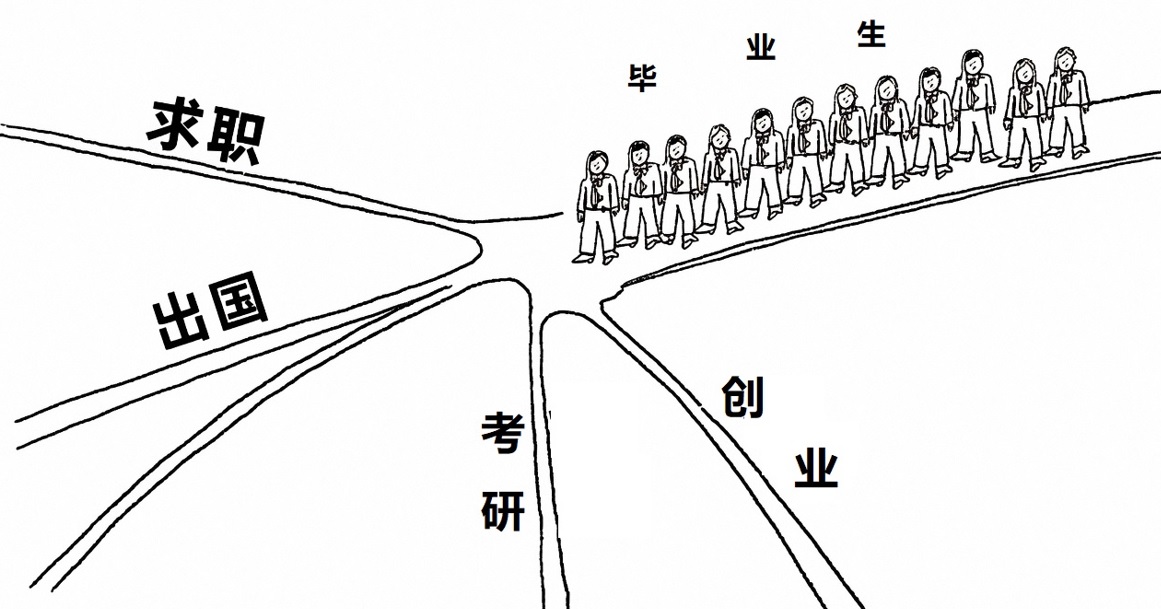
Write an essay of 160-200 words based on the following drawing. In your essay, you should
1)describe the drawing briefly,
2)interpret its intended meaning, and
3)give your comments.
You should write neatly on ANSWER SHEET. (20 points)
Write an essay of 160-200 words based on the following drawing. In your essay, you should
1)describe the drawing briefly,
2)interpret its intended meaning, and
3)give your comments.
You should write neatly on ANSWER SHEET. (20 points)
全卷客观题答案速查
考研英语一2013年真题全卷客观题参考答案速查如下表,按卷面顺序逐题型列出;写作、翻译等主观题无标准答案,参考范文与逐题解析见对应题型解析页。
| 题型(卷面位置) | 参考答案 |
|---|---|
| 完形填空(四选一) Section I (1–20 题) | 1 A grants · 2 B external · 3 C picture · 4 D For example · 5 B fearful · 6 D on · 7 A if · 8 A test · 9 D success · 10 C chosen · 11 A otherwise · 12 C conducted · 13 B rated · 14 C took · 15 B then · 16 C marked · 17 D before · 18 D drop · 19 B undo · 20 A necessary (逐题解析见 完形填空(四选一)解析页 ) |
| 阅读理解(四选一) Section II Part A (1) (21–25 题) | 21 A · 22 B · 23 D · 24 C · 25 C (逐题解析见 阅读理解(四选一)解析页 ) |
| 阅读理解(四选一) Section II Part A (2) (26–30 题) | 26 D · 27 D · 28 C · 29 B · 30 D (逐题解析见 阅读理解(四选一)解析页 ) |
| 阅读理解(四选一) Section II Part A (3) (31–35 题) | 31 B · 32 A · 33 D · 34 B · 35 A (逐题解析见 阅读理解(四选一)解析页 ) |
| 阅读理解(四选一) Section II Part A (4) (36–40 题) | 36 B · 37 C · 38 A · 39 C · 40 D (逐题解析见 阅读理解(四选一)解析页 ) |
| 选句填空(7选5) Section II Part B (41–45 题) | 41 E · 42 F · 43 D · 44 G · 45 A (逐题解析见 选句填空(7选5)解析页 ) |
| 英译汉(划线句子翻译) Section II Part C | 主观题 · 参考范文与逐题解析见 英译汉(划线句子翻译)解析页 |
| 写作 Section III Part A | 主观题 · 参考范文与逐题解析见 写作解析页 |
| 写作 Section III Part B | 主观题 · 参考范文与逐题解析见 写作解析页 |
全卷构成
- Section I 完形填空(四选一)
- Section II Part A (1) 阅读理解(四选一)
- Section II Part A (2) 阅读理解(四选一)
- Section II Part A (3) 阅读理解(四选一)
- Section II Part A (4) 阅读理解(四选一)
- Section II Part B 选句填空(7选5)
- Section II Part C 英译汉(划线句子翻译)
- Section III Part A 写作
- Section III Part B 写作
关于考研英语一 2013年 真题(整卷)的常见问题
- 2013年考研英语一真题由哪些题型构成,各有多少题?
- 2013年考研英语一真题共五大题型:英语知识运用(完形填空)20题、阅读理解Part A(四篇仔细阅读)20题、阅读理解Part B(选句填空,41-45题)5题、英译汉翻译(5处划线句)、写作两篇(小作文+大作文)。其中需涂卡的客观选择题合计45道(完形20+阅读20+选句填空5),另含5处翻译划线句与一小一大两篇作文,全卷100分。
- 2013年考研英语一阅读理解Part A有几篇文章、对应哪些题号?
- 2013年考研英语一阅读理解Part A为四篇仔细阅读,共20题(第21-40题),每篇5题:Text 1对应21-25题、Text 2对应26-30题、Text 3对应31-35题、Text 4对应36-40题,四篇平均篇幅约420词。
- 2013年考研英语一的阅读篇章难度(CEFR)大概是什么水平?
- 2013年考研英语一全部6篇篇章(完形1篇、阅读4篇、翻译1篇)的CEFR难度均为C1(熟练运用级),大致对应雅思6.5-7.5的高级阅读区间,无B级(中级)及以下的简单篇章。
- 2013年考研英语一所有阅读材料加起来有多少词?
- 2013年考研英语一六篇阅读材料合计约2430词:完形填空篇约289词,阅读Text 1约425词、Text 2约436词、Text 3约421词、Text 4约416词,翻译篇约443词,单篇最长为翻译篇(443词)。
- 2013年考研英语一阅读Text 4出现频率最高的词有哪些?
- 2013年考研英语一阅读Text 4(亚利桑那州移民法案)的高频实词集中在法律与政治领域:state出现约20次、federal约18次、immigration约11次、justice约10次、congress约7次、enforcement约6次,反映Text 4围绕联邦政府与州之间的移民执法权之争展开。
- 2013年考研英语一翻译(英译汉)考的是什么主题?
- 2013年考研英语一翻译(Section II Part C)选自斯坦福大学教授Robert Pogue Harrison的著作《花园:论人之为人》(Gardens: An Essay on the Human Condition)中"无家而园"(Homeless Gardens)一节,主题是花园源于人类的几种基本欲望——自我表达、在动荡中寻求宁静、以及渴望亲近自然生物(biophilia)。考生需将文中5处划线句译成中文,文段语言优美、富含哲理、长难句多。
- 2013年考研英语一阅读四篇文章分别讲了什么?
- 2013年考研英语一阅读Part A四篇主题分别为:Text 1评Elizabeth Cline的《Overdressed》、批判"快时尚"(fast fashion)的浪费与环境代价;Text 2讲微软在IE10中默认开启"Do Not Track"(DNT)所引发的在线行为广告与隐私之争;Text 3反驳对人类未来的悲观论、主张以长远视角看人类前景光明;Text 4评美国最高法院就亚利桑那州移民法案(Arizona v. United States)作出的8-0裁决与联邦、州的执法权边界。
- 2013年考研英语一完形填空讲的是什么内容?
- 2013年考研英语一完形填空选自《经济学人》文章《A Question of Judgment》,讲决策者做个体判断时易被当日局部样本影响而产生偏见:Dr Uri Simonsohn分析了31位招生官完成的9,323场MBA面试,发现若前一位面试者评分高出0.75分以上,下一位申请人的评分平均会被压低约0.075分。
- 2013年考研英语一大作文(Part B)题目是什么?
- 2013年考研英语一大作文要求根据一幅图画写一篇160-200词的短文,先简要描述图画、再阐释寓意、最后谈个人看法。图画主题是"选择":一名毕业生站在岔路口,面前有求职、考研、出国、创业等多条人生道路。大作文属社会热点类图画作文,考查描述、阐释、评论的三段式结构。
- 2013年考研英语一小作文(Part A)写什么?
- 2013年考研英语一小作文要求写一封约100词的英文邮件,邀请学校里的一位外教担任即将举行的英语演讲比赛评委,需写明你认为必要的细节;结尾统一署名"Li Ming",不写地址、不签真实姓名。属于应用文中的邀请信。
- 2013年考研英语一选句填空(Part B)讲的是什么话题?
- 2013年考研英语一选句填空(Section II Part B,41-45题)的文章讨论社会科学(social sciences)的发展与困境:学科虽繁荣(2005年全球已有近50万名专业社会科学家),却对气候变化、安全、可持续发展、健康等全球性挑战贡献不足,呼吁学界转变心态、加强与其他领域的协同。考生需从A-G七个选项中为5处空格选最合适的句子,其中两项为干扰项。
- 2013年考研英语一整体难度如何?
- 2013年考研英语一整体难度与前两年基本持平,写作难度略有下降。完形填空选自《经济学人》、用词以常见词为主、逻辑性强,难度适中;翻译篇(《花园》)生词多、句式复杂,是全卷较难部分;阅读四篇均为C1级的时事评论与书评,需要较强的长难句解析与推理能力。懒笔记整卷页可逐题查看试卷排版与原文精读。
- 2013年考研英语一真题答案和解析在哪里看?
- 2013年考研英语一为客观选择题(完形、阅读、选句填空)加主观题(翻译、写作)的混合卷,官方不公布标准答案,网传答案与参考译文均为各培训机构的参考版本。在懒笔记整卷页可查看完整试卷排版、逐篇阅读原文精读与题目解析,翻译与作文部分提供参考译文与范文思路而非唯一标准答案。
- 2013年考研英语一翻译的英文原文和参考译文出自哪里?
- 2013年考研英语一翻译原文出自Robert Pogue Harrison的《Gardens: An Essay on the Human Condition》(《花园:论人之为人》)一书的"Homeless Gardens"部分。懒笔记整卷页提供翻译篇的完整英文原文与5处划线句的逐句精读,可对照参考译文理解"无家者花园"中关于自我表达、寻求宁静与亲近自然的哲理表达。
- 2013年考研英语一有没有听力考试?
- 2013年考研英语一不含听力。全卷为笔试,由完形填空、四篇仔细阅读、选句填空、英译汉翻译以及小作文与大作文两篇写作构成,满分100分、考试时间180分钟;听力不在考研英语(一)的考查范围内。