
考研英语一 2023年 · 真题整卷
按真题原卷顺序的全部题型,逐题型可进试卷排版、题目解析、原文精读;整卷可免费下载电子版(真题 PDF、解析版 PDF 与 Word)。
整卷试卷排版
考研英语一 · 英语一真题 · 2023年
考研英语一2023年真题
Directions:
Read the following text. Choose the best word(s) for each numbered blank and mark A, B, C or D on the ANSWER SHEET. (10 points)
Read the following text. Choose the best word(s) for each numbered blank and mark A, B, C or D on the ANSWER SHEET. (10 points)
Caravanserais were roadside inns that were built along the Silk Road in areas including China, North Africa and the Middle East. They were typically 1 outside the walls of a city or village and were usually funded by local governments or 2 .
The word "caravanserai" is a 3 of the Persian words "karvan", which means a group of travellers or a caravan, and "saray", a palace or enclosed building. The term caravan was used to 4 groups of people who travelled together across the ancient network for safety reasons, 5 merchants, travellers or pilgrims.
From the 10th century onwards, as merchant and travel routes became more developed, the 6 of caravanserais increased and they served as a safe place for people to rest at night. Travellers on the Silk Road 7 the possibility of being attacked by thieves or being 8 to extreme weather conditions. For this reason, caravanserais were strategically placed 9 they could be reached in a day's travel time.
Caravanserais served as an informal 10 point for the various people who travelled the Silk Road. 11 , these structures became important centres for cultural 12 and interaction, with travellers sharing their cultures, ideas and beliefs, 13 taking knowledge with them, greatly 14 the development of several civilisations.
Caravanserais were also an important marketplace for commodities and 15 in the trade of goods along the Silk Road. 16 , it was frequently the first stop for merchants looking to sell their wares and 17 supplies for their own journeys. It is 18 that around 12,000 to 15,000 caravanserais were built along the Silk Road, 19 only about 3,000 are known to remain today, many of which are in 20 .
1.
[ A ]displayed
[ B ]occupied
[ C ]located
[ D ]equipped
2.
[ A ]privately
[ B ]regularly
[ C ]respectively
[ D ]permanently
3.
[ A ]definition
[ B ]transition
[ C ]substitution
[ D ]combination
4.
[ A ]classify
[ B ]record
[ C ]describe
[ D ]connect
5.
[ A ]apart from
[ B ]instead of
[ C ]such as
[ D ]along with
6.
[ A ]construction
[ B ]restoration
[ C ]impression
[ D ]evaluation
7.
[ A ]doubted
[ B ]faced
[ C ]accepted
[ D ]reduced
8.
[ A ]assigned
[ B ]subjected
[ C ]accustomed
[ D ]opposed
9.
[ A ]so that
[ B ]even if
[ C ]now that
[ D ]in case
10.
[ A ]talking
[ B ]starting
[ C ]breaking
[ D ]meeting
11.
[ A ]By the way
[ B ]On occasion
[ C ]In comparison
[ D ]As a result
12.
[ A ]heritage
[ B ]revival
[ C ]exchange
[ D ]status
13.
[ A ]with regard to
[ B ]in spite of
[ C ]as well as
[ D ]in line with
14.
[ A ]completing
[ B ]influencing
[ C ]resuming
[ D ]pioneering
15.
[ A ]aided
[ B ]invested
[ C ]failed
[ D ]competed
16.
[ A ]Rather
[ B ]Indeed
[ C ]Otherwise
[ D ]However
17.
[ A ]go in for
[ B ]stand up for
[ C ]close in on
[ D ]stock up on
18.
[ A ]believed
[ B ]predicted
[ C ]recalled
[ D ]implied
19.
[ A ]until
[ B ]because
[ C ]unless
[ D ]although
20.
[ A ]ruins
[ B ]debt
[ C ]fashion
[ D ]series
考研英语一2023年真题
Directions:
Read the following four texts. Answer the questions after each text by choosing A, B, C or D. Mark your answers on the ANSWER SHEET. (40 points)
Read the following four texts. Answer the questions after each text by choosing A, B, C or D. Mark your answers on the ANSWER SHEET. (40 points)
Text 1
The weather in Texas may have cooled since the recent extreme heat, but the temperature will be high at the State Board of Education meeting in Austin this month as officials debate how climate change is taught in Texas schools.
Pat Hardy, who sympathises with the views of the energy sector, is resisting proposed changes to science standards for pre-teen pupils. "There are as many scientists working against all the panic of global climate change as there are those who are pushing it," she claims. "Texas is an energy state and we need to recognise that. You need to remember where your bread is buttered."
Most scientists and experts sharply dispute Hardy's views. Board members like her "casually dismiss the career work of scholars and scientists as just another misguided opinion," says Dan Quinn, senior communications strategist at the Texas Freedom Network, a non-profit group that monitors public education.
Such debates reflect fierce discussions across the US, as researchers, policymakers, teachers and students step up demands for a greater focus on teaching about the facts of climate change in schools.
A study last year by the National Center for Science Education, a non-profit group of scientists and teachers, looking at how state public schools across the country address climate change in science classes, gave barely half of US states a grade B+ or higher. Among the 10 worst performers were some of the most populous states, including Texas, which was given the lowest grade (F) and has a disproportionate influence because its textbooks are widely sold elsewhere.
Glenn Branch, the centre's deputy director, cautions that setting state-level science standards is only one limited benchmark in a country that decentralises decisions to local school boards. Even if a state is considered a high performer in its science standards, "that does not mean it will be taught", he says.
Another issue is that while climate change is well integrated into some subjects and at some ages—such as earth and space sciences in high schools—it is not as well represented in curricula for younger children and in subjects that are more widely taught, such as biology and chemistry. It is also less prominent in many social studies courses.
Branch points out that, even if a growing number of official guidelines and textbooks reflect scientific consensus on climate change, unofficial educational materials that convey more slanted perspectives are being distributed to teachers. They include materials sponsored by energy industry associations.
21.
In Paragraph 1, the weather in Texas is mentioned to
[ A ]forecast a policy shift in Texas schools.
[ B ]stress the consequences of climate change.
[ C ]indicate the atmosphere at the board meeting.
[ D ]draw the public's attention to energy shortages.
22.
What does Quinn think of Hardy?
[ A ]She exaggerates the existing panic.
[ B ]She denies the value of scientific work.
[ C ]She shows no concern for pre-teens.
[ D ]She expresses self-contradictory views.
23.
The study mentioned in Paragraph 5 shows that
[ A ]climate education is insufficient at state public schools.
[ B ]policymakers have little drive for science education.
[ C ]Texas is reluctant to rewrite its science textbooks.
[ D ]environmental teaching in some states lacks supervision.
24.
According to Branch, state-level science standards in the US______
[ A ]call for regular revision.
[ B ]require urgent application.
[ C ]have limited influence.
[ D ]cater to local needs.
25.
It is implied in the last paragraph that climate change teaching in some schools______
[ A ]agrees to major public demands.
[ B ]reflects teachers' personal bias.
[ C ]may misrepresent the energy sector.
[ D ]can be swayed by external forces.
Text 2
Communities throughout New England have been attempting to regulate short-term rentals since sites like Airbnb took off in the 2010s. Now, with record-high home prices and historically low inventory, there's an increased urgency in such regulation, particularly among those who worry that developers will come in and buy up swaths of housing to flip for a fortune on the short-term rental market.
In New Hampshire, where the rental vacancy rate has dropped below 1 percent, housing advocates fear unchecked short-term rentals will put further pressure on an already strained market. The state Legislature recently voted against a bill that would've made it illegal for towns to create legislation restricting short-term rentals.
"We are at a crisis level on the supply of rental housing," said Nick Taylor, executive director of the Workforce Housing Coalition of the Greater Seacoast. Without enough affordable housing in southern New Hampshire towns, "employers are having a hard time attracting employees, and workers are having a hard time finding a place to live," Taylor said.
However, short-term rentals also provide housing for tourists, pointed out Ryan Castle, CEO of a local association of realtors. "A lot of workers are servicing the tourist industry, and the tourism industry is serviced by those people coming in short term," Castle said, "and so it's a cyclical effect."
Short-term rentals themselves are not the crux of the issue, said Keren Hom, an expert on affordable housing policy. "I think individuals being able to rent out their second home is a good thing. If it's their vacation home anyway, and it's just empty, why can't you make money off it?" Hom said. Issues arise, however, when developers attempt to create large-scale short-term rental facilities—de facto hotels—to bypass taxes and regulations. "I think the question is, shouldn't a developer who's really building a hotel, but disguising it as not a hotel, be treated and taxed and regulated like a hotel?" Hom said.
At the end of 2018, Governor Charlie Baker of Massachusetts signed a bill to rein in those potential investor-buyers. The bill requires every rental host to register with the state, mandates they carry insurance, and opens the potential for local taxes on top of a new state levy. Boston took things even further, requiring renters to register with the city's Inspectional Services Department.
Hom said similar registration requirements could benefit struggling cities and towns, but "if we want to make a change in the housing market, the main one is we have to build a lot more."
26.
Which of the following is true of New England?
[ A ]Its housing supply is at a very low level.
[ B ]Its communities are in need of funding.
[ C ]Its rental vacancy rate is going up slowly.
[ D ]Its home prices are under strict control.
27.
The bill mentioned in Paragraph 2 was intended to______
[ A ]curb short-term rental speculation.
[ B ]ensure the supply of cheap housing.
[ C ]punish illegal dealings in housing.
[ D ]allow a free short-term rental market.
28.
Compared with Castle, Taylor is more likely to support______
[ A ]further investment in local tourism.
[ B ]an increase in affordable housing.
[ C ]strict management of real estate agents.
[ D ]a favorable policy for short-term workers.
29.
What does Hom emphasize in Paragraph 5?
[ A ]The urgency to upgrade short-term rental facilities.
[ B ]The efficient operation of the local housing market.
[ C ]The necessity to stop developers from evading taxes.
[ D ]The proper procedures for renting out spare houses.
30.
Hom holds that imposing registration requirements is______
[ A ]an irrational decision.
[ B ]an unfeasible proposal.
[ C ]an unnecessary measure.
[ D ]an inadequate solution.
Text 3
If you're heading for your nearest branch of Waterstones, the biggest book retailer in the UK, in search of the Duchess of Sussex's new children's book The Bench, you might have to be prepared to hunt around a bit; the same may be true of The President's Daughter, the new thriller by Bill Clinton and James Patterson. Both of these books are published next week by Penguin Random House (PRH), a company currently involved in a stand-off with Waterstones.
The problem began late last year, when PRH confirmed that it had introduced a credit limit with Waterstones "at a very significant level". The trade magazine The Bookseller reported that Waterstones branch managers were being told to remove PRH books from prominent areas such as tables, display spaces and windows, and were "quietly retiring them to their relevant sections".
PRH declined to comment on the issue, but a spokesperson for Waterstones told me: "Waterstones are currently operating with reduced credit terms from PRH, the only publisher in the UK to place any limitations on our ability to trade. We are not boycotting PRH titles but we are doing our utmost to ensure that availability for customers remains good despite the lower overall levels of stock. We are hopeful with our shops now open again that normality will return and that we will be allowed to buy appropriately. Certainly, our shops are exceptionally busy. The sales for our May Books of the Month surpassed any month since 2018."
In the meantime, PRH authors have been the losers. Big-name PRH authors may suffer a bit, but it's those mid-list authors, who normally rely on Waterstones staff's passion for promoting books by lesser-known writers, who will be praying for an end to the dispute.
It comes at a time when authors are already worried about the consequences of the proposed merger between PRH and another big publisher, Simon & Schuster—the reduction in the number of unaligned UK publishers is likely to lead to fewer bidding wars, lower advances, and more conformity in terms of what is published.
"This is all part of a wider change towards concentration of power," says literary agent Andrew Lownie. "The publishing industry talks about diversity in terms of authors and staff but it also needs a plurality of ways of delivering intellectual contact, choice and different voices. After all, many of the most interesting books in recent years have come from small publishers."
We shall see whether that plurality is a casualty of the current need among publishers to be big enough to take on all-comers.
31.
The author mentions two books in Paragraph 1 to present______
[ A ]an ongoing conflict.
[ B ]an intellectual concept.
[ C ]a prevailing sentiment.
[ D ]a literary phenomenon.
32.
Why did Waterstones shops retire PRH books to their relevant sections?
[ A ]To make them easily noticeable.
[ B ]To comply with PRH's requirement.
[ C ]To respond to PRH's business move.
[ D ]To arrange them in a systematic way.
33.
What message does the spokesperson for Waterstones seem to convey?
[ A ]Their customers remain loyal.
[ B ]The credit limit will be removed.
[ C ]Their stock is underestimated.
[ D ]The book market is rather slack.
34.
What can be one consequence of the current dispute?
[ A ]Sales of books by mid-list PRH writers fall off considerably.
[ B ]Lesser-known PRH writers become the target of criticism.
[ C ]Waterstones staff hesitate to promote big-name authors' books.
[ D ]Waterstones branches suffer a severe reduction in revenue.
35.
Which of the following statements best represents Lownie's view?
[ A ]Small publishers ought to stick together.
[ B ]Big publishers will lose their dominance.
[ C ]The publishing industry is having a hard time.
[ D ]The merger of publishers is a worrying trend.
Text 4
Scientific papers are the recordkeepers of progress in research. Each year researchers publish millions of papers in more than 30,000 journals. The scientific community measures the quality of those papers in a number of ways, including the perceived quality of the journal (as reflected by the title's impact factor) and the number of citations a specific paper accumulates. The careers of scientists and the reputation of their institutions depend on the number and prestige of the papers they produce, but even more so on the citations attracted by these papers.
Citation cartels, where journals, authors, and institutions conspire to inflate citation numbers, have existed for a long time. In 2016, researchers developed an algorithm to recognize suspicious citation patterns, including groups of authors that disproportionately cite one another and groups of journals that cite each other frequently to increase the impact factors of their publications. Recently, another expression of this predatory behavior has emerged: so-called support service consultancies that provide language and other editorial support to individual authors and to journals sometimes advise contributors to add a number of citations to their articles.
The advent of electronic publishing and authors' need to find outlets for their papers resulted in thousands of new journals. The birth of predatory journals wasn't far behind. These journals can act as milk cows where every single article in an issue may cite a specific paper or a series of papers. In some instances, there is absolutely no relationship between the content of the article and the citations. The peculiar part is that the journal that the editor is supposedly working for is not profiting at all—it is just providing citations to other journals. Such practices can lead an article to accrue more than 150 citations in the same year that it was published.
How insidious is this type of citation manipulation? In one example, an individual—acting as author, editor, and consultant—was able to use at least 15 journals as citation providers to articles published by five scientists at three universities. The problem is rampant in Scopus, a citation database, which includes a high number of the new "international" journals. In fact, a listing in Scopus seems to be a criterion to be targeted in this type of citation manipulation.
Scopus itself has all the data necessary to detect this malpractice. Red flags include a large number of citations to an article within the first year. And for authors who wish to steer clear of citation cartel activities: when an editor, a reviewer, or a support service asks you to add inappropriate references, do not oblige and do report the request to the journal.
36.
According to Paragraph 1, the careers of scientists can be determined by______
[ A ]how many citations their works contain.
[ B ]how many times their papers are cited.
[ C ]the prestige of the people they work with.
[ D ]the status they have in scientific circles.
37.
The support service consultancies tend to______
[ A ]recommend journals to their clients.
[ B ]list citation patterns for their clients.
[ C ]ask authors to include extra citations.
[ D ]advise contributors to cite each other.
38.
The function of the "milk cow" journals is to______
[ A ]boost citation counts for certain authors.
[ B ]help scholars publish articles at low cost.
[ C ]instruct first-time contributors in citation.
[ D ]increase the readership of new journals.
39.
What can be learned about Scopus from the last two paragraphs?
[ A ]It fosters competition among citation providers.
[ B ]It has the capability to identify suspicious citations.
[ C ]It hinders the growth of "international" journals.
[ D ]It is established to prevent citation manipulation.
40.
What should an author do to deal with citation manipulators?
[ A ]Take legal action.
[ B ]Demand an apology.
[ C ]Seek professional advice.
[ D ]Reveal their misconduct.
Directions:
The following paragraphs are given in a wrong order. For questions 41 -45, you are required to reorganize these paragraphs into a coherent text by choosing from the list A-H and filling them into the numbered boxes. Paragraphs A, E, and H have been correctly placed. Mark your answers on the ANSWER SHEET. (10 points)
The following paragraphs are given in a wrong order. For questions 41 -45, you are required to reorganize these paragraphs into a coherent text by choosing from the list A-H and filling them into the numbered boxes. Paragraphs A, E, and H have been correctly placed. Mark your answers on the ANSWER SHEET. (10 points)
[ A ]
Last year marked the 150th anniversary of a series of Yellowstone photographs by the renowned landscape photographer William Henry Jackson. Jackson snapped the first-ever shots of iconic landmarks such as the Tetons, Old Faithful and the Colorado Rockies on a late 19th-century expedition through the Yellowstone Basin, conducted by the head of the U.S. Geological and Geographical Survey of the Territories, Ferdinand V. Hayden. The team included a meteorologist, a zoologist, a mineralogist, and an agricultural statistician.
[ B ]
Two centuries ago, the idea of preserving nature, rather than exploiting it, was a novel one to many US settlers. One of the turning points in public support for land conservation efforts—and recognizing the magnificence of the Yellowstone region in particular—came in the form of vivid photographs.
[ C ]
As an effective Washington operator, Hayden sensed that he could capitalize on the expedition's stunning visuals. He asked Jackson to print out large copies and distributed them, along with reproductions of Moran's paintings, to each member of Congress. "The visualization, particularly those photographs, really hit home that this is something that has to be protected," says Alicia Murphy, Yellowstone's park historian.
[ D ]
Throughout the trip, Jackson juggled multiple cameras and plate sizes using the collodion process that involved coating the plates with a chemical mixture, exposing them and developing the resulting images with a portable darkroom. The crude technique required educated guesses on exposure times, and involved heavy, awkward equipment—several men had to assist in its transportation. Despite these challenges, Jackson captured dozens of striking photos, ranging from majestic images like his now-famous snapshot of Old Faithful, to casual portraits of expedition members at the camp. While veterans of previous expeditions had written at length about stunning sights, these vivid photographs were another thing entirely.
[ E ]
The journey officially began in Ogden, Utah, on June 8, 1871. Over nearly four months, dozens of men made their way on horseback into Montana and traversed along the Yellowstone River and around Yellowstone Lake. That fall, they concluded the survey in Fort Bridger, Wyoming.
[ F ]
Though Native Americans (and later miners and fur trappers) had long recognized the area's riches, most Americans did not. That's why Hayden's expedition aimed to produce a fuller understanding of the Yellowstone River region, from its hot springs and waterfalls to its variety of flora and fauna. In addition to the entourage of scientists, the team also included artists: Painter Thomas Moran and photographer Jackson were charged with capturing this astounding natural beauty and sharing it with the world.
[ G ]
The bill proved largely popular and sailed through Congress with large majorities in favor. In quick succession, the Senate and House passed legislation protecting Yellowstone in early 1872. That March, President Ulysses S. Grant signed an act into law that established Yellowstone as the world's first national park. While some locals opposed the designation, the decision was largely accepted—and Jackson's photos played a key role in the fight to protect the area. "I don't believe that the legal protection would have happened in the time frame that it did without those images," says Heather Hansen, journalist and author of Prophets and Moguls, Rangers and Rogues, Bison and Bears: 100 Years of the National Park Service.
[ H ]
Perhaps most importantly, these images provided documentary evidence that later made its way to government officials. Weeks after completing the expedition, Hayden collected his team's observations into an extensive report aimed at convincing senators and representatives, along with colleagues at government agencies like the Department of the Interior, that Yellowstone ought to be preserved.
41.→A→42.→E→43.→H→44.→45.
Directions:
Read the following text carefully and then translate the underlined segments into Chinese. Write your answers on the ANSWER SHEET. ( 10 points)
Read the following text carefully and then translate the underlined segments into Chinese. Write your answers on the ANSWER SHEET. ( 10 points)
There has been some exploration around the use of artificial intelligence (AI) in digital marketing. For example, AI can be used to analyse what type of advertising content or copy would be appropriate to "speak" to a specific target customer group by revealing information about trends and preferences through the analysis of big data. (46)AI can also be used to identify the lifestyle choices of customers regarding their hobbies, favourite celebrities, and fashions to provide unique content in marketing messages put out through social media. At the same time AI can also be used to generate content for social media posts and chat sites.
The main disadvantage of using AI to respond to customers is that there are concerns about trusting personal interactions to machines, which could lead not only to the subsequent loss of interpersonal connections, but also to a decrease in marketing personnel. (47)Some believe that AI is negatively impacting on the marketer's role by reducing creativity and removing jobs, but they are aware that it is a way of reducing costs and creating new information. By allowing AI to develop content some brand marketers may find that they are losing control over the brand narrative. (48)Algorithms used to simulate human interactions are creating many of these concerns, especially as no-one is quite sure what the outcomes of using AI to interact with customers will be.
For AI to be successful, data needs to be accessible, but the use of personal data is becoming more regulated and the automated sharing of data is becoming more difficult. (49)If customers are not willing to share data, AI will be starved of essential information and will not be able to function effectively or employ machine learning to improve its marketing content and communication. Therefore, unless customers are prepared to sign release agreements, the use of AI may become somewhat restricted in the future. Not only can AI help to create the marketing content, but it can also provide a non-intrusive way of delivering the content to the target customers. Data can be gathered on where the customer can be engaged, such as location, devices used, website interactions, and sites visited, to display marketing messages in appropriate forms, including emails, social media posts, pop-up advertisements, and banners at an appropriate frequency. (50)The non-intrusive delivery of the marketing messages in a way that is sensitive to the needs of target customers is one of the critical challenges to the digital marketer.
考研英语一2023年真题
51.
Directions:
Write a notice to recruit a student for Prof. Smith’s research project on campus sports activities. Specify the duties and requirements of the job.
Write your answer in about 100 words on the ANSWER SHEET.
Do not use your own name in the notice; use “Li Ming” instead. (10 points)
Write a notice to recruit a student for Prof. Smith’s research project on campus sports activities. Specify the duties and requirements of the job.
Write your answer in about 100 words on the ANSWER SHEET.
Do not use your own name in the notice; use “Li Ming” instead. (10 points)
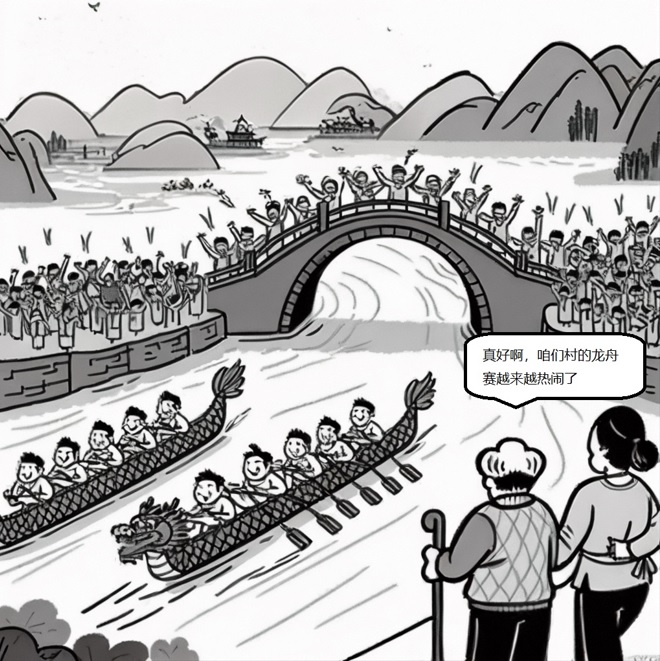
52.
Directions:
Write an essay based on the picture below. In your essay, you should
1) describe the picture briefly,
2) interpret the implied meaning, and
3) give your comments.
Write your answer in 160-200 words on the ANSWER SHEET. (20 points)
Write an essay based on the picture below. In your essay, you should
1) describe the picture briefly,
2) interpret the implied meaning, and
3) give your comments.
Write your answer in 160-200 words on the ANSWER SHEET. (20 points)
全卷客观题答案速查
考研英语一2023年真题全卷客观题参考答案速查如下表,按卷面顺序逐题型列出;写作、翻译等主观题无标准答案,参考范文与逐题解析见对应题型解析页。
| 题型(卷面位置) | 参考答案 |
|---|---|
| 完形填空(四选一) Section I (1–20 题) | 1 C located · 2 A privately · 3 D combination · 4 C describe · 5 C such as · 6 A construction · 7 B faced · 8 B subjected · 9 A so that · 10 D meeting · 11 D As a result · 12 C exchange · 13 C as well as · 14 B influencing · 15 A aided · 16 B Indeed · 17 D stock up on · 18 A believed · 19 D although · 20 A ruins (逐题解析见 完形填空(四选一)解析页 ) |
| 阅读理解(四选一) Section II Part A (1) (21–25 题) | 21 C · 22 B · 23 A · 24 C · 25 D (逐题解析见 阅读理解(四选一)解析页 ) |
| 阅读理解(四选一) Section II Part A (2) (26–30 题) | 26 A · 27 D · 28 B · 29 C · 30 D (逐题解析见 阅读理解(四选一)解析页 ) |
| 阅读理解(四选一) Section II Part A (3) (31–35 题) | 31 A · 32 C · 33 A · 34 A · 35 D (逐题解析见 阅读理解(四选一)解析页 ) |
| 阅读理解(四选一) Section II Part A (4) (36–40 题) | 36 B · 37 C · 38 A · 39 B · 40 D (逐题解析见 阅读理解(四选一)解析页 ) |
| 段落排序 Section II Part B | 41=B → 预给A → 42=F → 预给E → 43=D → 预给H → 44=C → 45=G (逐题解析见 段落排序解析页 ) |
| 英译汉(划线句子翻译) Section II Part C | 主观题 · 参考范文与逐题解析见 英译汉(划线句子翻译)解析页 |
| 写作 Section III Part A | 主观题 · 参考范文与逐题解析见 写作解析页 |
| 写作 Section III Part B | 主观题 · 参考范文与逐题解析见 写作解析页 |
全卷构成
- Section I 完形填空(四选一)
- Section II Part A (1) 阅读理解(四选一)
- Section II Part A (2) 阅读理解(四选一)
- Section II Part A (3) 阅读理解(四选一)
- Section II Part A (4) 阅读理解(四选一)
- Section II Part B 段落排序
- Section II Part C 英译汉(划线句子翻译)
- Section III Part A 写作
- Section III Part B 写作
关于考研英语一 2023年 真题(整卷)的常见问题
- 2023年考研英语一真题包含哪些题型、一共多少道题?
- 2023年考研英语一真题由五大题型构成,共9个模块、45道编号小题:完形填空20道、传统阅读(仔细阅读四选一)4篇共20道、段落排序(新题型)1篇5道(第41–45题)、英译汉划线翻译5个句子、写作2篇(小作文+大作文)。全卷不含听力。
- 2023年考研英语一阅读理解各部分分别有几道题?
- 2023年考研英语一阅读相关题型分布为:Section I 完形填空20空(第1–20题);Section II Part A 传统阅读4篇文章、每篇5道四选一(第21–40题);Part B 段落排序新题型1篇,需把A–H段落填入5个编号空(第41–45题,其中A、E、H已给定位置);Part C 划线翻译5个句子。
- 2023年考研英语一的文章难度(CEFR欧标)如何分布?
- 2023年考研英语一6篇主体篇章按欧标CEFR分为B2、C1各3篇:完形填空(商旅客栈,287词)、阅读Text 1(气候教育,406词)、Text 2(短租房,416词)为B2;阅读Text 3(出版业之争,427词)、Text 4(学术引用,438词)、翻译篇(AI数字营销,408词)为更难的C1。
- 2023年考研英语一阅读和翻译的文章总词量是多少?
- 2023年考研英语一6篇主体篇章合计约2382词。其中完形填空287词、阅读Text 1为406词、Text 2为416词、Text 3为427词、Text 4为438词、翻译篇408词;段落排序(黄石公园主题)篇幅另计。
- 2023年考研英语一完形填空和Text 4里反复出现的高频词有哪些?
- 在2023年考研英语一中,完形填空一文围绕caravanserai(商旅客栈)展开,caravanserai出现6次、silk与road各出现5次、traveller与travel合计高频;阅读Text 4聚焦学术引用问题,citation(引用)出现多达24次、journal(期刊)17次、author(作者)9次,是全文核心词。
- 2023年考研英语一翻译(英译汉)考的是什么主题?
- 2023年考研英语一的英译汉(Section II Part C)考的是人工智能在数字营销中的应用,节选自《Marketing: A Very Short Introduction(市场营销极简入门)》。文章讨论AI如何通过分析大数据精准投放营销内容,以及由此引发的对人际关系流失、营销人员减少、数据获取受限等忧虑,要求翻译其中5处划线句子。
- 2023年考研英语一完形填空讲的是什么内容?
- 2023年考研英语一完形填空(Section I)讲的是丝绸之路上的商旅客栈(caravanserai)。文章介绍其词源(波斯语“商队”与“宫殿/围合建筑”的组合)、作为旅人夜间安全歇脚地的功能,以及它作为文化交流与商品贸易枢纽对多个文明发展的影响,文末提到丝路沿线曾建约1.2万至1.5万座、如今仅存约3000座、多已成废墟。
- 2023年考研英语一四篇阅读理解分别讲了什么?
- 2023年考研英语一传统阅读4篇主题各异:Text 1讲美国得州学校气候变化教育之争(源自《金融时报》);Text 2讲新英格兰地区Airbnb短租房监管与住房危机(源自波士顿市政网);Text 3讲英国企鹅兰登书屋与水石书店的对峙及出版业并购隐忧(源自《每日电讯报》);Text 4讲科学界“引用卡特尔”人为操纵论文被引量的学术不端(源自《科学家》杂志)。
- 2023年考研英语一段落排序(新题型)的文章主题是什么?
- 2023年考研英语一段落排序新题型(Section II Part B)讲的是黄石公园的诞生与早期摄影。文章围绕风景摄影师威廉·亨利·杰克逊(William Henry Jackson)1871年随海登地质勘探队拍摄的黄石照片,说明这些震撼影像如何推动国会1872年立法、由格兰特总统签署法案将黄石设为世界第一座国家公园;A、E、H三段已给定位置,考生需排好其余段落(第41–45题)。
- 2023年考研英语一小作文(应用文)写的是什么?
- 2023年考研英语一小作文(Section III Part A)要求写一则招募启事/通知:为Smith教授一项关于校园体育活动的研究项目招募一名学生,需写明该工作的职责与要求,约100词,落款用“Li Ming”而非考生本人姓名(10分)。
- 2023年考研英语一大作文(图画作文)的漫画画的是什么?
- 2023年考研英语一大作文是图画作文,漫画呈现的是端午赛龙舟场景——两队队员奋力划桨、岸边众多年轻人为比赛呐喊助威,立意指向中国传统文化的传承与发展。题目要求160–200词,分三步:简要描述图画、阐释其寓意、给出个人评论(20分)。
- 2023年考研英语一难度怎么样、难不难?
- 综合多家机构评析,2023年考研英语一总体呈“文章不算难、题目有一定难度”:阅读篇章话题(气候教育、短租、出版业、学术引用)理解门槛适中,但题目以细节题为主、几乎没有主旨题和态度题,干扰项设计较强;翻译考AI数字营销、生词较少,被普遍认为偏简单。具体难度仍因个人英语基础而异。
- 2023年考研英语一哪篇阅读最难、最容易丢分?
- 从语言难度看,2023年考研英语一阅读Text 3(出版业企鹅兰登与水石之争)和Text 4(学术引用卡特尔)按CEFR属C1,明显高于Text 1、Text 2的B2,长难句与专业语境更多;加之全卷阅读以细节题为主、缺少易判断的主旨题,含较多生僻话题词(如citation cartel、predatory journals)的Text 4常被考生视为最易丢分的一篇。具体仍因人而异。
- 2023年考研英语一真题答案和解析在哪里看?
- 可在懒笔记整卷页查看 2023年考研英语一的完整试卷排版、逐题题干选项与原文精读(完形、4篇阅读、段落排序、翻译、写作均已收录)。需提醒:考研英语官方不公布标准答案,网传“答案”均为新东方、中国教育在线等机构的参考版本,个别细节题各家可能略有出入,宜对照原文与解析理解,而非死记选项字母。
- 2023年考研英语一大作文范文和翻译参考译文哪里找?
- 2023年考研英语一大作文(赛龙舟图画作文)的范文及翻译篇(AI数字营销)参考译文,可在懒笔记整卷页结合原文与逐句精读查看。各版范文与参考译文均为机构或教师版本,建议先理解原文句子结构与踩分点再比对译文,写作则套用“描述图画—阐释寓意—个人评论”三段式,而非背诵单一范文。