
考研英语(旧卷) 2005年 · 真题整卷
按真题原卷顺序的全部题型,逐题型可进试卷排版、题目解析、原文精读;整卷可免费下载电子版(真题 PDF、解析版 PDF 与 Word)。
整卷试卷排版
考研(旧) · 考研真题 · 2005年
考研英语(旧卷)2005年真题
Directions:
Read the following text. Choose the best word(s) for each numbered blank and mark A, B, C or D on the ANSWER SHEET. (10 points)
Read the following text. Choose the best word(s) for each numbered blank and mark A, B, C or D on the ANSWER SHEET. (10 points)
The human nose is an underrated tool. Humans are often thought to be insensitive smellers compared with animals, 1 this is largely because, 2 animals, we stand upright. This means that our noses are 3 to perceiving those smells which float through the air, 4 the majority of smells which stick to surfaces. In fact, 5 , we are extremely sensitive to smells, 6 we do not generally realize it. Our noses are capable of 7 human smells even when these are 8 to far below one part in one million.
Strangely, some people find that they can smell one type of flower but not another, 9 others are sensitive to the smells of both flowers. This may be because some people do not have the genes necessary to generate 10 smell receptors in the nose. These receptors are the cells which sense smells and send 11 to the brain. However, it has been found that even people insensitive to a certain smell 12 can suddenly become sensitive to it when 13 to it often enough.
The explanation for insensitivity to smell seems to be that the brain finds it 14 to keep all smell receptors working all the time but can 15 new receptors if necessary. This may 16 explain why we are not usually sensitive to our own smells – we simply do not need to be. We are not 17 of the usual smell of our own house, but we 18 new smells when we visit someone else's. The brain finds it best to keep smell receptors 19 for unfamiliar and emergency signals 20 the smell of smoke, which might indicate the danger of fire.
1.
[ A ]although
[ B ]as
[ C ]but
[ D ]while
2.
[ A ]above
[ B ]unlike
[ C ]excluding
[ D ]besides
3.
[ A ]limited
[ B ]committed
[ C ]dedicated
[ D ]confined
4.
[ A ]catching
[ B ]ignoring
[ C ]missing
[ D ]tracking
5.
[ A ]anyway
[ B ]though
[ C ]instead
[ D ]therefore
6.
[ A ]even if
[ B ]if only
[ C ]only if
[ D ]as if
7.
[ A ]distinguishing
[ B ]discovering
[ C ]determining
[ D ]detecting
8.
[ A ]diluted
[ B ]dissolved
[ C ]dispersed
[ D ]diffused
9.
[ A ]when
[ B ]since
[ C ]for
[ D ]whereas
10.
[ A ]unusual
[ B ]particular
[ C ]unique
[ D ]typical
11.
[ A ]signs
[ B ]stimuli
[ C ]messages
[ D ]impulses
12.
[ A ]at first
[ B ]at all
[ C ]at large
[ D ]at times
13.
[ A ]subjected
[ B ]left
[ C ]drawn
[ D ]exposed
14.
[ A ]ineffective
[ B ]incompetent
[ C ]inefficient
[ D ]insufficient
15.
[ A ]introduce
[ B ]summon
[ C ]trigger
[ D ]create
16.
[ A ]still
[ B ]also
[ C ]otherwise
[ D ]nevertheless
17.
[ A ]sure
[ B ]sick
[ C ]aware
[ D ]tired
18.
[ A ]tolerate
[ B ]repel
[ C ]neglect
[ D ]notice
19.
[ A ]available
[ B ]reliable
[ C ]identifiable
[ D ]suitable
20.
[ A ]similar to
[ B ]such as
[ C ]along with
[ D ]aside from
考研英语(旧卷)2005年真题
Directions:
Read the following four texts. Answer the questions after each text by choosing A, B, C or D. Mark your answers on the ANSWER SHEET. (40 points)
Read the following four texts. Answer the questions after each text by choosing A, B, C or D. Mark your answers on the ANSWER SHEET. (40 points)
Text 1
Everybody loves a fat pay rise. Yet pleasure at your own can vanish if you learn that a colleague has been given a bigger one. Indeed, if he has a reputation for slacking, you might even be outraged. Such behaviour is regarded as "all too human", with the underlying assumption that other animals would not be capable of this finely developed sense of grievance. But a study by Sarah Brosnan and Frans de Waal of Emory University in Atlanta, Georgia, which has just been published in Nature, suggests that it is all too monkey, as well.
The researchers studied the behaviour of female brown capuchin monkeys. They look cute. They are good-natured, co-operative creatures, and they share their food readily. Above all, like their female human counterparts, they tend to pay much closer attention to the value of "goods and services" than males.
Such characteristics make them perfect candidates for Dr. Brosnan's and Dr. de Waal's study. The researchers spent two years teaching their monkeys to exchange tokens for food. Normally, the monkeys were happy enough to exchange pieces of rock for slices of cucumber. However, when two monkeys were placed in separate but adjoining chambers, so that each could observe what the other was getting in return for its rock, their behaviour became markedly different.
In the world of capuchins grapes are luxury goods (and much preferable to cucumbers). So when one monkey was handed a grape in exchange for her token, the second was reluctant to hand hers over for a mere piece of cucumber. And if one received a grape without having to provide her token in exchange at all, the other either tossed her own token at the researcher or out of the chamber, or refused to accept the slice of cucumber. Indeed, the mere presence of a grape in the other chamber (without an actual monkey to eat it) was enough to induce resentment in a female capuchin.
The researchers suggest that capuchin monkeys, like humans, are guided by social emotions. In the wild, they are a co-operative, group-living species. Such co-operation is likely to be stable only when each animal feels it is not being cheated. Feelings of righteous indignation, it seems, are not the preserve of people alone. Refusing a lesser reward completely makes these feelings abundantly clear to other members of the group. However, whether such a sense of fairness evolved independently in capuchins and humans, or whether it stems from the common ancestor that the species had 35 million years ago, is, as yet, an unanswered question.
21.
In the opening paragraph, the author introduces his topic by____
[ A ]posing a contrast.
[ B ]justifying an assumption.
[ C ]making a comparison.
[ D ]explaining a phenomenon.
22.
The statement "it is all too monkey" (Last line, Paragraph 1) implies that____
[ A ]monkeys are also outraged by slack rivals.
[ B ]resenting unfairness is also monkeys' nature.
[ C ]monkeys, like humans, tend to be jealous of each other.
[ D ]no animals other than monkeys can develop such emotions.
23.
Female capuchin monkeys were chosen for the research most probably because they are____
[ A ]more inclined to weigh what they get.
[ B ]attentive to researchers' instructions.
[ C ]nice in both appearance and temperament.
[ D ]more generous than their male companions.
24.
Dr. Brosnan and Dr. de Waal have eventually found in their study that the monkeys____
[ A ]prefer grapes to cucumbers.
[ B ]can be taught to exchange things.
[ C ]will not be co-operative if feeling cheated.
[ D ]are unhappy when separated from others.
25.
What can we infer from the last paragraph?
[ A ]Monkeys can be trained to develop social emotions.
[ B ]Human indignation evolved from an uncertain source.
[ C ]Animals usually show their feelings openly as humans do.
[ D ]Cooperation among monkeys remains stable only in the wild.
Text 2
Do you remember all those years when scientists argued that smoking would kill us but the doubters insisted that we didn't know for sure? That the evidence was inconclusive, the science uncertain? That the antismoking lobby was out to destroy our way of life and the government should stay out of the way? Lots of Americans bought that nonsense, and over three decades, some 10 million smokers went to early graves.
There are upsetting parallels today, as scientists in one wave after another try to awaken us to the growing threat of global warming. The latest was a panel from the National Academy of Sciences, enlisted by the White House, to tell us that the Earth's atmosphere is definitely warming and that the problem is largely man-made. The clear message is that we should get moving to protect ourselves. The president of the National Academy, Bruce Alberts, added this key point in the preface to the panel's report: "Science never has all the answers. But science does provide us with the best available guide to the future, and it is critical that our nation and the world base important policies on the best judgments that science can provide concerning the future consequences of present actions."
Just as on smoking, voices now come from many quarters insisting that the science about global warming is incomplete, that it's OK to keep pouring fumes into the air until we know for sure. This is a dangerous game: by the time 100 percent of the evidence is in, it may be too late. With the risks obvious and growing, a prudent people would take out an insurance policy now.
Fortunately, the White House is starting to pay attention. But it's obvious that a majority of the president's advisers still don't take global warming seriously. Instead of a plan of action, they continue to press for more research – a classic case of "paralysis by analysis".
To serve as responsible stewards of the planet, we must press forward on deeper atmospheric and oceanic research. But research alone is inadequate. If the Administration won't take the legislative initiative, Congress should help to begin fashioning conservation measures. A bill by Democratic Senator Robert Byrd of West Virginia, which would offer financial incentives for private industry, is a promising start. Many see that the country is getting ready to build lots of new power plants to meet our energy needs. If we are ever going to protect the atmosphere, it is crucial that those new plants be environmentally sound.
26.
An argument made by supporters of smoking was that____
[ A ]there was no scientific evidence of the correlation between smoking and death.
[ B ]the number of early deaths of smokers in the past decades was insignificant.
[ C ]people had the freedom to choose their own way of life.
[ D ]antismoking people were usually talking nonsense.
27.
According to Bruce Alberts, science can serve as____
[ A ]a protector.
[ B ]a judge.
[ C ]a critic.
[ D ]a guide.
28.
What does the author mean by "paralysis by analysis" (Last line, Paragraph 4)?
[ A ]Endless studies kill action.
[ B ]Careful investigation reveals truth.
[ C ]Prudent planning hinders progress.
[ D ]Extensive research helps decision-making.
29.
According to the author, what should the Administration do about global warming?
[ A ]Offer aid to build cleaner power plants.
[ B ]Raise public awareness of conservation.
[ C ]Press for further scientific research.
[ D ]Take some legislative measures.
30.
The author associates the issue of global warming with that of smoking because____
[ A ]they both suffered from the government's negligence.
[ B ]a lesson from the latter is applicable to the former.
[ C ]the outcome of the latter aggravates the former.
[ D ]both of them have turned from bad to worse.
Text 3
Of all the components of a good night's sleep, dreams seem to be least within our control. In dreams, a window opens into a world where logic is suspended and dead people speak. A century ago, Freud formulated his revolutionary theory that dreams were the disguised shadows of our unconscious desires and fears; by the late 1970s, neurologists had switched to thinking of them as just "mental noise" – the random byproducts of the neural-repair work that goes on during sleep. Now researchers suspect that dreams are part of the mind's emotional thermostat, regulating moods while the brain is "off-line." And one leading authority says that these intensely powerful mental events can be not only harnessed but actually brought under conscious control, to help us sleep and feel better. "It's your dream," says Rosalind Cartwright, chair of psychology at Chicago's Medical Center. "If you don't like it, change it."
Evidence from brain imaging supports this view. The brain is as active during REM (rapid eye movement) sleep – when most vivid dreams occur – as it is when fully awake, says Dr. Eric Nofzinger at the University of Pittsburgh. But not all parts of the brain are equally involved; the limbic system (the "emotional brain") is especially active, while the prefrontal cortex (the center of intellect and reasoning) is relatively quiet. "We wake up from dreams happy or depressed, and those feelings can stay with us all day." says Stanford sleep researcher Dr. William Dement.
The link between dreams and emotions shows up among the patients in Cartwright's clinic. Most people seem to have more bad dreams early in the night, progressing toward happier ones before awakening, suggesting that they are working through negative feelings generated during the day. Because our conscious mind is occupied with daily life we don't always think about the emotional significance of the day's events – until, it appears, we begin to dream.
And this process need not be left to the unconscious. Cartwright believes one can exercise conscious control over recurring bad dreams. As soon as you awaken, identify what is upsetting about the dream. Visualize how you would like it to end instead; the next time it occurs, try to wake up just enough to control its course. With much practice people can learn to, literally, do it in their sleep.
At the end of the day, there's probably little reason to pay attention to our dreams at all unless they keep us from sleeping or "we wake up in a panic," Cartwright says. Terrorism, economic uncertainties and general feelings of insecurity have increased people's anxiety. Those suffering from persistent nightmares should seek help from a therapist. For the rest of us, the brain has its ways of working through bad feelings. Sleep – or rather dream – on it and you'll feel better in the morning.
31.
Researchers have come to believe that dreams____
[ A ]can be modified in their courses.
[ B ]are susceptible to emotional changes.
[ C ]reflect our innermost desires and fears.
[ D ]are a random outcome of neural repairs.
32.
By referring to the limbic system, the author intends to show____
[ A ]its function in our dreams.
[ B ]the mechanism of REM sleep.
[ C ]the relation of dreams to emotions.
[ D ]its difference from the prefrontal cortex.
33.
The negative feelings generated during the day tend to____
[ A ]aggravate in our unconscious mind.
[ B ]develop into happy dreams.
[ C ]persist till the time we fall asleep.
[ D ]show up in dreams early at night.
34.
Cartwright seems to suggest that____
[ A ]waking up in time is essential to the ridding of bad dreams.
[ B ]visualizing bad dreams helps bring them under control.
[ C ]dreams should be left to their natural progression.
[ D ]dreaming may not entirely belong to the unconscious.
35.
What advice might Cartwright give to those who sometimes have bad dreams?
[ A ]Lead your life as usual.
[ B ]Seek professional help.
[ C ]Exercise conscious control.
[ D ]Avoid anxiety in the daytime.
Text 4
Americans no longer expect public figures, whether in speech or in writing, to command the English language with skill and gift. Nor do they aspire to such command themselves. In his latest book, Doing Our Own Thing: The Degradation of Language and Music and Why We Should Like, Care, John McWhorter, a linguist and controversialist of mixed liberal and conservative views, sees the triumph of 1960s counter-culture as responsible for the decline of formal English.
Blaming the permissive 1960s is nothing new, but this is not yet another criticism against the decline in education. Mr. McWhorter's academic speciality is language history and change, and he sees the gradual disappearance of "whom", for example, to be natural and no more regrettable than the loss of the case-endings of Old English.
But the cult of the authentic and the personal, "doing our own thing", has spelt the death of formal speech, writing, poetry and music. While even the modestly educated sought an elevated tone when they put pen to paper before the 1960s, even the most well regarded writing since then has sought to capture spoken English on the page. Equally, in poetry, the highly personal, performative genre is the only form that could claim real liveliness. In both oral and written English, talking is triumphing over speaking, spontaneity over craft.
Illustrated with an entertaining array of examples from both high and low culture, the trend that Mr. McWhorter documents is unmistakable. But it is less clear, to take the question of his subtitle, why we should, like, care. As a linguist, he acknowledges that all varieties of human language, including non-standard ones like Black English, can be powerfully expressive – there exists no language or dialect in the world that cannot convey complex ideas. He is not arguing, as many do, that we can no longer think straight because we do not talk proper.
Russians have a deep love for their own language and carry large chunks of memorized poetry in their heads, while Italian politicians tend to elaborate speech that would seem old-fashioned to most English-speakers. Mr. McWhorter acknowledges that formal language is not strictly necessary, and proposes no radical education reforms – he is really grieving over the loss of something beautiful more than useful. We now take our English "on paper plates instead of china". A shame, perhaps, but probably an inevitable one.
36.
According to Mc Whorter, the decline of formal English____
[ A ]is inevitable in radical education reforms.
[ B ]is but all too natural in language development.
[ C ]has caused the controversy over the counter-culture.
[ D ]brought about changes in public attitudes in the 1960s.
37.
The word "talking" (Line 6, Paragraph 3) denotes____
[ A ]modesty.
[ B ]personality.
[ C ]liveliness.
[ D ]informality.
38.
To which of the following statements would McWhorter most likely agree?
[ A ]Logical thinking is not necessarily related to the way we talk.
[ B ]Black English can be more expressive than standard English.
[ C ]Non-standard varieties of human language are just as entertaining.
[ D ]Of all the varieties, standard English can best convey complex ideas.
39.
The description of Russians' love of memorizing poetry shows the author's____
[ A ]interest in their language.
[ B ]appreciation of their efforts.
[ C ]admiration for their memory.
[ D ]contempt for their old-fashionedness.
40.
According to the last paragraph, "paper plates" is to "china" as____
[ A ]"temporary" is to "permanent".
[ B ]"radical" is to "conservative".
[ C ]"functional" is to "artistic".
[ D ]"humble" is to "noble".
Directions:
In the following text, some sentences have been removed. For Questions 41-45, choose the most suitable one from the list A-G to fit into each of the numbered blanks. There are two extra choices, which do not fit in any of the gaps. Mark your answers on ANSWER SHEET 1. (10 points)
In the following text, some sentences have been removed. For Questions 41-45, choose the most suitable one from the list A-G to fit into each of the numbered blanks. There are two extra choices, which do not fit in any of the gaps. Mark your answers on ANSWER SHEET 1. (10 points)
Canada's premiers (the leaders of provincial governments), if they have any breath left after complaining about Ottawa at their late July annual meeting, might spare a moment to do something, together, to reduce health-care costs.
They're all groaning about soaring health budgets, the fastest-growing component of which are pharmaceutical costs.
(41)占位符这是等待完型填空的句子位置
What to do? Both the Romanow commission and the Kirby committee on health care – to say nothing of reports from other experts – recommended the creation of a national drug agency. Instead of each province having its own list of approved drugs, bureaucracy, procedures and limited bargaining power, all would pool resources, work with Ottawa, and create a national institution.
(42)占位符这是等待完型填空的句子位置
But "national" doesn't have to mean that. "National" could mean interprovincial – provinces combining efforts to create one body.
Either way, one benefit of a "national" organization would be to negotiate better prices, if possible, with drug manufacturers. Instead of having one province – or a series of hospitals within a province – negotiate a price for a given drug on the provincial list, the national agency would negotiate on behalf of all provinces.
Rather than, say, Quebec, negotiating on behalf of seven million people, the national agency would negotiate on behalf of 31 million people. Basic economics suggests the greater the potential consumers, the higher the likelihood of a better price.
(43)占位符这是等待完型填空的句子位置
A small step has been taken in the direction of a national agency with the creation of the Canadian Co-ordinating Office for Health Technology Assessment, funded by Ottawa and the provinces. Under it, a Common Drug Review recommends to provincial lists which new drugs should be included. Predictably, and regrettably, Quebec refused to join.
A few premiers are suspicious of any federal-provincial deal-making. They (particularly Quebec and Alberta) just want Ottawa to fork over additional billions with few, if any, strings attached. That's one reason why the idea of a national list hasn't gone anywhere, while drug costs keep rising fast.
(44)占位符这是等待完型填空的句子位置
Premiers love to quote Mr. Romanow's report selectively, especially the parts about more federal money. Perhaps they should read what he had to say about drugs: "A national drug agency would provide governments more influence on pharmaceutical companies in order to try to constrain the ever-increasing cost of drugs."
(45)占位符这是等待完型填空的句子位置
So when the premiers gather in Niagara Falls to assemble their usual complaint list, they should also get cracking about something in their jurisdiction that would help their budgets and patients.
[ A ]Quebec's resistance to a national agency is provincialist ideology. One of the first advocates for a national list was a researcher at Laval University. Quebec's Drug Insurance Fund has seen its costs skyrocket with annual increases from 14.3 per cent to 26.8 per cent!
[ B ]Or they could read Mr. Kirby's report: "The substantial buying power of such an agency would strengthen the public prescription-drug insurance plans to negotiate the lowest possible purchase prices from drug companies."
[ C ]What does "national" mean? Roy Romanow and Senator Michael Kirby recommended a federal-provincial body much like the recently created National Health Council.
[ D ]The problem is simple and stark: health-care costs have been, are, and will continue to increase faster than government revenues.
[ E ]According to the Canadian Institute for Health Information, prescription drug costs have risen since 1997 at twice the rate of overall health-care spending. Part of the increase comes from drugs being used to replace other kinds of treatments. Part of it arises from new drugs costing more than older kinds. Part of it is higher prices.
[ F ]So, if the provinces want to run the health-care show, they should prove they can run it, starting with an interprovincial health list that would end duplication, save administrative costs, prevent one province from being played off against another, and bargain for better drug prices.
[ G ]Of course, the pharmaceutical companies will scream. They like divided buyers; they can lobby better that way. They can use the threat of removing jobs from one province to another. They can hope that, if one province includes a drug on its list, the pressure will cause others to include it on theirs. They wouldn't like a national agency, but self-interest would lead them to deal with it.
Directions:
Read the following text carefully and then translate the underlined segments into Chinese. Write your answers on the ANSWER SHEET. ( 10 points)
Read the following text carefully and then translate the underlined segments into Chinese. Write your answers on the ANSWER SHEET. ( 10 points)
It is not easy to talk about the role of the mass media in this overwhelmingly significant phase in European history. History and news become confused, and one's impressions tend to be a mixture of skepticism and optimism. (46)Television is one of the means by which these feelings are created and conveyed – and perhaps never before has it served so much to connect different peoples and nations as in the recent events in Europe. The Europe that is now forming cannot be anything other than its peoples, their cultures and national identities. With this in mind we can begin to analyze the European television scene. (47)In Europe, as elsewhere, multi-media groups have been increasingly successful; groups which bring together television, radio, newspapers, magazines and publishing houses that work in relation to one another. One Italian example would be the Berlusconi group, while abroad Maxwell and Murdoch come to mind.
Clearly, only the biggest and most flexible television companies are going to be able to compete in such a rich and hotly-contested market. (48)This alone demonstrates that the television business is not an easy world to survive in, a fact underlined by statistics that show that out of eighty European television networks, no less than 50% took a loss in 1989.
Moreover, the integration of the European community will oblige television companies to cooperate more closely in terms of both production and distribution.
(49)Creating a "European identity" that respects the different cultures and traditions which go to make up the connecting fabric of the Old Continent is no easy task and demands a strategic choice – that of producing programs in Europe for Europe. This entails reducing our dependence on the North American market, whose programs relate to experiences and cultural traditions which are different from our own.
In order to achieve these objectives, we must concentrate more on co-productions, the exchange of news, documentary services and training. This also involves the agreements between European countries for the creation of a European bank for Television Production which, on the model of the European Investments Bank, will handle the finances necessary for production costs. (50)In dealing with a challenge on such a scale, it is no exaggeration to say, "United we stand, divided we fall" – and if I had to choose a slogan it would be "Unity in our diversity." A unity of objectives that nonetheless respects the varied peculiarities of each country.
考研英语(旧卷)2005年真题
51.
Directions:
Two months ago you got a job as an editor for the magazine Designs & Fashions. But now you find that the work is not what you expected. You decide to quit. Write a letter to your boss, Mr. Wang, telling him your decision, stating your reason(s), and making an apology.
Write your letter with no less than 100 words. Write it neatly on ANSWER SHEET 2. Do not sign your own name at the end of the letter; use “Li Ming” instead. You do not need to write the address. (10 points)
Two months ago you got a job as an editor for the magazine Designs & Fashions. But now you find that the work is not what you expected. You decide to quit. Write a letter to your boss, Mr. Wang, telling him your decision, stating your reason(s), and making an apology.
Write your letter with no less than 100 words. Write it neatly on ANSWER SHEET 2. Do not sign your own name at the end of the letter; use “Li Ming” instead. You do not need to write the address. (10 points)
52.
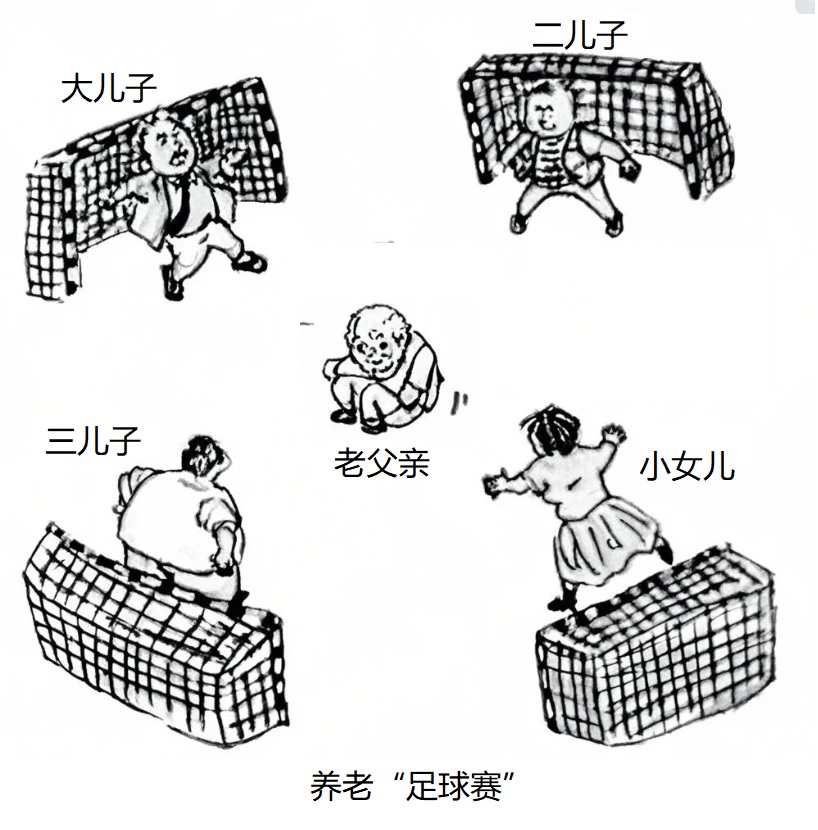
Directions:
Write an essay of 160 – 200 words based on the following drawing. In your essay, you should first describe the drawing, then interpret its meaning, and give your comment on it.
You should write neatly on ANSWER SHEET 2. (20 points)
Write an essay of 160 – 200 words based on the following drawing. In your essay, you should first describe the drawing, then interpret its meaning, and give your comment on it.
You should write neatly on ANSWER SHEET 2. (20 points)
全卷客观题答案速查
考研英语(旧卷)2005年真题全卷客观题参考答案速查如下表,按卷面顺序逐题型列出;写作、翻译等主观题无标准答案,参考范文与逐题解析见对应题型解析页。
| 题型(卷面位置) | 参考答案 |
|---|---|
| 完形填空(四选一) Section I (1–20 题) | 1 C but · 2 B unlike · 3 A limited · 4 C missing · 5 B though · 6 A even if · 7 D detecting · 8 A diluted · 9 D whereas · 10 B particular · 11 C messages · 12 A at first · 13 D exposed · 14 C inefficient · 15 D create · 16 B also · 17 C aware · 18 D notice · 19 A available · 20 B such as (逐题解析见 完形填空(四选一)解析页 ) |
| 阅读理解(四选一) Section II Part A (1) (21–25 题) | 21 C · 22 B · 23 A · 24 C · 25 B (逐题解析见 阅读理解(四选一)解析页 ) |
| 阅读理解(四选一) Section II Part A (2) (26–30 题) | 26 C · 27 D · 28 A · 29 D · 30 B (逐题解析见 阅读理解(四选一)解析页 ) |
| 阅读理解(四选一) Section II Part A (3) (31–35 题) | 31 A · 32 C · 33 D · 34 D · 35 A (逐题解析见 阅读理解(四选一)解析页 ) |
| 阅读理解(四选一) Section II Part A (4) (36–40 题) | 36 B · 37 D · 38 A · 39 B · 40 C (逐题解析见 阅读理解(四选一)解析页 ) |
| 选句填空(7选5) Section II Part B (41–45 题) | 41 E · 42 C · 43 G · 44 F · 45 B (逐题解析见 选句填空(7选5)解析页 ) |
| 英译汉(划线句子翻译) Section II Part C | 主观题 · 参考范文与逐题解析见 英译汉(划线句子翻译)解析页 |
| 写作 Section III Part A | 主观题 · 参考范文与逐题解析见 写作解析页 |
| 写作 Section III Part B | 主观题 · 参考范文与逐题解析见 写作解析页 |
全卷构成
- Section I 完形填空(四选一)
- Section II Part A (1) 阅读理解(四选一)
- Section II Part A (2) 阅读理解(四选一)
- Section II Part A (3) 阅读理解(四选一)
- Section II Part A (4) 阅读理解(四选一)
- Section II Part B 选句填空(7选5)
- Section II Part C 英译汉(划线句子翻译)
- Section III Part A 写作
- Section III Part B 写作
关于考研英语(旧卷) 2005年 真题(整卷)的常见问题
- 2005年考研英语(旧卷)真题由哪些题型组成?
- 2005年考研英语(旧卷)真题共 9 个模块、满分 100 分,按试卷结构分为三大部分:Section I 完形填空(四选一)1 篇 20 空(10 分);Section II Part A 仔细阅读(四选一)4 篇,每篇 5 题共 20 题(40 分);Section II Part B 选句填空新题型 1 篇,41–45 题从 A–G 七个选项中选 5 句(10 分);Section II Part C 英译汉划线翻译 5 段(10 分);Section III 写作两篇——Part A 小作文(10 分)与 Part B 图画大作文(20 分)。
- 2005年考研英语真题一共有多少道编号题目?
- 2005年考研英语真题共有 45 道编号客观题,外加 2 篇作文。具体为完形填空 1–20 题(20 空)、四篇仔细阅读 21–40 题(每篇 5 题、合计 20 题)、选句填空新题型 41–45 题(5 空);划线翻译为 5 段主观题,写作为小作文与大作文各 1 篇。
- 2005年考研英语真题的阅读文章难度(CEFR)如何分布?
- 2005年考研英语真题 6 篇文章的 CEFR 难度为 B2 共 1 篇、C1 共 5 篇。难度最低的是 Section I 完形填空文章(B2,约 280 词);四篇仔细阅读(Text 1–4)与英译汉翻译篇章均为 C1,属于雅思 6.5–7.5、偏学术英语的高阶阅读区间。
- 2005年考研英语真题六篇文章一共多少词?各篇多长?
- 2005年考研英语真题 6 篇文章合计 2399 词。各篇长度为:完形填空(嗅觉)280 词、Text 1(卷尾猴子与公平)426 词、Text 2(全球变暖类比吸烟)421 词、Text 3(梦与情绪)474 词、Text 4(正式英语的衰落)395 词、英译汉翻译篇章(欧洲电视媒体)403 词。其中 Text 3 是最长的一篇。
- 2005年考研英语真题各模块出现频率最高的词有哪些?
- 2005年考研英语真题各模块的高频词紧扣题材:完形填空文章里 smell 出现 16 次、receptor 5 次、sensitive 与 nose 各 4 次;Text 1 里 monkey 出现 17 次、capuchin 6 次、grape 与 cucumber 各 5 次;选句填空(加拿大药品机构)里 drug 高达 23 次、national 16 次、province 14 次、cost 12 次。这些词正是各篇主旨所在,背真题词建议按篇集中记。
- 2005年考研英语翻译(英译汉)考的是什么主题?
- 2005年考研英语英译汉划线翻译考的是大众传媒、尤其是电视在欧洲一体化进程中的角色。403 词的篇章探讨欧洲多媒体集团(如 Berlusconi、Maxwell、Murdoch)的整合、欧洲电视市场的激烈竞争、以及「在欧洲、为欧洲制作节目」以减少对北美市场依赖、打造「欧洲身份认同(European identity)」的主张,关键词 television 出现 8 次。需翻译的 5 个划线句围绕电视连接不同民族、欧洲电视格局分析、竞争与合作等展开。
- 2005年考研英语完形填空讲的是什么内容?
- 2005年考研英语完形填空(Section I)讲的是「人类嗅觉是一种被低估的工具」。280 词的科普文章指出:人类因直立行走而被认为嗅觉迟钝,实则对气味极为敏感,能察觉稀释到百万分之一以下的人体气味;有些人对特定气味不敏感,是因缺少生成相应嗅觉受体(receptor)的基因,但反复接触后可重新变敏感;大脑为节省资源只保留对陌生与危险气味(如烟味)的警觉。20 个空主要考查连接词、近义动词辨析与逻辑衔接。
- 2005年考研英语四篇仔细阅读(Text 1 至 Text 4)分别讲什么?
- 2005年考研英语 Section II Part A 四篇仔细阅读题材如下:Text 1 取自《经济学人》Fair and Square,讲卷尾猴(capuchin)实验显示猴子也有公平意识、会对不公待遇产生愤慨;Text 2 取自《美国新闻与世界报道》Warming to the Task,以当年质疑吸烟危害的历史类比全球变暖,呼吁立即行动;Text 3 取自《新闻周刊》,讲梦与情绪的关联以及如何有意识地驾驭反复出现的噩梦;Text 4 取自《经济学人》一篇书评,讨论 1960 年代反主流文化导致正式英语(formal English)衰落的现象。
- 2005年考研英语阅读 Text 1 关于卷尾猴的文章具体讲了什么?
- 2005年考研英语阅读 Text 1 讲的是卷尾猴(brown capuchin monkey)也具备「公平意识」。Emory 大学 Sarah Brosnan 与 Frans de Waal 发表于《自然》的研究中,研究者用两年教母猴拿石块(token)换食物:通常猴子乐意用石块换黄瓜片,但当相邻笼中另一只猴子用同样代币换到更受欢迎的葡萄、或不付代币就得到葡萄时,这只猴子会拒绝、甚至把代币扔出笼外。文章据此论证人类那种「义愤」并非人类独有,并留下「公平感是独立演化还是源自 3500 万年前共同祖先」的开放性问题。
- 2005年考研英语选句填空(新题型,41 至 45 题)的文章讲什么?
- 2005年考研英语 Section II Part B 选句填空(41–45 题)讲的是加拿大应建立「国家药品机构(national drug agency)」以控制药价。文章呼吁各省省长共同行动,指出处方药成本自 1997 年起以两倍于整体医疗支出的速度上涨;Romanow 委员会与 Kirby 委员会均建议各省合并采购、统一谈判以争取更低药价,但魁北克等省出于地方主义不愿加入。该题给出 A–G 共 7 个句子,需为 5 个空白选出最合适的 5 句,余下 2 句为干扰项。
- 2005年考研英语阅读 Text 3 关于梦的文章主要观点是什么?
- 2005年考研英语阅读 Text 3 的核心观点是:梦并非完全不可控,而可被有意识地驾驭。文章梳理了对梦的认识演变——从弗洛伊德的「潜意识欲望的伪装」,到 1970 年代末神经学家视其为「精神噪音」,再到如今研究者认为梦是大脑「情绪恒温器」,在睡眠中调节情绪。脑成像显示快速眼动(REM)睡眠时负责情绪的边缘系统活跃、负责理性的前额叶皮层相对安静;芝加哥的 Rosalind Cartwright 主张人可对反复出现的噩梦进行有意识的控制(醒来时辨认困扰点、想象理想结局),长期噩梦者则应寻求治疗师帮助。
- 2005年考研英语(旧卷)的两篇作文题目是什么?
- 2005年考研英语写作部分共两篇。小作文(Section III Part A,10 分)要求:你两个月前入职杂志《Designs & Fashions》担任编辑,现因工作不符预期决定辞职,写一封信给老板 Mr. Wang 说明决定、陈述理由并致歉,不少于 100 词,落款用「Li Ming」而非真实姓名。大作文(Section III Part B,20 分)是图画作文,要求 160–200 词,先描述图画、再阐释其寓意、最后发表评论。
- 2005年考研英语真题难度大吗?
- 2005年考研英语真题整体偏难,属于高阶学术英语。6 篇文章中 5 篇为 CEFR C1(雅思 6.5–7.5 区间),仅完形填空一篇为 B2;四篇仔细阅读全部选自《经济学人》《新闻周刊》《美国新闻与世界报道》等外刊,题材涵盖动物行为、全球变暖、睡眠科学与语言学,长难句与抽象论证较多。选句填空新题型(加拿大药品机构)信息密集、逻辑衔接强,翻译篇章(欧洲电视媒体)句式复杂,都是当年公认的失分点。
- 2005年考研英语真题的答案和解析在哪里看?
- 2005年考研英语真题的完整题目、原文与逐题解析可在懒笔记整卷页查看:完形填空、四篇仔细阅读(含真题+解析)、选句填空、英译汉与两篇作文按 Section I/II/III 原卷顺序还原。需要说明的是,考研英语官方不公布标准答案,网络上流传的客观题答案均为各培训机构整理的参考版本,存在个别分歧;建议以原文精读和解析思路为准来核对,而非死记某个字母答案。
- 2005年考研英语翻译的参考译文在哪里看?
- 2005年考研英语英译汉(Section II Part C,欧洲电视媒体主题)的划线句原文、整篇上下文与精读可在懒笔记翻译详情页查看,便于结合语境理解 5 个划线长句的结构。需注意官方仅给出评分要点而不发布逐字标准译文,市面参考译文为机构整理;练习时应先自译再对照解析中的拆句与采分点,重点掌握定语从句、被动语态与抽象名词的处理,而非背诵某一版译文。