
英语六级 2021年6月·第3套 · 真题整卷
按真题原卷顺序的全部题型,逐题型可进试卷排版、题目解析、原文精读;整卷可免费下载电子版(真题 PDF、解析版 PDF 与 Word)。
整卷试卷排版
六级 · 真题卷第3套 · 2021年6月
英语六级2021年6月·第3套真题
Directions: For this part, you are allowed 30 minutes to write an essay based on the chart below. You should start your essay with a brief description of the chart and comment on China's achievements in poverty alleviation. You should write at least 150 words but no more than 200 words.
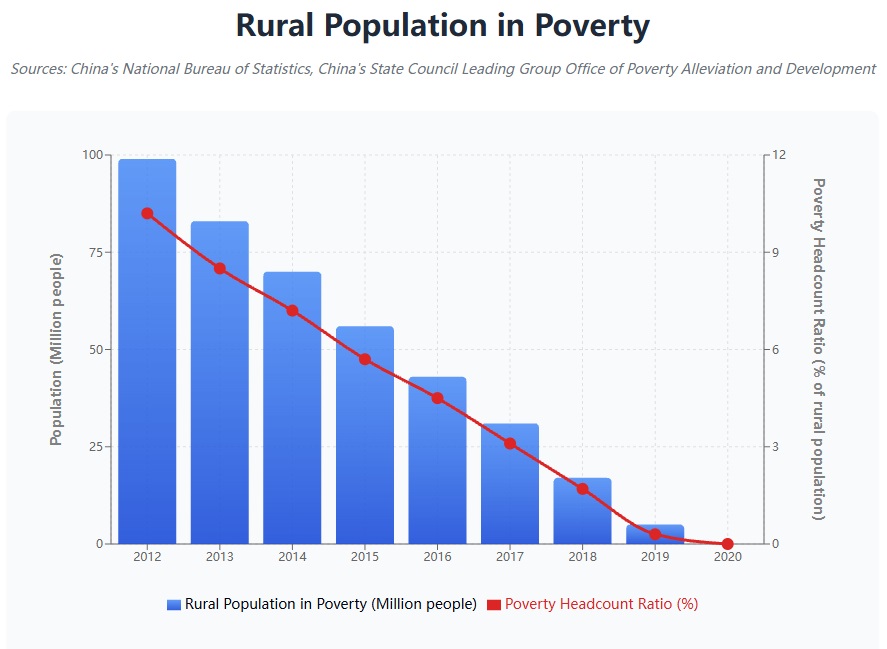
英语六级2021年6月·第3套真题
英语六级2021年6月·第3套真题
Directions: In this section, there is a passage with ten blanks. You are required to select one word for each blank from a list of choices given in a word bank following the passage. Read the passage through carefully before making your choices. Each choice in the bank is identified by a letter. Please mark the corresponding letter for each item on Answer Sheet 2 with a single line through the centre. You may not use any of the words in the bank more than once.
At 43, I've reached the stage where women are warned to watch out for the creeping sadness of middle age. We're served up an endless stream of advice on "how to survive your 40s", as if we're in the endurance stage of a slow limp toward 26 . This is the age women start to become "invisible"—our value, attractiveness and power supposedly 27 by the vanishing of youth. But I don't feel like I'm fading into 28 . I feel more seen than I ever have, and for the first time in my life, I have a clear-eyed view of myself that is 29 , compassionate and accepting.
When I look in the mirror, I'm proud of who I am—even those "broken" parts that for so long seemed impossible to love. So when advertisers try to sell me ways to "turn back the clock", I have to 30 a laugh. I wouldn't go back to the crippling self-consciousness of my youth if you paid me. This hard-won sense of self-acceptance is one of the joys of being an older woman. But it's a narrative often 31 out by the shame that marketers rely on to peddle us their diet pills, miracle face creams and breathable yoga pants—as if self-love is a 32 commodity.
For some women I know, this sense of trust and self-belief later in life gave them the courage to leave dysfunctional relationships or 33 on new career paths. Others talked about enjoying their own company, of growth through 34 , deepening bonds of friendships, the ability to be more compassionate, less judgmental and to listen more and appreciate the small pleasures. Life past 40 is far from smooth sailing, but it's so much more than the reductive 35 we see in women's magazines and on the Hollywood big screen.
A)adversity
B)authentic
C)convey
D)depictions
E)diminished
F)drowned
G)embark
H)fragility
I)neglected
J)obscurity
K)outlines
L)prevalent
M)purchasable
N)submit
O)suppress
Directions: In this section, you are going to read a passage with ten statements attached to it. Each statement contains information given in one of the paragraphs. Identify the paragraph from which the information is derived. You may choose a paragraph more than once. Each paragraph is marked with a letter. Answer the questions by marking the corresponding letter on Answer Sheet 2.
What Are the Ethics of CGI Actors—And Will They Replace Real Ones?
A)
Digital humans are coming to a screen near you. As computer-generated imagery (CGI) has become cheaper and more sophisticated, the film industry can now convincingly recreate people on screen—even actors who have been dead for decades. The technology's ability to effectively keep celebrities alive beyond the grave is raising questions about public legacies and image rights.
B)
Late in 2019, it was announced that US actor James Dean, who died in 1955, will star in a Vietnam War film scheduled for release later this year. In the film, which will be called Finding Jack, Dean will be recreated on screen with CGI based on old footage(影片镜头) and photographs, with another actor voicing him. The news was met with excitement by those keen to see Dean digitally brought back to life for only his fourth film, but it also drew sharp criticism. "This is puppeteering the dead for their fame alone," actress Zelda Williams wrote on Twitter. "It sets such an awful precedent for the future of performance." Her father, Robin Williams, who died in 2014, was keen to avoid the same fate. Before his death, he filed a deed protecting the use of his image until 2039, preventing others from recreating him using CGI to appear in a film, TV show or as a hologram(全息影像).
C)
The James Dean film is a way to keep the actor's image relevant for younger generations, says Mark Roesler of CMG Worldwide, the firm that represents Dean's estate. "I think this is the beginning of an entire wave," says Travis Cloyd, CEO of Worldwide XR, one of the companies behind the digital recreation of Dean. "Moving into the future, we want James Dean to be brought into different gaming environments, or different virtual reality environments, or augmented reality environments," he says.
D)
Other actors have been revived, with the permission of their estates, for advertising purposes: for example, a 2011 advertisement for Dior featured contemporary actress Charlize Theron alongside iconic 20th-century stars Marilyn Monroe, Grace Kelly and Marlene Dietrich. Later, Audrey Hepburn was digitally recreated for a chocolate commercial in 2013. In the same year, a CGI Bruce Lee appeared in a Chinese-language ad for a whisky brand, which offended many fans because Lee was widely known not to drink alcohol at all. "In the last five years, it's become more affordable and more achievable in a whole movie," says Tim Webber at UK visual effects firm Framestore, the company behind the Hepburn chocolate ad. Framestore used body doubles with resemblance to Hepburn's facial structure and body shape as a framework for manual animation. The process was extremely difficult and expensive, says Webber, but the technology has moved on.
E)
Now, a person can be animated from scratch. "If they're alive today, you can put them in scanning rigs, you can get every detail of their body analysed very carefully and that makes it much easier, whereas working from available photographs is tricky," says Webber, who won an Academy Award for his visual effects work on the 2013 film Gravity. "I also see a lot of actors today who will have the desire to take advantage of this technology: to have their likeness captured and stored for future content," says Cloyd. "They foresee this being something that could give their estates and give their families the ability to make money from their likeness when they're gone."
F)
A hidden hazard of digitally recreating a deceased(已故的) celebrity is the risk of damaging their legacy. "We have to respect the security and the integrity of rights holders," says John Canning at Digital Domain, a US firm that created a hologram rapper(说唱艺人) Tupac Shakur, which appeared at the Coachella music festival in 2012, 15 years after his death.
G)
Legally, a person's rights to control the commercial use of their name and image beyond their death differ between and even within countries. In certain US states, for example, these rights are treated similarly to property rights, and are transferable to a person's heirs. In California, under the Celebrities Rights Act, the personality rights for a celebrity last for 70 years after their death. "We've got a societal debate going on about access to our public commons, as it were, about famous faces," says Lilian Edwards at Newcastle University, UK. Should the public be allowed to use or reproduce images of famous people, given how iconic they are? And what is in the best interest of a deceased person's legacy may conflict with the desires of their family or the public, says Edwards.
H)
A recreation, however lifelike, will never be indistinguishable from a real actor, says Webber. "When we are bringing someone back, representing someone who is no longer alive on the screen, what we are doing is extremely sophisticated digital make-up," he says: "A performance is a lot more than a physical resemblance."
I)
As it becomes easier to digitally recreate celebrities and to entirely manufacture on-screen identities, could this kind of technology put actors out of jobs? "I think actors are worried about this," says Edwards. "But I think it will take a very long time." This is partly because of the risk that viewers find virtual humans scary. Edwards cites widespread backlash to the digital recreation of Carrie Fisher as a young Princess Leia in Rogue One, a trick later repeated in the recent Star Wars: The Rise of Skywalker, which was filmed after Fisher's death in 2016. "People didn't like it," she says. "They discovered the uncanny valley(诡异谷)."
J)
This refers to the idea that when objects trying to resemble humans aren't quite perfect, they can make viewers feel uneasy because they fall somewhere between obviously non-human and fully human. "That's always a danger when you're doing anything human or human-like," says Webber. "There're a thousand things that could go wrong with a computer-generated facial performance, and any one of those could make it fall into the uncanny valley," he says: "Your brain just knows there's something wrong." The problem often arises around the eyes or mouth, says Webber. "They're the areas that you look at when you're talking to someone."
K)
An unfamiliar digital human that has been created through CGI will also face the same challenge as an unknown actor: they don't have the appeal of an established name. "You have to spend substantial capital in creating awareness around their likeness and making sure people are familiar with who they are," says Cloyd. This is now starting to happen. "The way you pre-sell a movie in a foreign market is based on relevant talent," he says. "I think we're a long way away from having virtual beings that have the ability to pre-sell content."
L)
Webber expects that we will see more digital humans on screen. "It's happening because it can happen," he says. Referring to a line from Jurassic Park(侏罗纪公园), he adds: "People are too busy thinking about what they can do to think about whether they should do it."
36.
There is an ongoing debate among the public as to whether the images of deceased celebrities should be recreated.
37.
The CGI technology allows the image of the deceased James Dean to be presented to young people in new settings.
38.
It is very likely that the CGI-recreated image of a deceased celebrity will fail to match the real actor
39.
The use of digital technology can bring images of deceased celebrities back to the screen.
40.
Recreating a deceased famous actor or actress may violate their legitimate rights.
41.
More CGI-recreated images of deceased celebrities are expected to appear on screen.
42.
The image of James Dean will be recreated on screen with his voice dubbed by someone else.
43.
However advanced the CGI technology is, the recreated image will differ in a way from the real actor.
44.
A lot of actors today are likely to make use of the CGI technology to have their images stored for the benefit of their families.
45.
Some actors are concerned that they may lose jobs because of the CGI technology.
Directions: There are 2 passages in this section.Each passage is followed by some questions or unfinished statements.For each of them there are four choices marked A),B),C)and D).You should decide on the best choice and mark the corresponding letter on Answer Sheet 2 with a single line through the centre.
Passage One
Questions 46 to 50 are based on the following passage.
You can't see it, smell it, or hear it, and people disagree on how precisely to define it, or where exactly it comes from. It isn't a school subject or an academic discipline, but it can be learned. It is a quality that is required of artists, but it is also present in the lives of scientists and entrepreneurs. All of us benefit from it and we thrive mentally and spiritually when we are able to wield it. It is a delicate thing, easily stamped out; in fact, it flourishes most fully when people are playful and childlike. Meanwhile, it works best in conjunction with deep knowledge and expertise.
This mysterious—but teachable—quality is creativity, the subject of a recently-published report by Durham Commission on Creativity and Education. The report concludes that creativity should not inhabit the school curriculum only as it relates to drama, music, art and other obviously creative subjects, but that creative thinking ought to run through all of school life, infusing(充满) the way humanities and natural sciences are learned.
The authors, who focus on education in England, offer a number of sensible recommendations, some of which are an attempt to alleviate the uninspiring and fact-based approach to education that has crept into policy in recent years. When children are regarded as vessels to be filled with facts, creativity does not prosper; nor does it when teachers' sole objective is coaching children towards exams. One suggestion from the commission is a network of teacher-led "creativity collaboratives", along the lines of existing maths hubs(中心), with the aim of supporting teaching for creativity through the school curriculum.
Nevertheless, it is arts subjects through which creativity can most obviously be fostered. The value placed on them by the independent education sector is clear. One only has to look at the remarkable arts facilities at Britain's top private schools to comprehend this. But in the state sector the excessive focus on English, maths and science threatens to crush arts subjects; meanwhile, reduced school budgets mean diminishing extracurricular activities. There has been a 28.1% decline in students taking creative subjects at high schools since 2014, though happily, art and design have seen a recent increase.
This discrepancy between state and private education is a matter of social justice. It is simply wrong and unfair that most children have a fraction of the access to choirs, orchestras, art studios and drama that their more privileged peers enjoy. As lives are affected by any number of looming challenges—climate crisis, automation in the workplace—humans are going to need creative thinking more than ever. For all of our sakes, creativity in education, and for all, must become a priority.
46.
What do we learn from the passage about creativity?
A)It develops best when people are spiritually prepared.
B)It is most often wielded by scientists and entrepreneurs.
C)It is founded on scientific knowledge and analytical skills.
D)It contributes to intellectual growth but can easily be killed.
47.
What is the conclusion of a recently-published report?
A)Natural sciences should be learned the way humanities courses are.
B)Cultivation of creativity should permeate the entire school curriculum.
C)Art courses should be made compulsory for all students.
D)Students should learn more obviously creative subjects.
48.
What does the report say is detrimental to the fostering of creativity?
A)Alleviation of pressure.
B)Teacher-led school activities.
C)Test-oriented teaching.
D)Independent learning.
49.
What do we learn about the private schools in the UK?
A)They encourage extracurricular activities.
B)They attach great importance to arts education.
C)They prioritize arts subjects over maths and sciences.
D)They cater to students from different family backgrounds.
50.
What should be done to meet the future challenges?
A)Increasing government investment in school education.
B)Narrowing the existing gap between the rich and the poor.
C)Providing all children with equal access to arts education.
D)Focusing on meeting the needs of under-privileged students.
Passage Two
Questions 51 to 55 are based on the following passage.
Emulating your conversation partner's actions is a common human behavior classified as "mirroring" and has been known and studied by psychologists for years. We all tend to subconsciously copy gestures of people we like. But why do we act like this?
As a rule, mirroring means that conversationalists enjoy their communication and that there's a certain level of agreement between them. The topic of discussion is equally interesting for both and they know their interests meet.
Repeating someone's behavior is typical of talented communicators, not always because the person is sympathetic, but because there is a goal to be achieved. This way new idols have been brought to the stage: politicians, celebrities, and other big names. Popular culture makes people want to look popular, and act and speak like popular people.
Nowadays celebrities steal lyrics from each other and struggle with copyright violation accusations or straightforwardly claim themselves to be the authors, even though all the work was done by other people.
Among celebrities, it's trendy nowadays to use their own speech writers as politicians do. The so-called "ghostwriting" can take various forms: books, articles, autobiographies, and even social media posts.
Who is a true copycat(抄袭者) and who gets copycatted? Sometimes, it is a hard nut to crack without an expert's help. But new authorship defending methods based on identifying individual writing patterns are already here. Their aim is to protect intellectual property. Using scientific methods, some of them can define authorship with 85% accuracy.
Writing is not an easy craft to master. If you want to write like a professional without plagiarism(抄袭), there are a few lessons to learn and the first one is: "Copy from one, it's plagiarism; copy from two, it's research." The correct interpretation of this statement is not about copying, but rather about creating your own style. When you study an author's writing style, don't stop on a single one, but explore numerous styles instead. Examine types of sentences they use, pay attention to their metaphors, and focus on stories you feel you could write a pretty cool sequel(续篇) to.
Imitation is rather paradoxical. As an integral part of learning, it brings about positive changes, making people develop and grow. However, it may do a lot of harm. Copying someone's thoughts, ideas or inventions is completely unacceptable. It infringes on intellectual property rights of others.
Still, many things we do are about copying others one way or another. So if you want to compliment someone on the work they have done and imitate it, just make sure you do it the right way to avoid committing plagiarism.
51.
What do people tend to do while engaging in a conversation?
A)Repeat what their partners say one way or another.
B)Focus as much as possible on topics of mutual interest.
C)Imitate their partners' gestures without their knowing it.
D)Observe carefully how their partners make use of gestures.
52.
When does mirroring usually take place in a conversation?
A)When both sides are sympathetic with each other.
B)When both sides have a lot of things in common.
C)When both sides make interesting contributions.
D)When both sides try to seek common ground.
53.
What do we learn about popular culture?
A)It encourages people to imitate.
B)It appeals mostly to big names.
C)It acquaints young people with their idols.
D)It can change people's mode of cognition.
54.
Why is the saying "copy from two, it's research" a lesson to learn?
A)It facilitates the creation of one's own writing style.
B)It helps to protect one's intellectual property rights.
C)It fosters correct interpretation of professional writing.
D)It enables one to write intriguing sequels to famous stories.
55.
Why does the author say imitation is rather paradoxical?
A)It is liable to different interpretations.
B)It is by and large a necessary evil.
C)It can give rise to endless disputes.
D)It may do harm as well as good.
英语六级2021年6月·第3套真题
Directions: For this part, you are allowed 30 minutes to translate a passage from Chinese into English. You should write your answer on Answer Sheet 2.
云南是位于中国西南的一个省份,平均海拔 1500米。云南历史悠久,风景秀丽,气候宜人。云南生态环境优越,生物多种多样,被誉为野生动植物的天堂。云南还有多种矿藏和充足的水资源,为全省经济的可持续发展提供了有利条件。 云南居住着25个少数民族,他们大多有自己的语言、习俗和宗教。云南独特的自然景色和丰富的民族文化使其成为中国最受欢迎的旅游目的地之一,每年都吸引着大批国内外游客前往观光旅游。
全卷客观题答案速查
英语六级2021年6月·第3套真题全卷客观题参考答案速查如下表,按卷面顺序逐题型列出;写作、翻译等主观题无标准答案,参考范文与逐题解析见对应题型解析页。
| 题型(卷面位置) | 参考答案 |
|---|---|
| 写作 Part I | 主观题 · 参考范文与逐题解析见 写作解析页 |
| 听力 Part II (1–25 题) | 1 D · 2 A · 3 B · 4 D · 5 C · 6 C · 7 A · 8 D · 9 A · 10 B · 11 D · 12 D · 13 C · 14 C · 15 A · 16 B · 17 B · 18 D · 19 A · 20 B · 21 D · 22 C · 23 B · 24 C · 25 A (与 2021年6月第1套 共用本部分) |
| 完形填空(选词填空) Part III Section A (26–35 题) | 26 H fragility · 27 E diminished · 28 J obscurity · 29 B authentic · 30 O suppress · 31 F drowned · 32 M purchasable · 33 G embark · 34 A adversity · 35 D depictions (逐题解析见 完形填空(选词填空)解析页 ) |
| 长篇阅读(信息匹配) Part III Section B (36–45 题) | 36 G · 37 C · 38 J · 39 A · 40 F · 41 L · 42 B · 43 H · 44 E · 45 I (逐题解析见 长篇阅读(信息匹配)解析页 ) |
| 阅读理解(四选一) Part III Section C (1) (46–50 题) | 46 D · 47 B · 48 C · 49 B · 50 C (逐题解析见 阅读理解(四选一)解析页 ) |
| 阅读理解(四选一) Part III Section C (2) (51–55 题) | 51 C · 52 B · 53 A · 54 A · 55 D (逐题解析见 阅读理解(四选一)解析页 ) |
| 汉译英(段落翻译) Part IV | 主观题 · 参考范文与逐题解析见 汉译英(段落翻译)解析页 |
全卷构成
- Part I 写作
- Part II 听力
与 2021年6月第1套 共用本部分
- Part III Section A 完形填空(选词填空)
- Part III Section B 长篇阅读(信息匹配)
- Part III Section C (1) 阅读理解(四选一)
- Part III Section C (2) 阅读理解(四选一)
- Part IV 汉译英(段落翻译)
关于英语六级 2021年6月·第3套 真题(整卷)的常见问题
- 2021年6月英语六级真题第3套包含哪些题型?
- 2021年6月英语六级真题第3套在懒笔记整卷页收录了 6 个模块:写作(1 篇图表作文)、选词填空(1 篇)、长篇阅读信息匹配(1 篇 10 题)、仔细阅读四选一(2 篇各 5 题)、翻译(汉译英 1 篇)。四篇阅读篇章合计约 2321 词,编号选择题共 20 道。
- 2021年6月英语六级真题第3套的阅读篇章有几篇、总词量多少?
- 2021年6月英语六级真题第3套共有 4 篇阅读篇章,总词量约 2321 词。其中长篇阅读信息匹配的 CGI 演员一文最长,约 1149 词;仔细阅读四选一两篇分别约 442 词与 432 词;选词填空篇章约 298 词。
- 2021年6月英语六级真题第3套阅读篇章的 CEFR 难度分布如何?
- 2021年6月英语六级真题第3套的 4 篇阅读篇章按 CEFR 难度分布为 C1 级 3 篇、B2 级 1 篇。选词填空(中年女性)、长篇信息匹配(CGI 演员)、仔细阅读第一篇(创造力教育)均为 C1 级,仔细阅读第二篇(模仿与抄袭)为 B2 级,整体偏中上难度。
- 2021年6月英语六级真题第3套长篇阅读信息匹配篇章的高频词有哪些?
- 2021年6月英语六级真题第3套长篇阅读信息匹配(What Are the Ethics of CGI Actors)一文围绕数字复活展开,高频实词为 actor(16 次)、image(13 次)、celebrity / recreate / technology / digital(各 8–9 次)、film / screen(各 8 次)、human(7 次)、deceased(7 次),紧扣 CGI 技术再现已故演员的主题。
- 2021年6月英语六级真题第3套的选择题一共多少道、怎么分布?
- 2021年6月英语六级真题第3套编号选择题共 20 道:长篇阅读信息匹配 10 道(对应文章 A–L 段落定位),仔细阅读四选一两篇各 5 道(第 46–50 题、第 51–55 题)。选词填空另设 10 空、写作与翻译为主观题,不计入这 20 道选择题。
- 2021年6月英语六级真题第3套翻译考的是什么?
- 2021年6月英语六级真题第3套翻译考的是「云南」。汉译英原文介绍云南位于中国西南、平均海拔 1500 米,历史悠久、风景秀丽、气候宜人,生态环境优越、生物多样,被誉为野生动植物的天堂;还提到云南拥有多种矿藏和充足水资源、居住着 25 个少数民族,独特自然景色与民族文化使其成为中国最受欢迎的旅游目的地之一。
- 2021年6月英语六级真题第3套作文题目是什么?
- 2021年6月英语六级真题第3套作文是一篇图表作文(30 分钟、150–200 词),要求先简要描述图表,再就中国在脱贫(poverty alleviation)方面取得的成就发表评论。这是当年三套六级作文中围绕中国减贫成就命题的一套,属图表描述加议论的混合题型。
- 2021年6月英语六级真题第3套翻译「云南」有哪些难点词?
- 2021年6月英语六级真题第3套翻译「云南」的难点集中在专有表达与专业词:平均海拔(average elevation / altitude)、生态环境优越、生物多种多样、野生动植物的天堂(paradise of wildlife)、矿藏(mineral resources)、充足的水资源、可持续发展(sustainable development)、25 个少数民族(ethnic minorities)以及习俗与宗教(customs and religions)。数字「1500 米」「25 个」需准确译出。
- 2021年6月英语六级真题第3套长篇阅读信息匹配讲的是什么?
- 2021年6月英语六级真题第3套长篇阅读信息匹配选自《新科学家》,题为 What Are the Ethics of CGI Actors—And Will They Replace Real Ones?,讨论用 CGI 技术在银幕上再现已故演员的伦理与法律争议。文中举了 1955 年去世的詹姆斯·迪恩被数字复活出演电影 Finding Jack、奥黛丽·赫本代言巧克力广告、图帕克全息影像等案例,并谈及形象权、加州名人权利法、「诡异谷」效应等。
- 2021年6月英语六级真题第3套第一篇仔细阅读(第46–50题)讲的是什么?
- 2021年6月英语六级真题第3套第一篇仔细阅读(第 46–50 题)选自《卫报》,主题是学校教育中的创造力(creativity)。文章借达勒姆创造力与教育委员会的报告,批评英国当前重事实灌输、以应试为导向的教育方式,主张创造性思维应贯穿全部课程,并指出公立学校因侧重英语、数学、科学而挤压艺术学科,呼吁把面向所有孩子的创造力培养当作头等大事。
- 2021年6月英语六级真题第3套第二篇仔细阅读(第51–55题)讲的是什么?
- 2021年6月英语六级真题第3套第二篇仔细阅读(第 51–55 题)主题是「模仿」(mirroring)与抄袭。文章从人际交流讲起,指出人们会下意识模仿喜欢之人的手势;再谈流行文化中的抄袭乱象与名人代笔(ghostwriting),介绍可达 85% 准确率的作者身份识别新方法;最后指出模仿具两面性——作为学习手段有益,但抄袭他人思想则不可接受,呼吁以正当方式模仿。
- 2021年6月英语六级真题第3套选词填空是关于什么话题的?
- 2021年6月英语六级真题第3套选词填空选自《悉尼先驱晨报》,主题是「中年值得庆贺」。作者以 43 岁的自身经历反驳「中年女性开始走向衰退」的常见观点,批判靠购买抗衰商品保持外在年轻的做法,主张坦然接纳中年自我,并列举中年女性可获得的自我接纳、深化友谊、更具同理心等心智成长。
- 2021年6月英语六级真题第3套难不难?
- 2021年6月英语六级真题第3套整体属中上难度:4 篇阅读中 3 篇为 CEFR C1 级、1 篇 B2 级,长篇信息匹配的 CGI 演员一文长约 1149 词且涉及形象权、伦理法律等专业概念,是全卷较难部分;翻译「云南」含海拔、矿藏、少数民族等表达。懒笔记整卷页按模块拆分了题干、选项与篇章原文,可逐篇对照篇章难度与高频词自评。
- 2021年6月英语六级真题第3套的答案和翻译参考译文在哪里看?
- 2021年6月英语六级真题第3套的试卷原文、各模块题干选项、四篇阅读篇章原文及翻译「云南」中文原文,均可在懒笔记整卷页查看试卷排版与逐题解析。需要提醒的是,官方从不公布标准答案,网络上流传的答案与参考译文均为各培训机构的参考版本,选词填空与四选一的选项对应关系请以权威机构解析为准、注意甄别。
- 2021年6月英语六级真题第3套和第1套、第2套有什么不同?
- 2021年6月英语六级同期三套卷题型结构一致,区别主要在阅读篇章、作文与翻译选材。第3套作文考中国脱贫成就图表作文、翻译考「云南」,长篇阅读为 CGI 演员伦理、仔细阅读涉创造力教育与模仿抄袭。三套的写作、翻译话题各不相同,可在懒笔记各套整卷页分别对照篇章主题与题目后再决定按套刷题。