
考研英语(旧卷) 2009年 · 真题整卷
按真题原卷顺序的全部题型,逐题型可进试卷排版、题目解析、原文精读;整卷可免费下载电子版(真题 PDF、解析版 PDF 与 Word)。
整卷试卷排版
考研(旧) · 考研真题 · 2009年
考研英语(旧卷)2009年真题
Directions:
Read the following text. Choose the best word(s) for each numbered blank and mark A, B, C or D on the ANSWER SHEET. (10 points)
Read the following text. Choose the best word(s) for each numbered blank and mark A, B, C or D on the ANSWER SHEET. (10 points)
Research on animal intelligence always makes us wonder just how smart humans are. 1 the fruit-fly experiments described by Carl Zimmer in the Science Times. Fruit flies who were taught to be smarter than the average fruit fly 2 to live shorter lives. This suggests that 3 bulbs burn longer, that there is a(n) 4 in not being too bright.
Intelligence, it 5 , is a high-priced option. It takes more upkeep, burns more fuel and is slow 6 the starting line because it depends on learning – a(n) 7 process – instead of instinct. Plenty of other species are able to learn, and one of the things they've apparently learned is when to 8 .
Is there an adaptive value to 9 intelligence? That's the question behind this new research. Instead of casting a wistful glance 10 at all the species we've left in the dust I.Q.-wise, it implicitly asks what the real 11 of our own intelligence might be. This is 12 the mind of every animal we've ever met.
Research on animal intelligence also makes us wonder what experiments animals would 13 on humans if they had the chance. Every cat with an owner, 14 , is running a small-scale study in operant conditioning. We believe that 15 animals ran the labs, they would test us to 16 the limits of our patience, our faithfulness, our memory for locations. They would try to decide what intelligence in humans is really 17 , not merely how much of it there is. 18 , they would hope to study a(n) 19 question: Are humans actually aware of the world they live in? 20 the results are inconclusive.
1.
[ A ]Suppose
[ B ]Consider
[ C ]Observe
[ D ]Imagine
2.
[ A ]tended
[ B ]feared
[ C ]happened
[ D ]threatened
3.
[ A ]thinner
[ B ]stabler
[ C ]lighter
[ D ]dimmer
4.
[ A ]tendency
[ B ]advantage
[ C ]inclination
[ D ]priority
5.
[ A ]insists on
[ B ]sums up
[ C ]turns out
[ D ]puts forward
6.
[ A ]off
[ B ]behind
[ C ]over
[ D ]along
7.
[ A ]incredible
[ B ]spontaneous
[ C ]inevitable
[ D ]gradual
8.
[ A ]fight
[ B ]doubt
[ C ]stop
[ D ]think
9.
[ A ]invisible
[ B ]limited
[ C ]indefinite
[ D ]different
10.
[ A ]upward
[ B ]forward
[ C ]afterward
[ D ]backward
11.
[ A ]features
[ B ]influences
[ C ]results
[ D ]costs
12.
[ A ]outside
[ B ]on
[ C ]by
[ D ]across
13.
[ A ]deliver
[ B ]carry
[ C ]perform
[ D ]apply
14.
[ A ]by chance
[ B ]in contrast
[ C ]as usual
[ D ]for instance
15.
[ A ]if
[ B ]unless
[ C ]as
[ D ]lest
16.
[ A ]moderate
[ B ]overcome
[ C ]determine
[ D ]reach
17.
[ A ]at
[ B ]for
[ C ]after
[ D ]with
18.
[ A ]Above all
[ B ]After all
[ C ]However
[ D ]Otherwise
19.
[ A ]fundamental
[ B ]comprehensive
[ C ]equivalent
[ D ]hostile
20.
[ A ]By accident
[ B ]In time
[ C ]So far
[ D ]Better still
考研英语(旧卷)2009年真题
Directions:
Read the following four texts. Answer the questions after each text by choosing A, B, C or D. Mark your answers on the ANSWER SHEET. (40 points)
Read the following four texts. Answer the questions after each text by choosing A, B, C or D. Mark your answers on the ANSWER SHEET. (40 points)
Text 1
Habits are a funny thing. We reach for them mindlessly, setting our brains on auto-pilot and relaxing into the unconscious comfort of familiar routine. "Not choice, but habit rules the unreflecting herd," William Wordsworth said in the 19th century. In the ever-changing 21st century, even the word "habit" carries a negative implication.
So it seems paradoxical to talk about habits in the same context as creativity and innovation. But brain researchers have discovered that when we consciously develop new habits, we create parallel paths, and even entirely new brain cells, that can jump our trains of thought onto new, innovative tracks.
Rather than dismissing ourselves as unchangeable creatures of habit, we can instead direct our own change by consciously developing new habits. In fact, the more new things we try – the more we step outside our comfort zone – the more inherently creative we become, both in the workplace and in our personal lives.
But don't bother trying to kill off old habits; once those ruts of procedure are worn into the brain, they're there to stay. Instead, the new habits we deliberately press into ourselves create parallel pathways that can bypass those old roads.
"The first thing needed for innovation is a fascination with wonder," says Dawna Markova, author of The Open Mind. "But we are taught instead to 'decide', just as our president calls himself 'the Decider'." She adds, however, that "to decide is to kill off all possibilities but one. A good innovational thinker is always exploring the many other possibilities."
All of us work through problems in ways of which we're unaware, she says. Researchers in the late 1960s discovered that humans are born with the capacity to approach challenges in four primary ways: analytically, procedurally, relationally (or collaboratively) and innovatively. At the end of adolescence, however, the brain shuts down half of that capacity, preserving only those modes of thought that have seemed most valuable during the first decade or so of life.
The current emphasis on standardized testing highlights analysis and procedure, meaning that few of us inherently use our innovative and collaborative modes of thought. "This breaks the major rule in the American belief system – that anyone can do anything," explains M. J. Ryan, author of the 2006 book This Year I Will… and Ms. Markova's business partner. "That's a lie that we have perpetuated, and it fosters commonness. Knowing what you're good at and doing even more of it creates excellence." This is where developing new habits comes in.
21.
In Wordsworth's view, "habits" is characterized by being____
[ A ]casual.
[ B ]familiar.
[ C ]mechanical.
[ D ]changeable.
22.
Brain researchers have discovered that the formation of new habits can be____
[ A ]predicted.
[ B ]regulated.
[ C ]traced.
[ D ]guided.
23.
The word "ruts" (Para. 4) is closest in meaning to____
[ A ]tracks.
[ B ]series.
[ C ]characteristics.
[ D ]connections.
24.
Dawna Markova would most probably agree that____
[ A ]ideas are born of a relaxing mind.
[ B ]innovativeness could be taught.
[ C ]decisiveness derives from fantastic ideas.
[ D ]curiosity activates creative minds.
25.
Ryan's comments suggest that the practice of standardized testing____
[ A ]prevents new habits from being formed.
[ B ]no longer emphasizes commonness.
[ C ]maintains the inherent American thinking mode.
[ D ]complies with the American belief system.
Text 2
It is a wise father that knows his own child, but today a man can boost his paternal (fatherly) wisdom – or at least confirm that he's the kid's dad. All he needs to do is shell out $30 for a paternity testing kit (PTK) at his local drugstore – and another $120 to get the results.
More than 60,000 people have purchased the PTKs since they first became available without prescriptions last year, according to Doug Fogg, chief operating officer of Identigene, which makes the over-the-counter kits. More than two dozen companies sell DNA tests directly to the public, ranging in price from a few hundred dollars to more than $2,500.
Among the most popular: paternity and kinship testing, which adopted children can use to find their biological relatives and families can use to track down kids put up for adoption. DNA testing is also the latest rage among passionate genealogists – and supports businesses that offer to search for a family's geographic roots.
Most tests require collecting cells by swabbing saliva in the mouth and sending it to the company for testing. All tests require a potential candidate with whom to compare DNA.
But some observers are skeptical. "There's a kind of false precision being hawked by people claiming they are doing ancestry testing," says Troy Duster, a New York University sociologist. He notes that each individual has many ancestors – numbering in the hundreds just a few centuries back. Yet most ancestry testing only considers a single lineage, either the Y chromosome inherited through men in a father's line or mitochondrial DNA, which is passed down only from mothers. This DNA can reveal genetic information about only one or two ancestors, even though, for example, just three generations back people also have six other great-grandparents or, four generations back, 14 other great-great-grandparents.
Critics also argue that commercial genetic testing is only as good as the reference collections to which a sample is compared. Databases used by some companies don't rely on data collected systematically but rather lump together information from different research projects. This means that a DNA database may have a lot of data from some regions and not others, so a person's test results may differ depending on the company that processes the results. In addition, the computer programs a company uses to estimate relationships may be patented and not subject to peer review or outside evaluation.
26.
In Paragraphs 1 and 2, the text shows PTK's____
[ A ]easy availability.
[ B ]flexibility in pricing.
[ C ]successful promotion.
[ D ]popularity with households.
27.
PTK is used to____
[ A ]locate one's birth place.
[ B ]promote genetic research.
[ C ]identify parent-child kinship.
[ D ]choose children for adoption.
28.
Skeptical observers believe that ancestry testing fails to____
[ A ]trace distant ancestors.
[ B ]rebuild reliable bloodlines.
[ C ]fully use genetic information.
[ D ]achieve the claimed accuracy.
29.
In the last paragraph, a problem commercial genetic testing faces is____
[ A ]disorganized data collection.
[ B ]overlapping database building.
[ C ]excessive sample comparison.
[ D ]lack of patent evaluation.
30.
An appropriate title for the text is most likely to be____
[ A ]Fors and Againsts of DNA Testing.
[ B ]DNA Testing and Its Problems.
[ C ]DNA Testing Outside the Lab.
[ D ]Lies Behind DNA Testing.
Text 3
The relationship between formal education and economic growth in poor countries is widely misunderstood by economists and politicians alike. Progress in both areas is undoubtedly necessary for the social, political, and intellectual development of these and all other societies; however, the conventional view that education should be one of the very highest priorities for promoting rapid economic development in poor countries is wrong. We are fortunate that it is, because building new educational systems there and putting enough people through them to improve economic performance would require two or three generations. The findings of a research institution have consistently shown that workers in all countries can be trained on the job to achieve radically higher productivity and, as a result, radically higher standards of living.
Ironically, the first evidence for this idea appeared in the United States. Not long ago, with the country entering a recession and Japan at its pre-bubble peak, the U.S. workforce was derided as poorly educated and one of the primary causes of the poor U.S. economic performance. Japan was, and remains, the global leader in automotive-assembly productivity. Yet the research revealed that the U.S. factories of Honda, Nissan, and Toyota achieved about 95 percent of the productivity of their Japanese counterparts – a result of the training that U.S. workers received on the job.
More recently, while examining housing construction, the researchers discovered that illiterate, non-English-speaking Mexican workers in Houston, Texas, consistently met best-practice labor productivity standards despite the complexity of the building industry's work.
What is the real relationship between education and economic development? We have to suspect that continuing economic growth promotes the development of education even when governments don't force it. After all, that's how education got started. When our ancestors were hunters and gatherers 10,000 years ago, they didn't have time to wonder much about anything besides finding food. Only when humanity began to get its food in a more productive way was there time for other things.
As education improved, humanity's productivity potential increased as well. When the competitive environment pushed our ancestors to achieve that potential, they could in turn afford more education. This increasingly high level of education is probably a necessary, but not a sufficient, condition for the complex political systems required by advanced economic performance. Thus poor countries might not be able to escape their poverty traps without political changes that may be possible only with broader formal education. A lack of formal education, however, doesn't constrain the ability of the developing world's workforce to substantially improve productivity for the foreseeable future. On the contrary, constraints on improving productivity explain why education isn't developing more quickly there than it is.
31.
The author holds in Paragraph 1 that the importance of education in poor countries____
[ A ]is subject to groundless doubts.
[ B ]has fallen victim of bias.
[ C ]is conventionally downgraded.
[ D ]has been overestimated.
32.
It is stated in Paragraph 1 that the construction of a new educational system____
[ A ]challenges economists and politicians.
[ B ]takes efforts of generations.
[ C ]demands priority from the government.
[ D ]requires sufficient labor force.
33.
A major difference between the Japanese and U.S. workforces is that____
[ A ]the Japanese workforce is better disciplined.
[ B ]the Japanese workforce is more productive.
[ C ]the U.S. workforce has a better education.
[ D ]the U.S. workforce is more organized.
34.
The author quotes the example of our ancestors to show that education emerged____
[ A ]when people had enough time.
[ B ]prior to better ways of finding food.
[ C ]when people no longer went hungry.
[ D ]as a result of pressure on government.
35.
According to the last paragraph, development of education____
[ A ]results directly from competitive environments.
[ B ]does not depend on economic performance.
[ C ]follows improved productivity.
[ D ]cannot afford political changes.
Text 4
The most thoroughly studied intellectuals in the history of the New World are the ministers and political leaders of seventeenth-century New England. According to the standard history of American philosophy, nowhere else in colonial America was "so much importance attached to intellectual pursuits." According to many books and articles, New England's leaders established the basic themes and preoccupations of an unfolding, dominant Puritan tradition in American intellectual life.
To take this approach to the New Englanders normally means to start with the Puritans' theological innovations and their distinctive ideas about the church – important subjects that we may not neglect. But in keeping with our examination of southern intellectual life, we may consider the original Puritans as carriers of European culture, adjusting to New World circumstances. The New England colonies were the scenes of important episodes in the pursuit of widely understood ideals of civility and virtuosity.
The early settlers of Massachusetts Bay included men of impressive education and influence in England. Besides the ninety or so learned ministers who came to Massachusetts churches in the decade after 1629, there were political leaders like John Winthrop, an educated gentleman, lawyer, and official of the Crown before he journeyed to Boston. These men wrote and published extensively, reaching both New World and Old World audiences, and giving New England an atmosphere of intellectual earnestness.
We should not forget, however, that most New Englanders were less well educated. While few craftsmen or farmers, let alone dependents and servants, left literary compositions to be analyzed, it is obvious that their views were less fully intellectualized. Their thinking often had a traditional superstitious quality. A tailor named John Dane, who emigrated in the late 1630s, left an account of his reasons for leaving England that is filled with signs. Sexual confusion, economic frustrations, and religious hope – all came together in a decisive moment when he opened the Bible, told his father that the first line he saw would settle his fate, and read the magical words: "Come out from among them, touch no unclean thing, and I will be your God and you shall be my people." One wonders what Dane thought of the careful sermons explaining the Bible that he heard in Puritan churches.
Meanwhile, many settlers had slighter religious commitments than Dane's, as one clergyman learned in confronting folk along the coast who mocked that they had not come to the New World for religion. "Our main end was to catch fish."
36.
The author holds that in the seventeenth-century New England____
[ A ]Puritan tradition dominated political life.
[ B ]intellectual interests were encouraged.
[ C ]politics benefited much from intellectual endeavors.
[ D ]intellectual pursuits enjoyed a liberal environment.
37.
It is suggested in Paragraph 2 that New Englanders____
[ A ]experienced a comparatively peaceful early history.
[ B ]brought with them the culture of the Old World.
[ C ]paid little attention to southern intellectual life.
[ D ]were obsessed with religious innovations.
38.
The early ministers and political leaders in Massachusetts Bay____
[ A ]were famous in the New World for their writings.
[ B ]gained increasing importance in religious affairs.
[ C ]abandoned high positions before coming to the New World.
[ D ]created a new intellectual atmosphere in New England.
39.
The story of John Dane shows that less well-educated New Englanders were often____
[ A ]influenced by superstitions.
[ B ]troubled with religious beliefs.
[ C ]puzzled by church sermons.
[ D ]frustrated with family earnings.
40.
The text suggests that early settlers in New England____
[ A ]were mostly engaged in political activities.
[ B ]were motivated by an illusory prospect.
[ C ]came from different intellectual backgrounds.
[ D ]left few formal records for later reference.
Directions:
In the following text, some segments have been removed. For Questions 41-45, choose the most suitable one from the list A-G to fit into each of the numbered blanks. There are two extra choices, which do not fit in any of the blanks. Mark your answers on ANSWER SHEET 1. (10 points)
In the following text, some segments have been removed. For Questions 41-45, choose the most suitable one from the list A-G to fit into each of the numbered blanks. There are two extra choices, which do not fit in any of the blanks. Mark your answers on ANSWER SHEET 1. (10 points)
Coinciding with the groundbreaking theory of biological evolution proposed by British naturalist Charles Darwin in the 1860s, British social philosopher Herbert Spencer put forward his own theory of biological and cultural evolution. Spencer argued that all worldly phenomena, including human societies, changed over time, advancing toward perfection. (41)占位符这是等待完型填空的句子位置
American social scientist Lewis Henry Morgan introduced another theory of cultural evolution in the late 1800s. Morgan helped found modern anthropology – the scientific study of human societies, customs and beliefs – thus becoming one of the earliest anthropologists. In his work, he attempted to show how all aspects of culture changed together in the evolution of societies. (42)占位符这是等待完型填空的句子位置
In the early 1900s in North America, German-born American anthropologist Franz Boas developed a new theory of culture known as historical particularism. Historical particularism, which emphasized the uniqueness of all cultures, gave new direction to anthropology. (43)占位符这是等待完型填空的句子位置
Boas felt that the culture of any society must be understood as the result of a unique history and not as one of many cultures belonging to a broader evolutionary stage or type of culture. (44)占位符这是等待完型填空的句子位置
Historical particularism became a dominant approach to the study of culture in American anthropology, largely through the influence of many students of Boas. But a number of anthropologists in the early 1900s also rejected the particularist theory of culture in favor of diffusionism. Some attributed virtually every important cultural achievement to the inventions of a few, especially gifted peoples that, according to diffusionists, then spread to other cultures. (45)占位符这是等待完型填空的句子位置
Also in the early 1900s, French sociologist Émile Durkheim developed a theory of culture that would greatly influence anthropology. Durkheim proposed that religious beliefs functioned to reinforce social solidarity. An interest in the relationship between the function of society and culture became a major theme in European, and especially British, anthropology.
[ A ]Other anthropologists believed that cultural innovations, such as inventions, had a single origin and passed from society to society. This theory was known as diffusionism.
[ B ]In order to study particular cultures as completely as possible, he became skilled in linguistics, the study of languages, and in physical anthropology, the study of human biology and anatomy.
[ C ]He argued that human evolution was characterized by a struggle he called the "survival of the fittest," in which weaker races and societies must eventually be replaced by stronger, more advanced races and societies.
[ D ]They also focused on important rituals that appeared to preserve a people's social structure, such as initiation ceremonies that formally signify children's entrance into adulthood.
[ E ]Thus, in his view, diverse aspects of culture, such as the structure of families, forms of marriage, categories of kinship, ownership of property, forms of government, technology, and systems of food production, all changed as societies evolved.
[ F ]Supporters of the theory viewed culture as a collection of integrated parts that work together to keep a society functioning.
[ G ]For example, British anthropologists Grafton Elliot Smith and W. J. Perry incorrectly suggested, on the basis of inadequate information, that farming, pottery making, and metallurgy all originated in ancient Egypt and diffused throughout the world. In fact, all of these cultural developments occurred separately at different times in many parts of the world.
Directions:
Read the following text carefully and then translate the underlined segments into Chinese. Write your answers on the ANSWER SHEET. ( 10 points)
Read the following text carefully and then translate the underlined segments into Chinese. Write your answers on the ANSWER SHEET. ( 10 points)
There is a marked difference between the education which every one gets from living with others and the deliberate educating of the young. In the former case the education is incidental; it is natural and important, but it is not the express reason of the association. (46)It may be said that the measure of the worth of any social institution is its effect in enlarging and improving experience, but this effect is not a part of its original motive. Religious associations began, for example, in the desire to secure the favor of overruling powers and to ward off evil influences; family life in the desire to gratify appetites and secure family perpetuity; systematic labor, for the most part, because of enslavement to others, etc. (47)Only gradually was the by-product of the institution noted, and only more gradually still was this effect considered as a directive factor in the conduct of the institution. Even today, in our industrial life, apart from certain values of industriousness and thrift, the intellectual and emotional reaction of the forms of human association under which the world's work is carried on receives little attention as compared with physical output.
But in dealing with the young, the fact of association itself as an immediate human fact, gains in importance. (48)While it is easy to ignore in our contact with them the effect of our acts upon their disposition, it is not so easy as in dealing with adults. The need of training is too evident and the pressure to accomplish a change in their attitude and habits is too urgent to leave these consequences wholly out of account. (49)Since our chief business with them is to enable them to share in a common life we cannot help considering whether or not we are forming the powers which will secure this ability. If humanity has made some headway in realizing that the ultimate value of every institution is its distinctively human effect we may well believe that this lesson has been learned largely through dealings with the young.
(50)We are thus led to distinguish, within the broad educational process which we have been so far considering, a more formal kind of education – that of direct tuition or schooling. In undeveloped social groups, we find very little formal teaching and training. These groups mainly rely for instilling needed dispositions into the young upon the same sort of association which keeps adults loyal to their group.
考研英语(旧卷)2009年真题
51.
Directions:
Restrictions on the use of plastic bags have not been so successful in some regions. “White Pollution” is still going on.
Write a letter to the editor(s) of your local newspaper to
1)give your opinions briefly, and
2)make two or three suggestions.
You should write about 100 words on ANSWER SHEET 2.
Do not sign your own name at the end of the letter, use “Li Ming ” instead.
Do not write the address. (10 points)
Restrictions on the use of plastic bags have not been so successful in some regions. “White Pollution” is still going on.
Write a letter to the editor(s) of your local newspaper to
1)give your opinions briefly, and
2)make two or three suggestions.
You should write about 100 words on ANSWER SHEET 2.
Do not sign your own name at the end of the letter, use “Li Ming ” instead.
Do not write the address. (10 points)
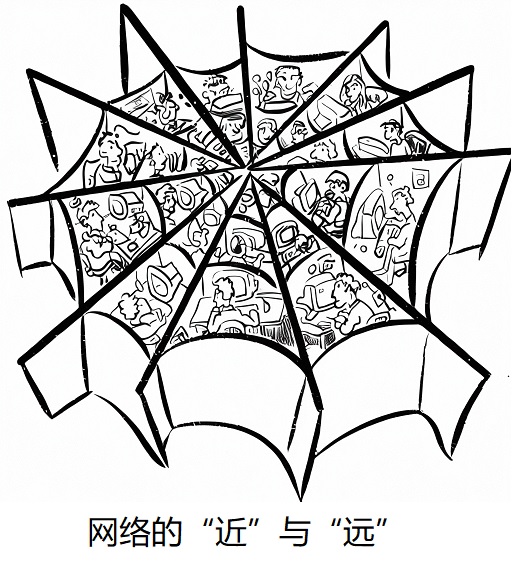
52.
Directions:
Write an essay of 160-200 words based on the following drawing. In your essay, you should
1)describe the drawing briefly,
2)explain its intended meaning, and then
3)give your comments.
You should write neatly on ANSWER SHEET 2. (20 points)
Write an essay of 160-200 words based on the following drawing. In your essay, you should
1)describe the drawing briefly,
2)explain its intended meaning, and then
3)give your comments.
You should write neatly on ANSWER SHEET 2. (20 points)
全卷客观题答案速查
考研英语(旧卷)2009年真题全卷客观题参考答案速查如下表,按卷面顺序逐题型列出;写作、翻译等主观题无标准答案,参考范文与逐题解析见对应题型解析页。
| 题型(卷面位置) | 参考答案 |
|---|---|
| 完形填空(四选一) Section I (1–20 题) | 1 B Consider · 2 A tended · 3 D dimmer · 4 B advantage · 5 C turns out · 6 A off · 7 D gradual · 8 C stop · 9 B limited · 10 D backward · 11 D costs · 12 B on · 13 C perform · 14 D for instance · 15 A if · 16 C determine · 17 B for · 18 A Above all · 19 A fundamental · 20 C So far (逐题解析见 完形填空(四选一)解析页 ) |
| 阅读理解(四选一) Section II Part A (1) (21–25 题) | 21 C · 22 D · 23 A · 24 D · 25 A (逐题解析见 阅读理解(四选一)解析页 ) |
| 阅读理解(四选一) Section II Part A (2) (26–30 题) | 26 A · 27 C · 28 D · 29 A · 30 B (逐题解析见 阅读理解(四选一)解析页 ) |
| 阅读理解(四选一) Section II Part A (3) (31–35 题) | 31 D · 32 B · 33 B · 34 A · 35 C (逐题解析见 阅读理解(四选一)解析页 ) |
| 阅读理解(四选一) Section II Part A (4) (36–40 题) | 36 B · 37 B · 38 D · 39 A · 40 C (逐题解析见 阅读理解(四选一)解析页 ) |
| 选句填空(7选5) Section II Part B (41–45 题) | 41 C · 42 E · 43 A · 44 B · 45 G (逐题解析见 选句填空(7选5)解析页 ) |
| 英译汉(划线句子翻译) Section II Part C | 主观题 · 参考范文与逐题解析见 英译汉(划线句子翻译)解析页 |
| 写作 Section III Part A | 主观题 · 参考范文与逐题解析见 写作解析页 |
| 写作 Section III Part B | 主观题 · 参考范文与逐题解析见 写作解析页 |
全卷构成
- Section I 完形填空(四选一)
- Section II Part A (1) 阅读理解(四选一)
- Section II Part A (2) 阅读理解(四选一)
- Section II Part A (3) 阅读理解(四选一)
- Section II Part A (4) 阅读理解(四选一)
- Section II Part B 选句填空(7选5)
- Section II Part C 英译汉(划线句子翻译)
- Section III Part A 写作
- Section III Part B 写作
关于考研英语(旧卷) 2009年 真题(整卷)的常见问题
- 2009年考研英语(旧卷)真题由哪些题型构成?
- 2009年考研英语(旧卷)真题由 5 种题型、9 个作答模块组成:完形填空(四选一)1 篇 20 空、仔细阅读(四选一)4 篇文章共 20 题、选句填空(41-45 题)、英译汉划线翻译 5 句、写作 2 篇(一篇应用文 + 一篇图画作文)。完形、阅读、选句填空、翻译合计 45 道编号小题,外加 2 道写作题。
- 2009年考研英语(旧卷)各部分分值怎么分配?
- 2009年考研英语(旧卷)满分 100 分,分值结构为:完形填空 10 分、四篇仔细阅读合计 40 分(Section II Part A)、选句填空 10 分(Part B)、英译汉翻译 10 分(Part C)、小作文 10 分(Section III Part A 书信)、大作文 20 分(Part B 图画作文)。阅读与写作合计 70 分,是拉开分差的主战场。
- 2009年考研英语(旧卷)阅读材料的难度(CEFR)和篇幅如何?
- 2009年考研英语(旧卷)共含 6 篇英文篇章、合计约 2360 词,CEFR 难度分布为 C1 四篇、B2 一篇、C2 一篇。最难的 C2 篇章是 Part C 翻译原文(约 407 词,节选自杜威《民主与教育》);最易的 B2 篇章是 Text 2 的 DNA 亲子鉴定科普(约 402 词);四篇 C1 分别是完形原文、Text 1、Text 3、Text 4。
- 2009年考研英语(旧卷)一共有多少道编号小题?
- 2009年考研英语(旧卷)共有 45 道编号小题:完形填空 20 空(1-20 题)、四篇仔细阅读各 5 题共 20 题(21-40 题)、选句填空 5 题(41-45 题)、英译汉划线翻译 5 句(46-50 题)。此外还有不编号的写作 2 篇(小作文约 100 词、大作文 160-200 词)。
- 2009年考研英语(旧卷)Text 3 出现频率最高的单词有哪些?
- 2009年考研英语(旧卷)Text 3(教育与经济增长)的高频词高度集中在主题词上:education 出现 15 次、productivity 8 次、economic 8 次、workforce 7 次、country 6 次、development 5 次。围绕这几个词复习「正规教育—劳动生产率—经济发展」的论证链,就能抓住 Text 3 主旨。
- 2009年考研英语(旧卷)完形填空原文的核心高频词是什么?
- 2009年考研英语(旧卷)完形填空原文(约 277 词,论动物智力)的核心高频词为 intelligence(6 次)、animal(5 次)、human(4 次)、would(4 次)、research(3 次)。全篇围绕 intelligence 与 animal/human 的对照展开,把握「智力是高代价选择」这一线索即可顺出 20 空的逻辑。
- 2009年考研英语(旧卷)完形填空讲的是什么内容?
- 2009年考研英语(旧卷)完形填空原文谈的是动物智力研究引发的反思,选自《纽约时报》2008 年文章 The Cost of Smarts(聪明的代价)。核心观点是「智力是一种高代价的选择」——它耗费更多养护与能量、起步更慢,因为依赖学习而非本能;文章借果蝇实验和动物视角,暗示人类在追求聪明的路上应适可而止。
- 2009年考研英语(旧卷)Text 1 讲了什么主题?
- 2009年考研英语(旧卷)Text 1 讲的是习惯与创新的关系,选自《纽约时报》文章 Can You Become a Creature of New Habits?。文章打破对「习惯」的负面成见,指出有意识地培养新习惯能在大脑中开辟平行通路、激活创新思维;并引用 Dawna Markova、M. J. Ryan 等人观点,批评标准化考试只强化分析与程序思维。Text 1 高频词 habit 出现 13 次。
- 2009年考研英语(旧卷)Text 2 的话题是什么?
- 2009年考研英语(旧卷)Text 2 是一篇基因检测科普,选自《科学美国人》文章 Who's Your Daddy? The Answer May Be at the Drugstore。前半介绍药店出售的亲子鉴定试剂盒(PTK,30 美元买盒、120 美元出结果)及 DNA 血缘、祖源检测的兴起;后半借社会学家 Troy Duster 之口质疑其「虚假的精确」——单一谱系只能揭示一两位祖先,且商业数据库参考样本良莠不齐。
- 2009年考研英语(旧卷)Text 3 提出了什么观点?
- 2009年考研英语(旧卷)Text 3 探讨正规教育与穷国经济增长的关系,选自《麦肯锡季刊》文章 Educating Global Workers。文章反对「要发展先办教育」的传统观点,主张工人可在岗位上被培训出更高生产率:美国本田、日产、丰田工厂的美国工人达到日本同行约 95% 的生产率,休斯顿不识字的墨西哥工人也达到了最佳实践标准。结论是缺乏正规教育并不会掣肘发展中国家提高生产率。
- 2009年考研英语(旧卷)Text 4 写的是什么历史话题?
- 2009年考研英语(旧卷)Text 4 写的是 17 世纪新英格兰的知识分子,节选自专著 Intellectual Life in America。文章以「欧洲文化载体」的视角重新审视清教徒移民:马萨诸塞湾早期定居者中有约九十位受过教育的牧师和像 John Winthrop 这样的政治领袖;同时指出多数新英格兰人受教育程度有限,如裁缝 John Dane 凭翻圣经定去留,还有沿海居民直言「我们来的主要目的是捕鱼」。Text 4 高频词 intellectual 出现 11 次。
- 2009年考研英语(旧卷)选句填空(41-45 题)讲的是什么学科话题?
- 2009年考研英语(旧卷)选句填空(Section II Part B,41-45 题)的篇章主题是文化进化理论与人类学的发展史。文章按时间线梳理几位学者的学说:英国斯宾塞的生物与文化进化论(适者生存)、美国摩尔根的文化进化论、德裔美国人博厄斯的历史特殊论、与之对立的传播论,以及法国涂尔干的社会团结理论。选句填空篇章高频词为 culture(16 次)、society(16 次)、theory(9 次)、anthropology / anthropologist(各 7 次)。
- 2009年考研英语(旧卷)翻译(Part C)考的是什么文章?
- 2009年考研英语(旧卷)英译汉划线翻译(Section II Part C,46-50 题)的原文节选自杜威 1916 年教育专著 Democracy and Education(《民主与教育》)第一章。要求将 5 个划线英文句子译成中文,内容围绕「衡量社会制度价值在于其拓展和改善经验的效果」「人际交往中的偶发教育与对青少年的刻意教育之区别」「广义教育与正规学校教育的界分」。翻译篇 CEFR 为 C2,长难句、后置定语、倒装与分隔结构密集,是全卷难度最高的部分。
- 2009年考研英语(旧卷)大作文和小作文的题目分别是什么?
- 2009年考研英语(旧卷)写作两题:小作文(Section III Part A,10 分)要求就「限塑令在部分地区收效不佳、白色污染仍在持续」给当地报纸编辑写一封约 100 词的信,简述看法并提两三条建议,落款用「Li Ming」、不写地址;大作文(Part B,20 分)是图画作文,要求根据所给图画写一篇 160-200 词的文章,先描述图画、再阐释其寓意、最后发表评论。
- 2009年考研英语(旧卷)哪一部分最难?
- 从篇章难度看,2009年考研英语(旧卷)最难的是 Section II Part C 英译汉翻译:原文是杜威《民主与教育》的 C2 级哲学论述,长难句、倒装与分隔结构密集,5 句划线翻译对断句和词义判断要求很高。阅读四篇中 Text 4(新英格兰清教徒,C1,含 17 世纪历史与宗教背景)信息密度也偏大;相对最易上手的是 B2 级的 Text 2 亲子鉴定科普。
- 2009年考研英语(旧卷)的标准答案和解析在哪里看?
- 2009年考研英语(旧卷)由完形填空、四篇仔细阅读、选句填空、英译汉翻译和两篇写作构成,官方并不公布标准答案,网传答案与参考译文均为各机构整理、仅供参考。需要核对题目排版、逐题精读与原文出处时,可在懒笔记的整卷页与阅读详情页查看试卷还原、四篇阅读全文及题干选项;翻译与写作以参考译文/范文为准,不存在唯一正确答案。